Parents often buy a washcloth without a second thought—until baby’s cheeks turn red, a musty smell appears, or you wonder whether one cloth can safely go from face to diaper area. A washcloth can be wonderfully simple. It can also become a little “germ hotel” if it stays damp. The good news: with a few clear choices (fabric, drying, rotation, and technique), a washcloth becomes a gentle, reliable tool for babies, toddlers, and the whole household.
What a washcloth is (and what families usually mean by it)
A washcloth is a small, reusable piece of fabric meant to be wet, lightly soaped, and used to cleanse skin. The classic size is about 12×12 in (30×30 cm)—big enough to fold into a neat pad, small enough to control around neck folds, ears, and tiny hands.
You may see different names on labels or in everyday talk:
- Washcloth / wash cloth
- Washrag
- Facecloth
- Flannel (especially UK)
One frequent point of confusion: “cleansing cloth.” In family life, that phrase can mean a reusable washcloth, but it can also point to disposable, pre-moistened wipes. Same goal (clean skin), different trade-offs (laundry and drying versus waste and potential ingredients such as fragrance or preservatives).


Baby skin: why gentleness is not just a slogan
You might be thinking, “But I’m being careful—why is my baby still red?” A big part of the answer sits in skin biology.
Newborn and infant skin is thinner, with a still-maturing stratum corneum (the outer barrier layer). It holds onto water less effectively and can react quickly to:
- friction (rubbing)
- heat
- harsh surfactants (strong, foamy cleansers)
- residues (leftover cleanser, hard-water minerals)
Clean is the goal. Not “sterile.” Many babies do well with 2–3 baths per week, plus targeted cleansing on in-between days (hands, face, neck folds, diaper area). If bathing daily suits your family routine, that can work too—provided you keep it short, warm, and low-friction.
Helpful “skin-barrier friendly” settings:
- water around 36–37°C
- bath time often 5–10 minutes
- gentle, preferably fragrance-free cleanser (or warm water only for face)
- a very soft washcloth and a light touch
Everyday uses of a washcloth (babies, kids, and parents)
A washcloth is basically the multitool of family hygiene—when used thoughtfully.
Bath and shower cleansing
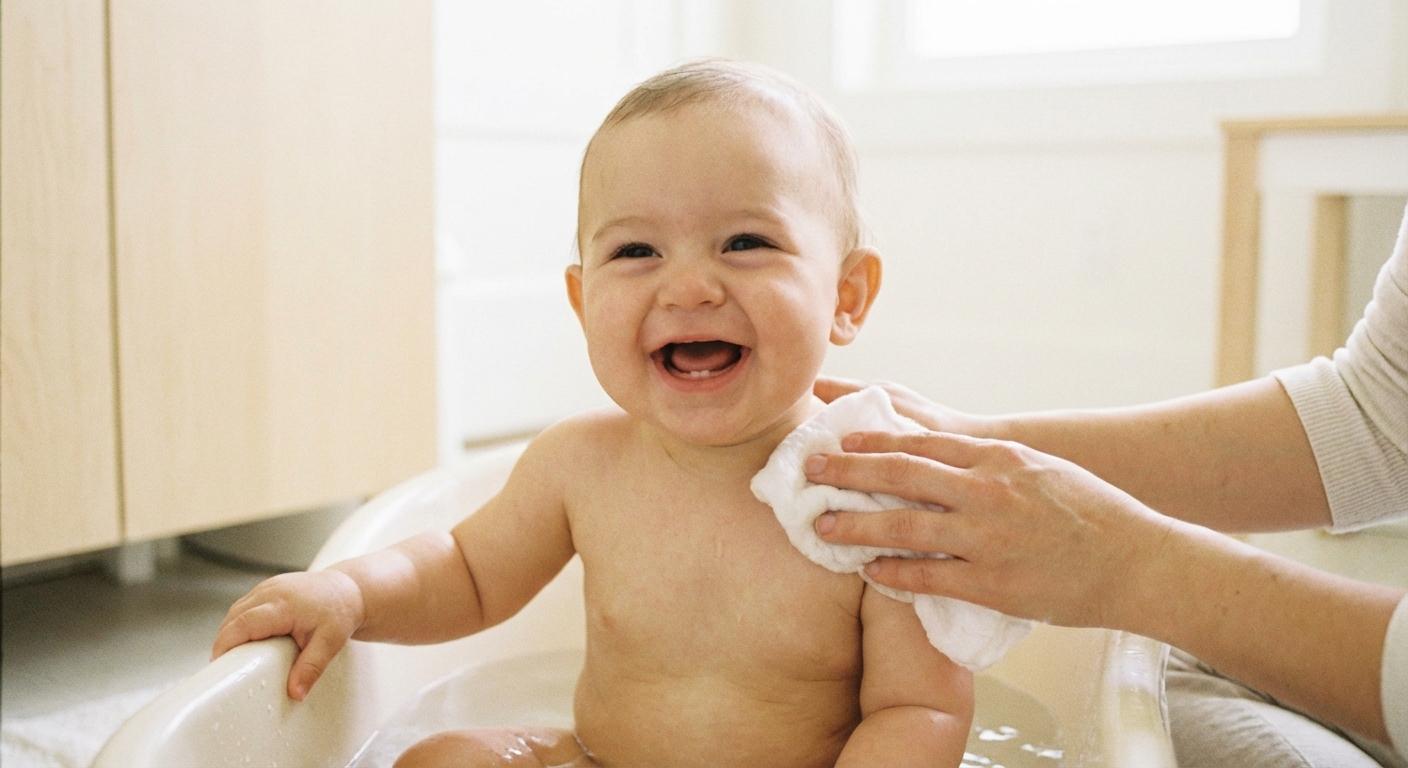
Fold the washcloth into a thicker square, wet it, add a small amount of cleanser, and wipe with small, calm movements. That’s enough to lift sweat, sunscreen, and oils.
If skin looks pink afterwards, or feels tight, the message is simple: less pressure, less frequency, or a softer fabric.
Face cleansing (where softness pays off)
Facial skin is reactive—especially in winter, during teething drool rashes, or when children have atopic dermatitis (eczema). A low-pile cotton or muslin washcloth can remove cleanser without scraping.
Mild exfoliation (for older kids and adults)
A textured washcloth can gently lift dead skin after sunscreen days or pool time. The line between “polish” and “overdo it” is thin: stinging with moisturizer afterwards usually means the barrier was irritated.
Quick wipe-downs for babies
Milk dribble in the neck, food around the mouth, sticky fingers—this is where a soft washcloth shines. In skin folds, a common irritation driver is maceration (skin that stays moist and fragile). Gentle wiping, then careful drying, helps.
Diaper area clean-up (use separate cloths)
For the diaper area, a dedicated washcloth (or color-coded set) reduces cross-contamination. A simple order that works well is clean-to-dirty:
1) face
2) body
3) diaper area last
Washcloth types and formats: which shape helps in real life?
Classic square vs larger sizes
Standard squares are easy to wring out and dry faster. Oversized cloths feel cozy for adults, but in humid bathrooms they may stay damp longer—odor risk goes up.
Wash mitt vs washcloth
A wash mitt (glove) is harder to drop when your toddler suddenly decides bath time is a water park. A washcloth is easier to fold into different thicknesses and to keep “zones” separate.
Sponge vs washcloth
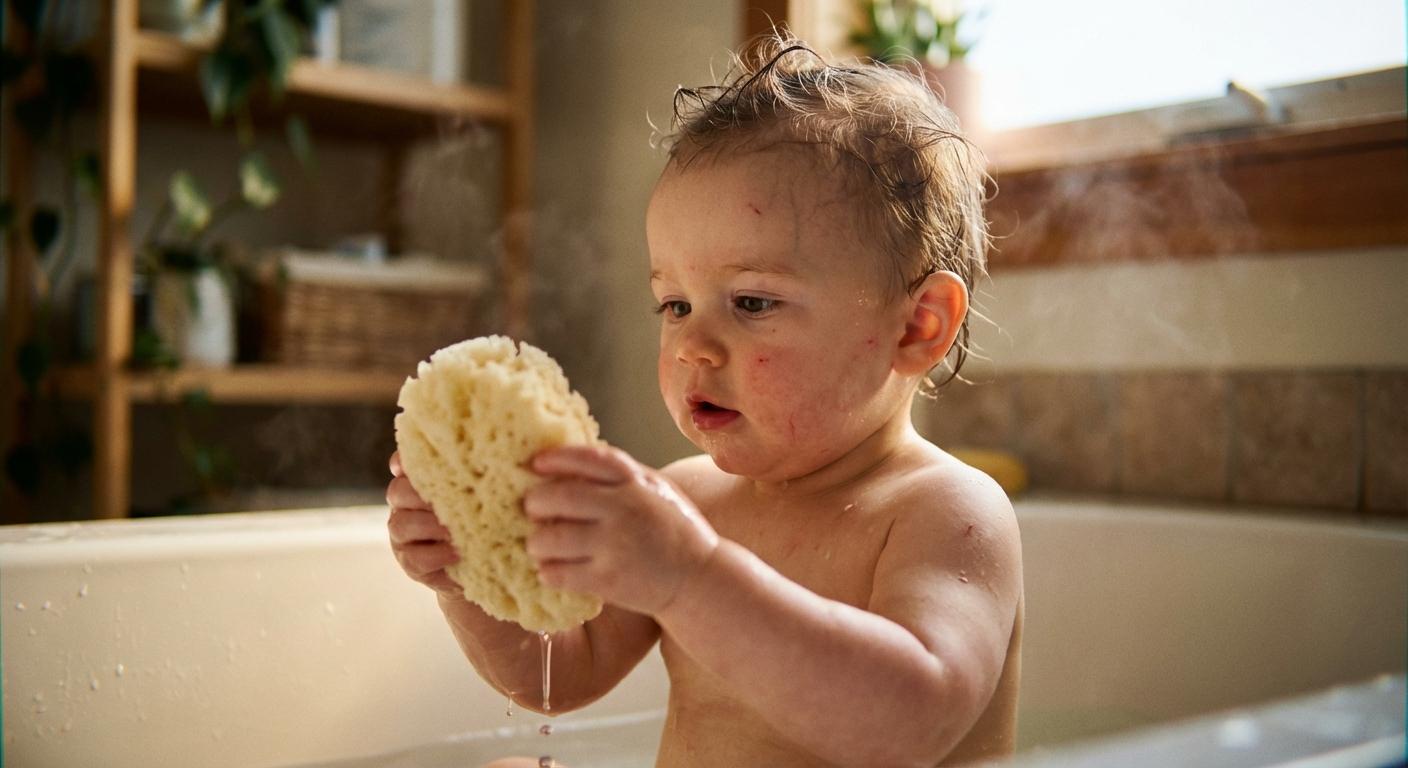
Sponges can hold water deep inside and dry slowly. That trapped moisture can feed odor and microbes. If a sponge smells damp, sheds, turns rough, or stays wet for hours, it’s not a great match for baby skin. A washcloth is simpler to rinse, launder, and replace.
Materials and textures: choosing what your child’s skin will tolerate
No fabric is “perfect” for everyone. Skin sensitivity, bathroom humidity, and laundry rhythm all matter.
Cotton terry: the family workhorse
Cotton terry washcloth fabrics are absorbent and durable. For sensitive skin, prefer low pile terry (short loops) to reduce friction.
Organic cotton: what it often adds
Many families choose organic cotton for softness and to limit exposure to some agricultural chemicals. Certifications vary, the practical point is still the same: wash well, rinse well, dry fully.
Microfiber: fast drying, strong on oils—sometimes “grippy”
Microfiber washcloth options can remove sunscreen and makeup effectively and dry quickly. Two caveats:
- avoid fabric softener (it coats fibers and reduces absorbency)
- some babies react to the “grabby” feel, if redness appears, switch fabric
Bamboo blends: smooth feel, variable durability
“Bamboo” usually means bamboo-derived viscose/rayon blended with other fibers. Many feel very smooth on cheeks. Durability depends on stitching and blend quality.
Muslin/gauze: very gentle for newborn care
Muslin washcloth styles glide over delicate skin, making them popular for newborns and drool clean-ups. Less plush, but often kinder to reactive skin.
Waffle weave: airflow and quicker drying
Waffle weave washcloth designs dry faster than thick terry because air moves through the grid. Rinse thoroughly, cleanser can sit in the weave if rushed.
Linen/hemp: textured and quick-dry (often better for adults)
These can resist musty odor in damp climates and provide natural texture. For babies or eczema-prone kids, they may feel too stimulating unless heavily softened.
Washcloth hygiene: stopping odor before it starts
A damp washcloth plus skin oils plus warm bathroom air is a comfortable setting for bacteria and yeast to multiply. That “musty towel smell” usually means one thing: the cloth stayed wet too long.
Realistic routines that work
- Face: use once, then laundry (helps limit irritation and breakouts)
- Body: one washcloth per bath/shower, then laundry
- Baby folds: use once, then laundry (milk and drool are odor magnets)
- Guests: fresh cloths, then wash afterwards
If daily laundry feels unrealistic, prioritize clean cloths for face and diaper area.
Keep zones separate
Color-coding is surprisingly effective: one color for faces, one for bodies, one for diaper care. It’s not about being extreme, it’s about limiting germ spread and avoiding transferring stronger residues (like sunscreen) to delicate areas.
After illness, sports, or travel
After vomiting/diarrhea in the household, rotate cloths more often and wash at the warmest temperature the label allows. When traveling, never seal a damp washcloth in an airtight bag—use a breathable pouch until it can dry or be laundered.
When rashes repeat: questions worth asking
A washcloth is rarely the only factor, but it can tip the balance. If redness keeps coming back, ask yourself:
- Did I change detergent, fabric softener, or scent boosters recently?
- Is my child reacting to cleanser residue (especially in folds)?
- Is the bathroom very humid, so cloths dry slowly?
- Could this be eczema, a drool rash, or irritant diaper dermatitis rather than “dirt”?
When in doubt, your pediatrician or pharmacist can help you sort out irritant dermatitis versus infection (for example, a yeast rash), and choose the right care.
How to use a washcloth with babies (technique matters more than pressure)
The simple method: wet, lather, wipe, rinse
Wet the washcloth with warm water. Use a small amount of cleanser (more product rarely means cleaner skin). Wipe gently. Then rinse skin and cloth until water runs clear.
Baby bath order: clean-to-dirty, no scrubbing
A skin-friendly sequence:
- Face: warm water only, very soft washcloth (or clean hands)
- Hair: only if needed, tiny amount of baby cleanser, rinse well
- Body: quick wash, focus on folds (neck, armpits)
- Folds: one gentle pass, then dry carefully
- Diaper area: last, with a dedicated washcloth
Rinsing: the underrated step
A frequent trigger for stinging or redness is leftover cleanser sitting on the skin or trapped in the cloth. If a rash appears mainly in folds, think “residue + moisture.” Rinse longer than you think you need.
Drying: pat, don’t rub
After bathing, pat dry. Then check folds—neck, groin, underarms. Persistent moisture can lead to irritation.
If skin is dry, applying an emollient (a moisturizing barrier product) when skin is slightly damp can reduce water loss.
Medical and antimicrobial cloths: when “special” products are used
Hospital cleansing cloths
In hospitals, disposable cleansing cloths are often used to standardize hygiene and reduce germ transfer between patients—especially when showering isn’t possible.
Chlorhexidine (CHG) cloths
CHG cloths are antiseptic products used in specific medical situations (for example, pre-procedure skin prep or certain decolonization protocols). CHG can irritate skin and must be kept away from eyes, ears, and mucous membranes. For babies, eczema-prone children, or broken skin, CHG should be used only with professional guidance.
“Antimicrobial washcloth” marketing
Even if a fabric treatment slows bacterial growth, it does not replace laundering and drying. If your child has sensitive skin, treated textiles and fragrances can increase the risk of irritant contact dermatitis.
Care and replacement: washing, drying, and when to let go
How often to wash
- Face washcloth: after each use
- Body washcloth: after each bath/shower
- Baby washcloth: after each use
Washing and detergents
Use the warmest temperature allowed by the label (many cotton cloths tolerate 40–60°C). Choose fragrance-free detergent if skin is reactive. For persistent musty odor, oxygen bleach can help (follow product instructions).
Vinegar is sometimes used as a rinse aid in hard water, but it doesn’t substitute for proper washing and full drying.
Drying: the other half of cleanliness
Hang cloths fully open, not bunched on a hook. Airflow matters. Quick-dry fabrics (waffle, low-pile) support better day-to-day hygiene.
Replace when…
Swap out any washcloth that:
- frays or has loose stitching
- feels rough
- keeps a smell even after washing
- looks thin and worn (holds residue)
Choosing a washcloth for your family: quick buying cues
A good washcloth is not necessarily the most expensive one. It’s the one that fits your routine.
Look for:
- softness (especially for face and baby folds)
- flat seams and tidy edges
- fabric that dries well in your bathroom
- durable stitching
Certifications like OEKO-TEX can reassure some parents about tested chemical residues in textiles.
If you’re comparing weights, GSM (grams per square meter) is a useful clue: higher GSM feels plusher but dries slower, lower GSM dries faster and can be gentler on faces.
Key takeaways
- A washcloth is a small reusable cloth (often 30×30 cm) that helps with gentle cleansing for babies, kids, and adults.
- Baby skin has a developing barrier: aim for warm water, short baths, minimal friction, and thorough rinsing—clean, not scrubbed.
- Separate cloths for face/body/diaper area lowers cross-contamination, color-coding is an easy system.
- Hygiene is mostly about fast drying, regular rotation, and washing at an appropriate temperature.
- Replace any washcloth that frays, feels rough, stays smelly, or no longer dries well.
Parents can also lean on professionals (midwives, pediatricians, pharmacists, dermatologists) when rashes recur or skin seems persistently uncomfortable, and download the Heloa app for personalized tips and free child health questionnaires.
Questions Parents Ask
Can I use a washcloth instead of baby wipes?
Yes—many parents do, especially at home. A soft washcloth with warm water can be very gentle, and it avoids fragrances or preservatives some babies react to. For diaper changes, some families add a tiny amount of mild, fragrance-free cleanser, then pat dry and apply a barrier cream if skin is easily irritated. When you’re out, wipes can be more practical—either option can work, the best choice is the one your baby’s skin tolerates well.
How do I sanitize washcloths (especially after illness)?
No need to “sterilize” every day, rassurez-vous. After a stomach bug or diaper leaks, it can be reassuring to wash cloths separately on the warmest cycle allowed by the label, with a full dose of detergent, then dry completely (a dryer or thorough air-drying both help). If odors linger, an oxygen-based bleach soak can be useful—always follow product directions and rinse well.
What’s the best washcloth fabric for eczema-prone or very sensitive skin?
Look for “low-friction” textiles: soft muslin/gauze or low-pile cotton are often well tolerated because they glide rather than scrub. Thick, rough terry or highly textured weaves can feel too stimulating during flares. If redness appears, you can try switching fabric and using only warm water on the face for a while—simple changes often make a real difference.