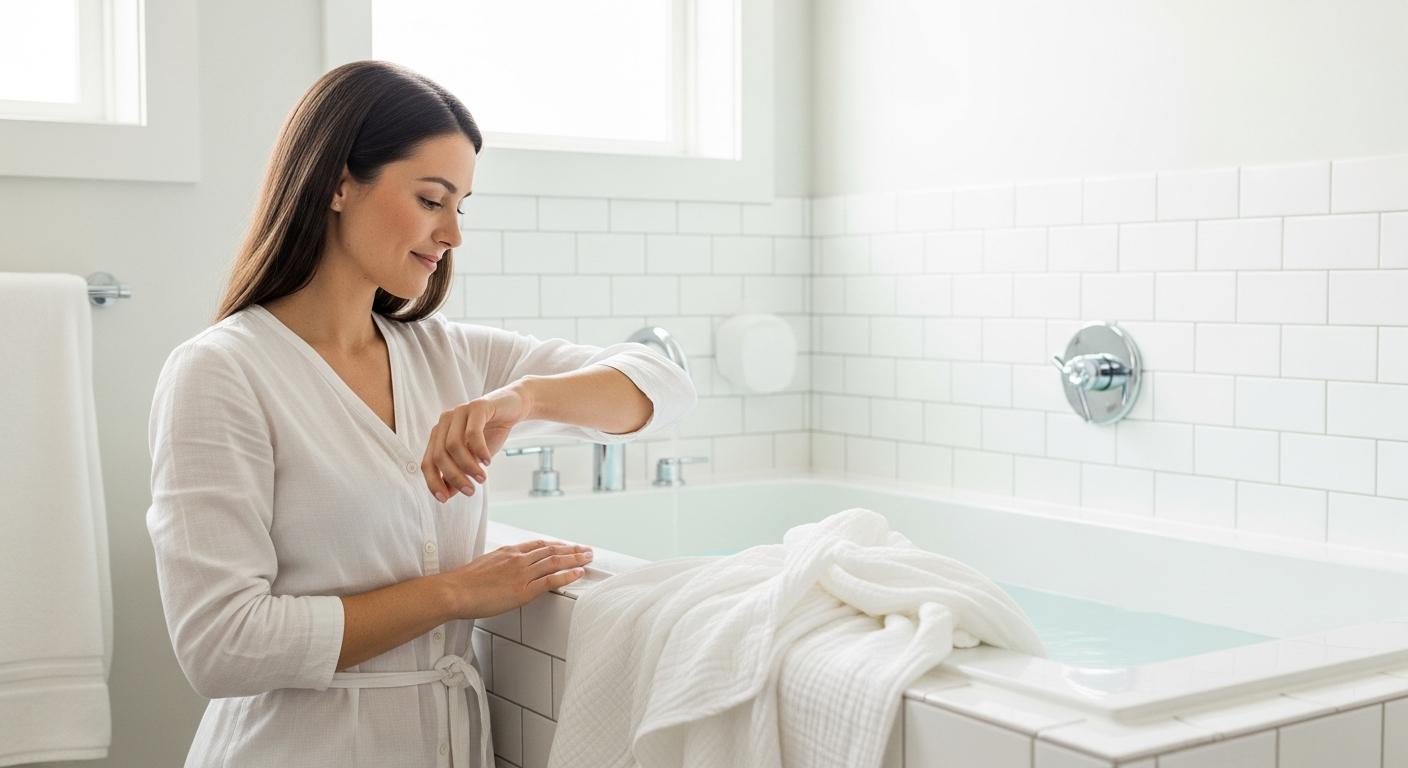
Bath time can flip a calm newborn into a tiny protester in seconds. Cold air on the skin, sudden movements, that reflexive “startle”—and the tears arrive. If you’ve wondered whether there’s a gentler way, swaddle bath baby routines often bring more warmth, more predictability, and less flailing. The idea is simple: keep your baby loosely wrapped, immerse up to the shoulders, and wash in small, steady steps. Safety stays central, comfort follows, and confidence tends to grow bath after bath.
Swaddle bath baby: what it is (and what it isn’t)
A swaddle bath baby approach is an immersion bath where your newborn remains loosely wrapped in a thin blanket or towel—sometimes called a containment bath or burrito bath. You lower baby and wrap together into warm water (shoulders in, face out), then uncover and wash one small area at a time, rewrapping between steps.
Why hospitals use it: in many maternity wards and some NICUs, a swaddled bath can be part of structured newborn care for medically stable babies, including some preterm infants. The wrap supports flexion (a curled, midline posture) and reduces abrupt sensory input.
What it is not: it’s not a spa ritual, and it’s not about “perfect bath technique.” It’s a practical, repeatable way to keep baby warmer and calmer.


Why many newborns cry during baths (normal physiology, not poor parenting)
If your baby stiffens, flings arms, or cries the second the clothes come off, nothing about that is “wrong.” A newborn nervous system is still calibrating.
Common reasons bath time feels intense:
- Immature thermoregulation: newborns lose heat quickly (large surface area for their size, limited fat stores). A chilly room plus wet skin can drop body temperature fast.
- Moro reflex (startle reflex): uncovered skin, quick positional changes, and unexpected splashes can trigger a full-body startle.
- Skin barrier fragility: the stratum corneum (outer skin layer) is thinner in early life, too-hot water, friction, or scented cleansers may irritate.
A swaddle bath baby routine aims for containment, warmth, and slower transitions—three things newborns typically tolerate better.
Swaddle bath baby vs sponge bath vs regular immersion
You may be deciding between options, especially in the first days.
- Sponge bath: baby stays out of water, you clean with a damp washcloth. Often chosen when caregivers want to keep the umbilical area dry, depending on local guidance.
- Regular immersion bath: baby is in water without the wrap. Many babies do fine once they’re a bit older, but some find the “open” sensation overstimulating.
- Swaddle bath baby method: combines immersion warmth with gradual exposure. Only a small area is uncovered at a time.
Why swaddled immersion can feel soothing
The wrap provides gentle boundaries around arms and legs. That supports flexion and midline orientation (hands closer to the center of the body), which can reduce frantic, wide movements triggered by the Moro reflex.
Small clinical observations and nursery practices commonly note less crying with swaddled bathing compared with more exposed techniques. Even when crying happens, the structure makes it easier to pause, rewrap, and settle.
Warmth: less heat loss during the bath
Immersion in appropriately warm water helps reduce evaporative heat loss compared with being repeatedly wiped in cool air. With swaddle bath baby steps, most skin stays covered and warm while you clean.
Handling feels steadier for the caregiver
A slippery newborn can feel daunting. The soaked fabric creates friction and a more secure grip, which often slows adult movements and lowers tension in the room. Babies pick up on that.
Sleep after the bath: possible, not promised
Warm water can relax muscles and ease arousal, particularly if the room is quiet and dim. Some babies sleep more easily afterward, others become more alert. Temperament, timing, and hunger matter.
Colic-like evening fussiness: where warmth may help (with timing)
Warmth may relax the abdominal wall and reduce general tension. Still, if your baby spits up easily or has just fed, bathing right away can worsen reflux symptoms. Many families find 30–60 minutes after a feed is a comfortable window.
Who benefits most, and when to start
The swaddle bath baby technique tends to shine during the neonatal period (roughly the first 28 days), when startle reflexes are strong and temperature control is immature.
Many families keep it through 4–6 weeks, sometimes 2–3 months, then transition as baby tolerates more freedom.
Signs your baby may be ready for a less “contained” bath
- Pushing the blanket away repeatedly
- Stretching hard and looking frustrated
- Settling better when more unwrapped
No rush. You can shift gradually—more exposure one bath, then back to swaddle if fussiness returns.
Preterm babies: extra nuance
In NICU settings, swaddle bathing is generally reserved for stable preterm infants—steady breathing and heart rate, adequate oxygenation, and good tolerance of handling.
If your baby was born early or is medically fragile, follow the care plan given by your neonatal or pediatric team. Bath duration, room temperature, and post-bath rewarming often need tighter control.
When another approach is a better fit
Some situations call for a pause and professional advice.
Ask your clinician before immersion if baby has:
- Fever, unusual sleepiness, poor feeding, or signs of illness
- Open wounds, oozing rashes, suspected skin infection
- Medical devices (dressings, lines, monitors) where water could loosen adhesives or raise infection risk
A targeted sponge wash is often safer in these cases.
Umbilical cord stump and circumcision: guidance varies
Recommendations differ by country, maternity unit, and individual factors.
- Umbilical stump: some teams prefer sponge bathing until the stump falls off and the base is dry, others allow brief immersion if the area is dried carefully afterward.
- Circumcision: soaking may be restricted for a period, petroleum jelly and gentle cleansing are commonly advised.
When discharge instructions and internet tips conflict, follow your baby’s clinician.
Eczema-prone or very sensitive skin
Keep baths short (often 5–10 minutes), use lukewarm-to-warm water, and minimize cleanser. If you use a product, choose mild, fragrance-free, and rinse well.
After the bath, pat dry and apply an emollient to slightly damp skin to reduce transepidermal water loss (TEWL).
Cradle cap (seborrheic dermatitis): avoid scratching. Depending on redness and scale thickness, your clinician may suggest a softening oil and gentle shampooing.
Stop the bath immediately if you notice
- Crying that escalates and doesn’t settle with rewrapping
- Shivering, mottled skin, very pale lips
- Unusual breathing effort or persistent coughing
- Sudden limpness or marked lethargy
Take baby out, warm them, comfort them. Trying again another day—shorter, warmer, simpler—is often the best plan.
What you need at home
You don’t need special gadgets to do swaddle bath baby safely.
Blanket or towel
- Thin, breathable cotton or muslin
- Large enough to rewrap easily
- Avoid heavy fabrics that trap heat
Tip: keep a second dry blanket nearby, wet fabric cools quickly.
Tub or sink setup
- Infant tub with a non-slip base, or a clean sink lined with a non-slip mat
- Stable surface at a comfortable height (protects your back and your grip)
- Shallow fill: enough for shoulders-in immersion while keeping the face well above water
Helpful extras
- Rinse cup or small pitcher (gentle pour, less startling)
- Bath thermometer (useful for accuracy)
- Timer
- Hooded towel
- Clean diaper and clothes laid out in reach
- Mild fragrance-free cleanser (optional)
How to do a swaddle bath baby routine (step-by-step)
Choose a moment when baby is calm-alert, not hungry, not overtired. Many parents prefer 30–60 minutes after feeding.
Temperature guideposts (common neonatal targets):
- Water: about 36.5–37.5°C (often near 37°C)
- Room: around 22–24°C
Keep the bath short: 5–10 minutes.
2) Set up for safety
Place everything within arm’s reach. The rule is strict: baby is never left unattended near water—not even for a second.
3) Wrap: snug enough to contain, loose enough to breathe
Wrap baby with arms and legs gently contained.
- Chest rises freely with breathing
- Hips can move (no forced straightening)
- Face stays uncovered
4) Lower into the water slowly
Support head and neck with your forearm and hand. Lower baby—still wrapped—into the water up to the shoulders.
Often, once the fabric is wet and warm, babies relax noticeably. Not always, but often.
5) Clean in small zones
- Face first with plain water (wipe inner eye corner outward)
- Neck folds, then underarms
- Skin creases
- Diaper area last
Use minimal cleanser if needed. No scrubbing, newborn skin responds better to gentle wiping and thorough rinsing.
6) The unswaddle–wash–rinse–reswaddle sequence
Unwrap one arm only. Wash shoulder to hand, rinse, then rewrap before moving to the other arm.
Repeat for legs: one leg at a time, hip to foot, rinse, rewrap.
This is the heart of the swaddle bath baby technique: exposure in tiny, predictable steps.
7) Finish: lift, wrap, pat dry, rewarm
Lift baby out with head/neck supported. Wrap immediately in a warm towel and pat dry, especially folds (neck, behind ears, groin).
Dress promptly. Skin-to-skin after the bath can help regulate temperature and calm the nervous system. If baby wants to feed, that’s often a soothing closer.
Two caregivers vs solo
With two adults, one supports while the other washes—nice in the first days.
Bathing solo is fine, just simplify. Shorter bath, fewer steps, zero distractions.
Safety essentials that keep things genuinely relaxing
No exceptions. Drowning can be silent and fast, even in shallow water.
Positioning: head, neck, hips
Keep the head and neck supported in a neutral alignment. Maintain a flexed posture, don’t force hips straight (healthy hip positioning allows flexion and abduction).
Water level and immersion
In a swaddle bath baby bath, immersion typically reaches the shoulders. Baby should not float free. Face stays well above water.
Warm without overheating
Warm room + warm water help prevent chilling, but overheating can happen with very hot rooms or thick fabric. Choose breathable wraps and keep the bath brief.
Avoid essential oils
Essential oils can irritate newborn skin and may trigger respiratory irritation. Plain water (and a mild fragrance-free cleanser if needed) is enough.
Common pitfalls
- Water too cool → more crying and stiffening
- Water too hot → redness, distress
- Wrap too tight → agitation, restricted breathing or hip movement
- Bath too long → fatigue, cooling afterward
Making bath time work in real family life
For most babies, 2–3 full baths per week is plenty. On other days, quick clean-ups of face, neck folds, hands, and diaper area usually cover hygiene needs.
Timing: daytime vs bedtime
Avoid bathing immediately after feeds, waiting 30–60 minutes can reduce spit-up. Some babies become sleepy after a warm bath, others get energized. Let your baby’s pattern decide.
Transitioning away from swaddle over time
Start by leaving the chest or one limb unwrapped slightly longer. If baby stays calm, you can move toward regular immersion baths. If bath stress returns, returning to swaddle bath baby steps for a while is perfectly reasonable.
Key takeaways
- Swaddle bath baby care means bathing your newborn while loosely wrapped and immersed up to the shoulders, washing one small area at a time.
- The wrap supports containment, may reduce the Moro reflex response, and helps limit heat loss—often meaning less crying.
- Safety anchors the routine: constant supervision, stable non-slip setup, steady head/neck support, shallow water, face always above water.
- Practical guideposts: water around 37°C, room around 22–24°C, short baths (5–10 minutes), minimal fragrance-free products.
- Stop if distress escalates or you see worrisome signs (shivering, unusual breathing, limpness), and seek medical advice if needed.
- If you want tailored tips and free child health questionnaires, you can download the Heloa app and connect with reliable guidance as your baby grows.
Questions Parents Ask
Is a swaddle (burrito) bath safe for newborns?
Yes, for most healthy, medically stable newborns it can be safe and very calming. What matters most is the setup: keep one hand on your baby at all times, support head and neck, and keep the face fully out of the water. A thin, breathable wrap works best. If your baby seems unwell (fever, unusual sleepiness, breathing changes) or has medical equipment/dressings, a quick sponge clean and a check-in with your clinician can be more appropriate.
Can you wash your baby’s hair during a swaddle bath?
You can, but many parents find it easier to keep it simple in the early weeks. If you do wash hair, try doing it last and quickly: support the head, use a small cup to pour warm water gently, and use a tiny amount of mild, fragrance-free cleanser only if needed. Dry the scalp right away and re-wrap—babies often dislike the sudden cool feeling on the head, and it’s completely normal if they protest.
When should you stop swaddle bathing?
There’s no single “right” age. Many families switch around 4–8 weeks, while others continue longer if it keeps bath time peaceful. You might transition when your baby pushes the wrap away, seems frustrated by the containment, or stays calm with more skin uncovered. You can also phase it out gradually—one limb unwrapped a bit longer each bath—so the change feels gentle for both of you.
Further reading: