A diaper change can feel repetitive… until your baby’s skin turns red, sleep gets choppy, or leaks appear out of nowhere. Then every detail matters: moisture, friction, stool enzymes, the fit around the thighs. A steady routine keeps your baby comfortable, protects the developing skin barrier, and helps you spot early signs of irritation or infection.
Diaper change basics: what’s really happening on baby skin
A diaper change isn’t only “clean and replace”. The diaper area is a warm, occluded microclimate: humidity rises, pH shifts, and rubbing increases. Newborn skin has less mature lipids in the outer layer (stratum corneum), so it can break down faster.
Why does poop irritate so quickly? Stool contains digestive enzymes (lipases, proteases). Add warmth + wetness + friction, and diaper dermatitis can develop in hours.
Full change or quick refresh?


- Full diaper change: any poop, heavy urine, leakage, strong smell, redness, or you need barrier protection.
- Quick refresh: diaper barely damp, skin looks normal, you just need a small wipe and refit.
Predictability calms many babies. Same spot, same short phrase, same order. Less drama, more ease.
When to do a diaper change (frequency, feeds, nights)
Newborn rhythm (including meconium)
In the first weeks, many babies need a diaper change about every 2–3 hours, plus after each poop. Meconium (sticky dark stools in the first 24–48 hours) clings to skin, earlier changes reduce irritation.
Signs the diaper is wet or dirty
Smell is a late sign. Look for:
- diaper feeling heavy or swollen
- leaks at the back or thighs
- wetness indicator line changing color
- sudden fussiness during contact
Do you need a diaper change after every pee? Not always, modern absorbent cores help. But if redness appears easily, shorten the interval.
Before or after feeding?
- Before: baby settles to feed, less spit-up during the change.
- After: useful if your baby often poops right after feeds.
A common compromise: half-feed, diaper change, finish feeding.
Night checks without ruining sleep
If it’s only urine and no leaks, many babies tolerate waiting. Poop is different: do a diaper change promptly to limit enzyme contact. Keep light low, voice quiet, hands steady.
Diaper change supplies: the small kit that prevents big stress
Safe setup
Pick a stable surface and keep everything within arm’s reach, because stepping away is when falls happen. A floor mat works beautifully once rolling begins.
Essentials
- clean diaper (right size)
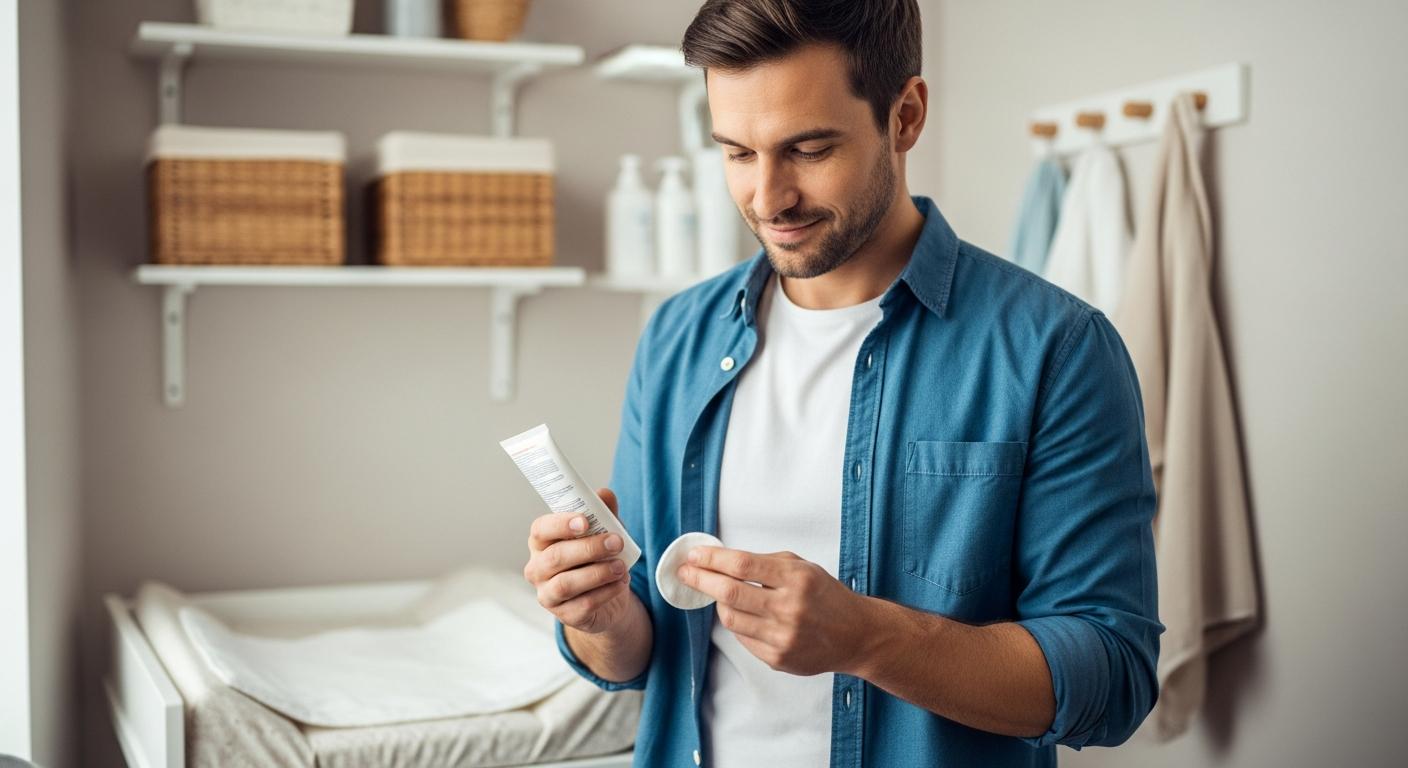
- wipes or warm water + soft cloth (often best with fragrance-free wipes)
- soft towel to pat dry
- barrier product (only if needed)
- disposal bag/diaper pail
- spare outfit
Cleaning choices (water, wipes) and “less is more”
Urine only? Warm water can be enough.
Poop? Clean folds gently, avoid scrubbing. If stool is stuck, moisten, wait a few seconds, then wipe.
Skin products:
- petrolatum ointment: light barrier, easy for daily prevention.
- zinc oxide paste: thicker shield for more pronounced redness.
Too many layers can trap moisture. If bumps or stinging appear, simplify: water, dry, barrier.
Diaper change safety and hygiene
- One hand on baby, always, on elevated surfaces.
- Wash hands before/after, use sanitizer when out, then wash later.
- Clean the changing pad after leaks.
- Don’t flush diapers or wipes (even “flushable”).
- Avoid talc powders (inhalation risk for infant airways).
How to do a diaper change: step by step (disposable)
1) Prepare: open the clean diaper, place baby, keep one hand on them.
2) Pee shield (often helpful for boys): briefly cover the penis with a wipe/cloth.
3) Remove without spreading: open tabs, fold front down, use the diaper front to lift the bulk, then tuck the dirty diaper under the bottom.
4) Clean gently (folds matter):
- Girls: wipe front-to-back, clean labial folds softly.
- Boys: clean penis/scrotum and groin folds, do not rub.
5) Dry: pat dry or air-dry 30–60 seconds if possible.
6) Protect if needed: thin barrier for mild irritation, thicker zinc oxide paste for stronger redness.
7) Refit: snug, not tight. Pull leg cuffs outward, center the diaper.
- For boys, aim the penis downward.
- With an umbilical stump, fold the waistband down to keep it dry.
8) Finish: bag the diaper, clean the surface if needed, wash hands.
Fast diaper change when time is tight
Minimal: diaper, wipes, disposal bag, optional barrier.
Sequence: remove → wipe (front-to-back for girls) → quick dry → refit with cuffs out → dispose → hands.
If baby is upset, fewer steps done gently beat fast scrubbing.
Newborn specifics: cord stump and meconium
- Keep the stump clean and dry, fold the diaper below it.
- Call a clinician if redness spreads, swelling increases, there’s foul odor, oozing, or fever.
- Meconium removal: warm water helps, a thin barrier before the next stool can make the next diaper change easier.
Wiggly baby or resistant toddler
Rolling? Choose the floor.
Calm strategies:
- repeat a short routine phrase
- offer one distraction (teether, small book)
- keep the change efficient
Toddlers: offer controlled choices, standing or lying, which diaper, wipe now or after. For poop, lying down is usually cleaner.
Fit and sizing: preventing leaks and blowouts
A surprising number of “bad diapers” are actually fit issues.
Signs it’s too small: deep red marks, frequent leg leaks, waistband tight.
Signs it’s too big: gaps, sagging, tabs barely meet.
Quick fixes during a diaper change:
- raise the back higher
- refasten tabs evenly
- pull cuffs out
- size up if leaks persist, especially at night
Blowout cleanup tip: roll baby slightly to the side and keep the dirty diaper under the bottom as a catch layer.
Diaper rash: prevention, patterns, and when to ask for help
At each diaper change: clean gently, dry well, protect when needed, and prioritize quick changes after poop.
Common triggers:
- longer time in a wet diaper
- diarrhea or acidic stools
- friction from poor fit
- diet changes (starting solids)
- frequent stools during viral gastroenteritis or after antibiotics
When to seek medical advice:
- rash lasting > 2–3 days despite good care
- oozing, bleeding, spreading, or significant pain
- fever in a young infant
- dehydration signs (fewer wet diapers, very dry mouth)
Yeast often looks beefy red with sharp borders and small satellite lesions, especially in folds, it may need an antifungal cream.
Diaper change in real life: nights, travel, public restrooms
- Nights: change for poop, for urine only, weigh comfort vs sleep.
- Public restrooms: use a portable pad, keep one hand on baby.
- Travel/no table: a waterproof pad on a flat surface works, pack extra wipes and a full spare outfit.
Key takeaways
- A diaper change protects comfort, limits humidity/friction, and supports the fragile infant skin barrier.
- Poop irritates fast because of enzymes, prompt changes matter.
- Clean gently, pat dry, then use barrier care only when needed (often petrolatum ointment or zinc oxide paste).
- Safety first: never step away, most injuries are falls.
- Leaks usually improve with better fit: centered diaper, leg cuffs out, snug waist.
- If rash persists, spreads, oozes, or baby seems unwell, a health professional can assess and guide.
- For tailored tips and free child health questionnaires, you can download the Heloa app.
Questions Parents Ask
Can you use diaper cream at every diaper change?
Many parents do, and it can be a simple way to support sensitive skin. If your baby’s skin looks calm, a very thin layer of a simple barrier (like petrolatum) can reduce friction and moisture. If skin seems perfectly fine, it’s also okay to skip products and keep things minimal. For visible redness, a thicker zinc oxide paste can feel more protective. If you notice burning, bumps, or the rash looks worse after a new product, you can switch back to warm water + gentle drying and consider asking a clinician for advice.
Is it normal for babies to cry during a diaper change?
Yes—no need to worry. Some babies dislike the cold air, being laid down, or the sensation of wiping. A few small tweaks often help: warming wipes in your hands, using a calm “same phrase” routine, and offering one distraction (a small book or toy). Moving to a floor setup can also help if your baby is suddenly very wiggly. If crying is intense and persistent, it may be worth checking for a rash, tight fit, or signs of discomfort like swelling.
How do you change a diaper when you’re out (no changing table)?
A portable changing mat + a small “mini kit” (2 diapers, wipes, a disposal bag, barrier ointment, spare onesie) usually covers most situations. You can use a flat bench, the car trunk, or a clean floor corner—whatever feels stable and safe. Keeping the routine short and gentle is often the easiest for everyone.
Further reading :
- Healthy Habits: Diaper Changing at Home: https://www.cdc.gov/hygiene/about/healthy-habits-diaper-changing-steps-at-home.html
- How to Change a Diaper: https://doh.wa.gov/sites/default/files/legacy/Documents/8330/130-082-DiaperCCsm-en-L.pdf