Diaper change moments pile up quickly: one before a nap, one right after a poop, one just as you finally sit down. How often is “often enough”? Do you really have to wake a sleeping newborn? And why can a bright red rash appear even when you clean carefully?
A solid Diaper change routine protects skin barrier function, lowers the risk of irritant diaper dermatitis, and keeps your baby safe on the changing surface. You’ll find clear timing cues, a simple setup, step-by-step technique, and calm troubleshooting for redness and leaks. These are small gestures, repeated often, that add up.
When to do a Diaper change (and how often)
Newborns vs. 3–12 months: a realistic rhythm
Newborns urinate frequently and may stool after many feeds. Their bladder is tiny, milk is liquid, transit is quick. So the “right” Diaper change frequency is guided by poop, moisture, and how the skin looks.
Helpful anchors:


- Diaper change after every poop (even small smears).
- Diaper change when the diaper is very wet, heavy, or the skin looks shiny or irritated.
From 3 to 12 months, stool frequency often decreases, but it varies widely. Many parents do best with quick checks:
- On waking
- After meals
- Before leaving home
- Before naps
- Before bedtime
Signs you should change soon (without changing for every drop)
You don’t need a Diaper change the second the wetness indicator turns. But change soon if you notice:
- A diaper that feels swollen or heavy
- Odor (urine or stool)
- Dampness you can feel through the diaper
- Early redness, or pale/whitish folds from prolonged moisture (maceration)
Maceration is simply skin that has stayed wet too long. The outer layer softens, micro-cracks appear more easily, and friction turns “a little pink” into “a real rash” surprisingly fast.
Before or after feeding?
No universal rule. Try what fits your baby’s physiology and temperament:
- Frequent spit-up (gastroesophageal reflux): Diaper change before the feed, or wait 10–15 minutes after.
- Baby drifts off while feeding: change before to avoid waking fully.
- Baby is furious-hungry: a few sips first, then Diaper change, then finish the feed.
Nighttime: when sleep can win
At night, you’re balancing sleep and skin.
- Urine only + a good overnight diaper: you can often let your baby sleep.
- Poop: try to do a Diaper change sooner. Stool contains digestive enzymes (lipases, proteases) that irritate skin when they sit against it.
Low stimulation helps: dim light, supplies ready, slow movements.
What you need for a smoother Diaper change
The small checklist (so you don’t step away)
Keep everything within reach:
- Clean diaper
- Fragrance-free wipes or warm water + cotton/soft cloth
- Changing pad (easy to wipe)
- Disposal bag or diaper pail
- Spare outfit
- Optional: soft towel for pat-drying
Diaper sizing: comfort and leak protection
Fit matters more than many parents expect.
Too small:
- Leaves deep marks
- Increases friction and chafing
- Leaks because the absorbent core gets overwhelmed
Too big:
- Gaps at the groin
- Leaks at the legs or up the back
Time to size up? Tabs stretched to the limit, persistent marks, repeated leaks despite correct placement.
Disposable, cloth, and “hypoallergenic”: what truly changes
Disposable diapers usually have an absorbent core that locks liquid away from the surface (helpful for sleep and long outings). Cloth diapers can be wonderful too, but they often need more frequent checks because the “wet feel” is closer to the skin.
If your baby’s skin reacts easily, look for fragrance-free, dye-free options. Still, the biggest difference often comes from basics: Diaper change timing, correct fit, and drying.
Wipes, warm water, and the underrated step: drying
Warm water at home is excellent: simple, effective, gentle. On the go, choose wipes that are water-based, alcohol-free, and fragrance-free.
After cleaning, drying is not cosmetic, it’s preventive medicine. Pat dry, especially in creases, to reduce maceration.
Liniment and oil-based cleansers
Oil-based products can dissolve stool fats and leave a light film. Useful, yes. But if the area is very soiled, start with warm water first.
You may wonder, “Will oil trap moisture?” It can if it’s layered thickly and the diaper is put on while the skin is still wet. Thin application on fully dry skin is the safer approach.
Barrier products: when they help, when they backfire
Not every Diaper change needs cream.
- Healthy skin: nothing mandatory.
- Mild moisture redness: a thin barrier cream (petrolatum or similar) limits contact with urine.
- Brighter, irritated, shiny areas: zinc oxide ointment forms a thicker shield and can feel more soothing.
Use a thin layer. Heavy buildup can trap moisture and make cleaning harsher later.
Diaper change safety: the habits that prevent falls
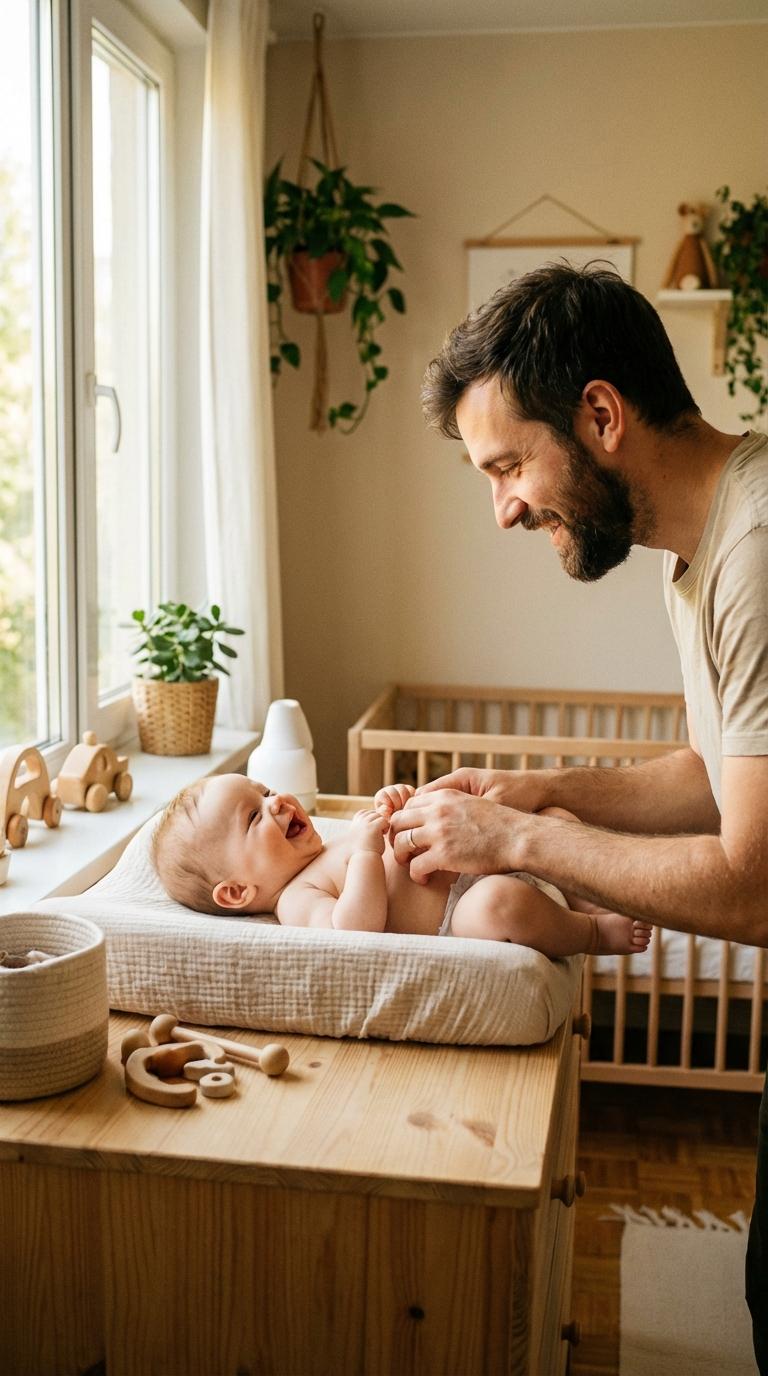
The simplest rule: one hand on your baby
Prepare everything first. During the Diaper change, keep one hand on your baby. Even newborns can twist or scoot.
High-risk moments are predictable: turning to grab a diaper, reaching for wipes, tossing trash. If you must move, take your baby with you.
No changing table? Safer options when you’re tired
A floor mat is often the safest “emergency station.” A bed can work if your baby is centered and you stay close. In the car, use a portable pad on a stable surface with the vehicle parked.
Comfort for the caregiver (yes, it matters)
A Diaper change is a small lift repeated many times a day. A few tweaks protect your back:
- Bring the surface to hip height when possible
- Keep supplies close to avoid twisting
- Bend at the hips, not the waist
- If you’re sore, do a floor change on a thick mat rather than a high table
Diaper change: step-by-step technique (quick, gentle, clean)
1) Prep
Open the clean diaper. Have wipes/water, a bag, and any cream ready. Keep your voice calm, babies react to tone long before they understand words.
2) Remove the dirty diaper without spreading the mess
Open tabs, fold the front down, and use the inside of the diaper to remove the bulk of poop. Keep the dirty diaper under the bottom while you clean.
A practical trick: slide the clean diaper under your baby before fully removing the dirty one (helpful for surprise pees).
3) Clean gently, including folds
Wipe front to back. Don’t forget inner thighs, groin creases, and the buttock crease.
More pressure does not clean better, it irritates more.
4) Baby girls: front to back
Front-to-back wiping reduces bacterial transfer toward the urethra, lowering urinary tract infection risk. Clean external folds gently, no need to clean “inside.”
5) Baby boys: surprise sprays and foreskin care
A cool wipe can trigger urination. Cover the penis briefly with a wipe while positioning the clean diaper.
Clean the outside only. Do not force the foreskin back, non-retractable foreskin is normal in young boys.
6) Dry by patting
Pat dry (don’t rub), especially in creases.
7) Apply protection only if needed
Use a thin barrier layer when the skin is fragile or stools are frequent. Use zinc oxide for more intense irritation.
Avoid powders: talc can be inhaled, cornstarch may worsen some yeast rashes.
8) Put on the clean diaper: the leak checklist
Fasten evenly.
- Aim for snug, not tight (about 1–2 fingers under the waistband)
- Pull leg cuffs outward, leak guards work only if they’re not tucked in
9) Newborn belly button: avoid rubbing the cord stump
Fold the diaper front down or use a notch diaper until the umbilical stump falls off. Seek medical advice if you see spreading redness, warmth, swelling, foul odor, or discharge.
10) Finish: dispose, wipe the surface, wash hands
Close the diaper pail/bag, clean the pad if soiled, and wash your hands, especially after poop.
Redness and diaper rash: why it happens, what helps fast
The main mechanism: irritant diaper dermatitis
Most diaper rash is irritant contact dermatitis:
- Moisture weakens the stratum corneum (outer skin layer)
- Urine shifts skin pH (more alkaline)
- Stool enzymes irritate
- Friction keeps inflammation going
Diarrhea, antibiotics, and dietary changes often increase stool acidity and frequency, so rashes flare more easily.
Different rashes can look similar
You may see “redness” and assume it’s all the same. It isn’t.
- Irritant dermatitis: usually on the convex surfaces (buttocks, lower belly), often spared in the deepest folds.
- Yeast (Candida) rash: can involve folds and show satellite spots.
- Bacterial infection: may ooze, crust, look like honey-colored scabs, or feel very painful.
If you’re unsure, a clinician can identify the pattern quickly.
A calm plan when skin looks red (first 48–72 hours)
- Faster Diaper change after poop
- Warm-water cleaning when possible
- Careful pat-drying
- Thin barrier layer each change until improved
- Short diaper-free air time on a waterproof mat
If the rash persists beyond 2–3 days, becomes very painful, oozes, blisters, or spreads beyond the diaper area, ask for medical advice.
Yeast rash clues (needs targeted treatment)
A Candida rash often shows:
- Bright red involvement of skin folds
- Small “satellite” spots near the main rash
If you suspect this, medical advice is useful, an antifungal cream may be needed.
Leaks, blowouts, and discomfort: quick troubleshooting
The common causes
Most leaks are fit issues, not parenting mistakes:
- Wrong size
- Diaper sitting too low in back
- Tabs uneven
- Leg cuffs tucked in
- Tight clothing compressing the absorbent core
Blowouts: controlling the mess
If a bodysuit has fold-over shoulders, you can often pull it down rather than over the head. Clean your baby first, put on a clean diaper second, dress last.
Overnight leaks
Start with fit (snug waist, centered diaper, cuffs out). Then consider an overnight diaper or sizing up. If your baby wakes soaked, it can also help to avoid very tight pajamas.
On-the-go Diaper change: minimal kit, maximum calm
Pack:
- 2 diapers (3 for a long outing)
- Wipes or cotton
- Portable changing mat
- 1–2 disposal bags (or a wet bag)
- Hand sanitizer
- One full spare outfit
A quick trick: prep small “change bundles” (diaper + wipes + bag). Less rummaging, fewer mistakes.
When to seek professional advice
Ask for medical advice if you notice:
- Rash lasting more than 2–3 days despite gentle care
- Worsening redness, significant pain, blisters, open sores, oozing, or crusting
- Fever or a baby who seems unwell
- Rash spreading beyond the diaper area
- A clear reaction after switching diaper, wipe, or cream brands
Key takeaways
- Diaper change after every poop, and when the diaper is heavy or skin looks shiny or irritated.
- At night, urine-only can often wait with a good overnight diaper, poop calls for a prompt Diaper change.
- Safety first: stable surface, supplies ready, one hand on your baby.
- Clean gently, pat dry, and use barrier products with intention (thin layers work best).
- Leaks usually improve with size and placement: centered diaper, even tabs, cuffs out.
- Support exists: your pediatrician, midwife, or pharmacist can help, and you can download the Heloa app for personalized tips and free child health questionnaires.
Questions Parents Ask
How can I change a diaper in a public restroom more safely?
No worries—public changes can still feel calm and clean. If you can, choose a wide, stable surface and place your changing mat down first. A quick wipe of the station (then hands) helps reduce germs. Keeping one hand on your baby stays important, especially on narrow fold-down tables. Many parents find it easier to prep everything before undressing (diaper open, wipes ready), then dress baby immediately after to limit contact with surfaces. If the station feels unstable, a stroller recline or a back-seat change on a mat can be a reassuring plan B.
Is it normal for a baby to cry at every diaper change?
Yes, it’s very common—babies often dislike the cold air, the position, or the sudden interruption. You can try warming wipes in your hands, using a softer voice, offering a small toy, or adding a “predictable routine” (same song, same steps). If crying is new and intense, it may help to check for irritation, small skin folds that need gentler cleaning, or a diaper that feels too tight.
When should I worry about a strong diaper smell?
A stronger odor can happen with dehydration, certain foods (once solids start), or a long night diaper—often nothing alarming. It’s worth seeking medical advice if urine smells very strong plus your baby seems unwell, has fever, pain with peeing, or fewer wet diapers than usual.

Further reading :