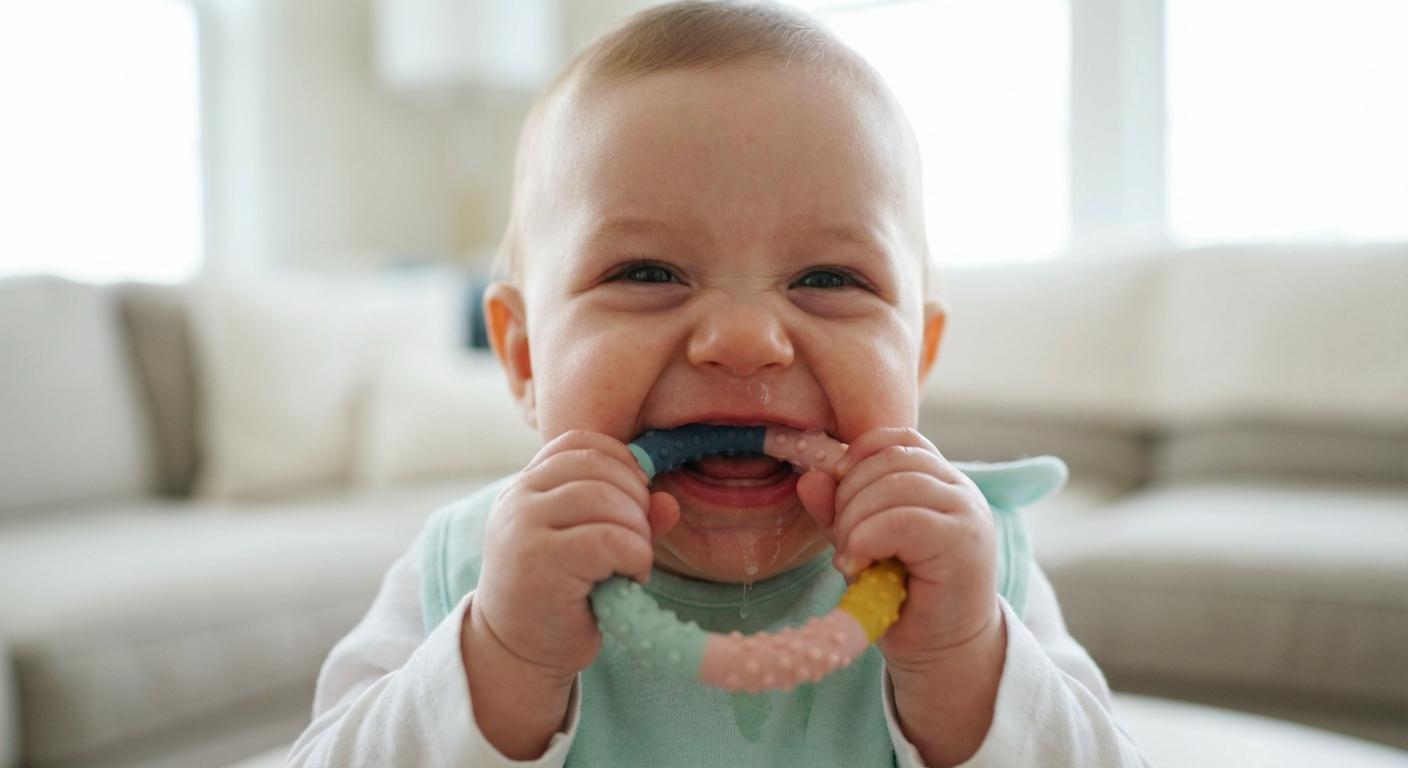
A little drool turns into a waterfall. Your baby chews everything, gets cranky at the breast or bottle, and you catch yourself inspecting the baby gum before first tooth like a detective under a desk lamp. Is this teething? A mouth infection? A random “bump” that looks alarming at 2 a.m.?
Here’s the reassuring (and practical) truth: a lot happens under the gum months before you see enamel. Most changes are normal and temporary, a few deserve a clinician’s eye. You’ll find what’s going on biologically, what you can do at home, what to avoid, and when to call a pediatrician or pediatric dentist.
Baby gum before first tooth: what’s happening under the surface
“Before the first tooth” doesn’t mean a quiet mouth. Baby teeth start forming during pregnancy. At birth, the alveolar bone (the jaw ridge that will hold teeth) is covered by thin oral mucosa full of capillaries, that’s why color swings easily. A pacifier, strong suction, rubbing fingers, even a long cry can make the baby gum before first tooth look redder for an hour and then perfectly fine.
As eruption gets closer, the body creates an eruption pathway: bone remodels, soft tissues thin locally, and a mild inflammatory response appears (inflammation here means increased blood flow and immune activity, it can be normal, not “infection”). That’s when you may notice:


- A small, localized bulge
- A warmer, more sensitive spot
- Symptoms that come in “waves” (two hard days, then calm)
You might see nothing… and still have a very uncomfortable baby. Yes, that happens.
When does teething really start?
The first visible tooth often arrives around 4–7 months (many babies near 6 months). Gum sensations can start earlier, commonly around 3–6 months.
Timing varies because:
- Genetics: family patterns are strong
- Prematurity: clinicians often use corrected age
- Overall growth and health: a “late” tooth can still be normal
No teeth by 10–12 months can be fine. Even 12–15 months can be a healthy variation if your child is thriving. If there are no teeth around 18 months, asking for an exam is sensible.
Which teeth usually come first?
Most often: lower central incisors (two bottom front teeth), then upper central incisors. Molars come later and can create more gum tension because they are broader.
What does normal gum look like in a baby?
A healthy baby gum before first tooth is usually pink to rosy (tone varies with skin pigmentation), moist, and smooth. You may notice gentle ridges along the gumline—those are the outlines of developing tooth buds.
Normal, near-eruption changes tend to be:
- Local (one small area, not the whole mouth)
- Mild (puffiness rather than dramatic swelling)
- Short-lived (improves, then returns)
Persistent spontaneous bleeding, widespread swelling, or a gum that looks angry everywhere is not typical teething.
Red, swollen, sore: common reasons before the first tooth
Parents often report that the baby gum before first tooth looks “inflamed.” The most common explanations are simple.
Pressure from eruption
As a tooth moves upward, the gum above it can look raised in a very specific point. That spot may feel firmer under your finger when you wipe the gums.
Irritation from drool and rubbing
Drool changes the skin and mucosa environment. Constant moisture plus friction (hands, toys, cloths, pacifiers) can create redness, especially along the front gumline.
“Pressure-seeking” behavior
Chewing is a pain-management strategy. Counter-pressure can reduce discomfort temporarily, so babies:
- Gnaw on teethers
- Clamp on a spoon handle
- Bite fingers
- Pull at ears (often a self-soothing gesture, not an ear infection by itself)
Baby gum before first tooth: bumps that look scary but are often benign
A bump on the baby gum before first tooth can look dramatic while being harmless. The key is appearance, location, and your baby’s overall condition.
Epstein pearls and Bohn’s nodules
These are small keratin-filled cysts seen in early infancy.
- Epstein pearls: tiny white-yellow “pearls,” often on the palate, sometimes near gums
- Bohn’s nodules: small pale bumps on gums or palate
They are benign, not contagious, and tend to disappear spontaneously over weeks to months. Do not squeeze or scrape.
Eruption cyst / eruption hematoma
When a tooth is close to the surface, fluid can collect above it.
- Eruption cyst: soft dome, translucent/whitish
- Eruption hematoma: bluish-purple if small bleeding occurs
These usually flatten when the tooth breaks through. Seek advice sooner if the swelling grows fast, becomes very painful, drains pus, or comes with facial swelling or fever.
A 30-second “gum bump” description that helps clinicians
When you call, details speed up the decision.
- Texture: soft and squishy vs. firm and fixed
- Pain: baby tolerates touch vs. pulls away sharply
- Surface: smooth vs. ulcerated (broken skin/sore)
- Number: one spot vs. multiple lesions
- Location: directly over a likely tooth site (front lower gum often first)
A firm, fixed lump that enlarges quickly should be checked promptly.
Natal and neonatal teeth (very early teeth)
Sometimes the story is flipped: there’s a tooth before you expected any gum change.
- Natal teeth: present at birth
- Neonatal teeth: erupt during the first 30 days
Because roots can be immature, these teeth may be mobile. Possible issues:
- Nipple trauma and poor latch
- Feeding refusal
- A sore under the tongue (traumatic ulcer)
- Choking/aspiration risk if the tooth is very wobbly
A pediatrician or pediatric dentist may monitor, smooth a sharp edge, or remove a very mobile tooth.
Symptoms often blamed on teething: what fits, what doesn’t
The baby gum before first tooth phase overlaps with peak viral season in many families. That’s why confusion is so common.
Typical teething-adjacent signs
- Drooling and drool rash (chin/cheeks)
- Chewing and gum rubbing
- Brief sleep disruption
- Short feeding “phases” (more comfort feeds or brief refusal)
Fever, diarrhea, runny nose: often not teething
- A true fever is ≥ 38°C / 100.4°F. That points more toward infection than teething, especially if it lasts beyond 24–48 hours.
- Softer stools can happen (more saliva swallowed), but repeated watery stools, blood, or vomiting suggest illness.
- Cough, breathing difficulty, pronounced ear pain, or refusing to drink deserve medical assessment.
For babies under 3 months, any fever requires prompt medical advice.
When it’s not teething: mouth conditions to recognize
Sometimes the baby gum before first tooth looks abnormal because something else is happening.
Oral thrush (Candida)
Thrush appears as creamy white patches on tongue, cheeks, palate, or gums that do not wipe away easily and may leave red tissue underneath. It can affect feeding and often needs prescription antifungal treatment.
Traumatic ulcers
A friction ulcer can look like a small sore with a white/gray center and a red border. Many heal in 7–14 days with gentle care. Seek care if ulcers multiply, come with fever, get larger, or don’t improve after two weeks.
Diffuse gingivitis, bleeding, bad breath
Widespread gum redness with easy bleeding and strong halitosis suggests more than eruption pressure. That pattern merits an exam.
Injury or foreign body
Mouth injuries bleed fast and look dramatic. Seek care if bleeding doesn’t stop with gentle pressure, a cut is deep, or you suspect an object is stuck.
Safe soothing for baby gum before first tooth
When the baby gum before first tooth is tender, comfort can be simple and effective.
Gentle gum massage
With clean hands, use a damp gauze or your finger to apply gentle circular pressure for 10–20 seconds, then pause. If there’s an open sore or significant bleeding, skip massage and get advice.
Cool (not frozen) relief
- A clean washcloth chilled in the refrigerator
- A one-piece teething ring cooled (not frozen)
Frozen objects can injure delicate mucosa and worsen inflammation.
Feeding: comfort without forcing
If solids have started, offer age-appropriate soft textures (some babies like slightly cool purées). Avoid hard foods that increase choking risk.
If intake dips for a day or two, offer smaller feeds more often. Hydration matters more than volume at one meal.
Pain medicine: when and how
If discomfort truly disrupts sleep or feeding, acetaminophen (paracetamol) can be used with weight-based dosing and appropriate spacing. If you’re unsure, ask for a dosing plan.
Ibuprofen may be appropriate for some babies depending on age and medical context, but avoid it with dehydration, chickenpox, or kidney concerns—check with your clinician.
Avoid teething products containing local anesthetics (benzocaine or lidocaine) unless specifically prescribed.
What to avoid (and what to use instead)
To protect a sensitive baby gum before first tooth, skip remedies that add risk.
- Numbing gels with benzocaine/lidocaine: side effects can outweigh benefits
- Unsafe teethers (breakable, small parts, overly hard)
- Amber necklaces: strangulation/choking risk, no proven efficacy
- Honey before age 1: botulism risk
- Essential oils on gums: irritation and toxicity risk
A cooled teether, a chilled cloth, and your calm presence often do more than any “miracle” product.
Oral care before the first tooth (yes, it matters)
A gentle routine helps you spot changes early and supports future oral health.
- Once daily, wipe the gums with a clean damp cloth or gauze (water is enough, saline can be used)
- Keep pacifiers clean, replace if cracked or sticky
- Avoid putting baby to sleep with a bottle of milk/formula/juice (sugars pooling overnight increase cavity risk later)
- Avoid sharing utensils or “cleaning” a pacifier with your mouth (bacteria transfer)
When the first tooth appears, switch to a soft infant toothbrush and use a smear of fluoridated toothpaste the size of a grain of rice.
When to see a pediatrician or pediatric dentist
A helpful anchor: is your baby’s overall condition reassuring? If not, trust that instinct and ask for help.
Seek prompt care if your baby:
- Has fever ≥ 38°C (especially under 3 months)
- Seems very sleepy, unusually unwell, or inconsolable
- Has breathing difficulty or repeated choking
- Shows dehydration signs (much fewer wet diapers, dry mouth, no tears, sunken fontanelle)
- Has repeated vomiting, significant diarrhea, blood in stool, or rash with fever
- Has rapidly growing, hot, spreading gum swelling, pus, facial swelling, strong bad breath
- Has bleeding that recurs or doesn’t stop with gentle pressure
- Has white patches that don’t wipe away
If there are no teeth by around 18 months, ask for an evaluation.
Key takeaways
- Baby gum before first tooth changes are common because teeth move and tissues remodel under the surface.
- Local puffiness, mild redness, drooling, and symptoms that come in waves usually fit normal eruption.
- Many bumps are benign (Epstein pearls, Bohn’s nodules), a translucent or bluish bump over a tooth site can be an eruption cyst/hematoma.
- Safe soothing for baby gum before first tooth discomfort: gentle massage, chilled (not frozen) options, and a hydration-first mindset.
- Fever (≥ 38°C), watery diarrhea, repeated vomiting, breathing issues, dehydration signs, or a baby who seems ill points away from teething and toward medical review.
- Oral care can start early, brush with a soft toothbrush and a rice-grain smear of fluoride toothpaste once the first tooth appears.
- If you want tailored tips and free child health questionnaires, you can download the Heloa app.
Questions Parents Ask
Can baby gums look white before the first tooth?
Yes—many parents notice pale or white-looking spots and it’s often harmless. Common causes include tiny keratin cysts (like Epstein pearls/Bohn’s nodules) or a gum area that looks lighter because it’s stretched over a tooth that’s moving up. A quick check-in is a good idea if the white area spreads, looks like “milk curds” that don’t wipe away (possible thrush), or if feeding becomes painful.
Is a dark or purple spot on the gum normal before teeth erupt?
It can be. When a tooth is close to the surface, a small bruise-like bubble can appear (often called an eruption hematoma). It may look blue, purple, or darker than the surrounding gum and usually settles as the tooth comes through. It’s worth seeking advice sooner if the swelling grows quickly, feels very hot, leaks fluid/pus, or comes with fever or facial swelling.
Why does my baby have bad breath even without teeth?
Baby breath can change with drooling, milk residue, or a dry mouth (especially with mouth-breathing during a cold). Gentle gum cleaning with water on a soft cloth can help. If the odor is strong and persistent, or you notice bleeding gums, ulcers, or your baby seems unwell, a clinician can check for infection, thrush, or irritation.

Further reading: