When a baby won’t sleep in crib, evenings can become a loop: put-down, crying, pick-up, repeat. You may start wondering if you should change your whole approach, try a different routine, or shift to bed-sharing even if it does not feel safe or sustainable.
Most babies are not “fighting sleep”. Usually there is a mismatch between what their body needs (comfort, predictable cues, the right timing) and what the crib feels like (stillness, separation, a cooler surface). The steady path is: keep safe sleep strict, stabilise basics, then move forward in small steps.
When baby won’t sleep in crib: what is usually behind it
When parents say baby won’t sleep in crib, it is often a combination of factors:
- Sleep-cycle maturation (lighter sleep can trigger wakes)
- A need for closeness (especially in the first months)
- Physical discomfort (blocked nose, reflux symptoms, eczema itching)
- Timing mismatch (overtired or undertired)
- Sleep associations (baby expects feeding, rocking, or arms at each micro-wake)
Ask yourself: when does it break down, at put-down, after 30 to 60 minutes, or only during naps?

Set a realistic goal based on age (and your energy)
What counts as “crib sleep” changes with development.
- Around 2 weeks: crib sleep may mean short safe stretches between feeds. Sleep cycles are often 40 to 60 minutes.
- Around 4 to 6 months: some babies link more cycles at night, but waking is still normal.
- Around 6 to 9 months: mobility and separation anxiety can make put-down harder (object permanence means baby notices you leaving).
A helpful goal when baby won’t sleep in crib can be:
- Accepting being placed down in a safe sleep space
- Falling back asleep with brief, repeatable support
- Linking more sleep cycles without needing pick-up at every wake
Consistency for 10 to 14 days usually brings more progress than a strict plan that feels impossible to maintain.
Bedtime battles, night wakings, and naps are not the same issue
If baby won’t sleep in crib, pinpoint the pattern:
- Bedtime refusal: crying the moment you put baby down. Common triggers: overstimulation, separation distress, strong sleep associations (feeding to sleep, rocking, motion).
- Night wakings: baby falls asleep, then wakes at the end of a cycle. The focus is returning to sleep in the same place, without escalating support.
- Hard naps: often depend on sleep pressure, light, noise, and settling habits.
A baby who wakes after 45 minutes needs different tweaks compared to a baby who protests at the first put-down.
Discomfort or need for closeness? Look for clues
At night, both can look similar. Details matter.
Signs suggesting physical discomfort
Prioritise comfort and consider medical advice if you notice:
- Fever or a clear change in overall well-being
- Breathing difficulty (nostril flaring, chest retractions, wheeze)
- Repeated vomiting, diarrhoea, or a tight/distended belly
- Obvious pain, unusual crying, or marked irritability
- Skin flare (eczema), or a soaked/soiled nappy
- Overheating (sweaty neck/upper back) or baby feeling cold at the trunk
If baby won’t sleep in crib and physical symptoms are prominent, health comes first.
Signs suggesting a need for closeness
Baby calms when you stand near the crib, speak softly, or use steady touch, and then escalates when you move away. In this situation, the solution is not extra entertainment. It is stable cues and gradual reduction of your presence.
Common causes when baby won’t sleep in crib (they often stack)
Attachment needs and separation anxiety
Babies regulate stress through closeness: warmth, scent, voice, touch. Early on, that is normal neurological immaturity.
Later, separation anxiety often appears around 6 to 9 months (sometimes 8 to 12 months). Crib put-downs may trigger protest. This is development, not manipulation.
Irregular timing and overstimulation
If bedtime looks different each night (different order, bright light, loud home, screens in the background), babies stay alert. In many Indian households, evenings can be busy, and stimulation may run late.
Often the simplest fix is to reduce stimulation in the last hour and shift bedtime 15 to 20 minutes earlier for a few nights.
Discomfort: teething, digestion, reflux, illness
Sleep is a sensitive detector.
- Teething: sore gums, chewing, irritability. High fever or a very unwell baby needs medical review.
- Gas/digestion: bloating, crying after feeds, difficult burps. Slower feeds and burping breaks can help.
- Gastro-oesophageal reflux: common and often physiological. More concerning with strong pain, frequent vomiting, poor weight gain, feeding refusal, or breathing symptoms.
- Cold/ear infection/cough: blocked nose and ear pressure can fragment sleep.
Changes and transitions
Travel, moving homes, starting daycare, switching from bassinet to crib, shifting rooms, babies lose familiar sensory landmarks. Keep the evening signals stable: same steps, same words, same calm atmosphere.
Developmental phases
Rolling, crawling, pulling to stand, and sleep-cycle changes around 4 months can temporarily disrupt nights. Around 8 to 9 months, object permanence and mobility can increase night wakes. A steady routine and steady response for a few days usually helps.
Sleep associations and transfer surprise
If baby falls asleep feeding or rocking, they may expect the same conditions at each micro-wake. Then the crib feels like a shock. Progress often comes from shifting the “falling asleep moment” closer to the crib, gradually.
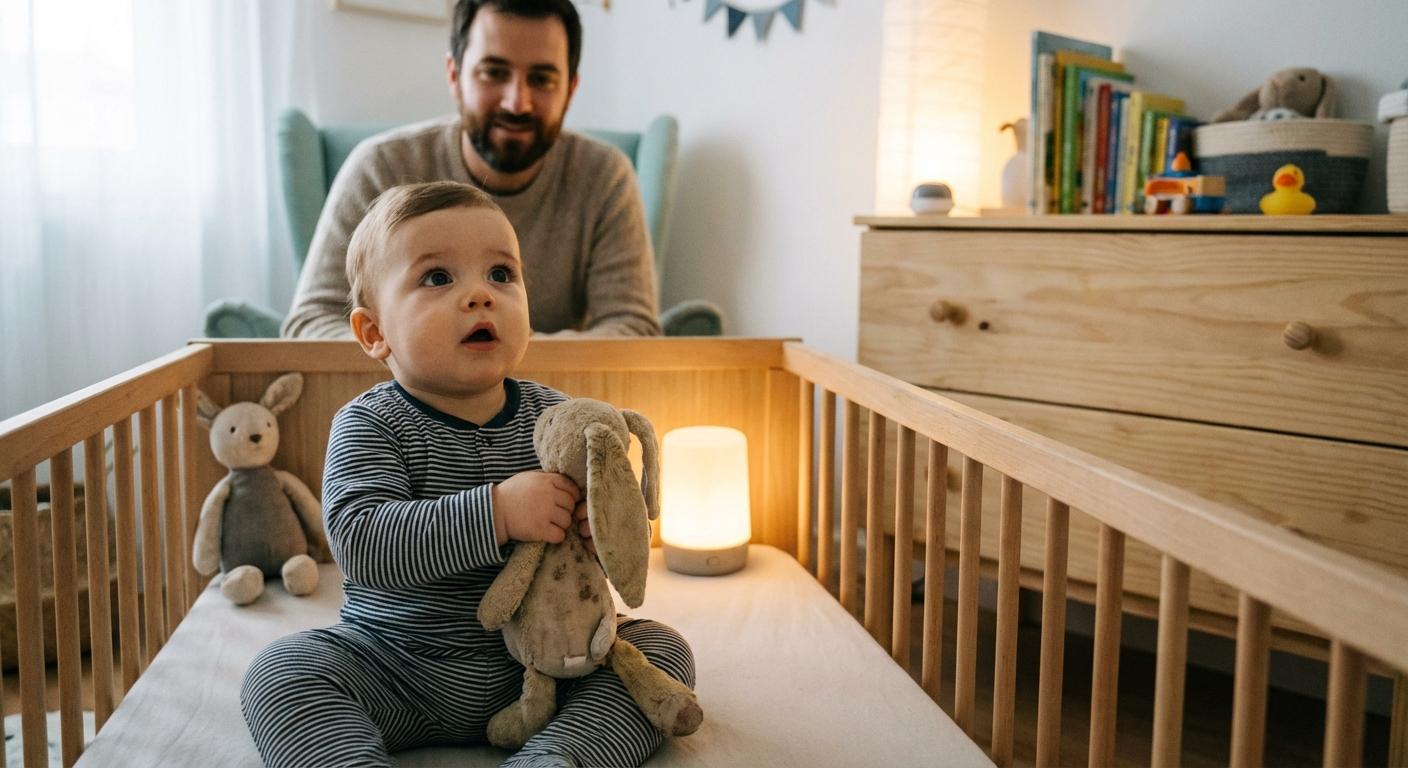
Safe sleep first: make the crib a safe sleep space
When baby won’t sleep in crib, it is tempting to add pillows, wedges, or loose blankets. Keep safety non-negotiable.
- Put baby on the back for every sleep.
- Use a firm, flat mattress with a fitted sheet only.
- Keep a bare crib: no loose blankets, pillows, bumpers, soft toys near the face.
- Use a sleep sack or wearable blanket for warmth.
- Stop swaddling as soon as baby shows signs of rolling (often 2 to 4 months).
Room-sharing (same room, separate safe surface) is commonly advised in early infancy. Bed-sharing on an adult mattress increases risk of sleep-related infant death. If you sometimes doze off while feeding at night, discuss practical risk-reduction steps with a health professional.
Crib safety checks at home
A shaky crib makes parents tense, and babies sense that.
- Slat spacing: no more than 2 3/8 inches apart.
- Avoid headboard/footboard cut-outs that could trap head or limbs.
- Avoid protruding corner posts that can snag clothing.
- Avoid drop-side cribs.
Sleep environment: India-friendly, climate-aware basics
Small environmental tweaks can shift outcomes when baby won’t sleep in crib.
Temperature, humidity, airflow
- Many babies sleep best around 20 to 22 degrees Celsius. In India, with fans, AC, coolers, and seasonal humidity swings, the key aim is avoiding overheating.
- Humidity around 40 to 60 percent often feels comfortable, especially during colds.
- A fan is fine if baby is dressed appropriately. Avoid direct cold air blowing onto baby.
- If you use a humidifier, clean it frequently to reduce microbial growth.
Check baby’s chest/back for warmth rather than hands and feet.
Darkness and light
Darkness supports melatonin. Thick curtains can help if streetlights or early sunrise disturb sleep. For night feeds, use dim, indirect light.
White noise
White noise can mask household sound, traffic, and sudden noises. Keep it a few feet away from the crib at a low-to-moderate volume.
Screens
Avoid screens before bed, even in the background. They can increase alertness.
Bedtime routine: short, repeatable, calming
Repetition lowers uncertainty.
A routine many families can repeat:
Dim lights -> nappy change and cotton nightwear -> feed -> short cuddle/story/lullaby -> sleep sack -> into crib
Use 2 to 3 stable cues. An anchor phrase can help: “It’s sleep time. Amma is here.” or “It’s sleep time. Papa is here.”
Feeding to sleep: gentle separation
Feeding is soothing and normal. If baby only sleeps while feeding, add a small buffer after the feed: burp, upright cuddle, quick nappy check, one lullaby, then crib. Comfort stays, sequence shifts.
Calm crib handoff if baby wakes on transfer
- Lower slowly, bottom first, head last.
- Keep your hands in place for 10 to 20 seconds.
- If baby startles, use steady pressure (hand on chest) and a quiet voice.
- If fussing starts, pause 3 to 5 minutes when safe, some babies resettle.
- Keep checks brief and boring: minimal light, minimal talking, no play.
Daytime foundations that make crib nights easier
When baby won’t sleep in crib, timing is a common hidden trigger.
Wake windows (flexible anchors)
- 0 to 6 weeks: about 45 to 60 minutes
- 6 to 8 weeks: about 60 to 90 minutes
- 3 to 4 months: about 1.25 to 2 hours
- 4 to 6 months: about 2 to 3 hours
- 6 to 9 months: about 2.5 to 3.5 hours
- 9 to 12 months: about 3 to 4 hours
If crib refusal suddenly spikes, adjust the last wake window by 15 to 20 minutes for three nights before changing everything else.
Total sleep needs (do not overtrack)
- 0 to 3 months: about 14 to 17 hours in 24 hours
- 4 to 6 months: about 12 to 16 hours
- 6 to 12 months: about 12 to 15 hours
- 12 to 24 months: about 11 to 14 hours
Daylight exposure
Morning daylight within 60 to 90 minutes of waking supports the circadian rhythm. Bright days, dim evenings.
Daytime feeding
Encourage fuller daytime feeds rather than constant snacking. If reflux is suspected, talk to your paediatrician about pacing, burping, and feed volumes.
Gentle approaches if baby won’t sleep in crib
Pick one method and stick with it for at least a week.
- Gradual withdrawal (fading): stay close, soothe calmly, then reduce presence step-by-step.
- Chair method: sit near the crib, move the chair farther every 2 to 3 nights.
- Pick-up/put-down: pick up only until calm (not asleep), then put down again.
- Graduated check-ins: brief reassurance at planned intervals, boring and consistent.
At night wakings, try the lightest support first: voice, hand on chest, anchor phrase, minimal light.
When to pause and get medical help
Pause sleep coaching and seek medical advice promptly for:
- Fever in a young infant (especially under 3 months)
- Any breathing difficulty (retractions, grunting, blue/pale colour, fast breathing)
- Poor feeding, dehydration signs (fewer wet nappies, very dry mouth), or lethargy
- Poor weight gain, repeated vomiting, or significant diarrhoea
- Prolonged inconsolable crying or pain not relieved by usual comfort
A retenir
- If baby won’t sleep in crib, the cause is often layered: timing, transitions, proximity needs, discomfort, and sleep associations.
- Separate bedtime refusal, night wakings, and nap struggles, they need different fixes.
- Safe sleep stays strict: back sleeping, firm flat mattress, and a bare crib with a sleep sack.
- A short routine, stable cues, and consistent responses usually help more than changing methods nightly.
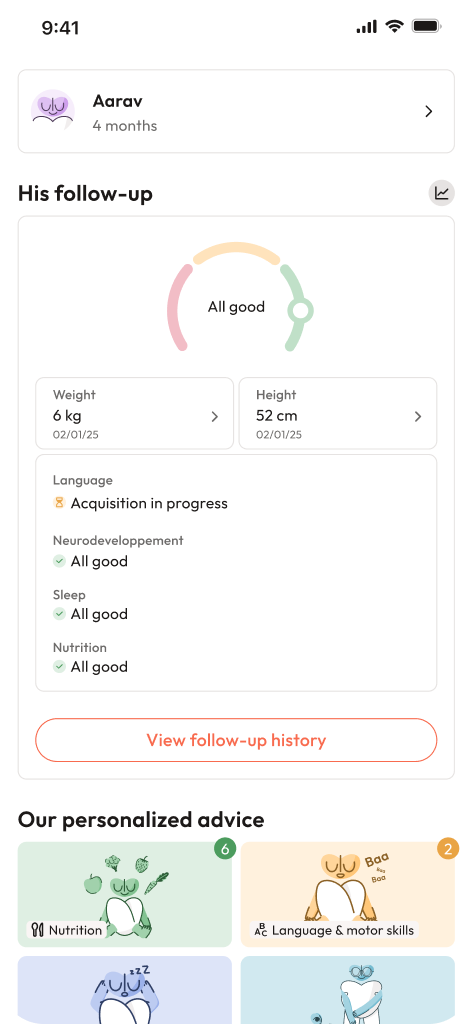
- Support exists: you can speak with your paediatrician, and you can download the Heloa app for personalised guidance and free child health questionnaires.

Further reading:
- Helping your baby sleep – Best Start in Life: https://www.nhs.uk/best-start-in-life/baby/baby-basics/newborn-and-baby-sleeping-advice-for-parents/helping-your-baby-sleep/