

Good parenting rarely looks like a silent, perfectly managed home. It looks like a child who tests the limit, a parent who holds the boundary, big feelings that spill over, and then – very importantly – a return to connection. Maybe you’re thinking, “Am I doing it right?” Good parenting is less about controlling outcomes and more about shaping daily conditions where children can grow: secure attachment, emotional skills, and a sense of safety even on chaotic mornings.
Good parenting starts with realistic goals that fit your family
What “good parenting” means in child development
In child development, good parenting is not about producing a certain “result” (top marks, perfect manners, constant happiness). It is about building skills in a way that matches your child’s stage and temperament.
Across research, the same ingredients keep showing up:
- Warmth
- Responsiveness
- Predictable structure (routines, clear rules)
- Guidance that teaches, not scares
Good parenting is also shaped by context: culture, joint family or nuclear set-up, work hours, sleep, and support. A practical check used by child professionals is simple: is your child growing up in an environment that is generally safe, stable, and reasonably adjusted to their needs? Not perfect – just steady enough.

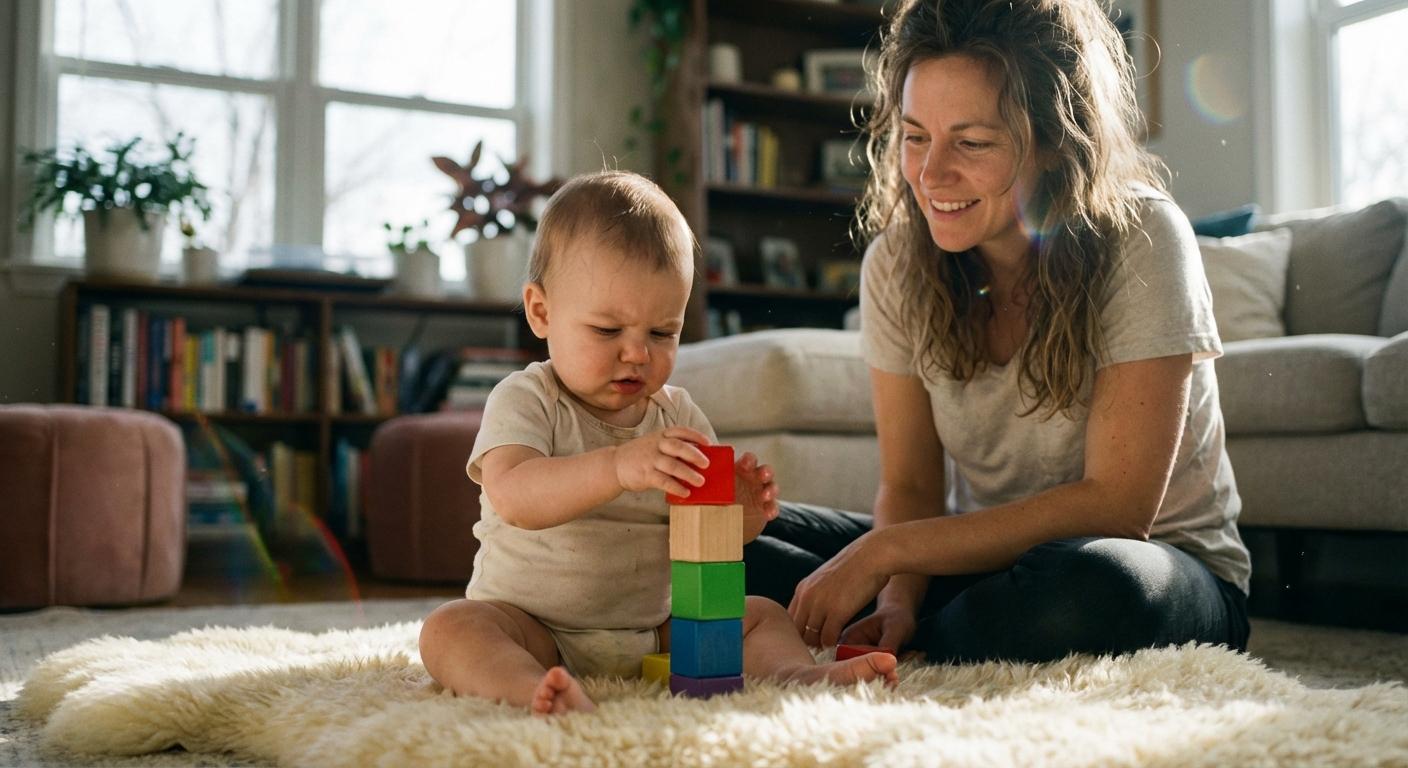
“Perfect parent” vs. “good enough parent”: a calmer standard
The “good enough parent” idea is reassuring. You respond most of the time, you miss sometimes, and then you return.
That return can look like:
- Naming what happened (“I shouted.”)
- Naming feelings (“That felt scary.”)
- Repairing the connection (a calmer tone, a helpful action)
This teaches a life lesson at the heart of good parenting: relationships can hold even when there is friction.
Common goals: empathy, self-control, honesty, cooperation, motivation
Many parenting goals are skills with a timeline:
- Empathy grows through feeling understood and practising perspective-taking.
- Self-control develops through co-regulation first, then self-regulation.
- Honesty is easier when mistakes can be repaired.
- Cooperation improves when adults notice helpful behaviour and name it.
- Motivation grows with autonomy and praise focused on effort and strategy.
Good parenting foundations: relationship, safety, and trust
Real presence, not constant presence
Good parenting does not require you to be available every second. What matters more is emotional availability – showing up “for real” at regular times.
With babies and toddlers, the brain cannot regulate big feelings alone. Children borrow your nervous system through co-regulation: your voice, posture, and breathing help them come down from overwhelm. As children grow, connection also includes reflective listening and open questions.
Protect, encourage, accompany: a reliable compass
When days are packed, three verbs can guide you:
- Protect: physical safety (sleep, accident prevention) and psychological safety (no humiliation).
- Encourage: spot micro-progress, name effort.
- Accompany: guide without taking over – do it together, then step back (scaffolding).
Secure attachment and psychological safety
A secure attachment forms when a child experiences a caregiver as responsive, especially during distress. This secure base supports exploration and learning.
Predictable routines support this safety: meals, bedtime, school drop-offs, and transitions announced in advance. Predictability calms the nervous system and often improves cooperation.
Repair after conflict: reconnecting and trying again
Conflict happens in every family. What matters is repair.
A simple sequence:
- “I raised my voice.”
- “That probably felt scary.”
- “I’m sorry.”
- “Next time I’ll pause before I speak.”
Apologising does not weaken authority. It models responsibility – good parenting in action.
Good parenting vs. intensive parenting: finding balance
What intensive parenting looks like
Intensive parenting can show up as constant monitoring, packed schedules (tuitions, classes), performance pressure, and comparison with others.
Social media hides the reality: broken nights, picky eating, tantrums. Comparison fuels guilt, and guilt shrinks patience.
A helpful filter: if advice makes you feel like a failure instead of helping you act, it deserves distance.
A balanced approach: warmth, boundaries, flexibility
Balance is not “doing less”. It is doing what helps most:
- Warmth: small moments of attention
- Boundaries: clear rules that protect safety and respect
- Flexibility: expectations adjusted to development and family capacity
Evidence-based foundations that inform good parenting
Authoritative parenting
Authoritative parenting combines warmth with clear expectations. It uses reasons, coaching, and predictable consequences – not fear. Research links it with better social skills and fewer behaviour problems.
Attachment-informed and positive parenting
Attachment-informed parenting prioritises responsiveness during distress and repeated co-regulation. Positive parenting uses tools like specific praise, reflective listening, and attention to desired behaviours (often summarised as PRIDE: Praise, Reflection, Imitation, Description, Enjoyment).
The basic principles of good parenting (research-based)
Routines and predictable limits
Routines reduce decision fatigue and strengthen regulation. Keep rules few, clear, and observable. Predictable consequences work best when calm.
Communication that improves cooperation
Try a 3-step sequence: listen, validate, then set the limit.
- “You’re angry.”
- “It’s hard to stop.”
- “Screens are done. You can choose a book or Lego.”
Validating a feeling does not mean approving behaviour:
- “I see you’re furious.”
- “I won’t let you hit.”
Autonomy and responsibility
Autonomy support means meaningful choices within firm limits:
- “Red pyjamas or blue?”
- “You start packing your bag, then we check together.”
Responsibility grows through routines and contribution.
Natural and logical consequences
Natural consequences happen without adult invention. Logical consequences are adult-set, related, and reasonable (for example, a thrown toy is put away). Keep them immediate, proportional, and time-limited.
Helping children cope
Resilience builds through stress + support + recovery. Teach quick tools: pause, breathe, name the feeling, choose a next step, ask for help.
Everyday good parenting strategies for busy families
Connection routines that take minutes
Small rituals add up:
- 2-5 minute daily check-in
- 5 minutes of undistracted play or conversation
- A predictable bedtime ritual
Follow-through that feels fair
Consistency is kinder than unpredictability. Use reminders, especially with young children: “Two more minutes, then we clean up.” Plan together when possible: “What will help you remember tomorrow?”
Healthy habits that support regulation
Sleep
Sleep affects mood, attention, appetite regulation, and behaviour. Aim for steady bed and wake times, plus a wind-down routine.
Nutrition
Picky eating is common. Keep regular meal and snack times, offer a balanced plate with one “safe” food, and let your child decide how much to eat.
Movement and screen time
Daily movement supports mood and attention. Screens work best with predictable boundaries and warnings before stopping.
Good parenting across ages and stages
Infants and toddlers
Focus on responsiveness, simple routines, and safety. Keep rules short and concrete, expect tantrums as a normal developmental phase.
School-age children and teens
School-age children do well with routines and small responsibilities. Teens need autonomy with boundaries, plus regular conversations at neutral times.
Parenting under stress: caring for the caregiver
Guilt and mental load
When guilt shows up, shift from “I failed” to: “What is one realistic adjustment tomorrow?”
Parental burnout can look like persistent exhaustion, irritability, sleep difficulties, loss of pleasure, and emotional withdrawal. Lightening the load is a health measure: simplify, delegate, and ask for a break.
If you ever feel you might harm yourself or your child, seek urgent medical help immediately.
Key takeaways
- Good parenting aims for connection, safety, and skill-building – not perfection.
- “Good enough” good parenting means you respond most of the time, miss sometimes, then return and repair.
- Emotional safety, routines, and repair support secure attachment.
- Validate feelings while holding boundaries.
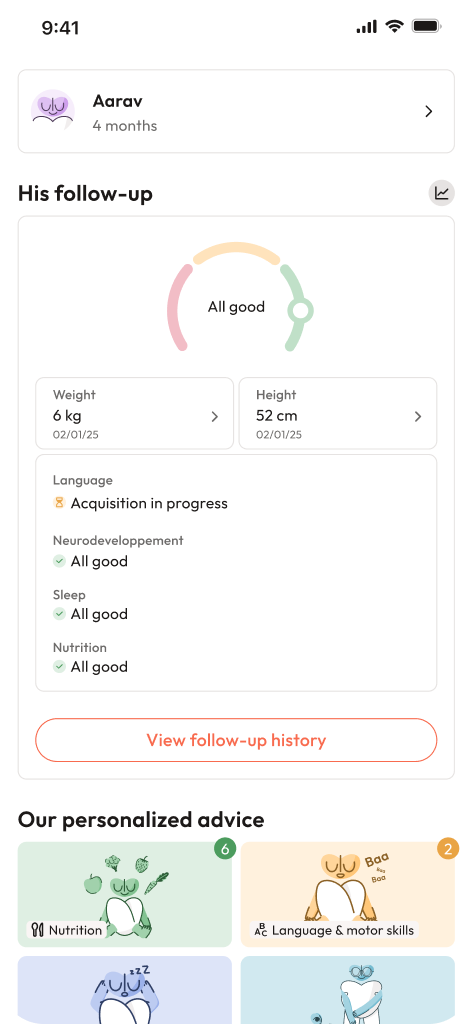
- Support exists, and you can download the Heloa app for personalised tips and free child health questionnaires.
Further reading:
- Positive Parenting Tips | Child Development (https://www.cdc.gov/child-development/positive-parenting-tips/index.html)
- Positive Parenting (https://newsinhealth.nih.gov/2017/09/positive-parenting)
- The Power of Positive Parenting | UC Davis Children Hospital (https://health.ucdavis.edu/children/patient-education/Positive-Parenting)