

Time can feel like it has started running on “Indian Standard Time” the day a baby arrives—always a little behind, always getting stretched. Between school WhatsApp groups, commute traffic, tiffin planning, house-help schedules, and a child who needs you right now, parent time management stops being a neat planner exercise. It becomes a health-and-stability practice: protect sleep, reduce daily friction, and keep the home rhythm predictable enough for children’s nervous systems (and yours) to settle.
You may be thinking, “I’m busy from morning to night… so why do I still feel unfinished?” That feeling is common, and it has biology behind it. Fragmented sleep, constant interruptions, and the mental load of caregiving change how the brain plans, remembers, and regulates emotions.
Why time feels harder after kids (and why it’s not your fault)
What “parent time management” actually means with children
In real parent time management, you are balancing three types of time—often in the same hour:
- Essential time: what supports growth and health (sleep, meals, hygiene, school, caregiving, connection).
- Constrained time: non-negotiables (commutes, prep, cooking, cleaning, bills, forms).
- Personal recovery time: usually the first to get cut, even though it resets the nervous system (rest, movement, quiet).
When recovery time shrinks, a domino effect can show up: routines drift, children become more dysregulated (more crying, more resistance, more meltdowns), bedtime stretches, and tension rises at home. The aim is not to “finish everything.” The aim is to protect what keeps both parent and child steady.

The hidden workload: mental load, interruptions, and task switching
Parenting adds work that rarely appears on a list: anticipating needs, remembering vaccination dates, tracking school requirements, planning meals, keeping spare clothes, monitoring screen time, organising transport. This is mental load—the brain work that uses working memory, sustained attention, and executive function (planning, prioritising, self-control, flexibility).
And multitasking? Most of the time, it is not parallel work. Attention keeps switching. Every interruption creates a restart cost: you lose your place, you re-check, you rebuild focus. That’s why a day full of activity can still feel like “nothing got done.”
Why typical productivity advice doesn’t fit caregivers
Many productivity systems assume you control your environment and can block long uninterrupted time. Parenting is the opposite: children need supervision, connection, and help with transitions, and that’s developmentally appropriate.
Sleep disruption matters a lot. With sleep deprivation, the prefrontal cortex works less efficiently, and you may notice:
- more forgetting (where are the keys?)
- more re-checking (did I reply to the teacher?)
- slower decisions (what to cook, what to pack)
- lower frustration tolerance
If you are postpartum, add physical recovery and hormonal changes (for example, shifts in oestrogen and progesterone), and “brain fog” can become very real. Feeling slower is not laziness, it’s physiology.
The same busy day feels different at different ages
Children’s development changes your constraints:
- Baby: feeding, burping, naps, diapering—plus unpredictability. Sleep debt reduces stress tolerance.
- Preschooler: slow transitions (dressing, leaving, separations). Independence starts, but structure still supports them.
- School-age: homework, tuition/activity schedules, school messages. A simple evening method prevents a marathon.
- Teen: fewer hands-on care tasks, more coordination, negotiation, and emotional support. Sleep can become irregular, anchors like shared meals help.
Life context: why the same advice doesn’t suit every family
Your available time depends on your setup:
- Single parenting: fewer handoffs, fewer breaks. Simplifying becomes a health strategy.
- Two-parent homes: coordination takes effort, but clear ownership reduces conflict.
- Multiple children: overlapping needs make buffer time essential.
- Working parents: dual load (work + home). Evenings are the most fragile zone.
- Joint family / grandparents at home: support can be huge, but expectations and roles may need calm conversations.
A kind reset: focus on stability in this season
The best parent time management approach is built around what your family needs most: safety, sleep, meals, transitions, and a few priorities that matter now. Not perfection. Less friction, more stability.
Set priorities without guilt (health, safety, stability, then comfort)
When everything feels important, nothing fits
When the list is endless, use a simple hierarchy:
- Physiology: sleep, nutrition, hydration, recovery.
- Safety and care: illness, medicines, essential appointments, treatments.
- Stability: school rhythm, emotional security, routines.
- Comfort: a spotless home, many activities, total availability.
Comfort can be enjoyable—but it costs energy. Ask yourself: What must still hold during a hard week? A protected bedtime window? A basic dal-rice/curd dinner? Ten minutes of calm connection?
Urgent vs important: a fast filter for parent decisions
When a new request arrives, sort it quickly:
- Urgent + important: do it now (fever, asthma flare, true deadline).
- Important, not urgent: schedule it (preventive care, weekly planning, rest).
- Urgent, not important: delegate or simplify (some errands, optional requests).
- Neither: reduce.
Protecting “important but not urgent” time is where next week improves. This is a quiet superpower in parent time management.
Make the invisible visible: list the “in-your-head” tasks
A common couple-conflict point is visible chores vs invisible planning. Writing the invisible tasks down reduces mental load because what is visible can be shared.
Try a quick list under headings:
- Health: vaccination reminders, refills, paediatrician follow-ups
- School: forms, fees, costume days, projects
- Food: groceries, snack planning, tiffin items
- Clothing: sizes, shoes, seasonal needs
- Home admin: bills, repairs, society work
Measure real time: replace imaginary schedules with data
Choose 3–5 heavy daily tasks (cooking, bath, homework, bedtime, commute) and time them for a few days. Not to “perform,” only to see reality.
Often bedtime is not 20 minutes but 45. Homework might be 30 minutes when everyone is fresh—and 60 when fatigue hits. Accurate timing leads to kinder planning.
Build a lightweight family system (simple, shared, sustainable)
Fewer rules, stronger anchors
Systems last when they are light. Strong anchors include:
- A consistent evening sequence (dinner → bath → story → lights out)
- A fixed home for school items (bags, water bottles, ID cards)
- One weekly “messages/admin” window (school emails, fees, forms)
Share the load: ownership means “do it” and “think about it”
Splitting tasks is not only about doing. It is also about carrying responsibility for remembering and planning.
Examples:
- One parent owns health logistics (pharmacy, refills, appointments).
- One parent owns clothing (sizes, replacements, uniform needs).
- Or: one parent cooks, the other plans the menu and grocery list.
Sharing the thinking work reduces mental load, a core pain point in parent time management.
Kids can help: autonomy grows through repetition
Children can contribute in age-appropriate ways:
- Small children: put toys away, clothes in the hamper
- School-age: fill water bottle, pack snack, keep shoes in one place, set the table
- Teens: manage their laundry, basic cooking, track deadlines
It may be messy initially. That’s normal. Skills develop with repetition, not instant perfection.
Clear handoffs reduce chaos
A shared system (one calendar + one shared note/list) can hold essentials: appointments, activities, homework, and any ongoing treatment plans. Clear handoffs reduce forgetting and help children feel secure.
Parenting solo: simplify to last
If you are parenting solo, choose short routines and fewer moving parts. Consider targeted support: carpool swaps, a trusted relative, occasional childcare, meal help. Even one protected recovery block per week changes capacity.
Plan the week first: routines and rhythm create real savings
The mini weekly meeting (10–15 minutes)
Take 10–15 minutes, once a week.
- Open the calendar
- Place non-negotiables
- Assign coverage
- Add rest and buffer time
A good question for children: “What would help mornings go more smoothly?” Sometimes the answer is simple: “Keep my socks ready.”
Morning and evening routines: fewer decisions, less conflict
Morning: prepare at night—clothes, bags, water bottles, lunch boxes. Keep the sequence consistent.
Evening: keep it short, predictable, and low-negotiation. Stable sleep supports attention, mood, immunity, and learning for children—and emotional steadiness for adults.
Homework and autonomy: build a method, not a battle
- Primary school: stable time, 5 minutes to set up, one task at a time. Checklist: take out materials → do work → put away.
- Middle/high school: focus on planning: what’s due, when, and what’s the first step.
Weekends: avoid the endless catch-up trap
A simple structure helps:
- One logistics block (groceries, uniforms, batch prep)
- One family block (outing, games, visit)
- One rest block (quiet time, nap, walk)
Rest lowers parental burnout risk and improves weekday functioning.
Transitions: protect the fragile end-of-day window
Transitions are hard for developing brains. Try a micro-routine after school/work:
- Toilet + snack
- 5–10 minutes to decompress
- Then one clear instruction at a time
After office, a tiny decompression step (wash hands, change clothes, one slow breath) can reduce reactivity.
Time blocking that works with kids (and real life)
Block the non-negotiables first
Start with anchors: sleep, drop-offs, pick-ups, meals, bedtime. In good parent time management, these are the foundation.
Timeboxing: stop tasks from eating the day
Use blocks with endpoints:
- 20 minutes: school messages/admin
- 30 minutes: one household task
- 15 minutes: prep tomorrow
- One phone-free family block
When the timer ends, you stop or extend consciously.
Buffer time: schedule slack on purpose
Build 10–20% margin for traffic, illness, slow transitions, forgotten items, and emotional meltdowns. Without slack, every surprise becomes a crisis.
Practical methods that reduce decision fatigue
Batching and checklists: fewer interruptions, fewer forgotten items
Batch similar tasks to reduce context switching:
- School forms in one planned window
- Laundry sorting in one short sprint
- Bills and paperwork grouped together
Checklists prevent the “missing item” spiral:
- School bag list
- Travel packing list
- Home first-aid/medicine kit list
Meals: template dinners and modest prep
Meal planning is about reducing daily decisions:
- 3–4 repeat dinners (for example: dal-chawal + sabzi, khichdi, dosa + chutney, roti + paneer/egg)
- predictable snacks (fruit, sprouts, curd)
- lunch prep folded into the evening routine
Modest batch prep helps: one carbohydrate base + one protein + vegetables, mix-and-match.
The 2-minute rule and short focus cycles
- If it takes under two minutes, do it now (sign diary, reply, file, put away).
- For a tired brain: 10 minutes focus + 2 minutes pause, one clear goal.
Declutter to reduce daily friction
Fewer items often means fewer decisions—especially in the entryway, kitchen counter, and children’s room. Less friction is a quiet win in parent time management.
Tools, automation, and support (without adding burden)
Choose tools you actually open
The best tool is the one you check. Shared calendars, recurring lists, and reminders externalise memory and reduce mental load.
Visual supports for children
Simple visual routines (morning steps, evening steps) reduce nagging and support independence.
Automate what you can, use your network where possible
Automation reduces repeated decisions:
- recurring payments
- repeating orders for essentials
- delivery or pickup when accessible
Support also counts: carpool swaps, one pickup covered by a friend, a grandparent doing one homework sitting. Small help protects energy.
When the week goes off-script: protect the basics and reduce demands
Protect hard evenings
After a heavy day, choose the simplest version:
- very simple dinner
- lower expectations
- earlier bedtime when possible
Sleep protection improves tomorrow.
A minimum viable day plan
On unpredictable days, set a minimum:
- everyone fed and hydrated
- basic hygiene
- one school/work essential
- one small connection moment
- bedtime protected as much as possible
Saying no and noticing parental burnout
Saying no can be a health decision. Signs overload may be building: persistent fatigue, irritability, forgetfulness, sleep problems, loss of pleasure, headaches, gut symptoms.
If distress becomes severe, lasts, or includes thoughts of self-harm, seek urgent medical help.
Key takeaways
- Parent time management becomes easier when priorities stay realistic: physiology, safety, stability, then comfort.
- Measuring real time for cooking, commuting, homework, and bedtime reduces pressure and improves planning.
- Sharing both tasks and the thinking work reduces mental load.
- Morning/evening routines plus buffer time protect the most fragile hours.
- Simple methods (time blocking, batching, checklists, the 2-minute rule, short focus cycles) save time and energy.
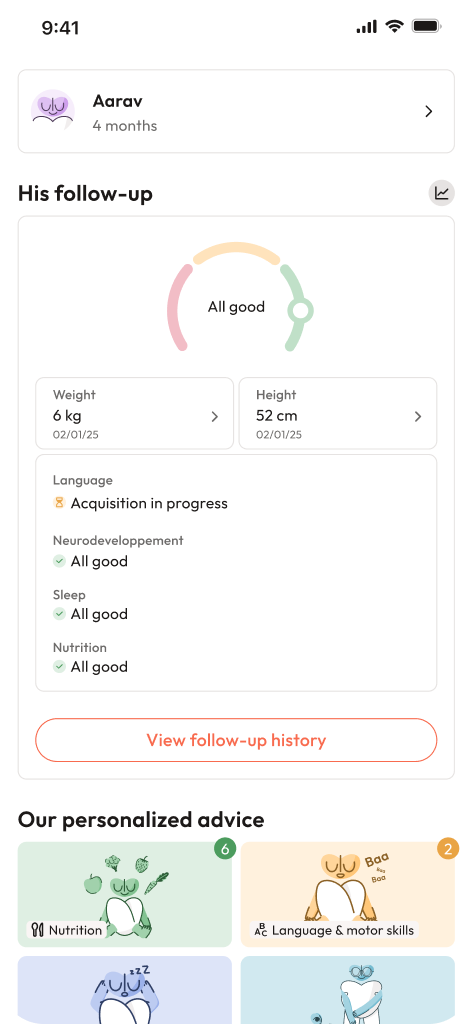
- Professionals can support you when things feel heavy. For personalised guidance and free child health questionnaires, you can download the Heloa app.