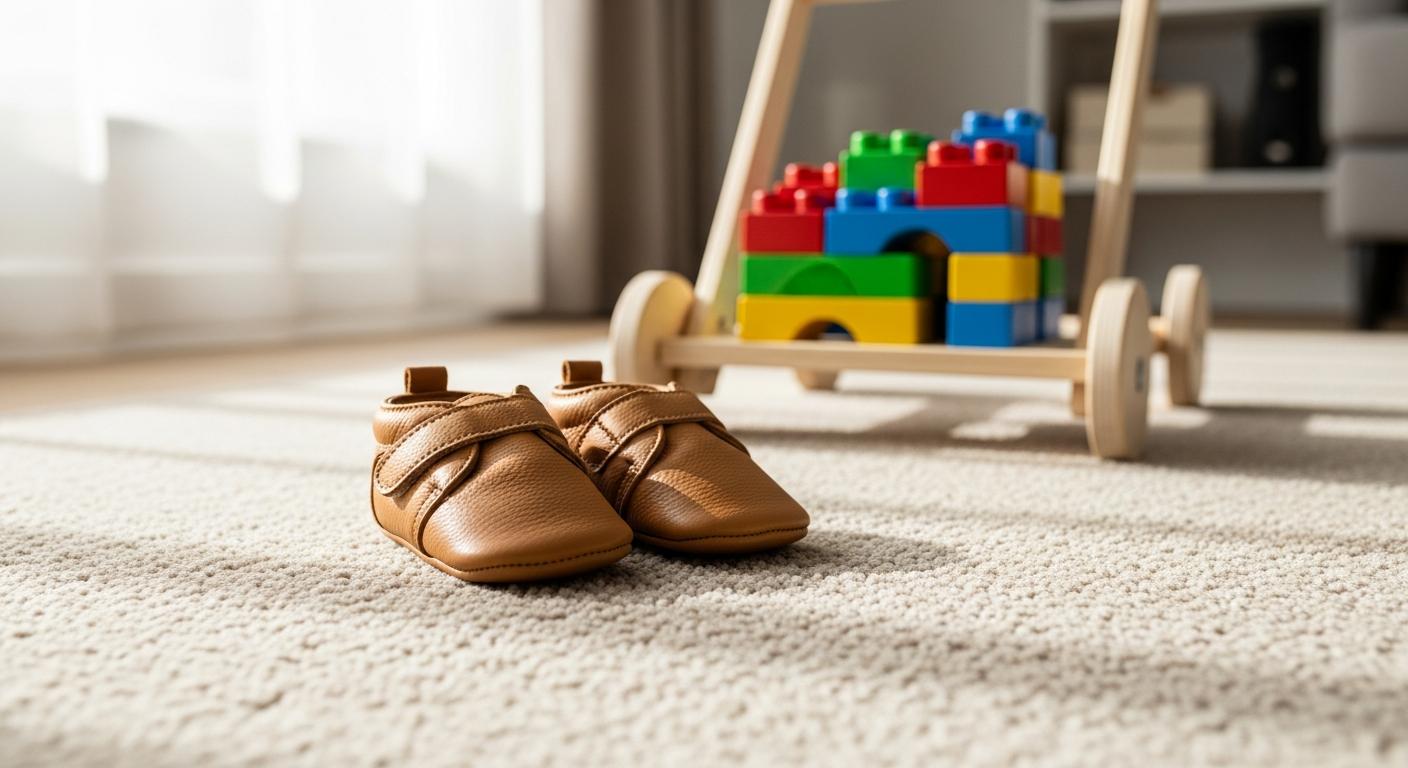
That first moment your baby pulls up at the sofa, looks around as if checking who’s watching, and then attempts a tiny step can trigger one big thought: when do babies start walking – and is my child’s pace okay? In many Indian families, there is extra noise too: comparisons with cousins, well-meaning suggestions to use a walker, and pressure to “make the baby stand”.
Walking is not a switch. It is a neuromotor skill (brain + nerves + muscles) built over weeks and months. Some days you see progress, some days you see a pause. Both can be normal.
When do babies start walking and what’s normal
The average age for first steps
Many babies take their first independent steps around 12 months. Consistent, confident independent walking commonly settles between 12 and 18 months.
If you keep googling when do babies start walking, remember: early walking usually looks messy. You may notice:


- Arms held up for balance (“high guard”)
- Short, quick steps
- A wide stance
- Frequent sits on the bottom
Walking depends on multiple systems working together:
- Neurological maturation (motor pathways, cerebellum, and sensory integration)
- Muscle tone and strength (trunk, hips, legs)
- Balance reactions
- Foot coordination and sensory feedback
It is also common for babies to try a few steps, then return to crawling or cruising. That back-and-forth can be a normal learning pattern.
The normal range: early to later walkers
A wide range is typical. Many children begin walking between about 9 and 18 months. Some may start closer to 19-20 months and still develop well, especially if the overall direction is forward.
A useful way to revisit when do babies start walking is to watch the trajectory: standing longer, cruising more smoothly, lowering to sit with better control, trying brief independent stands.
Why timelines vary from one baby to another
Walking is the end point of many smaller skills:
- Strength in hips, legs, and core
- Balance recovery when they wobble
- Motor planning (weight shift, foot placement)
- Plenty of floor time versus long stretches in “containers” (bouncer, activity chair)
- Temperament (bold vs cautious)
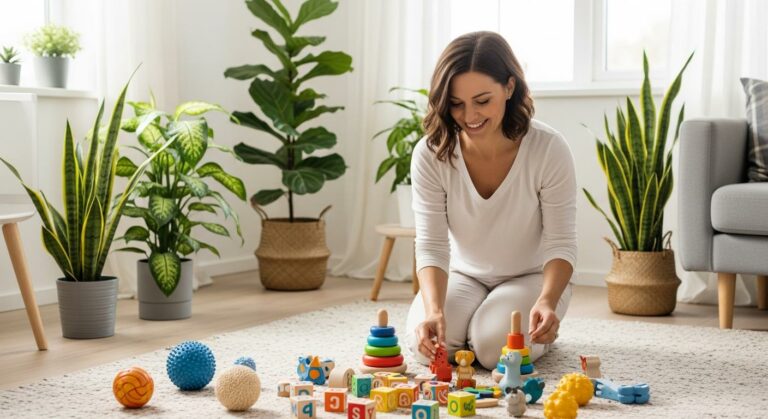
- Home environment: space to move, stable furniture, non-slip surfaces (tiles can be slippery)
Some babies focus hard on one area at a time. A child busy mastering pulling to stand, climbing, or fine-motor play may appear “slower” to walk, while still progressing overall.
Premature babies: corrected (adjusted) age
For babies born early, clinicians often interpret milestones using corrected age (adjusted age): the age the baby would be if born on the due date. This is commonly used up to about 2 years.
So if your question is when do babies start walking for a preterm baby, ask your paediatrician which age to use. It changes expectations in a very practical way.
Baby walking milestones: how skills usually build
Foundations: head and trunk control (tummy time)
Walking begins far from the feet. Babies build head control, then trunk stability. Supervised tummy time while awake (short and frequent at first) strengthens the back, shoulders, and core, supporting later sitting balance and upright posture.
Sitting balance: reach, twist, and recover
A stable sit is dynamic. When babies reach, lean, and recover without falling, they practise shifting their centre of gravity – the same skill used later for standing and stepping.
Floor mobility: crawling, scooting, belly-crawling
Crawling-like movement strengthens shoulders, hips, and trunk, and supports coordination between both sides of the body. Some babies scoot or belly-crawl, and some skip classic hands-and-knees crawling.
Skipping traditional crawling is not automatically worrying if progress continues and movement stays fairly symmetrical.
Pulling to stand: the bridge to first steps
Pulling up to stand loads the legs, supports pelvic stability, and teaches foot placement. Repetition matters here, babies learn through many daily attempts.
Cruising along furniture
Cruising (side-stepping along a sofa, bed, or table) trains weight transfer and dynamic balance. When you see a brief one-hand release to grab a toy, that is a small preview of independent steps.
First independent steps, then smoother walking
Early walking often has a wide base and minimal trunk rotation. Over time, you may see:
- Arms lowering
- Steps slowing down
- A more natural heel-to-toe pattern
This refinement is neurological and improves with repetition.
Signs your baby is getting ready to walk
You may notice quick bursts of readiness, then a quiet week. That is common.
- A more stable trunk (less collapsing during turns)
- More standing to play at furniture
- Brief “micro-let-go” moments (hands off for a second or two)
- Moving from floor to stand with less help
- Squatting to pick a toy and standing back up
- Controlled lowering to sit (not simply dropping)
What first walking can look like (and still be normal)
Wobbly, wide-based steps and frequent falls
New walkers use a wide stance for stability. Falls are expected while balance reactions are being fine-tuned. The key is gradual improvement over weeks.
Arms up and flat-footed steps
The “high guard” arm position is common. Steps are short and may look flat-footed initially.
Toe walking, in-toeing/out-toeing, uneven steps
Temporary variations can appear:
- Brief toe walking as a balance strategy
- Mild in-toeing or out-toeing as hips and legs mature
- Uneven steps during turning or over thresholds
Speak with a clinician if toe walking persists, or if there is stiffness, pain, marked asymmetry, limping, or heels rarely come down.
Bow legs and flat feet
Mild bow legs and flexible flat feet are common in toddlers and often improve with growth. Seek advice if there is pain, persistent limping, major asymmetry, or walking becomes harder.
What influences when babies walk
Neuromotor maturation and muscle tone
Walking depends on overall neuromotor organisation. Differences in tone can affect timing:
- Low tone can slow stability and upright control.
- High tone can reduce flexibility for smooth adjustments.
Temperament and confidence
Some babies attempt early, others prefer safer movement (crawling, cruising) and wait until they feel steady. Both can be healthy.
Environment and opportunities
A clear space, stable furniture, and safe surfaces give more chances to pull up and cruise. Less floor time usually means fewer attempts, not a lack of ability.
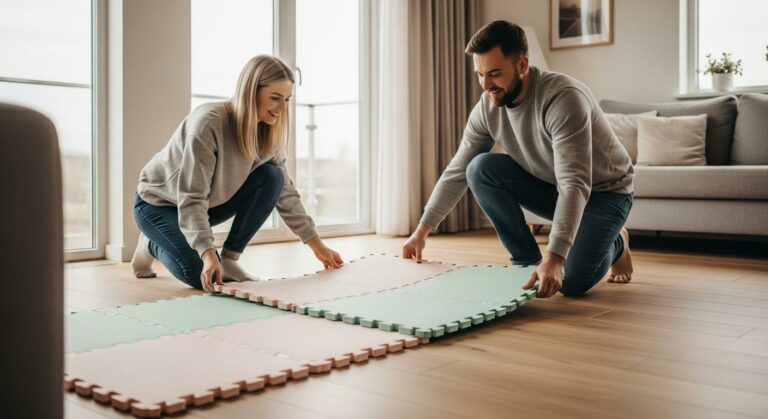
In many Indian homes, slippery tiles are common, a non-slip mat can make practice more comfortable.
How to encourage walking safely (without rushing)
Respect your baby’s pace
Trying, falling, sitting, and trying again is real neurological and muscular work. Your role is to keep the environment safe and supportive.
If family pressure makes you worry about when do babies start walking, shift focus to daily practice opportunities rather than dates.
Set up a safe practice space
- Stable supports at chest height
- Mats or rugs that don’t slide
- A short “route” between two sturdy supports
- A firm, non-slip floor (very soft surfaces can make balance harder)
Help just enough
Holding a baby high by both hands to “make them walk” shifts the centre of gravity and can strain shoulders. If support is needed, offer a low, light hold (near the trunk, or one hand they can release).
Push toys and walking carts
If you use a push toy, pick one that is stable, heavier, and ideally has resistance wheels. Supervise closely, especially on tiles.
Shoes vs barefoot for new walkers
Barefoot indoors
Indoors, barefoot or grippy socks often support balance and sensory feedback through the soles.
When shoes are needed
Shoes are mainly for protection outdoors (hot roads, rough ground, cold surfaces). Indoors on safe floors, shoes are usually optional.
Choosing first shoes
- Flexible sole
- Wide toe box
- Lightweight, non-slip outsole
- Secure closure
Very rigid shoes can limit ankle motion and natural foot roll.
Baby walkers and “container time”
Why wheeled baby walkers are discouraged
Wheeled baby walkers increase injury risk and do not teach true balance control for independent walking. They can also allow quick access to hazards like stairs.
Limiting time in restrictive devices
Short periods can be fine, but long stretches in activity centres, bouncers, or jumpers reduce free movement and floor practice. Aim for varied, supervised positions through the day.
Safety as babies start walking
Babyproofing before first steps
Once cruising starts, hazards become reachable fast. Secure heavy furniture, remove unstable items your baby can pull down, and keep small objects off the floor.
Common home hazards
- Corner guards on sharp edges
- Hot tea/coffee kept away from table edges
- Electrical cords secured, blind cords out of reach
- Light chairs watched closely (they can tip when pulled)
Stairs and water
Use safety gates at stairs (especially at the top). Keep bathroom doors closed, empty buckets/tubs promptly, and use non-slip bath mats.
After a fall: when to seek prompt advice
After a head bump, seek medical advice if there is repeated vomiting, unusual sleepiness, concerning behaviour change, seizures, or a fall from height.
Late walking: what it can mean
Later walking can still be normal
Some healthy children walk closer to 15-18 months, and occasionally a bit later, and do well long-term – especially if pulling to stand, cruising, bearing weight evenly, and progressing.
So, when do babies start walking? Sometimes later than expected, and still fine, if skills keep building.
When to talk to a clinician
Discuss with a clinician if:
- There is no clear progress towards walking by around 15 months.
- Independent walking is not present around 18 months (use corrected age for prematurity).
Red flags beyond timing
Seek advice sooner if you notice:
- Marked asymmetry
- Very high tone (stiffness) or very low tone (floppiness)
- Regression
- Pain, limping, refusal to bear weight
Key takeaways
- If you’re asking when do babies start walking, many take first steps around 12 months, and consistent independent walking commonly appears between 12 and 18 months.
- A broad range is normal: 9-18 months, and sometimes nearer 19-20 months if progress is steady.
- Pulling to stand, cruising, brief independent standing, and controlled lowering are strong readiness signs.
- Encourage safe practice with floor time, stable supports, and minimal help, avoid forcing.
- Indoors, barefoot or grippy socks often help, outdoors, choose flexible shoes with a wide toe box. Avoid wheeled baby walkers.
- Seek medical advice for stagnation, unusual tone, asymmetry, regression, pain, refusal to bear weight, or no independent walking around 18 months (corrected age for prematurity).
- Support exists. You can also download the Heloa app for personalised tips and free child health questionnaires.

Further reading: