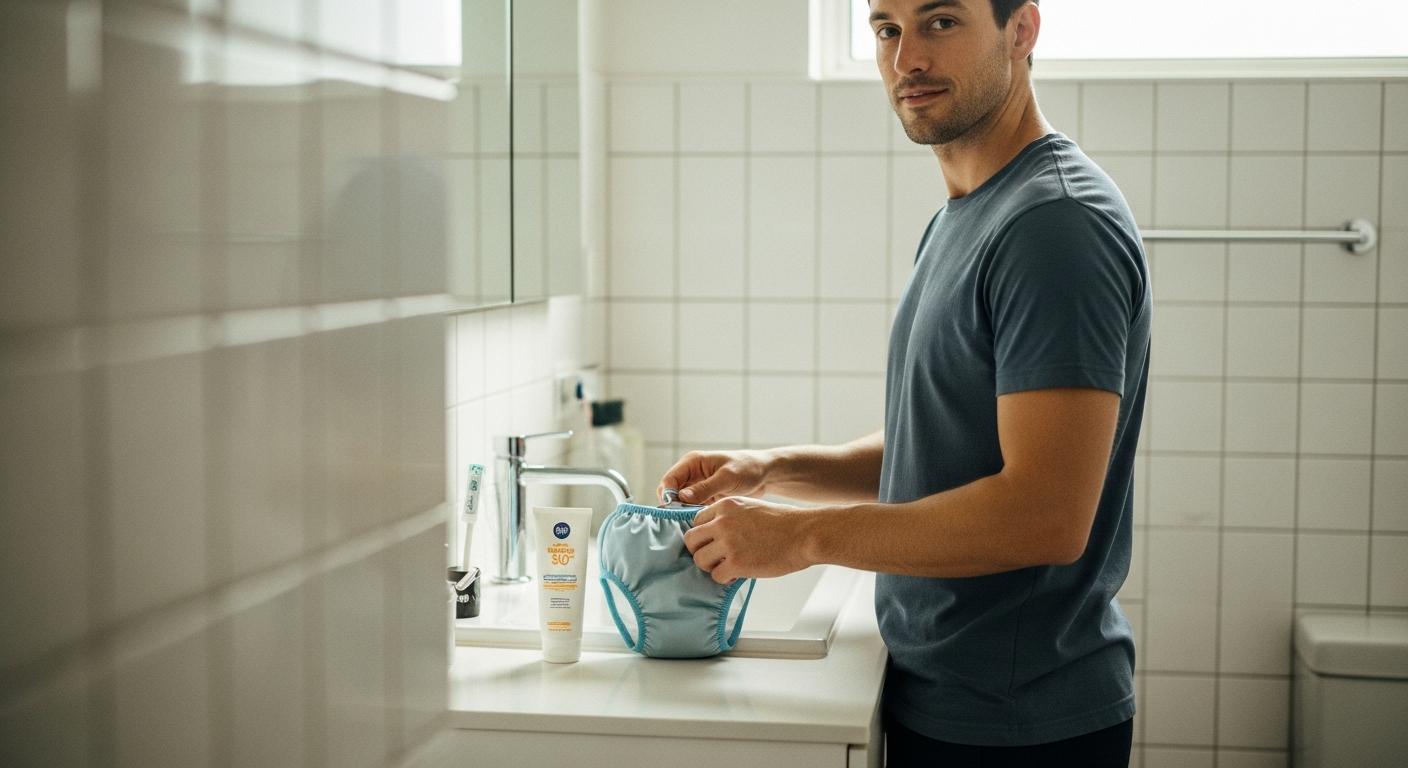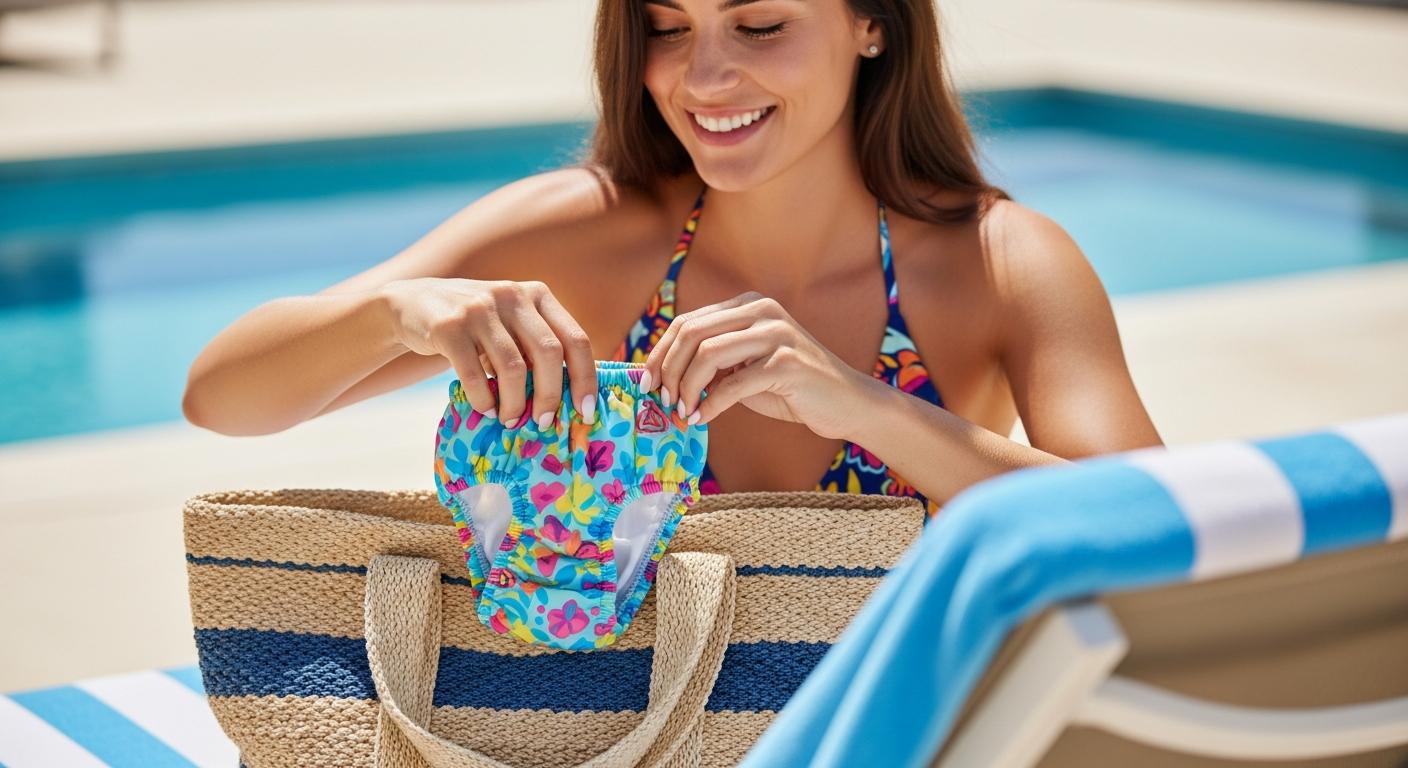
Taking a baby to the pool in India can feel like a quick mission—towel, spare clothes, a snack box, and a plan for changing in a small cubicle. One item, though, can decide how smooth the entry is: the baby swim diaper. Parents typically worry about leaks, comfort, pool rules, and that dry, itchy skin that sometimes shows up after chlorine. A few clear basics make everything easier: what a baby swim diaper is meant to do, how to get the fit right, and how to manage changes without stress.
Baby swim diaper basics for calmer pool days
What it is and what it’s designed to do
A baby swim diaper (often called a swim nappy) is designed mainly to contain solid stool in water. It is not built to absorb liquids. That is intentional: if it absorbed pool water, it would swell, sag, and pull away from the thighs.
From a medical hygiene point of view, this is about shared safety. Pools are disinfected (commonly with chlorine), but disinfection is not instant. Also, disinfectants work less efficiently when there is more organic material in the water. A well-fitted baby swim diaper helps reduce contamination risk.
Baby swim diaper vs regular diaper: what changes in water
A regular diaper contains superabsorbent polymers (SAP) that swell to lock urine away from the skin. In a pool, those polymers absorb pool water quickly, so the diaper becomes heavy and loose at the legs.

A baby swim diaper stays slim, lets water pass through, and relies on snug waist and thigh seals.
What it can hold in… and what it can’t
A baby swim diaper:
- Helps contain stool by sealing at the waist and thighs.
- Does not hold urine in the water, urine passes through and dilutes.
So, it is a stool-containment garment, not a urine-absorbing diaper.
Why babies need a baby swim diaper at pools and lessons
Hygiene and public health reasons
Stool can carry germs such as E. coli, norovirus, and Giardia. An accident may lead to illness risk and sometimes a pool closure for cleaning.
If your baby has had diarrhoea recently, many facilities ask families to wait around 48 hours after symptoms stop (rules vary). This is a practical precaution.
Common pool and swim school policies in India
Policies vary between apartment complexes, hotels, and swim schools, but many require a baby swim diaper for children who are not toilet trained. Swim schools sometimes ask for a double layer: an inner swim diaper plus an outer neoprene cover for better containment.
Baby swim diaper types and styles to compare
Disposable baby swim diaper
Pros: convenient for travel and occasional swims, quick changes, easy to pack.
Cons: ongoing cost, more waste, a slightly large size can leak more.
Reusable baby swim diaper
Reusable options are washable and often adjustable, made with fabrics like PUL/TPU laminates or neoprene.
Pros: cost-effective if you swim regularly, adjustable fit, often softer.
Cons: needs rinsing and washing, low absorption outside the water, so change promptly after swimming.
Integrated swimwear: check acceptance
Some swimsuits come with an integrated panel. They can be convenient, but not all facilities accept them as a replacement for a dedicated baby swim diaper. Always match the local rule.
Closures: snaps, pull-on, hook-and-loop
- Snaps: durable, precise adjustments.
- Pull-on: fast, but sizing must be accurate.
- Hook-and-loop: very quick to adjust, may wear over time.
How to choose the best baby swim diaper for your child
Fit checks that matter
Use weight ranges as a starting point, then confirm:
- Waist lies flat and comfortable.
- Thigh openings seal without digging in.
- Baby can kick, squat, arch, and sit without gaps forming.
A simple test: one finger can slide under the edge, but you should not be able to pull the leg opening away easily.
Too small vs too big
- Too small: deep red marks, rubbing, ongoing irritation.
- Too big: gaps, repeated leaks, diaper shifts easily.
Between sizes
Sizing up can reduce marks, but only if the thigh seal remains snug. Adjustable reusables can be easier during growth spurts.
What leak protection realistically means
A baby swim diaper reduces the chance of stool leaking. It does not guarantee zero accidents. If your baby poops, exit the water and change immediately.
Comfort and skin: chlorine, salt water, friction
Chlorine and sea water can dry skin. Dampness plus friction can cause maceration (softened skin) and diaper rash, especially in eczema-prone babies.
Helpful habits:
- Change out of wet swimwear soon after swimming.
- Rinse the diaper area with fresh water.
- Pat dry, do not rub.
- Apply a simple moisturiser after rinsing if skin gets dry.
If irritation repeats often, consider shorter swims and a softer fabric or a different cut.
Materials you may see
- PUL/TPU laminates: common in reusable swim diapers.
- Polyester: lightweight, often chlorine-friendly.
- Neoprene: snug outer cover used frequently in lessons.
- Liners: can simplify cleanup, but must not disrupt the leg seal.
Textile labels (such as OEKO-TEX)
A label like OEKO-TEX Standard 100 suggests the textile has been tested for certain undesirable substances. For a garment worn on damp skin, this can be a useful quality marker.
Baby swim diaper fit and putting it on without stress
How snug is snug enough
Aim for snug and sealed, not painfully tight. You want consistent contact at the waist and thighs, without pinching.
Putting on a disposable pull-on
- Put it on like underwear.
- Unfold fully, ensure leg gathers are not tucked in.
- Check the waistband sits flat and the edges sit into the groin creases.
Putting on a reusable (snaps or hook-and-loop)
- Adjust the waist first, then legs.
- Do a quick finger-check at waist and thighs.
Layers: what to avoid
Avoid putting a regular diaper under a baby swim diaper. It swells in water and worsens leaks. If a second layer is required, use the recommended neoprene cover and keep it flat.
How to use a baby swim diaper at the pool and beach
Timing: put it on just before entering water
Putting it on too early can backfire: if baby poops on the way, changing becomes messy, and the fit may loosen.
During and after swimming
- Check every 30 to 60 minutes, and immediately if you suspect stool.
- If stool occurs, exit the water and change promptly.
- Switch to a regular diaper after swimming for absorption.
Beach and sea swims
Sand can irritate quickly. After sea water, rinse with fresh water when possible, pat dry, and change out of wet swimwear soon.
Leaks and baby swim diaper rash: realistic troubleshooting
Preventing leaks
- Change right before swimming.
- Recheck thigh seals.
- Do not size up too much.
Urine outside the water
Outside the pool, a baby swim diaper absorbs very little. Change into a regular diaper after swimming to protect towels and car seats.
If your baby poops
Exit the water, inform staff, and change in the designated area. Seal soiled items in a bag.
Red marks vs chafing
Light marks that fade can be normal. Persistent redness or rubbed skin means adjust size or try a softer design.
Reusable baby swim diaper care
Rinse with fresh water after pool or sea use. Wash as per label with mild detergent. Avoid fabric softeners and dry fully before storing.
Key takeaways
- A baby swim diaper contains stool in water, it does not absorb urine.
- Fit at waist and thighs is the main factor for leak control.
- Disposable and reusable options both work, choose based on swim frequency and facility rules.
- Change just before swimming and immediately after, rinse and pat dry to protect skin.
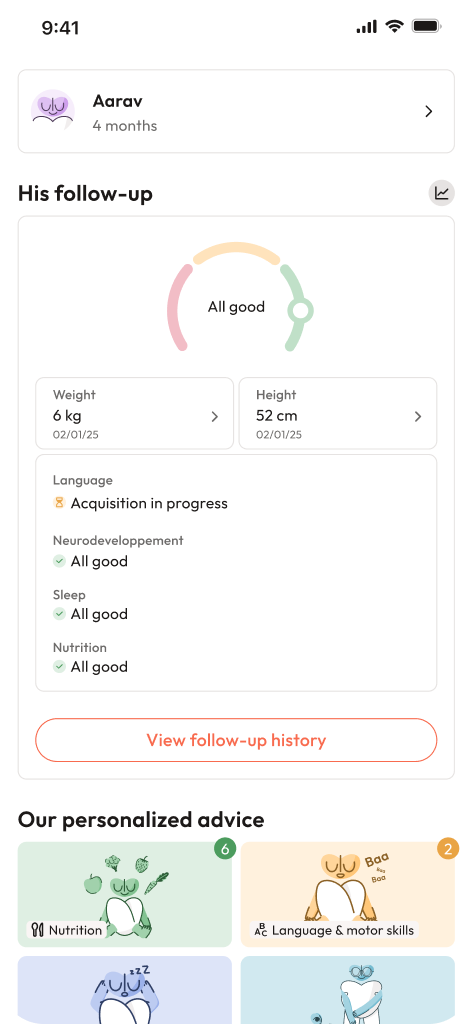
- For personalised tips and free child health questionnaires, download the Heloa app.