Typing free baby bath can feel like a small act of hope: “Maybe I can keep my baby clean, comfortable, and safe—without spending a lot.” Then you open links and it’s confusing. Is it a free bathtub? Free samples? A hospital demo? Or the “free-movement” style bath some parents talk about?
A good free baby bath plan does two things at once: it protects your baby’s skin barrier (newborn skin is thin and loses water quickly) and it keeps water safety rules absolutely strict. You’ll see what “free” usually means, what you actually need, how to do a free-movement bath safely, and where Indian parents often find genuine freebies.
Free baby bath: what parents usually mean by “free”
When someone says free baby bath, it typically falls into four buckets. Knowing your bucket saves time—and helps you skip “free” offers that quietly cost more.
Free tub vs free products vs free accessories
A free tub can mean an infant bathtub (simple plastic, foldable, or a newborn tub with an insert/sling). More commonly, free baby bath refers to trial-size wash, shampoo, lotion, coupons, or a combo that becomes free after reward points.

Free accessories are often the most practical:
- Rinse cup/mug
- Small towel or extra washcloths
- Bath thermometer
- Non-slip mat for the caregiver’s feet (slipping while holding a wet baby is a real risk)
Free support: nurse demos, hospital help, community guidance
Sometimes the best free baby bath is education. Many maternity hospitals and antenatal classes show:
- Sponge bathing
- Umbilical stump care (cord care)
- Safe positioning
- How to check water temperature
If you’re thinking, “My baby will be so slippery,” that’s a normal fear. A 5–10 minute demo can make your hands feel steadier.
What you actually need for baby bath time (keep it minimal)
More foam does not mean more hygiene. In paediatrics, we care a lot about the skin barrier: soap and long baths can strip natural lipids and worsen dryness or eczema (atopic dermatitis).
Bare-minimum checklist for newborns and infants
- Stable bathing setup: infant tub, a clean sink, or a small basin
- Soft washcloths
- Towel (hooded is nice, any clean towel works)
- Warm water (aim ~35–37°C)
- Fresh diaper and clothes ready before you start
- Optional cleanser: mild, tear-free, ideally fragrance-free (plain water is often enough for many newborn baths)
Bath frequency: for many babies, 2–3 baths per week is enough. On other days, quick wipe-downs of face, neck folds, hands, and diaper area.
Nice-to-haves that are often easy to get for free
If you’re chasing free baby bath items, these tend to show up:
- Rinse cup or small pitcher
- Extra washcloths (hand-me-downs are perfect)
- Sample-size baby wash/shampoo (registry welcome kits, pharmacy freebies, hospital discharge kits)
- Fragrance-free moisturiser sample (useful if skin is dry)
Items to avoid or use with extra caution
- Strong perfumes, bubble bath, “antibacterial” washes (more irritation, no benefit for routine baby hygiene)
- Essential oils in bath water (common trigger for irritation)
- Talc/powders (inhalation risk)
- Bath rings/seats marketed as “support” (they can tip, they can also make adults relax supervision—dangerous)
Free baby bath can also mean a method: the free-movement baby bath
Some parents searching free baby bath are not hunting for a giveaway tub. They mean a free-movement baby bath: baby lies on the back in a very shallow layer of warm water, with the body supported by the tub bottom so arms and legs can move and explore sensations.
Not swimming lessons. No performance target. Just a pleasant sensory moment—under strict safety rules.
Free-movement bath vs swaddled bath vs skin-to-skin bath
Families often alternate.
- Swaddled bath: baby is wrapped in cloth for a contained, held feeling (helpful if baby startles, cries when undressed, or feels “too much” sensation).
- Skin-to-skin bath: baby held against a parent in water (warmth, smell, breathing rhythm), often calming.
- Free-movement baby bath: more room for spontaneous movement, but supervision stays hands-on.
When to start a free-movement baby bath (age and readiness)
You may hear “2–3 months.” It’s a useful reference, not a rigid rule.
Signs baby may be ready
- Better muscle tone: baby feels more stable on the back
- Curiosity: watching, moving, enjoying sensations
- Comfort: baby calms to your voice and doesn’t stiffen immediately
Head control doesn’t have to be like sitting. You want the neck to be toned enough that the face stays clear and the airway stays above water.
If baby was premature or medically fragile
Prematurity, low tone, breathing conditions, or recent hospital recovery call for extra caution. One big theme: thermoregulation (how baby keeps body temperature). Some babies get cold quickly.
If you’re unsure, check with your paediatrician or physiotherapist before trying a free-movement style.
Why some families like the free-movement baby bath
A free baby bath method won’t “boost development” overnight. Still, it can offer a gentle space that matches infant physiology.
Movement and body awareness, without forcing
In shallow water, gravity feels slightly reduced, but baby still has bottom contact. Baby can coordinate arms and legs, push gently with feet, and feel water across skin.
Repetition supports early psychomotor development without pushing milestones.
Calming—when settings are right
Warm bathroom. Correct temperature. Short duration. Many babies relax.
Predictability matters too: the same steps, same order, same calm voice.
Parent–baby connection through observation
This bath style invites observation: breathing changes, facial expressions, hands opening, early signs of overload (looking away, sudden agitation, sharp crying). You adjust, baby learns their signals are respected.
Baby bath safety basics (for any bath, free tub or not)
Bath time is one of the highest-risk daily routines because water accidents happen fast.
Constant supervision: the rule that never changes
A baby can drown in very little water, very quickly.
- Prepare everything first: towel, diaper, clothes, cleanser, rinse cup
- No phone
- No “I’ll be right back,” not even for a second
- Keep your hand able to reach baby immediately
If you must step away, wrap baby in a towel and take baby with you.
Water depth, temperature, and duration
- Water temperature: aim for 35–37°C (thermometer helps, wrist/elbow check is a backup—water should feel warm, never hot).
- Water depth (free-movement bath): often ~5 cm, sometimes up to 10 cm depending on baby and tub. The point is not floating, baby stays supported by the bottom.
- Duration: usually 5–8 minutes (up to about 10 minutes). Short baths protect the skin barrier and reduce chilling.
Preventing chilling
Free-movement baths expose more of the upper body to air. Keep the bathroom warm. Keep the bath short. If baby shivers, pour warm water gently over the chest.
Common safety mistakes
- Adding extra water “to keep baby warm” (reduces bottom support)
- Trusting a seat/ring as if it prevents drowning
- Bathing when baby is very hungry, unwell, or overtired
Simple equipment for a safe baby bath
No fancy gear needed—just stability and grip.
Where to place baby
- Baby bathtub
- Stable basin (appropriately sized)
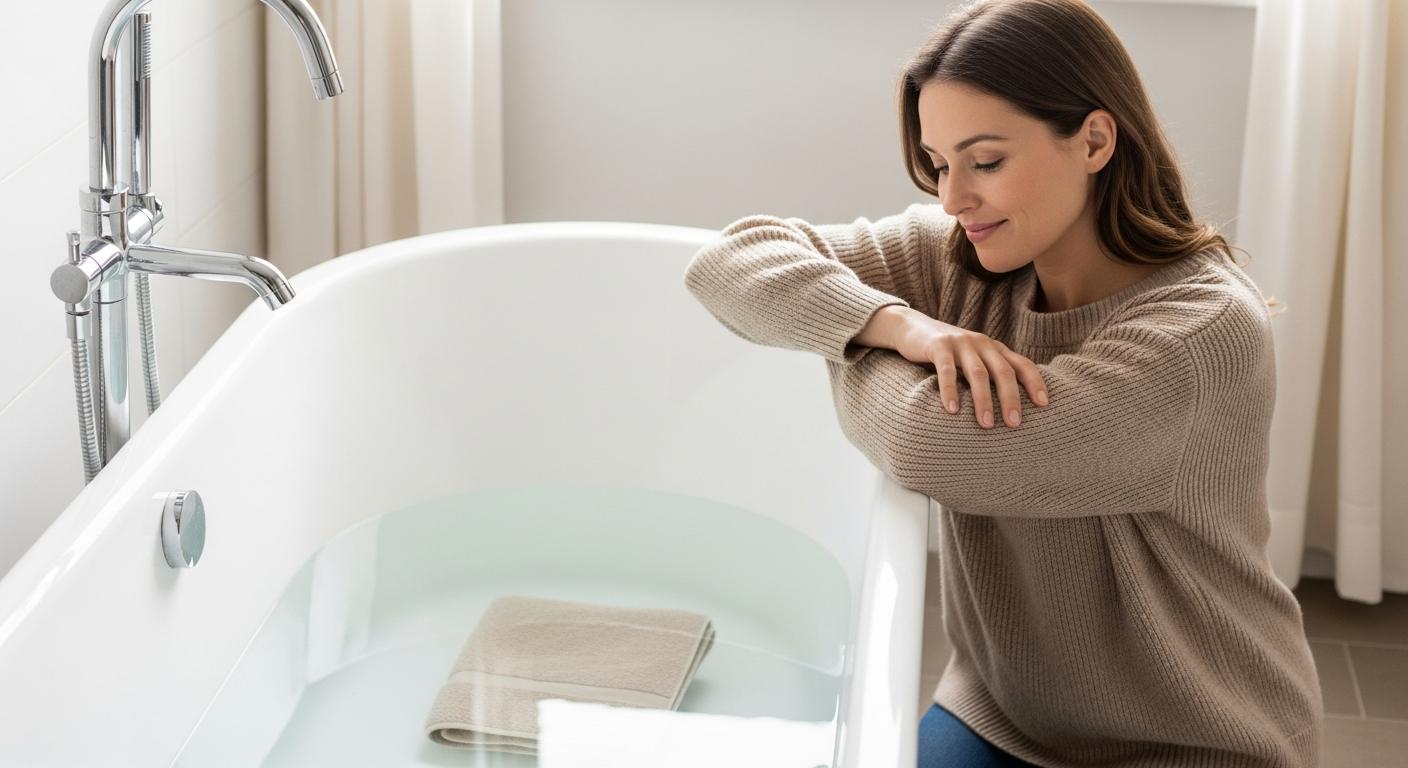
- Family bathtub (only if you can bend safely and keep steady footing)
Prevent slipping on the bottom
- Non-slip mat (ideal)
- Or a thick towel placed under water
If baby slides, lower water level and improve traction. The goal isn’t to hold baby tightly, it’s to prevent that stressful “skating” feeling.
Hygiene: minimal product, careful rinsing
Use a small amount of gentle, fragrance-free cleanser. Often, plain water is enough, with cleanser focused on diaper area and skin folds (neck, armpits, groin).
Rinse carefully so residue doesn’t irritate.
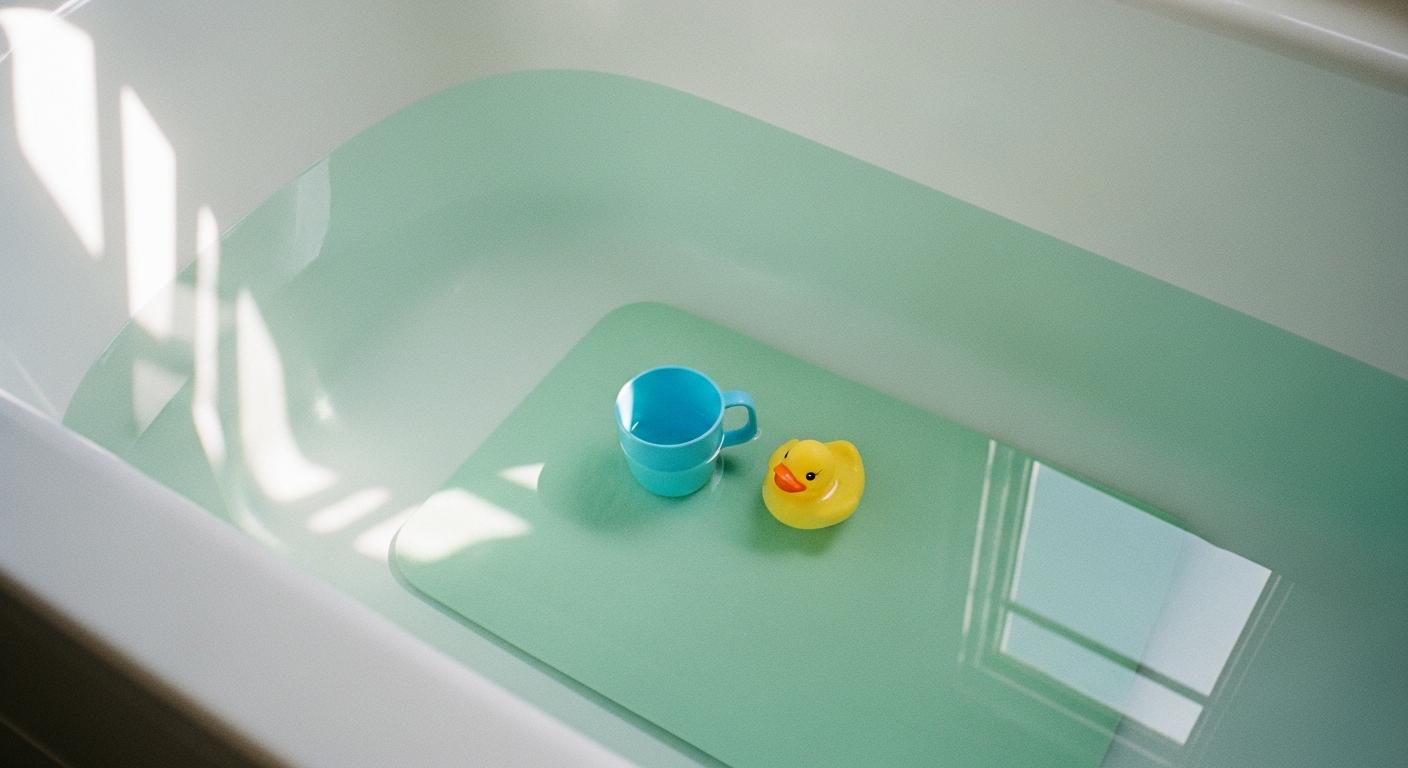
Toys: yes, but keep it minimal
One cup, a single-piece toy that dries easily, or a small clean cloth is enough. Too many objects can overstimulate baby and distract the caregiver.
How to do a free-movement baby bath: a clear sequence
Repetition is reassuring.
- Place non-slip surface. Fill 5–10 cm water. Check 35–37°C.
- Undress baby close to the bath, speak calmly.
- Place baby on the back with bottom support, keep your hand close.
- Pause 10–20 seconds to adapt, watch breathing, face, hands.
- Wash gently (folds, hands, diaper area). Use plain water for the face.
- Rinse gently with a cup.
- Lift out with a firm hold (under shoulders and pelvis) and wrap immediately.
If it doesn’t go smoothly
A “successful” free baby bath is not measured by minutes.
If baby cries the moment water touches, do quick checks: cold? too tired? bathroom too cool? Try: shorten the bath, slow your movements, rest a reassuring hand on the tummy. If crying continues, switch to a swaddled bath for a few days, then try again.
If baby becomes agitated or arches, it’s often sensory overload. Reduce stimulation, talk less, shorten the bath.
If skin is dry or you see patches, use less cleanser, keep baths shorter, moisturise with a simple emollient. If you see oozing, cracks, persistent redness, or scratching, get medical advice—eczema and skin infections can look similar early.
Who offers free baby bathtubs and why
Freebies usually come from programmes that want you to trial a product, come back as a customer, or connect you with services.
Retail, registry, and brand promotions
Some stores and brands provide welcome gifts with trial sizes, coupons, or an accessory.
Hospitals, antenatal classes, and community organisations
Hospitals may provide sample kits at discharge. Community groups sometimes distribute essentials to reduce financial strain and support infant health. Availability varies—ask during pregnancy and again after delivery.
Best places in India to find a free baby bathtub (or free bath essentials)
“Near you” often means local parent networks more than big national promotions.
- Hospital or maternity ward kits (ask the discharge nurse or social worker)
- Local paediatric clinics during vaccination visits (sometimes sample sachets are available)
- Apartment society/RWA groups and parenting WhatsApp communities
- Facebook Marketplace “Free” listings (inspect before accepting)
- Friends and family hand-me-downs and lending closets
How to claim free baby bath items step by step
Free items disappear fast. A simple system helps.
- Check welcome kit conditions (minimum purchase, delivery charges). If shipping is high, treat it like a purchase.
- Request samples you’ll actually use, for sensitive skin, pick fragrance-free.
- Post a polite local request with safety criteria (no cracks, no mould) and sanitise before use.
- Inspect before bringing it home: stability, sharp edges, missing parts, label/model info.
Choosing a safe baby bathtub (even if it’s free)
Free should never mean “take a chance.” Focus on safety basics.
- Check age/weight limits, wide base, non-slip feet, textured interior.
- Newborn slings/inserts help positioning but don’t replace hands-on supervision.
- Prefer smooth, intact plastic, skip peeling, sticky, or strongly smelling tubs.
- To prevent mould: rinse, drain fully, wipe dry, store ventilated, dry slings separately.
If you can’t find a free baby bathtub
A safe minimalist setup can still work:
- Clean sink with a towel for grip (watch the tap and hard edges)
- Sturdy basin placed inside the adult tub
You can still get free baby bath samples (wash, moisturiser) in small sachets. Check expiry dates, patch test, and introduce one product at a time.
Key takeaways
- Free baby bath can mean a free tub, free samples, free accessories, free education, or a free-movement bath method.
- Keep it simple: short baths, minimal cleanser, protect the skin barrier.
- Safety is strict: constant supervision, 35–37°C water, shallow depth (often 5–10 cm), short duration.
- Inspect and sanitise second-hand tubs, skip damaged or mouldy items.
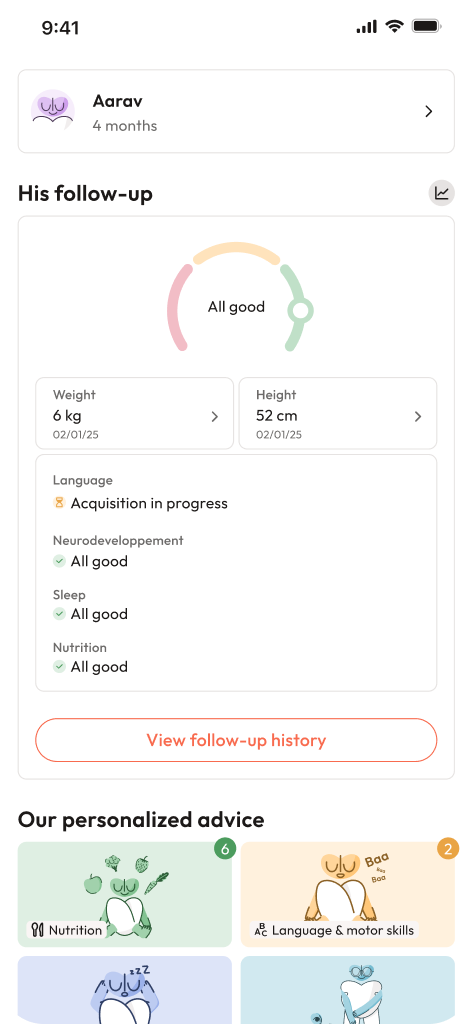
- Support exists: your paediatrician, nurses, community programmes—and for personalised tips and free child health questionnaires, download the Heloa app.
Further reading:
- Bathing Your Baby (https://www.healthychildren.org/English/ages-stages/baby/bathing-skin-care/Pages/Bathing-Your-Newborn.aspx)