Watching your baby grab a rattle, later try to pick up a tiny crumb, and then—almost overnight—hold a crayon with purpose can feel fascinating. It can also trigger questions. Is the grip too tight? Why does cutting look so tiring?
Fine motor skills development is the gradual progress of small, precise hand movements that lead to big everyday skills: pinching, turning, buttoning, cutting, drawing, and writing. These abilities support independence at home, smoother school participation, and that quiet pride children feel when they manage things “all by myself”.
There is no single perfect timeline. Muscle tone, nervous system maturity (including myelination), vision, and body sensations like proprioception all play a part. Progress often comes in spurts—then a pause—then another jump.
What fine motor skills development really means
Fine motor skills: hands, fingers, wrists
Fine motor skills are the small, accurate movements of the hands, fingers, and wrists that allow a child to grasp, manipulate, and release objects intentionally. This relies on muscles, joints, sensory receptors, nerves, and the brain working together (neuromuscular control).

Daily examples:
- picking up small snack pieces (with close supervision)
- turning a book page
- fastening a button
- drawing a circle
- using scissors safely
Fine motor vs gross motor: why posture comes first
Gross motor skills involve larger muscle groups—rolling, sitting, crawling, walking, running. Fine motor skills are the detailed work at the end of the chain.
Skilled hands need a steady body. If the trunk and shoulder girdle are stable, the arm stays calm and the fingers can refine movements. If posture is tiring, you may see a tight grip, bent wrist, raised shoulders, or the head leaning too close to the page.
Why it matters: independence, school, confidence
Fine motor skills development supports:
- eating with spoon and fork
- opening a water bottle and tiffin/lunch boxes
- dressing (zips, snaps, buttons)
- using ruler, glue, scissors, and organising work on the page
When movements become efficient, children spend less energy controlling the tool and more energy thinking.
Three foundations clinicians often look for
- Hand–eye coordination / visual-motor integration
- Finger dissociation
- Postural control
What influences fine motor skills development
Nervous system maturity and myelination
Fine motor control improves as the central nervous system matures. Myelination helps nerve signals travel faster and more reliably.
Many children follow a broad pattern: arm control → purposeful hand opening/closing → refined finger actions like pinching and pointing. Short, frequent practice usually helps more than long sessions.
Muscle tone and stability
Muscle tone is baseline tension.
- With low tone (hypotonia), a child may slump and tire quickly.
- With high tone or stiffness, a child may over-grip and fatigue.
Therapy often targets proximal stability (trunk/shoulder support) to allow distal mobility (wrist/fingers).
Vision and proprioception
Vision supports tracking and alignment. Proprioception guides force control. When proprioception is less reliable, you may notice pressing too hard, writing too faintly, frequent dropping, or holding objects with excessive force.
Environment and motivation
Hands grow clever when they have reasons to work: twisting caps, pouring with a small cup, sorting coins/buttons, sticker peeling, puzzles, blocks, clothespins. Too hard discourages, too easy bores. The “just right” challenge keeps a child trying.
Screen time does not automatically harm fine motor skills development. But if screens replace hands-on play—building, drawing, fastening—practice reduces and progress can feel slower. A simple approach: short daily hands-on moments, even 5 minutes at a time.
Building blocks of fine motor skills development
Strength, grasp patterns, dexterity, bilateral coordination
Fine motor skills development includes:
- hand and forearm strength for tool control and pressure
- grasp progression (whole-hand holds to refined grips)
- manual dexterity for beading, buttoning, handwriting
- bilateral coordination (one hand stabilises, the other works)
Motor planning and sensory foundations
Motor planning (praxis) helps the brain organise a sequence for threading, copying shapes, cutting lines.
Sensory inputs matter: touch, proprioception, vestibular (balance), and vision. If sensory processing differs, hand use may look inconsistent because feedback is different.
Fine motor milestones by age (broad ranges)
Birth to 12 months
- 0–3 months: reflexive grasp, hands open more over weeks, watches hands
- 3–6 months: purposeful reach/grasp, brings objects to mouth, early transfers
- 6–9 months: stronger grasp, early intentional release, raking small items
- 9–12 months: emerging pincer grasp, targeted placing in/out, pointing
Consider a check-in if there is persistent asymmetry, very little progress in voluntary grasping across months, major ongoing difficulty releasing, or few transfers.
12 to 24 months
Scribbles start, blocks stack, containers open/close, pages turn with help.
2 to 3 years
Pages turn one at a time, simple puzzles appear, lines/circles are imitated. Scissors may be introduced for open-close practice.
3 to 6 years
Pre-writing strokes refine into shapes and early letters. Cutting improves from snips to lines to curves. Endurance gradually grows.
6 to 10 years
Writing demands increase (speed and stamina), plus ruler work, crafts, and tying shoelaces.
Key skills to notice
Grasp, release, pressure
A functional grip is comfortable and efficient. Watch for tight grip, finger whitening, quick fatigue, torn pages, deep grooves, or very faint writing.
In-hand manipulation
Translation (fingertips ↔ palm), shift (adjusting pencil), rotation (turning a cap) support speed and tool control. If your child always uses the other hand to reposition, playful practice can help.
Scissors and fasteners
Many struggles come from the helper hand not stabilising and turning paper or fabric smoothly.
Activities that support fine motor skills development
Keep practice short and playful. If your child avoids drawing, try lowering the “writing” demand while keeping the same skill goal: window markers, water painting, stampers, stickers, dot markers, or tracing in a rice tray. Offer choices and end on success.
Play ideas using common Indian household items:
- dough/putty (pinch, roll, hide-and-find)
- kneading atta dough together
- wringing a sponge during bath-time play
- clothespin games
- tongs/tweezers to move small items into an ice-cube tray
- posting coins into a slot (piggy bank)
- threading beads, lacing cards
- building with small blocks
Everyday Indian routines that build hand skills
Dressing
Pick one fastener. Practise when there is no rush. Larger buttons or zip pulls first, then return to uniform or daily clothes.
Mealtimes
Child-sized spoon/fork, stable seating, feet supported. Let the child help: peeling a banana with support, mixing curd rice, stirring batter, sprinkling ingredients.
School support: posture, tools, workload
Comfort matters as much as neatness.
- feet supported, pelvis stable
- shoulders relaxed
- forearms on the desk
- wrist closer to neutral
Helpful materials: thicker pencils, ergonomic grips, slanted writing surface.
If hand effort is the bottleneck: break tasks into chunks, allow extra time, reduce copying, use clearer visual guides. Keyboarding or dictation can protect learning if handwriting is slow and painful.
When to seek extra support
Consider a check-in if difficulties are persistent and affect daily life:
- preschool: ongoing struggles with crayons, puzzles, bead play, basic scissors
- 4–6 years: major difficulty cutting or writing, very tight uncomfortable grip
- any age: pain, marked fatigue, avoidance, strong asymmetry
Possible contributors can include Developmental Coordination Disorder (DCD/dyspraxia), dysgraphia, sensory processing differences, attention/self-regulation challenges, or visual-motor issues.
Professionals assess function first (grip, pressure, in-hand manipulation, bilateral coordination, endurance) and may use standardised tools such as PDMS-2, BOT-2, or M-ABC-2.
To remember
- Fine motor skills development supports self-care, learning, and play.
- Posture, shoulder support, vision, and proprioception all shape skilled hands.
- Milestones are ranges, watch steady trajectory and participation.
- Short, frequent, playful practice often works best.
- If there is pain, persistent fatigue, avoidance, strong asymmetry, or impact on school/independence, speak with a paediatrician or occupational therapist.
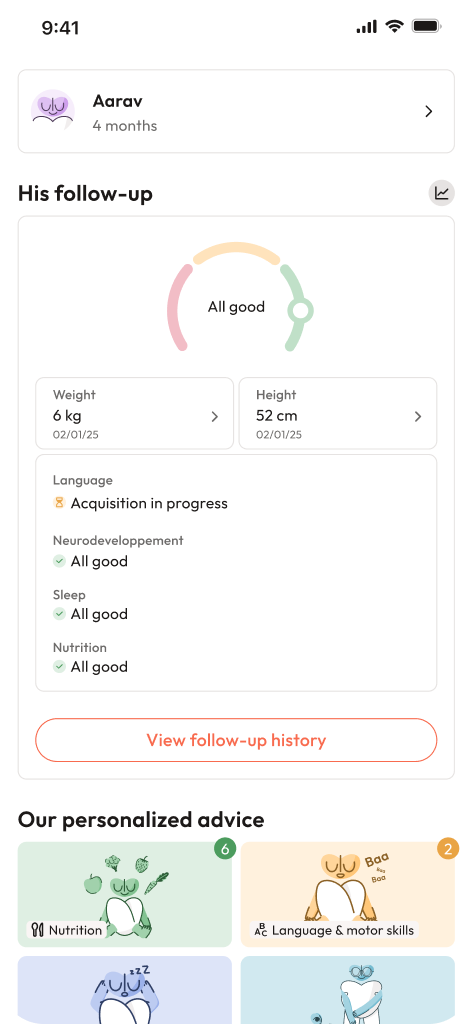
- Support exists, and you can also download the Heloa app for personalised guidance and free child health questionnaires.