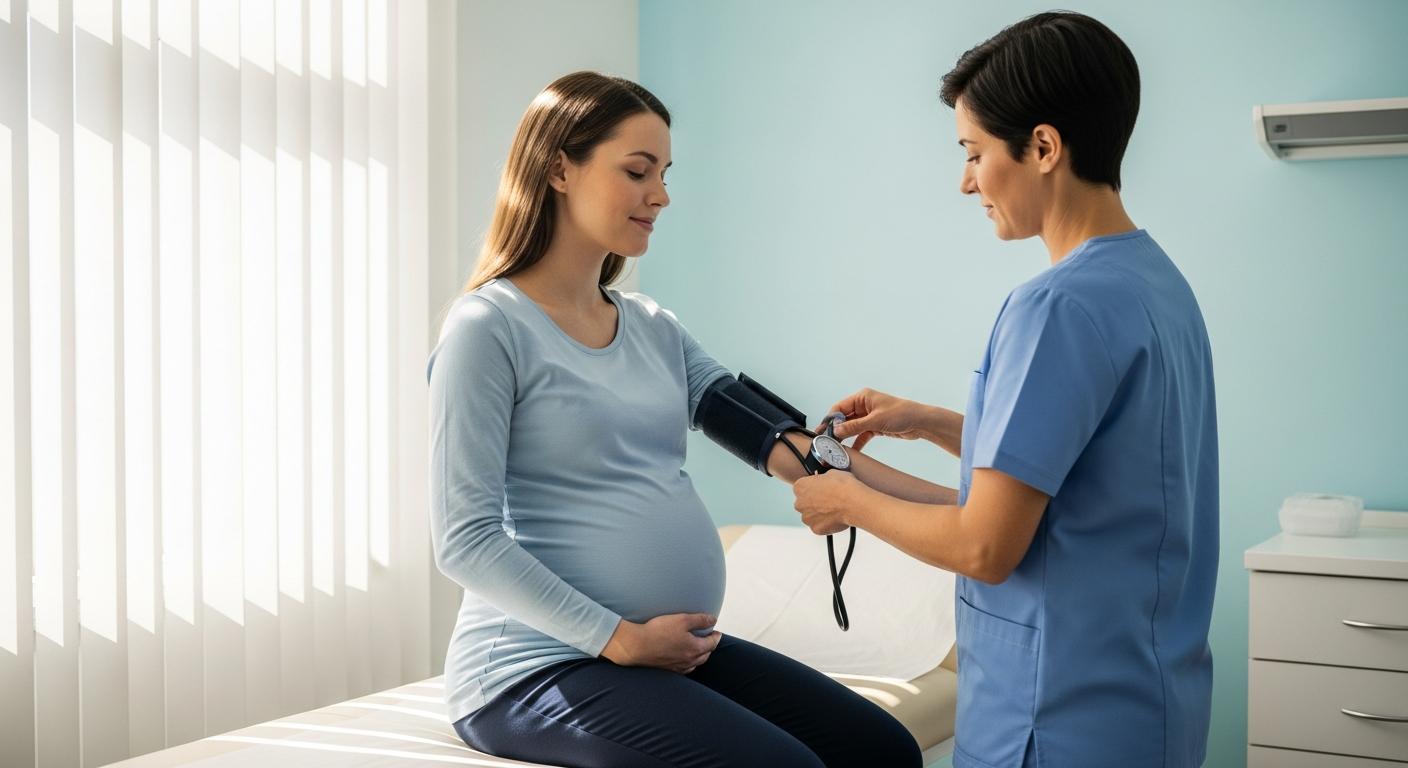
Blood pressure checks can feel routine—until one day the nurse repeats your reading and says it is higher. You may feel perfectly alright, and still hear the phrase high blood pressure during pregnancy. The thoughts come quickly: Is my baby safe? Do I need tablets? Is it just stress, or something more?
In India, you may hear different labels in the OPD: “BP high”, “PIH”, “preeclampsia risk”. The names vary, the aim stays the same—detect changes early, protect the placenta’s blood flow, and prevent complications for mother and baby. High blood pressure during pregnancy is often manageable, but it needs consistent follow-up.
What “high blood pressure” means in pregnancy
Blood pressure is the force of blood pushing against artery walls. In pregnancy, clinicians watch it closely because it can be an early hint that the placenta is under strain or that your blood vessels are reacting differently than expected.
In most maternity care, hypertension is diagnosed when BP is ≥140/90 mmHg on at least two readings (usually separated in time). If you already had hypertension before pregnancy, or it is detected before 20 weeks, it is usually called chronic hypertension.

Normal BP changes across pregnancy (a pattern worth knowing)
BP does not remain flat for nine months.
- Early pregnancy: hormones (especially progesterone) relax blood vessels (vasodilation), so BP often drops by about 5–10 mmHg.
- Around 20–24 weeks: many women reach the “lowest point”.
- Third trimester: blood volume rises, circulation adapts, and BP often rises gradually again.
A gradual rise can be normal. What matters is whether it crosses thresholds, climbs quickly, or comes with symptoms or abnormal urine/blood tests.
Key terms parents may hear (PIH, gestational hypertension, preeclampsia, HELLP)
- Gestational hypertension: new high blood pressure during pregnancy after 20 weeks, without organ involvement.
- PIH (Pregnancy-Induced Hypertension): a term commonly used in India, often overlapping with gestational hypertension.
- Preeclampsia: high BP after 20 weeks with protein in urine and/or signs that organs are affected.
- HELLP syndrome: a severe form of preeclampsia—Hemolysis, Elevated Liver enzymes, Low Platelets.
Blood pressure numbers: what’s typical, what needs monitoring, what’s urgent
Systolic and diastolic: two numbers, two clues
- Systolic (top number): pressure when the heart contracts.
- Diastolic (bottom number): pressure when the heart relaxes.
Persistent elevation of either can signal high blood pressure during pregnancy.
Typical ranges and “high-normal” values
Many pregnant women have readings around 110–120/60–80 mmHg, with a mid-pregnancy dip.
Readings around 130–139/85–89 mmHg are often considered “high-normal”. They do not automatically mean a disorder, but they usually justify closer follow-up—especially if other risk factors are present.
When it becomes hypertension (≥140/90) and when it becomes severe (≥160/110)
- Hypertension in pregnancy: typically ≥140/90 mmHg on repeated readings.
- Severe hypertension: ≥160/110 mmHg.
When severe readings are an emergency
A BP ≥160/110 needs urgent assessment even if you feel fine. The aim is to reduce the risk of stroke and other complications, while avoiding a sudden over-correction that could reduce placental blood flow.
If you monitor at home: rest for a few minutes and repeat. If it remains in the severe range, seek urgent/emergency care—especially if symptoms are present.
Low blood pressure in pregnancy: common, usually manageable
Why low BP is common early on
Because blood vessels relax in early pregnancy, a lower BP is frequent and often harmless. It can cause dizziness, “seeing stars” while standing, or weakness—particularly in heat or when hydration is low.
Practical steps that often help
- Stand up slowly (sit first, then rise)
- Drink regularly, even small sips
- Eat smaller, frequent meals
- Sit or lie down as soon as symptoms start
Later in pregnancy, lying on your left side can improve comfort by supporting blood return to the heart.
When low BP becomes truly bothersome
Many describe it when readings are around 100/60 mmHg or lower, especially with faintness.
Common triggers include heat, dehydration, standing for long periods, sudden posture changes, and very large meals.
Types of high blood pressure in pregnancy
Chronic hypertension
High BP present before pregnancy or diagnosed before 20 weeks. It may continue after delivery and often needs follow-up beyond maternity care.
Gestational hypertension
Begins after 20 weeks, BP ≥140/90, without protein in urine or other organ concerns initially. It can remain stable, resolve after birth, or progress to preeclampsia.
Preeclampsia
A multisystem condition: high blood pressure during pregnancy after 20 weeks plus proteinuria (often ≥300 mg in 24-hour urine, or protein/creatinine ratio ≥0.3) and/or organ involvement (kidney, liver, blood, brain, lungs).
Preeclampsia with severe features, eclampsia, and HELLP
- Preeclampsia with severe features: BP ≥160/110 and/or significant organ involvement (low platelets, worsening kidney function, abnormal liver enzymes, severe headache/visual symptoms, pulmonary oedema). Usually needs hospital care.
- Eclampsia: seizures in the setting of preeclampsia—an emergency.
- HELLP syndrome: haemolysis, elevated liver enzymes, low platelets.
White coat and masked hypertension
- White coat hypertension: BP high in clinic, normal at home.
- Masked hypertension: clinic BP looks normal, but home BP is high.
Causes and risk factors
What can contribute to high blood pressure during pregnancy
Hypertensive disorders are often linked to placental formation. In preeclampsia, inadequate remodelling of placental spiral arteries can reduce placental perfusion. The placenta may then release factors that trigger endothelial dysfunction (blood vessel lining irritation), vasoconstriction, and increased vascular permeability—leading to rising BP, swelling, and organ stress.
Risk factors that can increase monitoring needs
- First pregnancy
- Twin or multiple pregnancy
- Older maternal age
- Higher BMI
- Personal/family history of preeclampsia
- Diabetes
- Smoking
- Assisted reproduction (including IVF)
Having a risk factor does not mean you will develop high blood pressure during pregnancy. It simply means closer follow-up is sensible.
How common is it?
Hypertensive disorders affect roughly 5–10% of pregnancies, which is why BP is checked at every antenatal visit.
Signs and symptoms parents can recognise
Can you have high BP without symptoms?
Yes. Many women feel fine. That is why routine checks—and sometimes home BP logs—matter.
Symptoms that should prompt a quick call
Especially if new or persistent:
- Significant headaches
- Visual changes (blurred vision, light sensitivity, seeing spots)
- Sudden swelling of the face or hands
- Rapid weight gain along with swelling
Warning signs needing urgent evaluation (preeclampsia/HELLP)
Seek urgent care for:
- Pain under the ribs on the right side or upper abdominal pain (tight “band” feeling), especially with nausea/vomiting
- Significant shortness of breath or chest pain
- Confusion, marked weakness
- Seizures
For baby: a clear, unusual decrease in fetal movements needs prompt assessment.
Symptoms can also begin after birth
Postpartum preeclampsia can occur—often from about 48 hours up to 6 weeks after delivery.
Why it matters: possible complications for mother and baby
Maternal complications
Severe high blood pressure during pregnancy and preeclampsia can lead to stroke, acute kidney injury, liver injury, pulmonary oedema/heart failure, seizures, HELLP syndrome, and clotting problems.
Placental abruption
Hypertensive disorders increase the risk of placental abruption (the placenta separating early).
Baby risks
If placental function is reduced, baby may receive less oxygen and nutrition. This can lead to fetal growth restriction (IUGR) and low birth weight.
Preterm birth
Sometimes early delivery is advised because continuing pregnancy becomes riskier than being born—especially with severe disease or worsening fetal monitoring.
Long-term health after pregnancy hypertension
A history of gestational hypertension or preeclampsia is linked to higher lifetime risk of chronic hypertension and cardiovascular disease.
How it’s diagnosed and monitored
How diagnosis is made at antenatal visits
BP is measured at every visit. If elevated, your team repeats it and may schedule closer follow-up. Diagnosis generally requires ≥140/90 on at least two readings.
Getting accurate readings: the details that matter
A reliable reading usually means:
- Rest for 5 minutes
- Sit with back supported, feet flat (not crossed)
- Arm supported at heart level
- Correct cuff size
Home blood pressure monitoring (useful, as long as it’s structured)
Home monitoring can clarify “white coat” or masked hypertension. A common plan is:
- 2 readings in the morning and 2 in the evening
- For 3 to 7 days
Urine and blood tests
Urine dipstick may screen for protein. Confirmation often uses protein/creatinine ratio or a 24-hour urine collection.
Blood tests help assess organ involvement:
- Platelets
- Creatinine
- Liver enzymes (AST/ALT)
Baby monitoring
Depending on severity:
- Ultrasound for growth and amniotic fluid
- Doppler studies for placental blood flow
- NST and/or biophysical profile
Treatment and management options
Treatment goals
The goals are to protect the mother (especially brain, kidney, and liver), maintain healthy uteroplacental blood flow, support fetal growth, and choose the safest time for delivery.
Lifestyle and day-to-day measures
Depending on your clinician’s advice:
- A calmer routine with rest breaks
- Gentle activity if approved (walking, prenatal yoga)
- Regular hydration
- Balanced meals with moderate salt intake (avoid extremes)
- Stopping smoking
Pregnancy-safe medications (and which to avoid)
Common medicines used in pregnancy:
- Labetalol
- Nifedipine (often extended-release)
- Methyldopa
Medicines generally avoided in pregnancy (can affect fetal kidneys):
- ACE inhibitors
- ARBs
- Renin inhibitors
Severe disease: hospital care, magnesium sulfate, and rapid BP control
Severe hypertension and preeclampsia with severe features usually require hospital monitoring.
- Magnesium sulfate is used to prevent seizures in severe preeclampsia and to treat eclampsia.
- Acute severe BP (≥160/110) may be treated with IV labetalol or IV hydralazine (protocols vary).
Corticosteroids if preterm delivery is likely
If delivery is expected between 24 and 34 weeks, corticosteroids may be given to support fetal lung maturity.
Low-dose aspirin for prevention in higher-risk pregnancies
Low-dose aspirin may be advised for selected higher-risk pregnancies, often started around 12 weeks (ideally before 16 weeks depending on local guidance) and continued as advised. Do not self-start.
Delivery planning and care during labour
Delivery is the definitive treatment for preeclampsia
Delivery ends the placenta-driven process. BP can remain high for days to weeks, so monitoring continues after birth.
Timing of delivery
If BP remains elevated after 37 weeks, delivery between 37 and 39 weeks may be discussed.
Induction vs caesarean
Vaginal birth is often possible when safe. Induction may be recommended. Caesarean is considered for standard obstetric reasons or when rapid delivery is necessary.
Postpartum high blood pressure and recovery
High BP and preeclampsia can start after birth, typically from 48 hours to 6 weeks postpartum.
Many care plans include:
- BP checks in hospital after delivery
- Review around 2 weeks postpartum
- Follow-up around 6–8 weeks postpartum
A BP check around 3 months postpartum is a useful habit after high blood pressure during pregnancy.
Many antihypertensives used in pregnancy (labetalol, nifedipine, methyldopa) can be compatible with breastfeeding, but choices should be personalised.
When to contact a healthcare professional or seek emergency care
Seek urgent/emergency care for:
- Severe headache or vision changes
- Chest pain or significant breathlessness
- Severe upper abdominal/right-sided rib pain
- Confusion, marked weakness, seizures
- Confirmed BP ≥160/110
Call your maternity team for repeated BP ≥140/90.
Baby-related reasons to seek care include decreased fetal movements, vaginal bleeding, leakage of fluid, or signs of preterm labour.
Key takeaways
- BP often drops early, is lowest around 20–24 weeks, then rises gradually in the third trimester.
- High blood pressure during pregnancy is typically repeated BP ≥140/90, ≥160/110 needs urgent assessment.
- Many women have no symptoms, warning signs (headache, vision changes, sudden swelling, upper abdominal pain, breathlessness, decreased fetal movements) need prompt care.
- Preeclampsia can occur with or without protein in urine, symptoms and blood tests (platelets, creatinine, liver enzymes) guide diagnosis.
- Treatment may include monitoring, pregnancy-safe medicines, magnesium sulfate in severe cases, and personalised delivery planning.
- Postpartum monitoring matters because BP problems can begin or worsen after birth.
Professionals are available to support you. You can also download the Heloa app for personalised guidance and free child health questionnaires.

Further reading :
- High blood pressure (hypertension) and pregnancy – NHS: https://www.nhs.uk/pregnancy/existing-health-conditions/high-blood-pressure/#:~:text=Hypertension%20in%20pregnancy%20is%20defined,do%20not%20always%20need%20treatment.
- High Blood Pressure in Pregnancy | Preeclampsia: https://medlineplus.gov/highbloodpressureinpregnancy.html
- High Blood Pressure During Pregnancy: https://www.cdc.gov/high-blood-pressure/about/high-blood-pressure-during-pregnancy.html