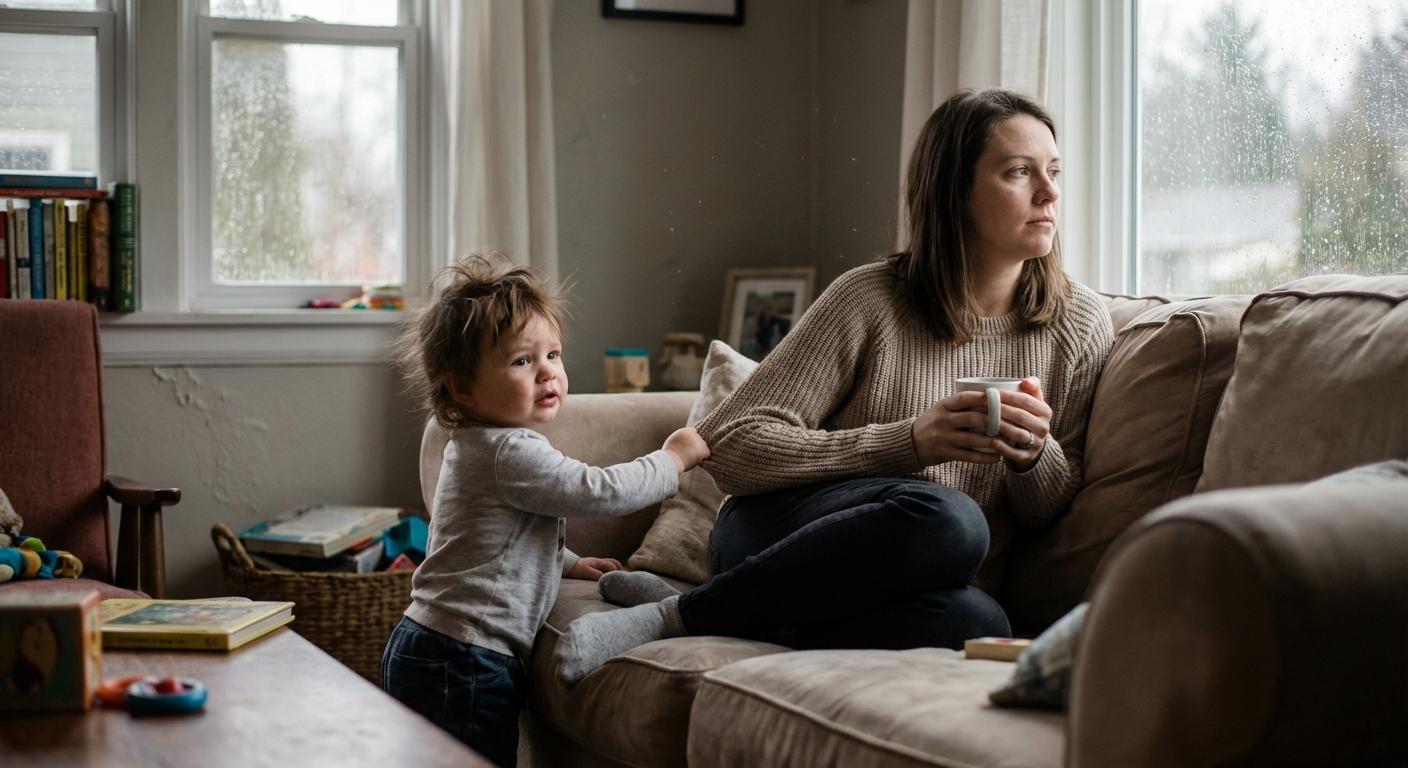
When you are raising a child, you want home to feel like a safe base (steady, warm, predictable). And yet, some family dynamics leave a lingering sting: words that cut, control that feels suffocating, guilt that sticks to everyday life. You may be wondering: is this just a stressful phase with a tired parent, or a repeated pattern shaping your child’s emotional health?
These 13 signs of a toxic parent are practical markers, not a quick label. The key is frequency, impact on emotional safety, and what happens after conflict. Is there repair, or just more pain?
In India, there is one extra layer. Joint families, high academic pressure, and “adjust kar lo” expectations can blur boundaries. Even well-meaning elders may normalise shaming, strict control, or silent treatment. So it helps to look at outcomes: is your child becoming more confident and regulated, or more fearful and tense?
13 signs of a toxic parent to watch for at home
1) Chronic criticism, contempt, and humiliation
One sharp comment can happen on a hard day. But when a child regularly hears “You never do anything right”, the brain and body absorb a harsh message: I am not enough.


Repeated shaming can keep the stress response switched on (higher cortisol, more vigilance). Children may stop exploring and focus on avoiding mistakes.
You may notice:
- fear of being wrong, slowing down, perfectionism
- rumination and harsh self-talk
- constant approval-seeking
2) Constant comparisons that undermine self-worth
“Look at your cousin,” “When I was your age…” Comparisons can be framed as motivation. Many children experience them as humiliation.
In many Indian homes, comparisons become routine “encouragement”. But the child’s nervous system often reads it as: love is a competition. Sibling rivalry may increase, and secure attachment can weaken.
A quick check: after the interaction, does your child look energised, or smaller?
3) Excessive control and intrusive monitoring
Guidance is not confiscation. Control becomes unhealthy when a parent decides beyond what is age-appropriate (friends, clothing, hobbies, career choices, opinions) and when intrusion is systematic (checking phones, reading messages, constant interrogation).
This can overlap with coercive control. Power gets prioritised over connection.
Possible effects: anxiety, inhibition, difficulty building identity, and a constant sense of “I will be blamed”.
4) Imposed social isolation
Blocking friendships, sabotaging invitations, or cutting a child off from a supportive adult (another parent, a grandparent, a teacher) is harmful because it removes protective factors.
Outside connections help children regulate emotions and learn healthier relationship models.
5) Emotional invalidation and low empathy
“You’re overreacting,” “Don’t be so sensitive,” “Stop crying” teaches a child to doubt their inner world.
Children need emotional mirroring: an adult who recognises the feeling, names it, and helps calm it (co-regulation). Without that, emotion regulation may swing between blow-ups, shutdown, or over-adaptation.
A simple question: when your child cries, do you try to understand, or to silence?
6) Conditional love and affection used as leverage
Affection that appears only when a child performs, pleases, or complies is love withdrawal. It teaches: saying no = losing the relationship.
Children may become people-pleasers or perfectionists. Later, even healthy boundaries can trigger automatic guilt.
7) Gaslighting and rewriting reality
Gaslighting is repeated denial of facts or feelings: “That never happened,” “You’re imagining it”.
Over time, a child may doubt their memory, apologise excessively, and rely on others to confirm what is real.
8) Emotional volatility and disproportionate reactions
A home that feels like an emotional roller coaster keeps a child’s body on alert. Children can become hypervigilant: scanning micro-signals, anticipating the storm.
Common knock-on effects:
- sleep disruption, nightmares
- irritability, difficulty concentrating
- headaches, tummy aches, nausea (stress can show up as somatic symptoms)
9) Parentification (role reversal)
Parentification happens when a child becomes the confidant, mediator, emotional support, or “little adult” in the family.
It may look like the child managing a parent’s mood, hearing adult worries about money or marriage, or carrying sibling responsibilities beyond age-appropriate chores.
Longer term, it can lead to self-neglect, exhaustion, and difficulty asking for help.
10) Making the child responsible for the parent’s happiness
“After everything I’ve done for you…” creates an emotional debt. The child learns they must fix the adult, often at the cost of their own development.
This pressure can produce chronic guilt and fear of disappointing others.
11) Unrealistic expectations and performance pressure
Encouragement is different from demanding perfection. When a child’s worth is tied to achievement (marks, sports, appearance, “log kya kahenge”), learning becomes loaded with fear.
You may see anxiety, avoidance of new challenges, and rigid self-judgement after small mistakes.
12) Verbal aggression, sarcasm, and public humiliation
Insults, mocking, and humiliating a child, especially in front of relatives, neighbours, or classmates, are forms of emotional abuse.
Even without physical harm, children may freeze, lie to avoid punishment, withdraw, or show low self-esteem. Fear becomes a parenting tool, and the child stops feeling safe being vulnerable.
13) Refusing accountability and avoiding genuine apologies
All parents make mistakes. Lasting damage often comes from repeated refusal to repair: “I did nothing wrong,” “You made me do it,” or “Sorry you feel that way”.
Healthy repair includes naming what happened, acknowledging impact, and changing behaviour.
What “toxic parent” means (and what it does not)
A practical definition: repeated patterns that cause harm
“Toxic parent” is not a medical diagnosis. It describes repeated behaviours (humiliation, intrusion, manipulation, guilt-tripping) and their effect on a child’s emotional safety and development.
That is why the 13 signs of a toxic parent focus on patterns, not one argument.
Patterns vs one-off mistakes: how to tell the difference
Most caregivers have moments they regret. A toxic pattern repeats, becomes the child’s normal environment, and is followed by little to no repair.
Ask: after conflict, is there calm accountability and comfort, plus changed behaviour, or is the child left carrying the distress alone?
Toxic vs strict vs authoritarian: where the line often sits
A strict parent sets firm rules with consistency and respect. An authoritarian parent may be rigid and less responsive.
The drift towards toxicity often shows up when authority relies on shame, fear, reality manipulation, conditional affection, or intimidation.
Toxic vs abusive: when safety comes first
Physical violence, sexual boundary violations, severe threats, confinement, or escalating coercive control require immediate protection. Emotional abuse can also be abuse when it involves terror, chronic degradation, humiliation, or threats.
If you see strong fear, withdrawal, persistent anxiety, low mood, or sleep disruption in your child, professional support is worth considering.
How toxic dynamics show up in everyday family life
Common scenes families describe
You might recognise situations like:
- silent treatment as punishment: ignoring the child to “teach a lesson”
- criticism disguised as “advice”: “I’m only saying this for your own good”
- intrusion into emotional life: controlling friendships, disqualifying feelings
A body-based check can help: after the interaction, do you feel steadier, or tense, confused, and guilty?
When sibling dynamics get pulled in
Favouritism, scapegoating, forced alliances. Children may be assigned roles: the “golden child”, the “problem child”, the “peacemaker”.
Sometimes, practical support is used as control: money, gifts, tuition, housing, help with strings attached.
Effects on children now: common short-term impacts
Anxiety, fear, and hypervigilance
Children living with criticism or unpredictability may scan constantly for danger. Some become very quiet, others overflow at school because their stress system is overloaded.
Low self-esteem, self-doubt, and perfectionism
Repeated messages of “not enough” can shape self-image. Perfectionism becomes a survival strategy: “If I do everything right, I’ll be safe”.
People-pleasing and conflict avoidance
Appeasing reduces short-term threat but blocks assertiveness and boundary development.
Somatic complaints and sleep disruption
Relational stress often shows up in the body: headaches, abdominal pain, muscle tension, fatigue, and non-restorative sleep.
Effects on adult children later: common long-term impacts
Attachment insecurity and relationship patterns
An emotionally unsafe childhood can shape later expectations: fear of closeness, fear of abandonment, or confusing control with love.
Boundary challenges: guilt and fear of saying no
Adults raised with fear, obligation, and guilt may feel ashamed for setting limits.
Anxiety, depression, and trauma-like symptoms
Chronic emotional harm increases the risk of anxiety and depressive symptoms. Some people also develop trauma-related patterns like hyperarousal or emotional numbing.
Why it can be hard to recognise toxic parenting
Normalisation and minimising are common, especially when patterns have existed for years. Hot-and-cold caregiving can create trauma bonds. Cultural scripts about obedience and loyalty may also blur the line, but they never justify humiliation or threats.
What to do next: supportive options that protect wellbeing
Name the pattern in behavioural terms (without self-blame)
Try factual language: “When I share a feeling, I get mocked.” “My privacy is searched.” “Affection is withdrawn as punishment”.
Clarify boundaries and plan follow-through
A workable boundary has three parts: the limit, the consequence, and follow-through.
- “If you insult me, I will end the call.”
- “I’m not discussing that topic.”
- “I will respond when you speak calmly.”
If there is intimidation, plan safety first.
Adjust distance based on the situation
If you live together, identify high-risk moments, plan safe places to cool down, protect privacy, and identify a trusted adult (relative, teacher, school counsellor). In adulthood, consider scheduled calls, shorter visits, neutral locations.
Stabilise the nervous system with simple, repeatable tools
Routines, sleep, regular meals, movement, and grounding skills support regulation. Some parents keep a factual log to counter gaslighting and clarify patterns for a clinician.
One more practical tool: watch for stress signals after family events (weddings, festivals, exam seasons). If your child’s sleep worsens, appetite changes, or school functioning dips, it can be a sign that the emotional load is too high, even if everything looked fine on the surface.
When extra help is needed
Threats, violence, sexual boundary violations, or escalating control are emergencies. If symptoms persist (panic, insomnia, low mood, school refusal), professional support can help.
Therapies often used include CBT, DBT, and EMDR. For children and teens with trauma symptoms, trauma-focused CBT may be offered.
If a parent wants to change: what real repair can look like
Real repair sounds like: “I yelled and humiliated you. That was wrong. I am working on it. Here is what I will do differently.” Change is seen over time, consistently.
What healthy parenting can look like instead
Respect, empathy, and age-appropriate autonomy can exist together with clear limits. Healthy structure teaches skills, not shame. Apologies include accountability and behaviour change.
To remember
- The phrase 13 signs of a toxic parent points to repeated harmful patterns and their impact, not a diagnosis.
- In the 13 signs of a toxic parent, patterns matter more than one bad day.
- Common 13 signs of a toxic parent include criticism, comparisons, isolation, gaslighting, conditional affection, intrusive control, volatility, parentification, guilt-based obligation, and refusal to repair.
- These 13 signs of a toxic parent can be linked to stress dysregulation, sleep problems, low self-esteem, people-pleasing, and somatic symptoms.
- Support exists. Paediatricians, psychologists, school counsellors, and trusted family members can help. You can also download the Heloa app for personalised tips and free child health questionnaires.