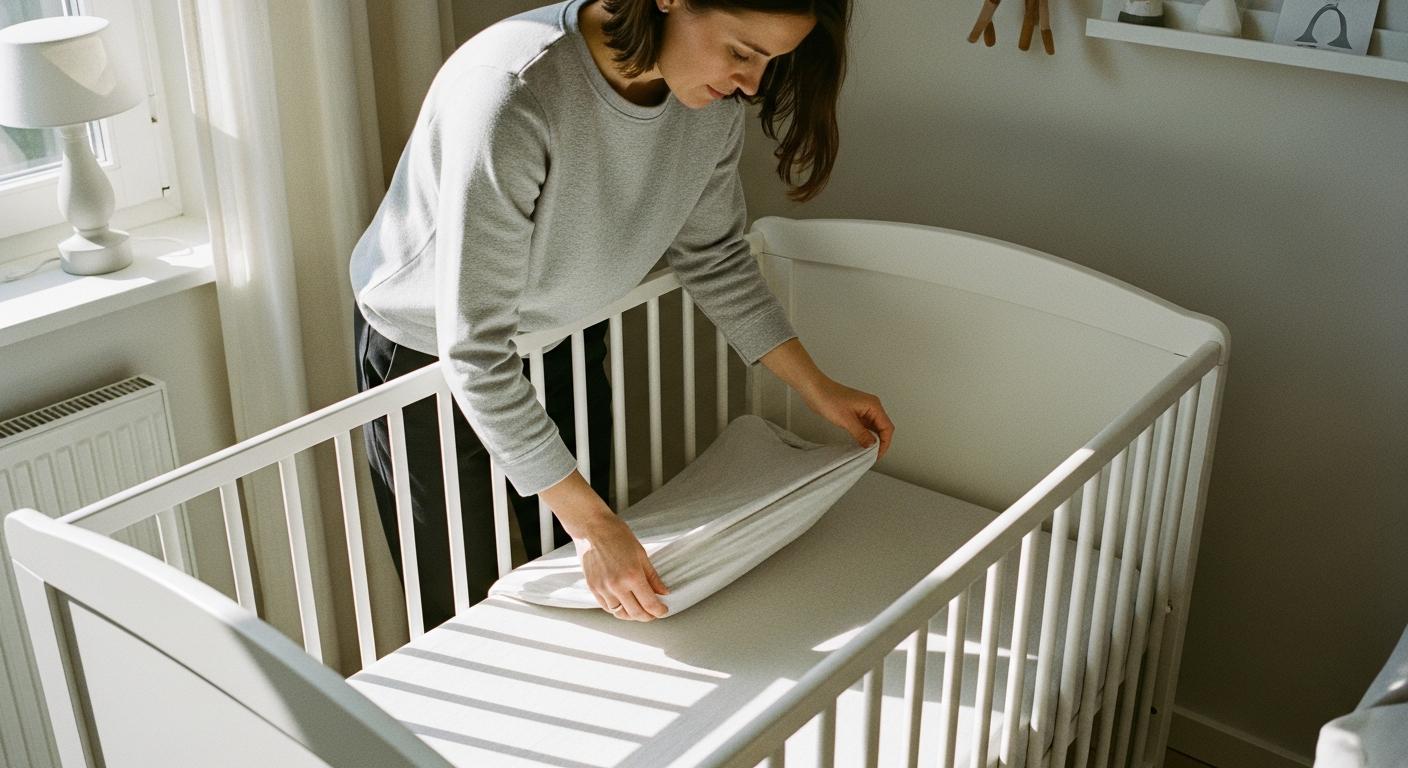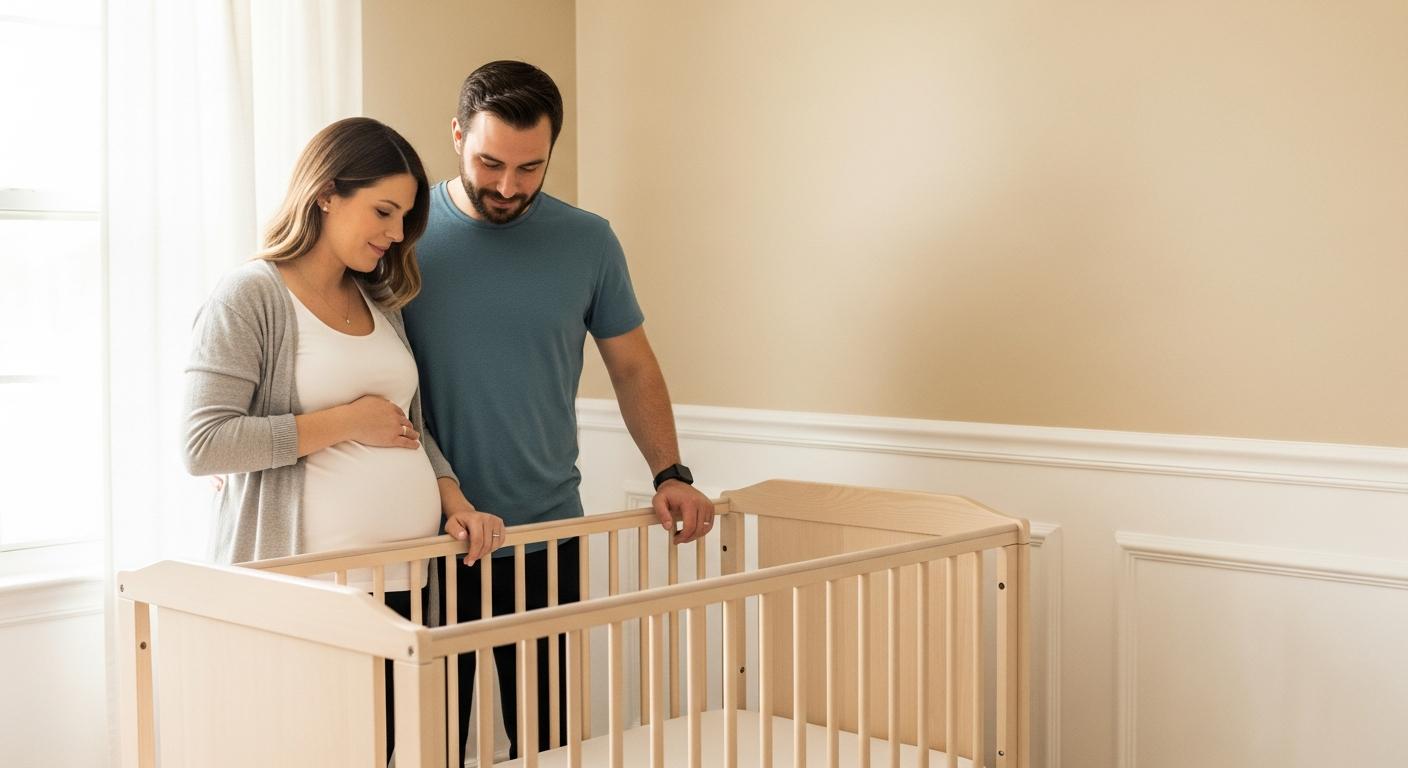
Choosing a crib is not just about a pretty piece of nursery furniture. It is about setting up a calm, airy space where your baby can sleep on a firm, flat surface—without extra pillows, soft toys, or just-in-case cushions. And in many Indian homes, there is another practical layer: do you have space in your bedroom for the crib, or will it go in another room? Are grandparents helping at night? Will you be travelling to your native place often?
Between safety labels, sizes, mattress fit, and popular options (bedside sleepers, mini models, convertible styles), you can choose a crib confidently—without turning it into a never-ending research project.
What a crib is, and why it matters for sleep safety
A crib is a fixed, enclosed sleep space designed for infants and young children. It holds a mattress on a stable base, with side rails that reduce the risk of falls while still allowing airflow.
You might also see the word cot used by sellers. In India, baby cot is common on online marketplaces, while crib is also widely used. Names vary, what protects your baby is the design, the condition, and the correct setup.

Crib vs bassinet vs bedside sleeper vs playard
Families often start with a smaller sleep space and shift to a crib later, especially if the baby outgrows the first option quickly.
- Bassinet: smaller and lighter, meant for the early months. Convenient for room-sharing and feeds, but many babies outgrow it once they start rolling or pushing up.
- Bedside sleeper: attaches to an adult bed. It can support breastfeeding and recovery, but it must be installed exactly as instructed: secure attachment, aligned height, and no gap.
- Playard/travel cot: portable, useful for short trips and travel. Safe sleep still depends on a firm surface and using only the mattress approved by the manufacturer.
When babies typically use a crib
Many full-size cribs can be used from birth until toddler years, often around 2–4 years—but the real driver is development, not the calendar.
- Rolling, sitting, pulling to stand → lower the mattress base.
- Climbing attempts → the crib can become a fall risk, and it is time to change the sleep setup.
Always follow the manufacturer’s weight/height limits.
Newborn convenience vs long-term crib: what changes in real life
In the newborn phase, proximity can feel like survival. A bedside sleeper or bassinet keeps the baby close for feeds, burping, and quick checks.
A long-term crib usually offers:
- an adjustable mattress height (higher for early care, then lower as mobility increases),
- more stable containment as the baby starts moving around,
- more standard sizing for mattresses and fitted sheets.
You may be weighing fewer transitions against easier nights right now. Both are valid. The best crib is the one that fits your home layout and your routine—safely.
What to prioritise before you buy
Before colour, storage drawers, or aesthetics, focus on:
- Safety: sturdy frame, no fragile parts, no missing hardware.
- Size: will it fit in your bedroom, and can you walk around it at night?
- Mattress: firm and a snug fit, with minimal side gaps.
A practical home check for any crib: if the gap between mattress edge and crib frame is more than about a finger-width, the fit is too loose.
Crib safety standards and labels: how to think about them in India
Parents in India often shop across brands and countries—local manufacturing, imported models, and even hand-me-downs. That makes labels and documentation even more important.
What labels should show
On a safe crib, look for a compliance label or product label that clearly mentions:
- manufacturer/importer details,
- model name/number,
- date of manufacture,
- instructions and warnings.
Why does this matter? If there is a recall, a safety advisory, or you need spare parts later, the model details are what you will need.
International standards you may see
Depending on where the crib is made, you may see:
- CPSC/ASTM references (U.S.)
- EN 716 (Europe)
- AS/NZS 2172 (Australia/New Zealand)
Even if a product claims compliance, do your own physical checks at home. A certified crib can still become unsafe if assembled wrongly or used with the wrong mattress.
Drop-side cribs: avoid
Drop-side cribs rely on moving hardware that can loosen over time. If a gap forms between mattress and rail, it increases entrapment and suffocation risk. In many markets, drop-side designs are no longer considered a safe choice.
Safe crib design checklist (simple, but strict)
A safe crib is usually the boring one. And that is a compliment.
Slat spacing and head entrapment
Slats should be close enough to reduce the risk of head entrapment. A commonly cited maximum is around 6 cm (2 3/8 inches). If any gap is wider—even near the corners—treat it as unsafe.
Mattress fit: the gap rule
Your crib mattress must fit snugly.
- Check all four sides.
- Recheck after you add the fitted sheet.
- Avoid makeshift padding to fill gaps—extra material can create soft spots and uneven surfaces.
Hardware and stability
A stable crib has:
- no wobble,
- no loose screws,
- no rattling joints,
- no sharp or protruding parts.
If you keep tightening screws and they keep loosening, or the rails do not align properly, stop using the crib and reassess. That is a safety issue, not a minor annoyance.
Paint, polish, and indoor air
Babies mouth rails. Prefer finishes described as lead-free and low-VOC.
If there is a strong smell after unboxing (off-gassing), ventilate the room and allow it to air out before routine sleep. In smaller Indian bedrooms—especially with closed windows and AC—this step is worth your time.
Crib sizes: standard vs mini, and why wrong sizing becomes risky
A mattress that does not match the crib is one of the most common safety problems.
Standard crib vs mini crib
- A standard/full-size crib uses a standard crib mattress.
- A mini crib uses a smaller mattress and is not interchangeable with standard sizes.
Online listings can be confusing, especially with universal mattress language. Do not rely on that. Match the mattress to the exact crib model.
Interior vs exterior dimensions (Indian home reality)
Interior dimensions decide mattress fit. Exterior dimensions decide whether the crib fits your room.
Measure:
- the available footprint,
- your doorway width,
- the space needed to stand comfortably while lifting baby in and out.
If you have a compact flat, you may prefer a mini crib—but confirm how long you expect to use it and check the height/weight limits.
Types of cribs that Indian families commonly consider
Standard fixed-side crib
A fixed-side, full-size crib is often the simplest long-term choice. Easier mattress shopping, fewer special parts, predictable setup.
Convertible crib
Convertible cribs can become a toddler bed later. Good value, but only if:
- you can source the exact conversion kit,
- you install it as instructed,
- you do not mix and match parts from other models.
Portable and travel options
If you travel often—visits to grandparents, weddings, or work trips—a travel cot/playard can be very practical.
Key safety point: use only the manufacturer-approved mattress. Adding aftermarket mattresses can create gaps and change firmness.
Bedside sleeper
A bedside sleeper can support recovery after delivery and frequent feeds. Safety depends on:
- secure attachment,
- aligned height,
- no gap between adult mattress and baby surface,
- a clear baby space.
Crib mattress: firmness, thickness, and breathable marketing
What firm means medically
For infants, a firm surface means it does not allow the face to sink in. Softer surfaces increase the risk of positional asphyxia (breathing gets obstructed because the airway position is compromised) and suffocation.
Press your hand down: the mattress should resist and bounce back quickly, without a deep indentation.
Thickness and rail height
A very thick mattress can reduce how high the rails sit above the sleep surface. As your baby grows and stands, that reduced height can matter.
Follow the crib manual on allowed mattress thickness, and lower the base as soon as baby starts sitting or pulling up.
Breathable claims: useful, but limited
Airflow features may improve comfort, but they do not replace safe sleep basics. The foundation remains:
- baby on the back,
- a firm, flat surface,
- a bare crib.
Setting up a crib: assembly and first safety checks
Before assembly:
- confirm the label (model/date),
- inspect parts and hardware,
- prepare a flat, well-lit space.
During assembly:
- follow the manual in order,
- use only the provided hardware,
- do not force misaligned parts.
After assembly:
- push gently at each corner (no wobble),
- confirm mattress support is locked,
- check for sharp edges or gaps.
Re-tighten screws after about a week. Settling can happen.
Safe sleep in a crib: the simplest routine is usually the safest
Many parents want the crib to look cosy. For infant sleep safety, minimalism wins.
- Place baby on the back for every sleep.
- Use a firm, flat mattress.
- Use a snug fitted sheet.
- Keep everything else out.
Avoid pillows, quilts/razai, soft toys, bumpers, wedges, and sleep positioners inside the crib.
Warmth without loose blankets
In many Indian homes, a fan, AC, or cooler can make nights feel chilly. Instead of loose blankets, consider:
- a sleep sack/wearable blanket,
- appropriate layers (cotton sleepsuit, warmer layer if needed).
A commonly comfortable room range is around 20–22°C, adjust based on your baby’s comfort and your paediatrician’s advice.
Nursery layout tips (especially for compact bedrooms)
- Keep the crib away from windows and blind cords.
- Keep it away from heaters and direct vents.
- Do not place heavy frames or shelves above it.
- Keep charging cables and monitors out of reach.
If you use a mobile, remove it once baby can roll or reach up.
Maintenance: keeping the crib safe over months
Once a month:
- tighten bolts and screws,
- inspect slats and rails for cracks,
- re-check mattress fit,
- check stability.
Clean with mild soap and water, then wipe and dry. Avoid strong solvents that can damage finishes.
Replace the mattress if it sags, has permanent dents, develops mould, or stops fitting snugly.
Secondhand crib: when it can work, and when to skip it
A secondhand crib can be a sensible budget choice if it is identifiable and complete.
Consider it a pass if:
- the model label is missing,
- hardware is incomplete or replaced with random screws,
- the frame wobbles,
- the design is drop-side,
- you cannot source original parts.
When unsure, check with the manufacturer/importer for spare parts and assembly guidance.
Common mistakes parents make (and how to avoid them)
- Buying a crib and mattress separately without confirming exact sizing.
- Adding extra mattresses or thick padding to soften the surface.
- Filling the crib with pillows, bumpers, quilts, and soft toys.
- Keeping the mattress at a high level even after baby starts sitting or pulling up.
À retenir
- A crib is meant to provide a stable, enclosed, flat sleep space from infancy into toddler years, but the right time to transition depends on development (rolling, standing, climbing).
- Focus on measurable safety points: firm mattress, snug fit, safe slat spacing, and a frame that does not wobble.
- Keep the crib sleep space bare: baby on the back, fitted sheet only, and use a sleep sack for warmth.
- If buying secondhand, insist on an identifiable model label and complete original hardware, avoid drop-side designs.
- For extra support, health questionnaires, and personalised guidance, you can download the Heloa app.