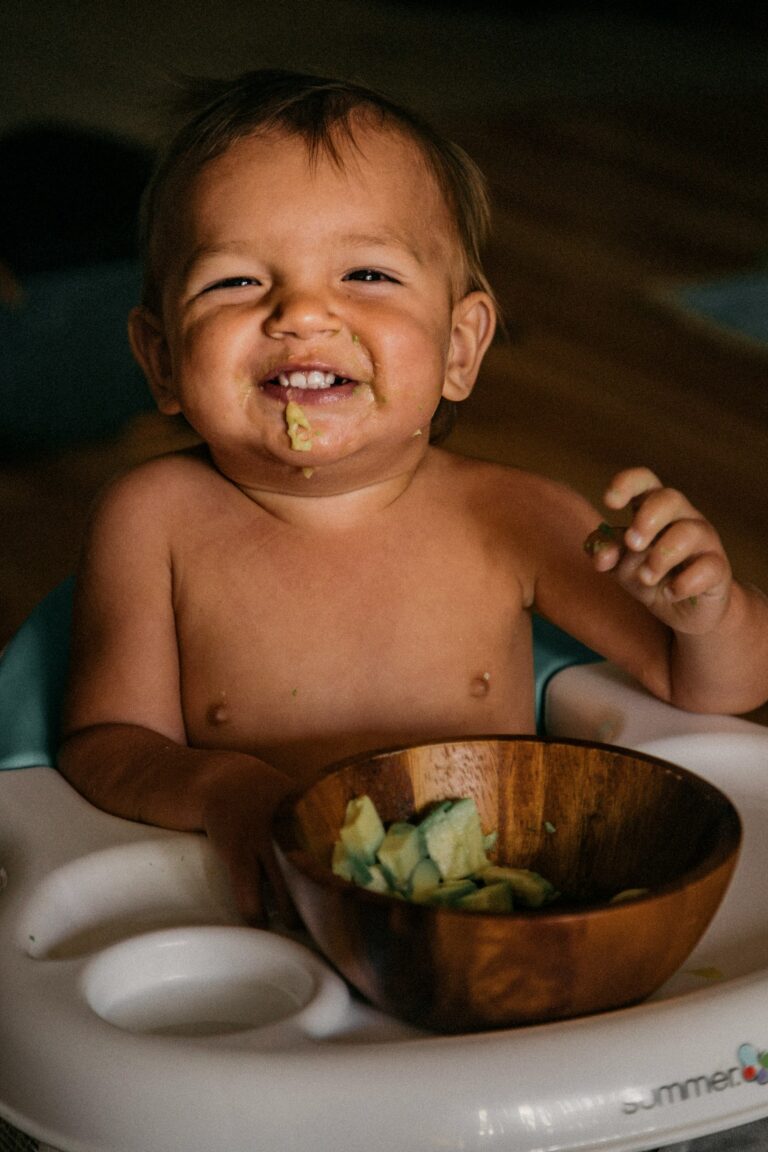

At around 4 months, many Indian parents start hearing the same question from every side: “Shall we start solids now?” Some families are advised to wait till 6 months, others are told to begin early “just with a little taste”. If you are searching baby food 4 months, you may be thinking about choking, reflux, constipation, allergies, iron levels, sleep myths, and whether your baby is ready at all.
The good news: early solids are usually about skills, not quantity. Milk stays first. Your baby leads the pace.
Baby food 4 months: what it means from 4 to 7 months
The 4 to 7 month shift: tasting vs meals
At 4 months, baby food 4 months typically means a few teaspoons of very smooth puree offered by spoon. The purpose is to:
- expose your baby to new flavours (bitter veggies, mild fruits)
- practise oral-motor skills (tongue, lips, jaw working together)
- get comfortable sitting semi-upright with support for a short time
It is not meant to replace breastfeeds or formula feeds. Most calories and fluids still come from milk.

What changes around month 4 (motor control, mouth skills, digestion)
Many babies show a jump in head and neck control around 4 months. You might see better midline stability and less wobbliness when supported. That makes spoon-feeding possible.
Mouth behaviour also changes. Your baby may drool more, chew on fists, stare at your plate, open the mouth when the spoon comes near, or clamp the lips shut if the timing is wrong.
Digestively, the gut is still maturing. Breast milk or first-stage infant formula is the easiest fuel. Once you begin baby food 4 months, stool patterns often shift: thicker texture, stronger smell, sometimes fewer motions.
Milk still comes first at 4 months
Breast milk or formula remains the main nutrition and hydration
Even if you start baby food 4 months, milk remains the primary source of energy, protein, fats, micronutrients, and fluids. A simple way to think: milk feeds help growth, spoon tastes help learning.
Typical feeding patterns: breastfed vs formula-fed
Feeding patterns can vary widely.
Formula-fed babies often take around 4 to 5 feeds in 24 hours. Many fall in the 500–800 ml/day range, but this is not a must-achieve number.
Breastfed babies can feed anywhere from 6 to 12 times in 24 hours, sometimes more during growth spurts. Since volume is not measured, look at the bigger picture:
- steady growth on the child’s growth chart (weight/length/head circumference)
- alertness, muscle tone, interaction
- wet nappies with pale urine
Common milk-feeding mistakes to avoid
Family pressure can be real: “Finish the bottle”, “Add cereal so baby sleeps”, “Change formula quickly”. But pushing volume can disturb hunger-satiety cues and may worsen spit-up.
If your baby is not breastfed, the standard choice at this age is first-stage infant formula. Avoid using cow’s milk as a drink, plant beverages (almond/rice/oat drinks), or homemade milks for infants. They can lead to nutrient deficits.
Avoid:
- frequent formula switches without medical direction
- adding cereal to bottles (choking risk, overfeeding risk)
- thickening feeds without clinician advice
If reflux is troublesome, posture changes, pacing, smaller feeds, and in selected cases thickened formula or medication may help. Your paediatrician can guide you.
Starting solids: 4 months vs 6 months
Why “around 6 months” is often emphasised
Many guidance documents prefer around 6 months because most babies then have steadier trunk control in a high chair, better oral-motor coordination, and easier swallowing of thicker textures.
Why some babies start in the 4 to 6 month window (with paediatrician input)
In some settings, solids can start between 4 and 6 months if readiness is clear and your paediatrician agrees. Starting earlier is not advanced, it is only appropriate when safe.
Possible reasons families begin baby food 4 months or closer to 5 months:
- gradual exposure to tastes and textures
- planned early allergen introduction (egg/peanut) in safe forms
- starting complementary foods while keeping milk as the main nutrition
Waiting closer to 6 months also has upsides: more stable sitting, fewer gag episodes, often a calmer feeding experience.
Delaying far beyond 6 months without a medical reason can sometimes make texture progression harder later and may complicate iron intake if milk volume drops.
Signs your baby may be ready for baby food 4 months
Posture readiness: head and neck control
Readiness matters more than the calendar. Common signs include:
- good head and neck control
- ability to sit upright with strong support (high chair with insert or supported lap)
- stable posture without slumping
Oral readiness: tongue-thrust fading and swallowing thin purees
You may see reduced tongue-thrust reflex (food isn’t pushed out every time), the ability to move a small amount of puree backward, and swallowing a thin puree without distress.
Some gagging can happen and is often protective. What needs medical review: repeated choking, persistent cough with feeds, wet or gurgly breathing during or after spoon-feeding, or ongoing swallowing difficulty.
Interest cues: curiosity, not hunger panic
You might notice watching you eat, leaning towards the spoon, or opening the mouth when the spoon approaches. If curiosity is followed by turning away, that still counts as practice.
When it may be better to wait a little
“Not yet” signs
It can be safer to pause when there is poor head control, difficulty staying upright even with support, strong tongue-thrust that blocks swallowing, frequent coughing or wet sounds with spoon-feeding, or feeding that regularly overwhelms your baby.
If feeding feels stressful
If your baby cries at the sight of the spoon, arches away, or forcefully turns the head, stop and try again after a few days (sometimes 1 to 2 weeks). Short, calm attempts protect trust.
When to speak to your paediatrician before starting
Medical input is especially helpful if your baby was born preterm, has significant reflux, has eczema (especially moderate-to-severe), has had any reaction to food, has slow weight gain, or has a condition affecting swallowing or growth.
Questions you can ask:
- Which readiness signs should we prioritise now?
- Should we start iron-rich foods early?
- How should we introduce peanut and egg given eczema or family history?
- What texture is safest first, and when can it thicken?
- How often and how much is suitable over the next few weeks?
How to start baby food 4 months (if your paediatrician agrees)
A simple, low-stress plan
For baby food 4 months, keep it basic:
- offer solids once daily
- start with 1 to 2 teaspoons (or even 1/2 teaspoon)
- choose a very smooth, thin puree
- use one single ingredient at a time
Milk stays the priority.
Best timing around milk feeds
A very hungry or sleepy baby rarely enjoys tasting. Many families find success offering spoon tastes after a milk feed, when baby is calm.
Baby food 4 months textures: consistency matters
At 4 months, aim for an ultra-smooth, lump-free puree that slides easily off the spoon. You can thin with a little cooking water, breast milk, or prepared formula.
If it is grainy, blend longer. If needed, strain to remove skins or tiny lumps.
Gagging can still happen, even with smooth purees. Pause, keep baby upright, and stop if the baby signals enough.
Refusal is common. Many babies need repeated exposure before a taste feels familiar.
Best first foods for baby food 4 months (including Indian kitchen options)
Vegetables to start
Good first vegetables include:
- carrot
- pumpkin/squash
- bottle gourd (lauki), well-cooked and blended smooth
- ridge gourd (turai), well-cooked and strained if needed
- green beans
Cook till very soft, blend completely, and introduce one at a time.
Fruits to start
Common starter fruits include:
- apple (stewed and blended)
- pear
- banana (fully mashed and smooth)
- avocado
Try to keep vegetables in the rotation so the palate doesn’t shift only towards sweetness.
Iron, grains, and fats: where they fit
Infant cereal and the “no cereal in bottle” rule
Iron-fortified infant cereal can be an early iron source. Mix with breast milk or prepared formula to a thin consistency.
Do not put cereal in a bottle. It raises choking risk, can cause overfeeding, and does not reliably improve sleep.
Starches and grains (gradually)
As tolerance improves, small amounts of starch can be added: potato, rice, or semolina, blended smooth.
In many Indian households, parents ask about rice water or dal water. These are not nutritionally complete meals. If used, they should not replace milk feeds, and textures must remain safe.
Adding fats
Once purees become more than a taste, some families add about 1 teaspoon of oil after cooking (canola/rapeseed, olive, walnut, rotated).
Proteins and dairy as solids progress
After vegetables and fruits are accepted, proteins can be introduced in very smooth forms: well-cooked meat or fish blended into puree, or hard-boiled egg blended smoothly. Everything must be thoroughly cooked.
Plain curd or yogurt can be offered in small amounts, but it should not replace breast milk or formula at this age.
Allergens at 4 months (only if ready, with medical guidance)
If your baby has moderate-to-severe eczema, known egg allergy, or any previous reaction, discuss a plan with your paediatrician before introducing peanut or other common allergens.
If your baby is ready for solids, many guidelines support introducing allergens between 4 and 6 months:
- introduce one allergen at a time
- offer it in the daytime
- start with a tiny amount and increase gradually
Safe forms include well-cooked egg blended into puree, and smooth peanut butter thinned well with breast milk or formula.
Seek urgent care for severe symptoms such as swelling, wheeze, repeated vomiting, or breathing difficulty.
Feeding schedule, water, and safety
If starting baby food 4 months, once daily tasting is sufficient. Keep sessions short.
Before 6 months, milk is generally enough for hydration. With solids, you may offer a few sips of water from a small cup with meals.
For hygiene: wash hands, keep utensils clean, cook foods thoroughly, and discard leftovers from baby’s bowl. Store opened purees in the fridge and use within 24 to 48 hours, homemade purees are often best used within about 24 hours.
What to avoid at 4 months
Avoid honey, juice, cow’s milk as a drink, unpasteurised foods, raw or undercooked animal products, added salt, added sugar, and risky textures like chunks or sticky thick blobs.
Responsive feeding and common worries
With baby food 4 months, the calm approach works best. Your role is to offer, your baby decides how much.
If your baby gags, pause. If your baby refuses, stop and try another day.
Tongue-thrust is common at this age and often fades between 4 and 6 months. Constipation can occur when solids begin, so increase portions slowly and keep milk intake steady.
Call your doctor promptly for repeated large vomiting, blood in stools, dehydration signs, hives, swelling, wheeze, breathing difficulty, marked pain, or poor weight gain.
To remember
- Baby food 4 months usually means tiny spoon tastes of ultra-smooth, thin purees, milk remains the main nutrition and hydration.
- Readiness matters more than age: head control, supported sitting, interest, and a fading tongue-thrust reflex.
- Keep it simple: once daily, one food at a time, very smooth texture, tiny amounts.
- Allergens can be introduced in safe forms when your baby is ready, with extra medical planning for eczema or previous reactions.
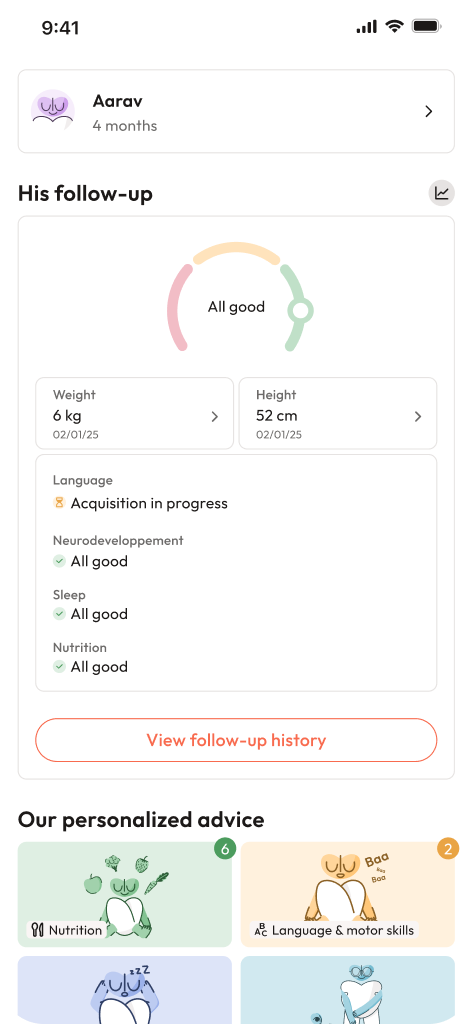
Support is available if you feel unsure. You can also download the Heloa app for personalised tips and free child health questionnaires.

Further reading :