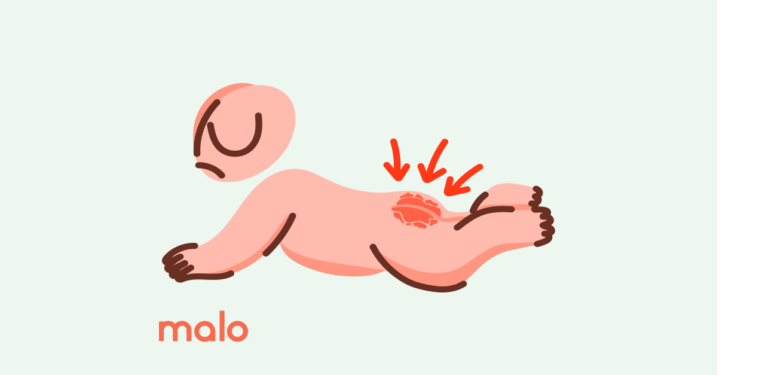
Newborn breathing can be surprisingly noisy and changeable. One moment your baby is breathing quickly, the next the rhythm slows, and in sleep you may even notice a tiny pause that makes you freeze. Add to that the common “blocked nose” sound (especially in air-conditioned rooms), and it is easy to wonder: is this normal newborn breathing, or a sign that something is wrong?
A clear, practical approach helps: what is typical in the first weeks, what sounds are usually from the nose versus the lungs, how to count breaths correctly, and which warning signs mean you should seek medical care without delay.
Newborn breathing in the first days and weeks
Why newborn breathing can look and sound different from adult breathing
Newborn breathing is shaped by normal anatomy and physiology:
- Breathing control is still maturing. The brainstem respiratory centres are immature, so the pattern may be fast, then slow, then fast again, most noticeable during sleep.
- High oxygen demand, small reserves. A newborn has a high metabolic rate, but smaller oxygen “buffer” in the lungs and blood, so they compensate by breathing more often.
- Soft chest wall and easily tired muscles. The rib cage is more flexible, feeds, crying, or heat can briefly increase the work of breathing.
- Narrow airways and a higher larynx. A small amount of mucus can change the sound of breathing even when the lungs are clear.
- Many babies are preferential nasal breathers, so even mild nasal congestion can make newborn breathing sound louder and can disturb feeding.
You may be thinking: My baby sounds snuffly but looks comfortable, should I worry? Often, appearance matters more than noise.

Right after birth: the transition to air breathing
In the first minutes and hours, lungs move from fluid-filled to air-filled. Fluid must clear so air reaches the alveoli (tiny air sacs where oxygen enters the blood and carbon dioxide leaves it). Circulation also reroutes so oxygen comes from the lungs rather than the placenta.
During this transition, brief fast newborn breathing can occur.
If lung fluid clears more slowly, some babies develop transient tachypnoea of the newborn (TTN). It is more commonly seen in the first hours and may be more likely after a caesarean birth. TTN typically improves within 1–3 days with monitoring.
Normal ups and downs: rate, rhythm, and short pauses
Many healthy babies show irregular newborn breathing, especially during sleep: a few quick breaths, then slower breathing, and sometimes a short pause.
Pauses of about 5–10 seconds can be normal if your baby:
- restarts breathing on their own
- stays pink
- looks relaxed (no pulling in of the chest)
- continues to feed effectively overall
Longer pauses, or pauses with colour change or limpness, need urgent assessment.
Normal newborn breathing patterns parents can expect
Typical newborn breathing rate and day-to-day variability
A typical resting newborn breathing rate is often 30–60 breaths per minute. Many clinicians also use 40–60 as a common “at rest” range.
It is normal for newborn breathing to speed up temporarily:
- after a feed
- during crying
- when the room is warm (or baby is overdressed)
- with fever
Reassuring: the rate comes down when your baby is calm.
More concerning: a sustained rate over 60 breaths per minute while calm or asleep, especially if it lasts for hours or is paired with increased effort.
Also do not ignore breathing that is unusually slow (for example, under 20 breaths per minute), as it can indicate fatigue, under-ventilation, or illness.
Sleep vs awake breathing: why it can look more irregular during sleep
In REM (active) sleep, newborn breathing can look uneven: shallow breaths, then a few faster breaths, then slower again. This usually becomes steadier over the first months as the nervous system matures.
Why babies breathe mostly through the nose (and why a “blocked nose” sounds louder)
Because many newborns rely heavily on nasal breathing, mild congestion can sound dramatic, snuffles, squeaks, even “wet” noises.
In Indian homes, common triggers include:
- air-conditioning or very dry indoor air
- dust exposure
- strong fragrances (room fresheners, agarbatti/incense)
- smoke (including second-hand cigarette smoke)
A blocked nose often affects feeding more than sleep, because sucking, swallowing, and breathing must be coordinated.
Short breathing pauses that can still be normal
Short pauses (often 5–10 seconds) are generally acceptable if baby remains pink and comfortable and restarts without help.
Pauses that are longer than about 10 seconds, frequent, or linked to colour change, limpness, or poor responsiveness should be treated as urgent.
Periodic breathing in newborns
What periodic breathing is and what it can look like
Periodic breathing is a common pattern of newborn breathing: a brief pause (often a few seconds, typically 5–10), followed by several quicker breaths, then back to baseline. It is most noticeable during sleep.
Periodic breathing vs apnoea: what parents should look for
Periodic breathing:
- short pauses
- baby stays comfortable
- no colour change
- breathing restarts without stimulation
Apnoea is more concerning. Clinically, it is often defined as a pause longer than 20 seconds, or a shorter pause linked with danger signs such as blue lips/tongue, marked limpness, or poor responsiveness.
At home, focus less on exact seconds and more on the whole picture: Did baby look unwell? Was there a colour change? Did it feel like an episode?
How long periodic breathing can last
Periodic breathing usually improves as breathing control matures over the first months.
Periodic breathing in premature babies
Preterm babies may show periodic breathing more often and may have had monitoring in the NICU for pauses and oxygen dips.
After discharge, follow the NICU team’s thresholds. If newborn breathing changes at home, especially with colour change or feeding difficulty, seek advice promptly.
Common newborn breathing sounds and what they usually mean
Snorting, snuffles, and other nasal sounds
Snorts, soft “rattly” sounds, and mild snoring often come from the nose or upper throat rather than the lungs.
Clues it is upper-airway noise:
- changes with position
- more obvious during sleep
- improves after saline drops
Mild congestion: why it happens and what can worsen it
Dry air can thicken secretions. Irritants (smoke, strong scents) can inflame the nasal lining. Frequent suctioning can cause swelling inside the nostril and make newborn breathing sound worse.
Helpful measures:
- saline drops (wait 30–60 seconds)
- gentle suction only when needed
- comfortable indoor humidity (often around 40–60%)
Sounds during and after feeding (milk, reflux, coordination)
Feeding is a complex coordination task. Occasional coughing or a “gurgly” sound after feeds can happen.
Reflux (gastro-oesophageal reflux) can irritate the upper airway and make newborn breathing noisy, especially when lying flat.
Seek a prompt check if there is persistent choking/coughing with feeds, sweating, tiring, or poor weight gain.
Wheeze
A wheeze (whistling, often on breathing out) can suggest small airway involvement such as bronchiolitis.
In a newborn, sounds are difficult to interpret without examination. Watch for:
- increasing work of breathing
- very fast newborn breathing at rest
- unusual sleepiness or reduced tone
- feeding becoming difficult
- fever
Stridor
Stridor is a higher-pitched sound mainly on breathing in, suggesting upper-airway narrowing.
A common cause is laryngomalacia (soft laryngeal tissues). It may be worse when lying flat or crying and may appear in the first weeks.
Medical advice is important if stridor becomes constant, feeding is difficult, weight gain is not adequate, or breathing looks laboured.
When to worry about a baby’s breathing
Fast breathing that doesn’t settle when baby is calm
A sustained rate over 60 breaths per minute while calm or asleep can signal illness.
Possible causes include fever, infection, significant congestion, early lung transition problems (like TTN), and sometimes heart conditions. Your baby’s feeding, colour, and alertness help guide urgency.
Long or frequent pauses, especially with colour or behaviour change
Urgent assessment is needed if pauses are:
- longer than about 10 seconds
- frequent
- linked with pallor, blue/grey colour, limpness, or poor responsiveness
Signs of increased work of breathing
Watch for:
- retractions (skin pulling in under or between the ribs, or at the base of the neck)
- nasal flaring
- persistent grunting
- head bobbing
These signs mean baby is working harder to move air.
Colour changes
Blue or grey colour around the lips, tongue, or central face can indicate low oxygen (central cyanosis). If it does not resolve quickly, treat it as an emergency.
Breathing and feeding problems together
Seek same-day advice if newborn breathing changes and your baby:
- tires quickly or sweats during feeds
- coughs/chokes repeatedly
- feeds much less than usual
- has fewer wet nappies/diapers
- becomes unusually sleepy or hard to wake
How to check newborn breathing at home
When to observe
Check newborn breathing when baby is calm, resting or asleep. Crying and feeding can temporarily raise the rate.
How to count breaths accurately
Watch the rise and fall of the belly/chest and count for a full 60 seconds.
What else to note
Record breaths per minute, pattern (clusters/pauses), effort (retractions/flaring/grunting), colour, alertness, triggers, feeding, and wet nappies. A short video can help your paediatrician.
What can cause abnormal newborn breathing
Common mild causes include mucus in narrow nasal passages, dry air from fans/AC, temporary post-feed congestion, and overheating. TTN may occur in the first days and usually improves within 1–3 days under observation.
Infections can raise breathing rate and effort, in young infants, they may present as poor feeding, low energy, temperature instability, or fast newborn breathing. Bronchiolitis can cause cough and wheeze, pneumonia may cause persistent fast breathing and low oxygen.
Less commonly, congenital heart conditions can present with persistent fast breathing, sweating with feeds, tiring quickly, poor weight gain, or abnormal colour.
Environmental triggers matter in India: second-hand smoke, incense/agarbatti, mosquito coils, strong cleaning sprays, and poor air quality can irritate the airway.
When to contact a clinician and when to seek urgent care
Go to emergency immediately
- blue/grey lips or tongue
- severe work of breathing (deep retractions, persistent grunting)
- prolonged pauses or a worrying episode
- very floppy, unresponsive, or very hard to wake
- refusal to feed with clear breathing difficulty
Same-day paediatric review
- newborn breathing stays over 60/min at rest
- ongoing retractions or nasal flaring
- feeding is noticeably reduced or wet nappies decrease
- fever or baby seems unwell
Any fever of 38°C or higher in a baby under 3 months needs urgent medical assessment the same day.
Watchful waiting may be enough
If there is mild congestion/snuffles but baby has normal colour, normal alertness, no increased work of breathing, and feeds well, supportive care and routine follow-up is often reasonable.
Supporting healthy newborn breathing at home
Keep air clean and smoke-free, reduce incense/room fresheners, and aim for humidity often around 40–60%. Saline drops and gentle suction (only when needed) can improve nasal comfort.
For feeds, keep things paced, for bottle-feeding, a slow-flow nipple may help. Hold baby upright for 20–30 minutes after feeds while awake.
For sleep, keep it flat and firm: on the back, no pillows, wedges, or inclined sleepers. “Head elevation” using pillows is not safe.
To remember
- Newborn breathing can be noisy and variable, especially during sleep.
- A resting rate is often 30–60/min, newborn breathing that stays over 60/min at rest needs medical advice.
- Periodic breathing can be normal, apnoea (often >20 seconds, or any pause with colour change/limpness) needs urgent assessment.
- Seek help quickly for retractions, nasal flaring, persistent grunting, long pauses, poor feeding, unusual sleepiness, or blue/grey lips or tongue.
If you feel uncertain, your paediatrician can assess your baby’s breathing and feeding together. You can also download the Heloa app for personalised guidance and free child health questionnaires.

Further reading: