A diaper change can feel like a small, everyday routine, until it suddenly becomes a mini emergency: poop just as you open the tabs, a newborn who pees mid-air, or a toddler who refuses to lie down for even ten seconds. Many Indian parents also think about heat, humidity, long commutes, and how to manage a diaper change in a public washroom that is not baby-friendly. The basics stay steady: clean well, dry completely, protect the skin barrier, and keep safety tight.
Diaper change basics parents can rely on
What a diaper change includes: clean, dry, protect
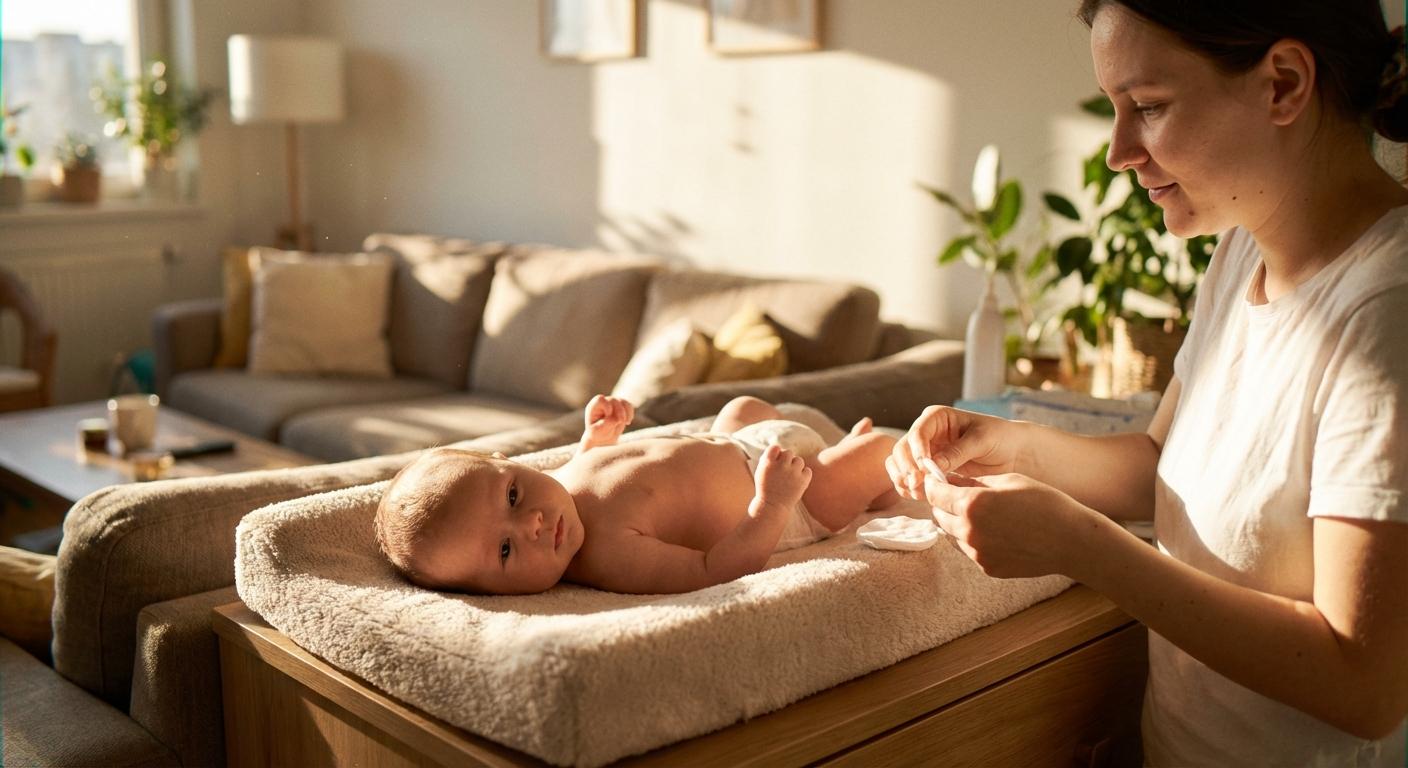
A diaper change is a three-step rhythm you can trust:
- Clean the skin (remove urine, stool, and irritants)
- Dry fully (so skin does not stay damp and fragile)
- Protect (support the skin barrier if it looks pink, rough, or sensitive)
Drying is not a “nice extra”. When moisture sits on the skin, it can cause maceration (skin becomes softened and more likely to break down).
Protection usually means a thin layer of barrier ointment on areas that react often. Think of it as a raincoat, not a thick plaster.

Why timely changes matter: comfort, skin barrier, infection risk
A diaper change is not only about cleanliness. It is about preserving a baby’s stratum corneum (the outer layer of skin), which is thinner and more permeable than an adult’s.
When a diaper stays wet or soiled:
- Warmth and humidity rise (a “cocoon” effect)
- Moisture lingers and softens skin
- Urine can become more irritating over time
- Stool brings acids and digestive enzymes (proteases, lipases)
This weakens the skin barrier and increases irritant contact dermatitis (common diaper rash). Prolonged stool contact can also encourage Candida (yeast) overgrowth, especially in folds.
When a diaper change is needed
Practical signs to look for
Often, you will know before you even check:
- Any poop, even a small amount
- A diaper that looks swollen, feels heavy, or sags
- A stronger smell than usual
- Baby squirms, arches, scratches, or cries when the area is touched
- Leaks at the thighs or up the back
Some diapers have a wetness indicator line. Helpful in the early weeks, but the skin and comfort matter more.
After poop: why quick changes help (day or night)
After stool, a diaper change sooner is usually better, even at night. Stool enzymes irritate fast, and stool contact can raise skin pH.
If you are choosing between “more cream” and “more changes”, start with: more frequent diaper change plus better drying.
Wet-only diapers: when you can wait a little (and when you should not)
A slightly wet diaper, in a baby with calm skin, may not need an immediate diaper change.
Change sooner if:
- Skin is already red or reactive
- It has been wet for a long stretch (long nap, traffic, travel)
- The diaper is swelling a lot or starting to leak
In Indian summers and coastal humidity, dampness can build quickly. Air time and careful drying help.
How often to do a diaper change by age
Every baby is different. Let the diaper and the skin guide you, not the clock.
Newborns (0–3 months): frequent changes are common
Many families see 6–10 diaper change sessions daily.
Helpful rhythms:
- Offer a diaper change about every 2–3 hours in the day
- Change after every stool
- Pair a diaper change with feeds for an easy pattern
At night, if it is wet-only and baby sleeps comfortably, you can often avoid waking. If there is stool, change.
3–12 months: solids and movement shift things
Once solids start, stool texture and acidity change. Some babies get redness, especially after new foods or mild diarrhoea. Rolling and crawling add friction.
If redness shows up, do two things first: dry thoroughly and use a suitable barrier in a thin layer.
Toddlers (after 12 months): more flexible, still regular
Avoid long damp periods.
A simple pattern:
- After waking
- Before naps
- Before bedtime
- Any time it’s dirty or clearly wet
Pull-up diapers can make a diaper change easier for very active toddlers.
Diaper change supplies and checklist
Essentials you will actually use
- Clean diapers (correct size)
- Fragrance-free, alcohol-free wipes, or warm water + soft cloth/cotton
- A washable pad or changing mat
- Soft cloth to pat dry
- Barrier cream
- Disposable bags
- Hand sanitiser for emergencies (soap and water whenever possible)
- Spare clothes
Choosing the diaper type: disposable, cloth, or mixed
- Disposable diapers: convenient for travel and nights, choose fragrance-free options if skin reacts.
- Cloth diapers (nappies): less waste, need a wash rhythm and detergent that suits your baby.
- Mixed approach: cloth at home, disposable for outings or overnight.
Fit and size: the leak logic
- One to two fingers at the waist
- Leg elastics hug without digging
- Leak guards/ruffles pulled out
- For a healing umbilical stump, fold the front down
Setting up a safe diaper change station at home
Changing table vs floor setup
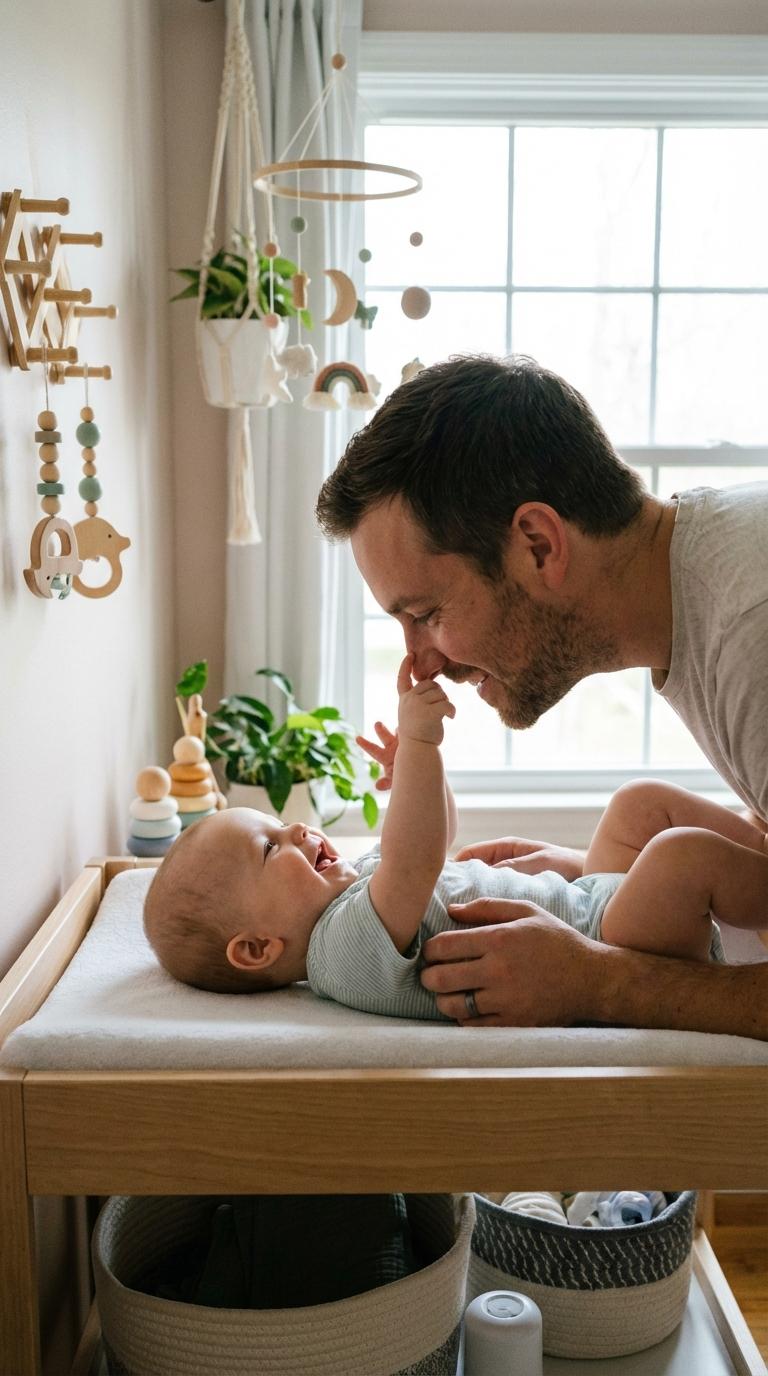
A changing table can help your back, but fall risk rises once rolling starts. A floor setup (mat + towel) is simple and safe.
Safe layout: keep everything within reach
Gather before you start:
- Clean diaper
- Wipes/cloth + warm water
- Disposal bag
- Drying cloth
- Barrier cream if needed
- Spare outfit
The one-hand rule
On any raised surface, keep one hand on baby through the diaper change. If something is missing, lift baby first. Then fetch it.
Hygiene: hands, surfaces, used diapers
- Wash hands before and after when possible
- Clean the changing surface regularly
- Close the soiled diaper onto itself and dispose in a lined bin or sealed bag
How to do a disposable diaper change step by step
1) Prep and position
Keep supplies within reach. Place baby on a stable surface. If baby is very wiggly, slide a clean diaper under the bottom before cleaning.
2) Open and contain the mess
Open the tabs. If there’s poop, use the front of the diaper to remove the bulk gently, then fold the dirty diaper under the bottom.
3) Clean gently (urine vs poop)
- Urine: warm water on cotton/cloth is often enough, dab rather than rub.
- Poop: remove the bulk first, then clean into skin folds.
For girls, wipe front to back.
For boys, clean around the penis and under the scrotum. Do not scrub.
4) Dry thoroughly, then protect if needed
Pat dry, especially in folds. Skin should feel dry before you close the diaper.
- Healthy skin: minimal product, sometimes none
- Redness: a thin layer of barrier helps
Common barrier ingredients:
- Zinc oxide
- Petrolatum
5) Put on the clean diaper (snug fit, ruffles out)
Fasten snugly (one to two fingers at the waist) and pull out leg cuffs/ruffles.
6) Disposal and cleanup
Roll the dirty diaper, secure with tabs, and discard. Wash hands as soon as you can.
How to do a cloth diaper change step by step
Cloth diaper types and what changes in your routine
Cloth diaper change steps still follow clean–dry–protect, but you manage inserts, covers, and storage.
Common types include prefolds + cover, fitteds + cover, pocket diapers, and AIO/AI2 systems.
Liners and poop handling (milk-fed vs solids)
With exclusive milk feeding, stool can be loose. After solids begin, remove solids into the toilet before storage.
Storage and washing basics
Store used cloth in a sealed wet bag or lidded pail. Avoid long soaking.
If a cloth routine seems to trigger redness, detergent residue or product sensitivity may be part of the picture. Simplify products and improve rinsing.
Diaper change safety for every age
Never leave your baby unattended
Falls can happen in seconds. If you need to step away, take baby with you.
Tips for wiggly babies and toddlers
For frequent rollers, floor changes can be safer. Keep the diaper change short and steady.
Diaper change hygiene and skin comfort
Avoid over-wiping
Too much wiping adds friction. For pee-only diaper change moments, if skin looks calm, a lighter clean may be enough.
Moisture management and brief air time
Pat dry and allow 15–60 seconds of air time when possible. In humid weather, even this small pause can reduce irritation.
Product reactions: simplify when skin flares
If redness starts after a new wipe, cream, or detergent, pause it for a few days. Return to basics: warm water + cotton/cloth, careful drying, and a simple barrier.
Newborn diaper change tips
What to expect in the early days
Newborns need frequent diaper change sessions. Stools transition from meconium (dark, sticky) to lighter stools and can be frequent.
Changing around the umbilical stump
Keep the cord stump clean and dry. Fold the diaper down so it does not rub or trap moisture.
Baby-specific diaper change situations
Baby girls vs boys: protective habits
- Girls: wipe front to back, clean gently between folds.
- Boys: clean around the genitals and under the scrotum, do not force the foreskin back.
Toddler diaper change tips
Handling resistance with calm routines
Offer small choices and keep your words short. Predictability helps.
Standing and quick changes
For quick pee-only diaper change moments, a standing change may work with steady support.
Night-time diaper change while protecting sleep
When an overnight change is truly needed
Change promptly for poop, leaks, or clear discomfort. For wet-only diapers, many babies sleep through in a well-fitting, high-absorbency diaper.
Keeping baby calm
Use dim light, slow movements, minimal talking.
On-the-go diaper change (public, car, travel)
Diaper bag checklist
Pack: diapers, wipes or water + cloth/cotton, a portable mat, disposal bags, spare outfit, barrier ointment, and hand sanitiser.
Public changing table safety
Use your own mat, use the strap if available, and keep a hand on baby.
Diaper change problems and practical fixes
Common mistakes that cause leaks and blowouts
Most leaks are fit issues: ruffles tucked in, gaps at thighs, waistband not flat.
Red marks, chafing, and sizing
Deep red lines, persistent irritation, or frequent chafing often mean the diaper is too small or the shape does not suit your baby.
Diaper rash prevention during diaper change
Why diaper rash happens
Most diaper rash is irritant dermatitis: moisture + friction + irritants.
More common during diarrhoea, diet changes, and long gaps between diaper change sessions.
Daily prevention habits
- Change promptly after stool
- Clean gently
- Dry thoroughly
- Use a barrier when skin is pink or rough
Yeast rash clues and when to seek medical advice
Yeast rash often looks very bright red with defined borders and small “satellite” bumps, often in folds.
Seek medical advice if:
- Redness lasts more than 3–5 days despite frequent diaper change, drying, and barrier use
- Skin oozes, bleeds, or cracks
- Baby seems in significant pain
- Fever occurs or rash spreads widely
Myths and reassuring facts
Powder and “stronger cleaning” misconceptions
Talc-based powders are avoided because babies can inhale particles. Strong soaps and scrubbing often worsen irritation.
Cloth vs disposable: rash realities
Fit, timely diaper change habits, gentle cleaning, and drying matter more than diaper type.
Key takeaways
- A diaper change works best as clean–dry–protect.
- After poop, change as soon as possible, including at night if needed.
- Most leaks improve with better fit and ruffles pulled out.
- Warm water + cotton/cloth is often enough, gentle wipes help on the go.
- Dry carefully, then use a barrier cream when redness appears.
- Safety first: supplies within reach, one hand on baby, never unattended.
- If redness persists, skin oozes or cracks, pain is significant, or fever occurs, seek medical advice.
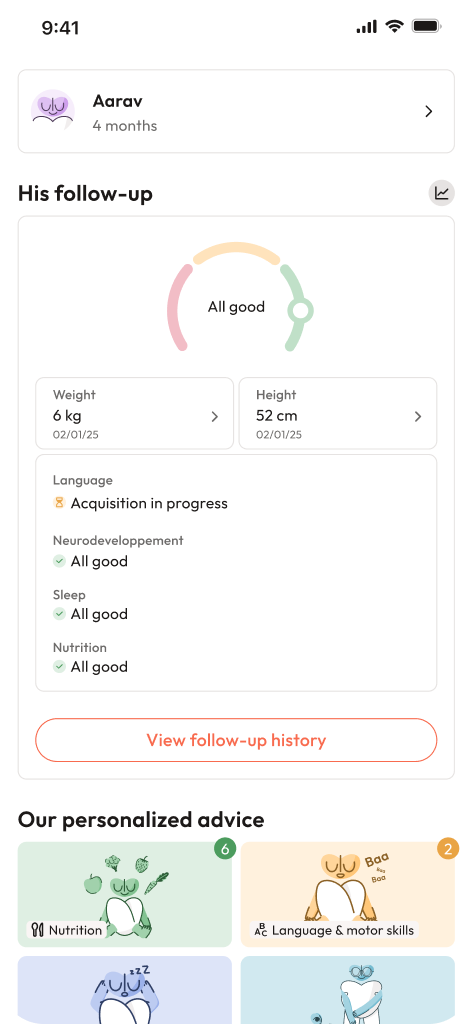
- For personalised tips and free child health questionnaires, you can download the Heloa app.
Further reading :
- Healthy Habits: Diaper Changing at Home (https://www.cdc.gov/hygiene/about/healthy-habits-diaper-changing-steps-at-home.html)
- Healthy Habits: Diaper Changing Steps for Childcare Settings – CDC (https://www.cdc.gov/hygiene/about/healthy-habits-diaper-hygiene.html)