Parents often find themselves asking When do babies sit up? right around the time rolling turns into little acrobatics, tiny fingers start grabbing everything in sight, and well-meaning relatives casually check in: “Baby is sitting yet?” It can feel like a countdown. But baby development rarely follows a neat timetable.
The comforting part? Sitting develops in layers—support, balance strategies, confidence, then smooth transitions. The months on the calendar matter, yes, but your baby’s muscle tone, coordination, floor-time practice, and steady week-to-week progress matter just as much.
When do babies sit up? Typical ages by stage
When someone asks When do babies sit up?, they may mean very different skills: sitting while held, sitting with hands propped, sitting hands-free, or moving into sitting independently. Naming the stage makes progress easier to spot—and worry easier to put down.
Sitting with support: what many babies do first
Most babies begin to tolerate supported sitting once head control improves and the trunk can stay upright for brief periods.

- Around 4 months: many babies can sit on a caregiver’s lap with hands supporting the trunk. Wobbling is common, fatigue comes fast.
- Around 5 months: posture often looks more organised, with support at the hips or mid‑trunk, many babies can stay upright briefly without “folding” forward.
- Around 6 months: supported sitting usually looks steadier, with fewer head bobs and better endurance.
These ranges are wide. The more meaningful sign is gradual improvement over weeks.
Propped sitting and tripod sitting
Before a baby can sit fully upright, many use their hands as support. This is not “cheating”, it’s smart biomechanics.
- Propped sitting (hands down, or light support) is common around 6–8 months.
- Tripod sitting is the classic look: baby leans slightly forward with both hands on the floor, widening the base of support.
Tripod sitting often becomes the bridge between supported sitting and truly hands‑free sitting.
Sitting independently (hands‑free)
Independent sitting means baby can hold an upright seated posture without external support and keep the hands free to play.
Many babies become noticeably steadier between 7–9 months. For some, durable, clearly independent sitting appears around 9–10 months (earlier for a few, later for others). A helpful marker is “functional sitting”: leaning towards a toy, returning to centre, and turning the trunk without immediately toppling.
Getting into sitting independently (transitions)
The milestone isn’t only “staying seated.” Another big step is getting into and out of sitting.
Transitions often develop around 8–12 months. Babies may move from side‑lying or tummy time into sitting using a side‑sit position, then later shift from sitting to hands‑and‑knees as mobility takes off.
Why the timing varies so much
If you’re still circling back to When do babies sit up?, here’s a relief: two babies born the same week can look very different and still be developing typically.
Muscle tone and trunk stability
Sitting depends heavily on axial tone—the coordinated work of the neck, back, abdominal wall, and pelvis. Some babies organise that “internal support” quickly. Others need more time for the nervous system and muscles to coordinate smoothly.
Practice opportunities: free floor movement matters
More free movement on the floor—tummy, back, side‑lying, rolling—means more chances to strengthen supports and practise balance reactions.
Babies who spend long stretches in semi‑reclined positions (loungers, swings, car seats used beyond travel) may simply get fewer opportunities to train active trunk control.
Temperament and movement style
Some babies are cautious: they watch, stabilise, then act. Others are bold: they test, topple, repeat. Different styles change the visible timing of sitting without automatically indicating a concern.
Premature babies: corrected age changes the picture
For babies born early, milestones are commonly tracked using corrected (adjusted) age until about 2 years.
Corrected age = chronological age minus the number of weeks early. Using corrected age often makes the question When do babies sit up? feel far more reasonable.
What “sitting up” really means
Supported sitting vs independent sitting
“Sitting up” can describe very different skills.
- Supported sitting: baby needs you (hands at trunk/hips), or a stable boundary, to stay upright.
- Independent sitting: baby holds posture without external support.
Clinically, professionals look for head staying in midline, the trunk not collapsing, and the pelvis bearing weight in a stable, symmetrical way.
Brief sits vs stable, functional sitting
A brief sit—seconds to a minute—is still progress.
Stable sitting is when baby can:
- sit longer without slumping,
- reach and come back to midline,
- turn head and trunk to follow a toy,
- keep breathing comfortably rather than “bracing” hard.
“Being placed” is not the same as “being able to sit”
A baby can look “seated” in arms, cushions, a baby seat, or a supported corner. But sitting as a skill means baby is actively controlling posture and can get out of the position.
The building blocks before sitting
Head and neck control
Sitting starts at the top. Babies need to hold the head steady in midline so the trunk can stack underneath.
A simple readiness clue is reduced head lag during a gentle pull‑to‑sit: the head stays more aligned with the torso instead of dropping back. Many babies show clear improvement around 4–5 months.
Trunk “corset” control: back, abs, pelvis
Sitting requires co‑activation: spinal muscles (back), abdominal wall, and pelvic/hip stabilisers.
As that system organises:
- the chest lifts and the trunk looks taller,
- breathing becomes easier,
- hands become available for play.
When trunk stability isn’t there yet, the centre of gravity shifts quickly—often leading to forward leaning (tripod) or side tipping.
Tummy time strength: neck, shoulders, back
Tummy time builds anti‑gravity muscles—neck and back extensors—and shoulder stabilisers that later support upright posture.
Many babies develop strength on forearms around 3–4 months, then progress towards pushing on straighter arms around 4–6 months.
A commonly used practical target is gradually building towards about 60–90 minutes per day, broken into small sessions.
Rolling, side‑lying, and trunk rotation
Rolling is not separate from sitting. Rolling trains trunk rotation and coordinated control of shoulders and hips.
- Tummy‑to‑back often appears around 4–5 months.
- Back‑to‑tummy often follows around 5–6 months.
Comfortable side‑lying play also helps babies learn weight shift and activate side‑body muscles that prevent toppling in sitting.
Weight shifting and early balance practice
When a baby pushes up on forearms/hands and begins to pivot during tummy time, they are rehearsing balance and weight shifting.
In early supported sitting, you may also see small controlled leans towards a toy and a return to centre. That “off‑centre and back again” pattern is a key motor ingredient.
Signs your baby may be ready to sit up (without forcing)
Head stable, chin free, trunk lifting
In upright holding, baby keeps the head mostly centred without frequent bobbing. The chin doesn’t constantly drop to the chest, and the trunk rounds less quickly.
Effective arm support
On the tummy, baby pushes on forearms and then hands. In semi‑upright positions, baby may naturally reach for a support in front—an early, meaningful balance strategy.
Plays with objects without immediately toppling
Grabbing, shaking, passing a toy from hand to hand—while staying relatively stable—shows the trunk is doing its job while the arms move.
Protective reactions
As balance improves, babies start extending a hand to protect themselves during a wobble. Supervision still matters, but these reactions are a positive sign.
How babies learn to sit: skill progression
Supported sitting on your lap and on the floor
This phase is about alignment and tolerance. Baby learns what upright feels like while you provide stability at the pelvis and trunk.
Propped sitting and tripod sitting
Tripod sitting widens the base. Over time, baby may lift one hand to tap a toy and recover balance—early dynamic control.
Independent sitting with protective reactions
Independence is not “never falling.” It’s being able to sit, wobble, and use the body’s reactions to stay safer.
Reaching, turning, and functional sitting
As sitting matures, baby can rotate the trunk, look behind, reach across midline, and play with both hands without immediately bracing.
Moving into and out of sitting
Later, sitting becomes a transition point rather than a destination. Babies move from tummy time into a side‑sit and up, then later out of sitting to explore hands‑and‑knees.
How to encourage sitting safely (without rushing)
If you keep wondering When do babies sit up? because you want to help baby reach there, the best support is usually simple: give the body practice, then give it rest.
Free floor play: the training ground
A firm but comfortable surface, a clear space, and a few toys are enough. Freedom of movement supports trial‑and‑error learning.
Tummy time: consistency, creativity, small doses
If tummy time is a struggle, keep it short and frequent. A few minutes several times a day often works better than one long session.
Try variety:
- on a mat,
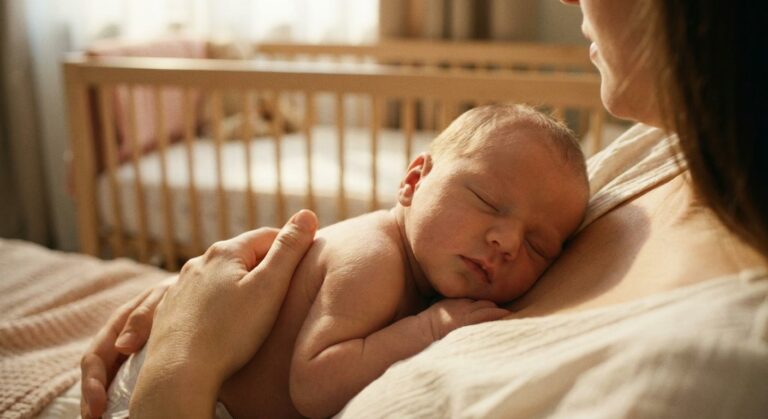
- on your chest (face‑to‑face motivation),
- over your legs for a gentle incline.
Side‑lying and position changes
Alternating positions builds coordination, trunk rotation, and motor planning.
Brief, supported “tastes” of sitting
Helpful setups that keep baby secure while still working:
- Sitting between your legs on the floor, facing away from you, your hands ready at the trunk
- Sitting on your lap with support at the hips (avoid pulling on the arms)
- A rolled towel behind the lower back as a gentle cue
If baby slumps, stiffens, or gets frustrated, shorten the attempt or add support.
Simple play ideas to build trunk control
- In tummy time, place a toy slightly to one side so baby turns and shifts weight.
- On the back, offer a toy above the chest so baby brings hands (and sometimes feet) towards midline.
- Very briefly on your legs, offer a toy at chest height so baby attempts to lift and stabilise.
Stop signals: very rounded back, visible tension, irritability, or fatigue.
Semi‑reclined positions and baby gear: what helps, what limits
Semi‑reclined can be useful—briefly
A slightly reclined position can let baby experience a more vertical body angle. It can help if it’s brief and doesn’t replace floor time.
If a baby spends long periods semi‑reclined before they are ready, they may round the back, tense up, and move less.
Floor seats and “sit-me-up” devices
These can be convenient for short periods, but they reduce active trunk work.
Use briefly, on the floor, with supervision. Prioritise time playing on the floor where baby can move freely.
Limiting prolonged container time
Swings, loungers, and similar devices can reduce floor practice time if used often or for long stretches. More floor time usually means more chances to build balance and transitions.
Safety and common mistakes to avoid
Practice where falls are safest: the floor
Practice on the floor, on a firm mat or carpet. Avoid beds and sofas—early sitters can tip quickly.
Avoid long forced sitting sessions
When sitting isn’t ready, babies fatigue and compensate: rounded back, fixed arm supports, tension, sometimes shorter or less comfortable breathing. Several brief attempts, mixed with tummy and side play, often work better.
Cushions and propping: use with caution
Pillows can limit balance adjustments and encourage asymmetry.
If used, treat them as soft bumpers for safety—not as a long‑duration seat.
Watch for persistent asymmetry or discomfort
If baby consistently collapses to the same side, often twists, keeps the head tilted, or shows persistent awkward patterns, guidance can be helpful.
When to talk to a paediatrician about sitting
If the question When do babies sit up? starts to feel loaded with worry, a timely check-in can bring clarity.
Age-based landmarks (use corrected age for preterm babies)
Consider discussing if you see:
- around 6–8 months: no sitting even with hand support, immediate collapse, and no improvement
- around 9–10 months: no stable independent sitting, or a clear plateau
Signs that justify earlier advice
Seek medical guidance sooner if there is:
- marked low tone (very floppy) or marked stiffness,
- strong asymmetry (always using one side),
- regression (loss of a skill),
- lack of progress over several weeks despite regular floor time.
After sitting: what often comes next
Playing with both hands and turning
As sitting stabilises, babies spend more time manipulating toys, passing objects hand‑to‑hand, and turning to look behind.
Moving from sitting to hands‑and‑knees
Many babies lean forward from sitting into hands‑and‑knees, rock, then start creeping.
Crawling patterns and pulling to stand
Crawling styles vary, pulling to stand often follows as balance and strength continue to grow.
To remember
- When do babies sit up? Sitting develops in steps: supported sitting, propped/tripod sitting, hands‑free sitting, then transitions.
- Timing varies widely. Tripod/propped sitting is common around 6–8 months, and steadier hands‑free sitting is often clearer between 7–10 months.
- Strong head control, trunk stability, tummy time, rolling, and weight shifting usually come first.
- Floor time and short playful practice tend to help more than long “installed” sitting.
- For premature babies, use corrected age when looking at milestones.
- If you’re concerned about progress, tone, asymmetry, or regression, a paediatrician and/or paediatric physiotherapist can guide you. You can also download the Heloa app for personalised tips and free child health questionnaires.