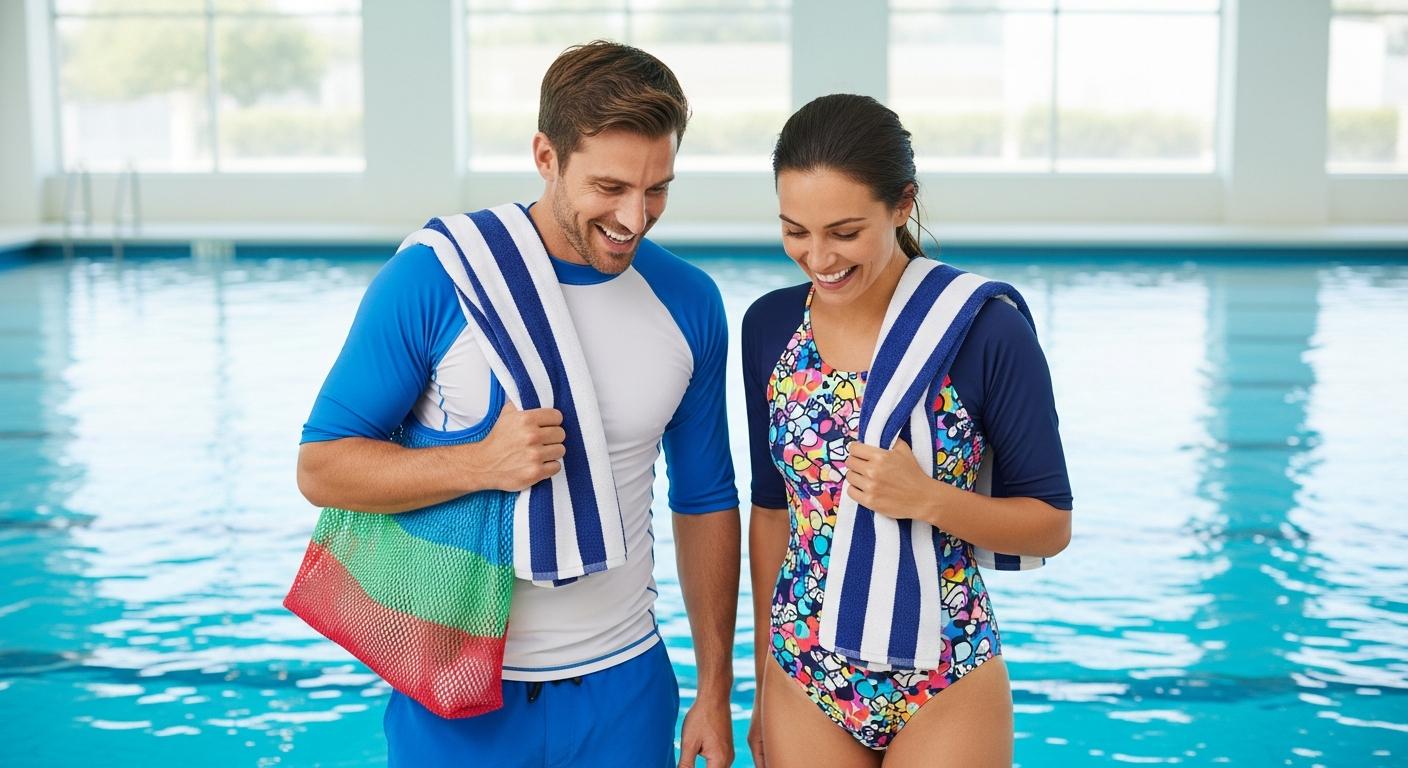
Baby swimming can feel like a big milestone: a tiny baby, a public pool, and that ever-present parental question—”Will my child be okay in water?” In Indian cities, there are extra layers too: crowded changing rooms, variable pool hygiene, travel time in traffic, and sometimes a water temperature that is not as warm as promised. Baby swimming, done well, is less about “teaching swimming” and more about water familiarisation—helping your baby feel secure, building predictable routines, and practising safe handling while a trained professional supports the group.
Baby swimming: what it is (and what “infant aquatics” includes)
When people say Baby swimming, they often picture a baby doing mini laps. In reality, Baby swimming sessions are usually play-based and parent-led.
A typical Baby swimming class happens in a shallow, warm pool (often around 32°C), with a parent in the water and professional supervision (ideally a qualified instructor plus lifeguard cover). The goal is not formal strokes or “bravery tests”. It is comfort, body awareness, and safe habits.
Common focus areas include:

- sensory experiences (temperature, buoyancy, echoes, splashes)
- gentle motor exploration (supported gliding, turning, pushing off, righting)
- emotional safety (your voice, steady hold, predictable cues)
You may notice songs, simple games, floating support, and short “circuits” using mats or toys. Repetition is not boring here—it is regulating.
Baby swimming is not drown-proofing: realistic expectations that keep babies safe
Some babies show reflexes that look like breath-holding when water touches the face. These are reflexes, not reliable skills. They are not consistent protection from drowning.
So, one sentence worth remembering: no baby is drown-proof.
Baby swimming can build familiarity over time, but drowning prevention still depends on:
- barriers (gates, locked doors, covered tanks)
- close, active adult supervision
- safe routines around any water source (bucket, tub, pool, open water)
Baby swimming vs formal swim lessons
Baby swimming does not replace traditional lessons. It prepares your child by making water feel predictable and non-threatening.
Formal swim lessons usually need a child to follow instructions, repeat sequences, and coordinate breathing with movement. Many children are ready closer to 5–6 years, though readiness varies.
Benefits of Baby swimming for babies and parents
Parents often ask whether there is any real benefit, or if it is only an activity. The benefits can be very real, but they look different for each child.
Water confidence and positive early experiences
Repeated gentle exposure can reduce distress around splashes and face wetting. Some babies love it quickly, others take several sessions. Temperament matters.
Motor development, coordination, and balance
Buoyancy reduces the effect of gravity, so babies can try bigger movements with less impact. In Baby swimming, supported floating, gentle turning, and reaching for toys can support postural control (trunk stability) and coordination.
It is not a guarantee of faster milestones. It is varied sensorimotor practice.
Sensory development and emotional regulation
Warm water gives strong sensory input: skin pressure, movement through space, and vestibular stimulation (the balance system) during swaying and floating. For some babies, this is calming. For others, it is overstimulating.
Your baby’s cues matter more than finishing every activity.
Bonding, early interaction, and trust
Because you stay close, Baby swimming often supports bonding: eye contact, responsive touch, and tiny adjustments in pace. Many babies start anticipating cues—songs, “ready-set-go”, bubbles—and learn to pause and recover back to you.
Sleep, appetite, and routines
Many families notice good feeds and longer naps after Baby swimming. It makes sense: babies spend energy on movement, temperature regulation, and sensory processing. Still, some babies get overtired if sessions run long.
Limits: what Baby swimming cannot replace
Baby swimming does not create independent swimmers, and it never replaces supervision. A baby who looks comfortable can still tire suddenly.
When to start Baby swimming
Many programs start Baby swimming around 4–6 months (sometimes later, depending on pool policy).
Age ranges commonly offered
- 4–6 months: sensory discovery, close holds, short activities, frequent breaks
- 6–12 months: more curiosity, reaching, supported floating, simple transitions
- 1–2 years: more active exploration, moving away and returning, early waiting routines
- 2–3 years: playful circuits with more autonomy, still without pressure
Signs your baby is ready
A “ready” baby is generally well, can settle in your arms, tolerates water on skin, and recovers after a surprise splash. Curiosity is a great sign.
When it makes sense to wait
Postpone if your baby has:
- fever or acute illness
- heavy cold with significant congestion
- marked cough or breathing difficulty
- suspected ear infection (pain, unusual irritability)
- extreme fatigue after a poor night
Teething alone is not automatically a reason to skip. But if discomfort is high, the pool can turn into a negative memory.
Safety essentials in Baby swimming
Your role: active, continuous supervision
In Baby swimming, you are the main safety anchor:
- eyes on baby
- hands close (ideally hands-on)
- attention not split (phone away)
A baby in difficulty may not cry. Watch for silence, freezing, unusual floppiness, or a “switched off” look. Exit immediately and call for help.
What to expect from professional supervision
A good instructor keeps activities age-appropriate, offers clear holds, manages safe entry/exit, and respects distress signals. Group size matters: very large groups can become noisy and overstimulating.
Pool setup: stable standing and quick exits
Choose a spot where you can stand firmly and leave quickly. Identify steps/ramps. Pool decks are slippery—non-slip footwear helps, especially when carrying a wet baby.
Breath control, reflexes, and why forced underwater skills are unsafe
Reflex breath-holding is not a “skill”. Avoid forced dunking or prolonged underwater time. Safer foundations are face wetting by choice, calm breathing, and playful exhalation (bubbles).
Submersion (if offered): gradual progression and clear stop signals
If brief submersion is part of a program, it should be predictable (cue + calm baby), very brief, and stopped at any distress.
Stop and return to a comforting hold if you notice stiffening, panic clinging, repeated coughing, intense crying, turning away, or shut-down stillness.
Warmth: temperature, duration, and ending early
Even with warm water, babies cool quickly—especially in changing areas with fans or air-conditioning.
For many babies, 20–30 minutes is enough. End early if you see shivering, mottled skin, unusual paleness, bluish lips, or escalating fussiness.
Health considerations: when to skip and what to discuss
Illness and breathing symptoms
Swimming challenges breathing and thermoregulation. Postpone Baby swimming during acute illness.
Seek medical advice if your baby has ongoing wheeze, significant breathing difficulty, asthma symptoms that seem uncontrolled, or frequent respiratory infections.
Ear infections: why they matter
Ear pain can make pool stimulation harder to tolerate. If you suspect otitis (ear infection), it is usually better to skip.
Eczema, sensitive skin, and chlorine irritation
Chlorine can dry skin and aggravate atopic dermatitis (eczema). Helpful steps:
- quick rinse before entering
- thorough rinse after
- pat dry (do not rub)
- apply a fragrance-free emollient
If your baby often gets red eyes, cough, or skin flares after sessions, pool ventilation and chlorine/pH balance may be contributing. Consider another facility and discuss with your clinician if it persists.
Red flags during the session: stop immediately
Stop if you notice:
- shivering, bluish lips, mottling
- unusual paleness
- rapid breathing or persistent cough
- inconsolable crying
- limpness or “switched off” behaviour
Leaving at the right time can protect your baby’s future comfort.
What a Baby swimming session typically looks like
Duration, frequency, pacing
Weekly sessions work well for many families. Regular short exposure usually beats occasional long sessions.
A gentle start
Enter slowly: water on hands first, then shoulders, baby close to your chest. Adjust pace based on cues—curious, tense, relaxed.
Play and simple skills
Baby swimming is built on play:
- supported floating
- balance on mats
- moving between supports
- reaching for toys
- mini circuits
A calm ending and recovery
Finish with quieter activities, then a warm exit routine: towel ready, dry skin folds (neck, groin), rinse off chlorine. Plan extra time—rushing can undo the calm.
Gear, hygiene, and practical organisation
A simple checklist
- swim nappy/diaper (plus spare)
- snug swimwear (some pools require double layer)
- two towels (one poolside)
- hooded towel/bath cape
- non-slip adult footwear
- wet bag
- regular diaper and easy-change clothes
Chlorine aftercare
Rinse after swimming and moisturise. For sensitive skin, fragrance-free products are usually better.
Changing rooms and feeding timing
Arrive early. After class, offer milk, and if age-appropriate, a snack. Many babies get hungry quickly after Baby swimming.
Choosing the right pool for Baby swimming (India-specific checks)
Look beyond the brochure.
- Water and air temperature: babies chill quickly if the air is cold even when the pool is warm.
- Cleanliness: changing areas, shower zones, and the pool deck should look well-maintained.
- Water quality and ventilation: strong “chlorine smell” can mean more irritant by-products in the air, good ventilation helps eyes and airways.
- Crowd management: smaller groups are often calmer.
If the pool repeatedly triggers cough, red eyes, or skin irritation, consider switching facilities and discussing symptoms with your clinician.
After Baby swimming: progress, pauses, and next steps
Milestones are not a straight line
Many children move through phases: relaxed holding → floating → brief dips (if offered) → more active movement. After illness or a break, a step back is common.
Vaccinations, swim nappies, and ear plugs: practical doubts parents have
If you are planning Baby swimming close to vaccinations, the main question is not the calendar—it is your baby’s condition. If your baby has fever, unusual sleepiness, or seems very unsettled after immunisation, postponing is usually kinder. If your baby is well and feeding normally, many families continue as usual, when in doubt, check with your clinician.
Swim nappies are designed mainly for solid stool, not urine. In many pools, a double system (swim diaper plus snug cover) reduces accidents. Fit matters more than the brand: secure at waist and thighs, comfortable for baby.
Ear plugs are not routinely required for most babies in a clean, well-managed pool, and they can irritate the ear canal or fall out. If your baby has frequent ear infections, ear tubes (grommets), or pain after swimming, discuss tailored prevention with your clinician.
When to move toward structured learning
Some programs become more organised around 3–4 years. Technical lessons often suit many children better around 5–6 years.
Useful readiness signs: can listen, wait briefly, coordinate simple breathing cues, tolerate small frustrations.
At-home reinforcement (bath time is enough)
Bath time can support gentle routines: pouring water over shoulders, bubbles, face wetting without forcing. Supervision remains essential around any water.
Key takeaways
- Baby swimming is about comfort, positive exposure, and predictable cues—not early “swimming performance”.
- Many babies start Baby swimming around 4–6 months, depending on facility policies and health.
- Safety depends on active, hands-on supervision, trained instruction, and gradual pacing.
- Postpone Baby swimming for fever, acute illness, significant respiratory symptoms, suspected ear infection, or extreme fatigue.
- Keep sessions short (often 20–30 minutes), prioritising warmth.
- Rinsing and moisturising can limit chlorine-related irritation.
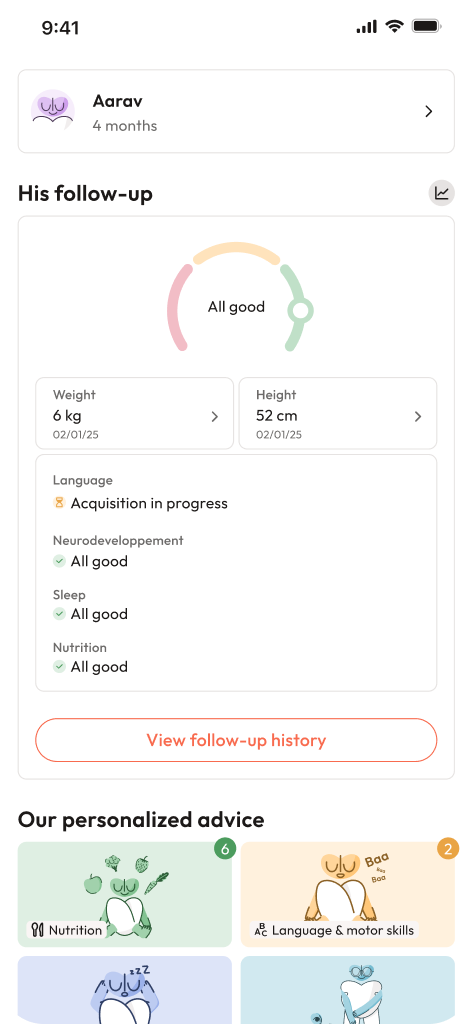
- For personalised tips and free child health questionnaires, you can download the Heloa app.
Further reading :