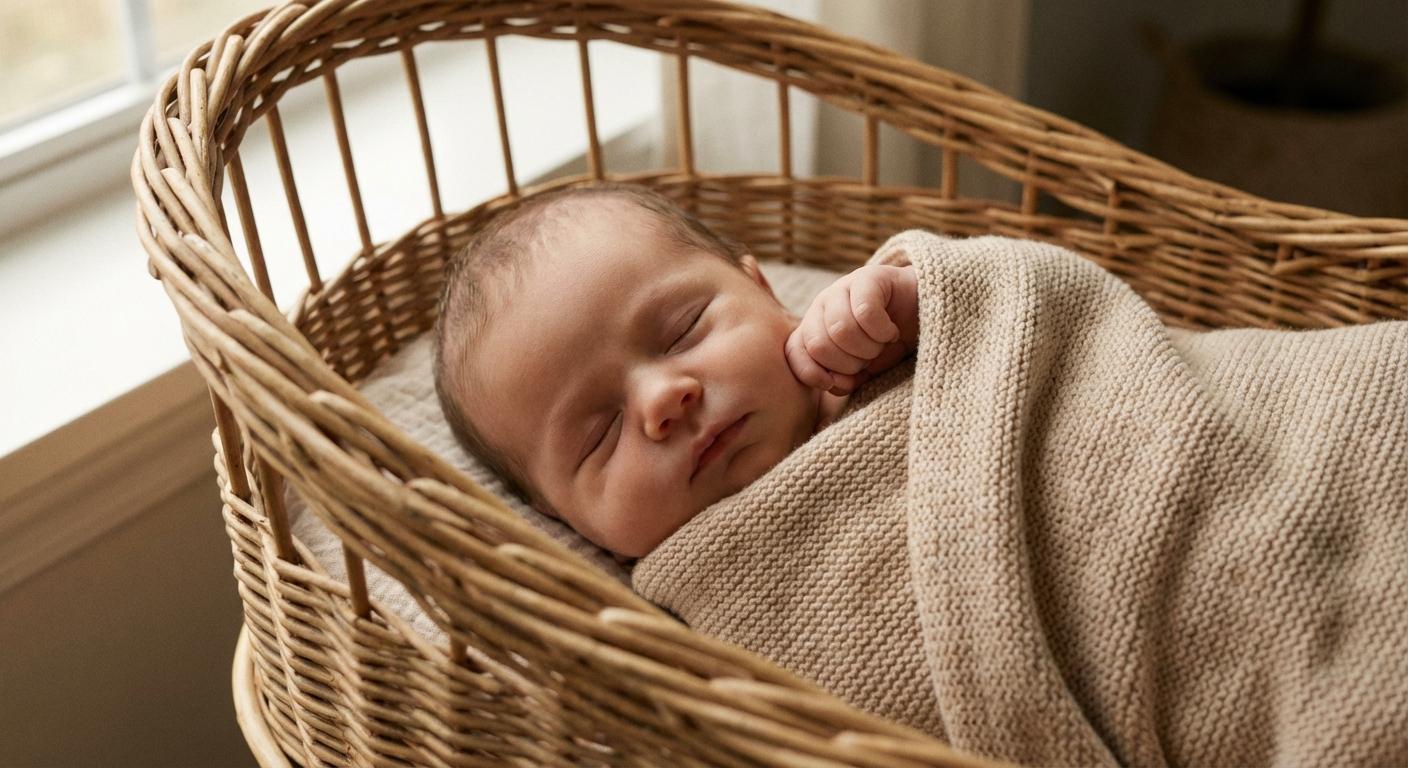
Seeing a baby clenched fist can make your mind run fast : Is this normal? Is my baby getting too tight? Is it a sign of some problem? In many newborns, closed hands are linked to primitive reflexes and the naturally higher flexor muscle tone of early infancy (flexor means the muscles prefer a bent, curled position).
What matters is the trend : hands that open more often with age, a baby who relaxes at times, and movements that look mostly symmetrical. Certain patterns, though, deserve a clinician’s opinion, for example one fist staying closed most of the time, marked stiffness, a thumb staying trapped in the palm, or delayed grasping.
Baby clenched fist: what does it usually mean?
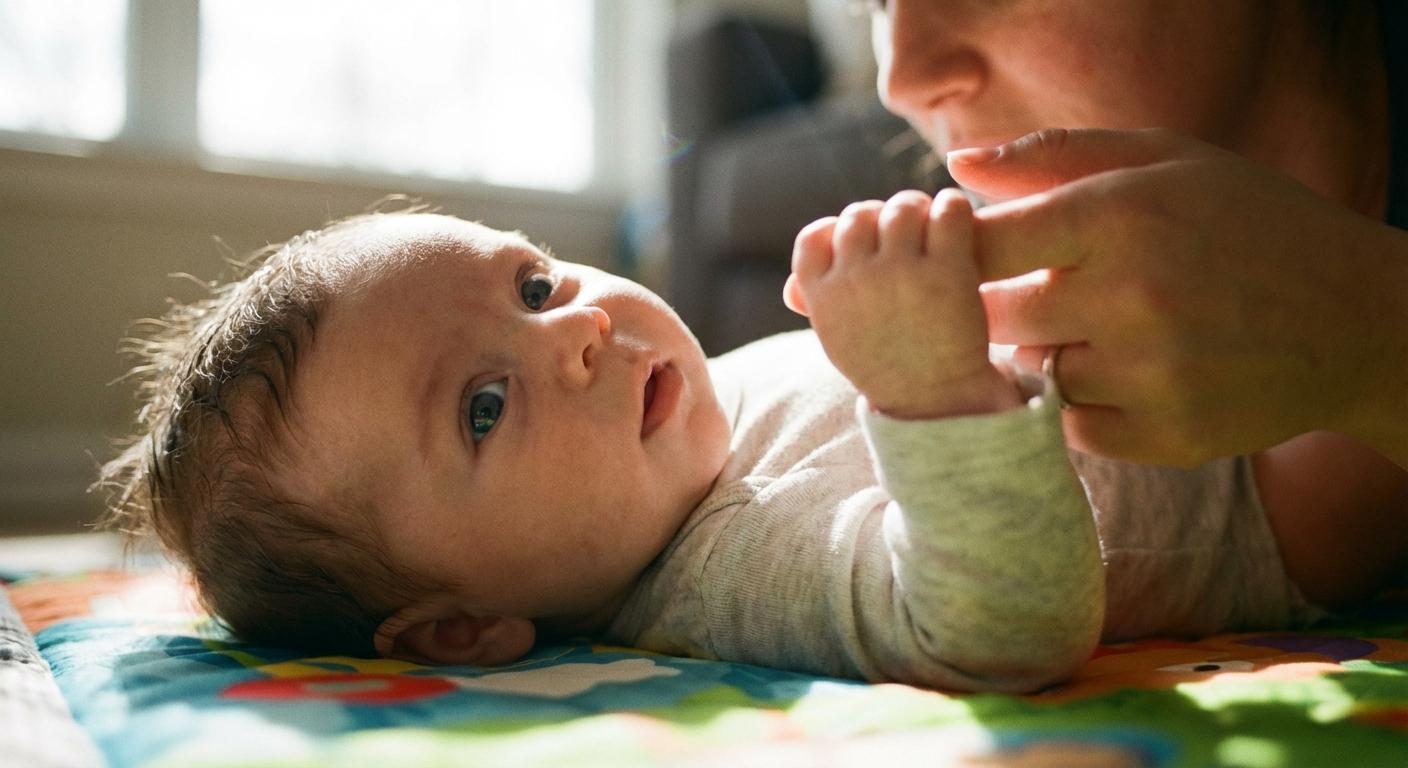
A baby clenched fist usually looks like fingers folded into the palm, sometimes with the thumb tucked in. In the early weeks, it is often not voluntary. Your baby’s nervous system is still working in an “automatic mode” : it reacts first to touch, hunger, tiredness, and discomfort, then slowly learns deliberate control.
You might notice a baby clenched fist during sleep, feeds, crying, or even quiet alert time. That is common. A hungry, cold, overstimulated, or sleepy baby often tightens up, then relaxes once calm again.


Clenched fist vs tense hand vs curled fingers
You do not have to name every hand position, but describing it can help.
- Clenched fist: a rounded, closed hand with fingers grouped together, often due to the palmar grasp reflex.
- Tense hand/arm: visible effort, sometimes involving the whole arm (raised shoulder, bent elbow). This can come with distress, pain, or sensory overload.
- Curled fingers: not fully fisted, may happen with mild tension or early gripping.
The most practical question : Does the hand open by itself when your baby is calm?
Both hands, or only one side?
If your baby clenches both hands and also opens them at different times, it is usually a typical early pattern.
If one hand is often open and the other remains a baby clenched fist again and again, note it and discuss it. Symmetry of movement is a key clue in early motor development checks.
Reflex-driven clenching vs early voluntary control
In the first weeks, hand closing is mainly automatic. Touching the palm can trigger a strong grasp, and fingers curl without your baby “deciding”. Voluntary control builds gradually as the brain and motor pathways mature. With time, you will see more open hands, hands coming towards the midline, and more purposeful reaching.
Why baby clenched fists are common in normal early development
Newborns naturally have a flexed posture : arms and legs tucked in, elbows bent. This reflects both the curled position from pregnancy and the normal early balance of muscle tone. Primitive reflexes add to the closing pattern. As coordination improves, babies shift from reflex gripping to intentional grasp-and-release.
A reassuring sign is the direction : more frequent hand opening and more hand use for exploration.
The palmar grasp reflex (why the fist can look “stuck”)
What it is
The palmar grasp reflex is an automatic response : when something touches your baby’s palm, the fingers flex and grasp, sometimes very strongly. It is present from birth and gradually integrates as the nervous system matures.
When it reduces
It is often strongest in the first 1-2 months and typically begins to integrate around 3-4 months, with a gradual shift across 4-6 months as voluntary control becomes clearer.
If this reflex remains very strong for long, it can make opening the hand and releasing objects harder.
The Moro (startle) reflex and daily triggers
A sudden loud noise, a sensation of falling, or heavy fatigue can trigger the Moro (startle) reflex : arms briefly open and then return into flexion. Hands may close tightly during the episode, but it is usually brief.
Also, daily state changes matter. When babies are hungry, tired, overstimulated, or uncomfortable, their nervous system runs “higher”, and a baby clenched fist may show up more.
Baby hand development timeline: when fists usually start to open
Every baby develops at a slightly different pace, but the general sequence is similar.
0-2 months
Many babies keep hands closed most of the time. A light touch to the palm triggers a strong grasp.
Instead of expecting open hands all day, look for small moments of opening, often easiest to see :
- in a warm bath
- during skin-to-skin
- after feeding when your baby is relaxed
Even a few seconds of relaxation is meaningful.
2-4 months
The clenched posture is usually less constant. Hands go to the mouth, fingers move more, and open palms appear longer during calm alert time, then may close again during crying.
A common milestone here : your baby starts grabbing their own clothes, a soft towel, or your finger. It is early control.
4-6 months
Reaching becomes more intentional. Babies grasp, shake, and begin to release. A baby clenched fist can still appear, but it usually alternates with open-hand activity.
You may also notice transferring, moving a toy from one hand to the other. This combines vision, posture, and finger coordination.
After 6 months
After 6 months, a fist that stays closed most of the time even when calm, especially if the hand looks stiff or is used less, should be discussed in clinic.
This does not automatically mean something serious. It means an exam and follow-up can assess tone (how tight or floppy muscles feel), mobility, and overall development.
Prematurity and adjusted age
If your baby was born early, comparing milestones using adjusted (corrected) age (chronological age minus prematurity) is often more accurate in the first 1-2 years.
Common everyday patterns that are usually reassuring
During sleep
Closed hands during sleep are common. It is reassuring when hands loosen at least sometimes during calm awake periods.
With hunger, crying, fatigue, or overstimulation
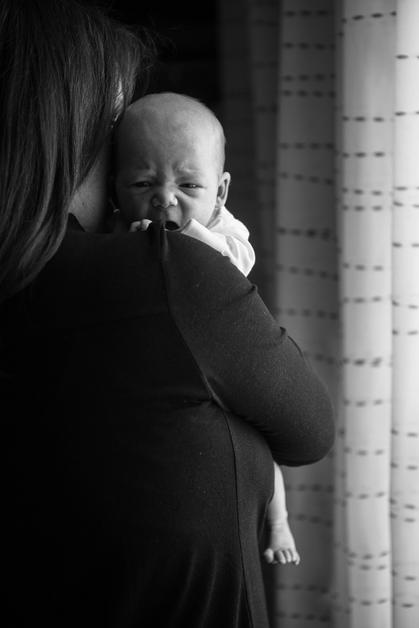
A hungry or distressed baby often looks tense overall : fists, shoulders, face, legs. After feeding or soothing, many babies soften visibly.
With discomfort (gas, reflux-like pain, constipation)
Discomfort can increase whole-body tension. Some babies clench while crying hard, during feeds, or when reflux-like pain is present (arching, distress around meals). If hands relax when calm and development keeps moving forward, discomfort may be the driver.
Practical clue : if your baby settles after burping, being held upright after feeds, gentle rocking, warmth, or a quiet room, that points more towards state and comfort than a motor problem.
With cold or environmental discomfort
Some babies clench when cold. Check warmth at the back of the neck and trunk rather than hands alone. Sometimes the reason is simple : a cold diaper change, tight clothing, harsh light, or a noisy house.
Bluish nails or fingertips when fists are closed
Brief colour changes can happen if baby is cold or the fist is tightly curled, and often improves with warmth. Seek medical advice promptly if a hand stays blue or very pale, feels cold, becomes swollen, looks painful, or your baby has breathing or feeding difficulty.
When a baby clenched fist needs extra attention
A baby clenched fist is only one piece of the puzzle. It becomes more meaningful when it is persistent, clearly asymmetric, or paired with other concerns.
Tight fists most of the day beyond expected windows
If hands stay tightly closed most of the day and do not gradually loosen by about 4-6 months, discuss it. Persistent tight fists beyond about 6 months (or beyond what fits adjusted age) are taken seriously, especially if reaching and grasping are limited.
One-sided fisting or reduced use of one hand
Consistent one-sided fisting or clearly reduced use of one hand can suggest asymmetry in tone, strength, or motor control. A very strong hand preference before 12 months is worth mentioning.
Thumb-in-fist posture
A tucked thumb can be part of early reflex patterns. It becomes more concerning when :
- the thumb stays trapped most of the time
- it is difficult to bring out when your baby is relaxed
- it persists week after week and limits opening and grasping
Tight clenched fists plus abnormal tone (hypertonia or hypotonia)
Newborn flexion is normal. Concerns rise when :
- the body seems very stiff (possible hypertonia), limbs difficult to move gently, or
- the body seems unusually floppy (possible hypotonia), with poor antigravity control
If this persists or appears along with other delays, a detailed exam is helpful.
Delayed milestones with clenched fists
Clenched fists matter more when linked with :
- poor head control
- limited hands-to-midline or hands-to-mouth
- little reaching
- difficulty grasping and releasing
- difficulty transferring objects hand-to-hand
Unusual episodes: shaking or possible seizures
Some trembles can happen when a baby is falling asleep or crying hard. More concerning patterns include repetitive rhythmic jerking, repeated identical spells, reduced responsiveness, or breathing/colour changes. If unsure, a short video (10-30 seconds) can help the doctor a lot.
General health warning signs
Seek prompt medical advice if fist clenching comes with marked sleepiness, worsening feeds, persistent vomiting, breathing difficulty, high fever, refusal to feed, or extreme irritability.
When to seek urgent care
Get urgent assessment if a hand becomes bluish and cold, swollen, clearly painful, or your baby suddenly stops moving an arm after a fall or event.
Fine motor milestones linked to hand opening
Doctors and therapists look at hand opening along with shoulders, elbows, wrists, head, and trunk. If a baby stays very curled, with shoulders raised or wrists strongly flexed, opening the hand may be harder because alignment affects finger position.
Typical milestones (with variation) include :
- hands to midline and hands to mouth: around 2-3 months
- reaching with a more open hand: around 3-4 months
- reflex grasp shifting to voluntary grasp-and-release: across 3-6 months
- transferring objects hand-to-hand: around 5-7 months
- raking grasp and early pincer: raking around 6-8 months, early pincer around 8-10 months, refined pincer around 9-12 months
What to avoid: forcing finger opening
If a baby clenched fist worries you, try to resist “unfolding” the fingers. Forcing can be uncomfortable and does not teach the nervous system to organise movement.
Instead, focus on :
- noticing when hands relax naturally
- warm water (bath time)
- skin-to-skin
- comfortable, supported positions with relaxed shoulders
- light toys that are easy to hold (a small ring, soft rattle)
When to contact a paediatrician (and what helps the visit)
Bring it up if you notice :
- fists clenched almost all the time, including when calm
- persistent one-sided fisting or reduced use of one hand
- persistent thumb-in-fist limiting opening
- marked stiffness or floppiness
- delays in reaching, grasping, bringing hands to mouth, transferring, or releasing
- unusual repetitive episodes (video helps)
- feeding difficulty, poor weight gain, or breathing concerns
What to track at home
A few notes can make your appointment more efficient :
- When does the hand open most (bath, after feeding, skin-to-skin)?
- Is it symmetrical?
- Does your baby release objects?
- Do hands go to the mouth?
- Does your baby watch their hands and try to reach?
Gentle ways to support hand opening and motor development at home
Positioning and daily routines
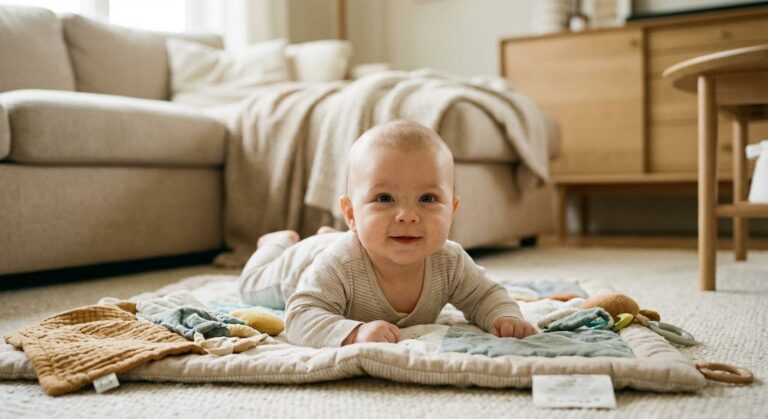
- Supervised tummy time, short and frequent, supports shoulder and trunk strength, helping hands open and reach.
- During play on the back or side-lying, offer toys at midline to encourage both hands together.
Calming and sensory support
Warm baths, soft textures, and gentle touch help many babies relax. Keep stimulation simple, if baby turns away, stiffens, or cries, pause and try later.
Touch and movement ideas (child-led)
Try slow palm massage and fingertip strokes. Offer an interesting object and wait. Avoid prying fingers open.
Toy choices
Choose lightweight rattles, soft cloth books, textured teethers, and soft blocks that are easy to hold. Different shapes help your baby practise adjusting grip and letting go.
Safety and care for baby hands
- Supervise play and keep small objects out of reach.
- Trim and file nails often (after a bath can help) to reduce scratches, mittens during awake time can reduce healthy hand exploration.
- For sleep, swaddling can calm some newborns, but keep it breathable and not tight, and stop once rolling may be close.
Key takeaways
- Baby clenched fist is very common in newborns and is often explained by primitive reflexes and early flexor tone.
- The most reassuring sign is the trend : more frequent opening, hands to midline/mouth, reaching, and progress in grasp and release.
- Sleepiness, hunger, crying, cold, overstimulation, and discomfort (gas, reflux-like pain, constipation) can all increase a baby clenched fist.
- Seek medical advice if you see persistent tight fists beyond expected ages (especially after 6 months), ongoing thumb-in-fist, clear one-sided clenching, abnormal tone, delayed milestones, unusual episodes, or general health concerns.
- Gentle, child-led play supports hand skills, avoid forcing finger extension.
- Support is available. You can also download the Heloa app for personalised tips and free child health questionnaires.