Planning an outing with a little one often triggers the same spiral: sun, heat, a wriggly baby… and the hunt for the best baby sunscreen that protects without upsetting delicate skin. Baby skin is thinner, its barrier is still maturing, and UV exposure can be sneaky, no immediate burn does not mean “no impact.” Parents usually want three things at once: strong UVA/UVB coverage, a formula that doesn’t sting, and a routine that works outside real life.
Best baby sunscreen picks by need
Quick picks at a glance
- Overall: mineral lotion/cream with zinc oxide first, Broad Spectrum SPF 30–50, fragrance-free.
- Budget: larger tube/pump, mineral SPF 30+, Broad Spectrum on the label, fragrance-free.
- Eczema/very sensitive: zinc oxide, short ingredient list, fragrance-free (not “unscented”), often alcohol-free.
- Water days: mineral SPF 30–50 with 80-minute water resistance.
- Stick: zinc oxide face stick for fast reapplication.
If you hesitate between two products, ask a simple question: which one will you actually apply generously? That one often becomes the best baby sunscreen for your family.
What to compare before buying
Useful columns when you’re choosing:
- SPF (30 / 50 / 50+)
- Active ingredients (%) (e.g., Zinc oxide 20%, Titanium dioxide 4%)
- Broad Spectrum (yes/no)
- Water resistance (none / 40 min / 80 min)
- Fragrance-free (yes/no)
- Alcohol-free (yes/no)
- Finish/white cast (low/medium/high, tinted option)
- Format (lotion/cream/stick)
- Price per ounce
Best baby sunscreen overall: mineral + broad spectrum
Zinc oxide is prized because it covers UVB and UVA well, including longer UVA wavelengths. Many baby sunscreens sit around 10–25% zinc oxide, higher often looks whiter and feels thicker. Real-life protection depends less on chasing a number and more on even coverage and reapplication. A product that spreads easily is more likely to become the best baby sunscreen you’ll stick with.


Best baby sunscreen budget pick
Budget options can still be excellent if the essentials are there: Broad Spectrum, mineral actives, and no fragrance. A larger tube often lowers cost per ounce, a pump can reduce waste (and the “cap disappeared in the diaper bag” problem). If your baby reacts easily, skip “botanical” extras, price does not predict tolerance.
Best baby sunscreen for eczema and very sensitive skin
Eczema (atopic dermatitis) means a more fragile skin barrier. The outer layer of skin holds less water and lets irritants in more easily, which explains the classic cycle: dryness → itching → rubbing → inflammation.
What tends to help:
- Zinc oxide mineral base
- Fragrance-free and dye-free
- Often alcohol-free if stinging/dryness happens
- Minimal ingredient list
- Barrier-friendly base ingredients (glycerin, sometimes ceramides)
Patch test new sunscreen on a small area for 24–48 hours if skin is reactive.
Best baby sunscreen with minimal white cast (including deeper skin tones)
Mineral filters can leave a visible cast because they scatter light. Some brands reduce this with “sheer” or “micronized” minerals, some families prefer lightly tinted mineral options that blend more naturally on medium-to-deeper skin tones.
Two practical tricks:
- Apply in two thin layers rather than one thick coat.
- Warm it between fingers before spreading (texture softens, streaks reduce).
Best baby sunscreen for beach and pool days
Water-resistant does not mean all-day. It means the film holds up for a tested time: 40 or 80 minutes.
For water play, look for:
- Broad Spectrum mineral SPF 30–50
- 80-minute water resistance
- A slightly “grippy” texture (it can withstand splashing better)
Reapply after swimming, after heavy sweating, and after towel drying. And remember the friction factors: sand, life jackets, carrier straps, and towels can rub sunscreen away quickly.
Best baby sunscreen stick (face + quick top-ups)
A stick helps around eyes, nose, cheeks, ears, and hairline. Apply, then blend with warm fingertips to reduce streaks.
Choose: zinc oxide active, fragrance-free, “tear-free” can be helpful, but avoid direct eye contact.
Best baby sunscreen for travel
Small squeeze tubes and twist-up sticks are the easiest in a diaper bag. Aerosol sprays are usually a poor match for babies (inhalation risk, patchy coverage). Trips are also a bad moment to experiment, pack the formula already tolerated at home.
What makes baby sunscreen different
Baby skin: why gentleness matters
Baby skin loses water more easily (higher transepidermal water loss) and irritates faster. Babies also regulate heat less efficiently. So the best baby sunscreen is one layer only: shade, breathable clothing, hydration, and cool breaks matter just as much.
What might you see after sun exposure, even without a classic burn?
- Diffuse redness and warmth
- Tiny bumps (heat rash can overlap)
- An eczema flare in predisposed babies
UVA vs UVB (and why “Broad Spectrum” matters)
- UVB: sunburn.
- UVA: penetrates deeper, contributes to oxidative stress and long-term DNA damage.
“No redness” can be misleading, especially with UVA. The best baby sunscreen should clearly state Broad Spectrum.
Baby vs kids vs family sunscreen
Baby formulas often feel thicker and more emollient. “Kids/family” options may rub in faster, yet can include fragrance or ingredients that sting near eyes. Usability is not cosmetic, if reapplication becomes a battle, protection drops.
A workable compromise for many families once baby is older than 6 months: one fragrance-free mineral sunscreen for everyone, plus a more minimal option if eczema flares.
Baby sunscreen safety basics
When babies can wear sunscreen
- Under 6 months: prioritize sun avoidance, true shade, hat, stroller canopy, breathable covering clothing. If a small area cannot be covered in a specific situation, medical advice can help.
- 6 months and older: sunscreen becomes part of routine protection. Aim for Broad Spectrum SPF 30+.
Sun safety beyond sunscreen: layers that actually hold
Sunscreen is the flexible layer. Clothing and shade are the stable layers.
- Shade as much as possible, especially from late morning to mid-afternoon
- Wide-brim hat that covers ears and neck
- UPF 50+ clothing and rash guards (excellent for water play)
- Sunglasses labeled 100% UVA/UVB protection (often UV400)
Patch testing (fast but useful)
1) Inner forearm or behind the ear.
2) Small amount.
3) Keep dry.
4) Check at 24 and 48 hours.
5) Redness, bumps, swelling, itching? Stop.
Mineral vs chemical filters for babies
Mineral filters (zinc oxide, titanium dioxide)
Mineral (inorganic) filters sit mainly on the skin surface and scatter/reflect UV, with some absorption.
- Zinc oxide: strong UVA + UVB.
- Titanium dioxide: great UVB, weaker long UVA.
Many clinicians prefer mineral-first for babies because it often stings less.
Chemical (organic) filters: why some families avoid them
Organic filters can feel lighter and look more “invisible,” but can sting around eyes or irritate reactive skin. Some parents also worry about absorption, research continues and regulations evolve by region.
A balanced view helps: if a toddler tolerates an organic-filter sunscreen and it’s applied generously, protection can be excellent. For many infants, mineral formulas remain the easiest route to tolerability and consistent reapplication, often what defines the best baby sunscreen in daily life.
Ingredients and label cues parents care about
Fragrance-free vs unscented
Pick fragrance-free. “Unscented” may still contain masking fragrance. Essential oils (lavender, citrus) can irritate or sensitize, especially with eczema.
Alcohol-free: when it’s worth prioritizing
If your child’s skin stings or runs dry, alcohol-free formulas can feel more comfortable and support consistent use.
“Non-nano” and “natural” labels
“Non-nano” definitions vary and may increase white cast. “Natural” can still irritate (botanical extracts). A better anchor: tolerance + Broad Spectrum protection.
Reading the label quickly
Check:
- Active ingredients + %
- “Broad Spectrum” wording
- SPF
- Water resistance (40 or 80 minutes)
- Directions for reapplication
SPF, water resistance, and reapplication
SPF 30 vs SPF 50
SPF mainly reflects UVB protection under test conditions with generous application. SPF 30 is already high when applied well, SPF 50 adds a buffer for imperfect application, especially in intense sun. Still, the best baby sunscreen fails if it is applied too thinly.
Reapplication rhythm
- Every 2 hours outdoors
- After swimming
- After heavy sweating
- After towel drying
Towel dry before reapplying, brush off sand first.
How to apply sunscreen well (without a struggle)
How much is “enough”?
Testing uses about 2 mg/cm², more than most families apply. Try:
- Apply zone by zone (face, arms, legs, torso, back)
- Aim for a thin, even layer you can briefly see before it blends
If you wonder whether you used enough, do a second pass on high-exposure zones (nose, shoulders, tops of feet).
When to apply, and where you don’t need it
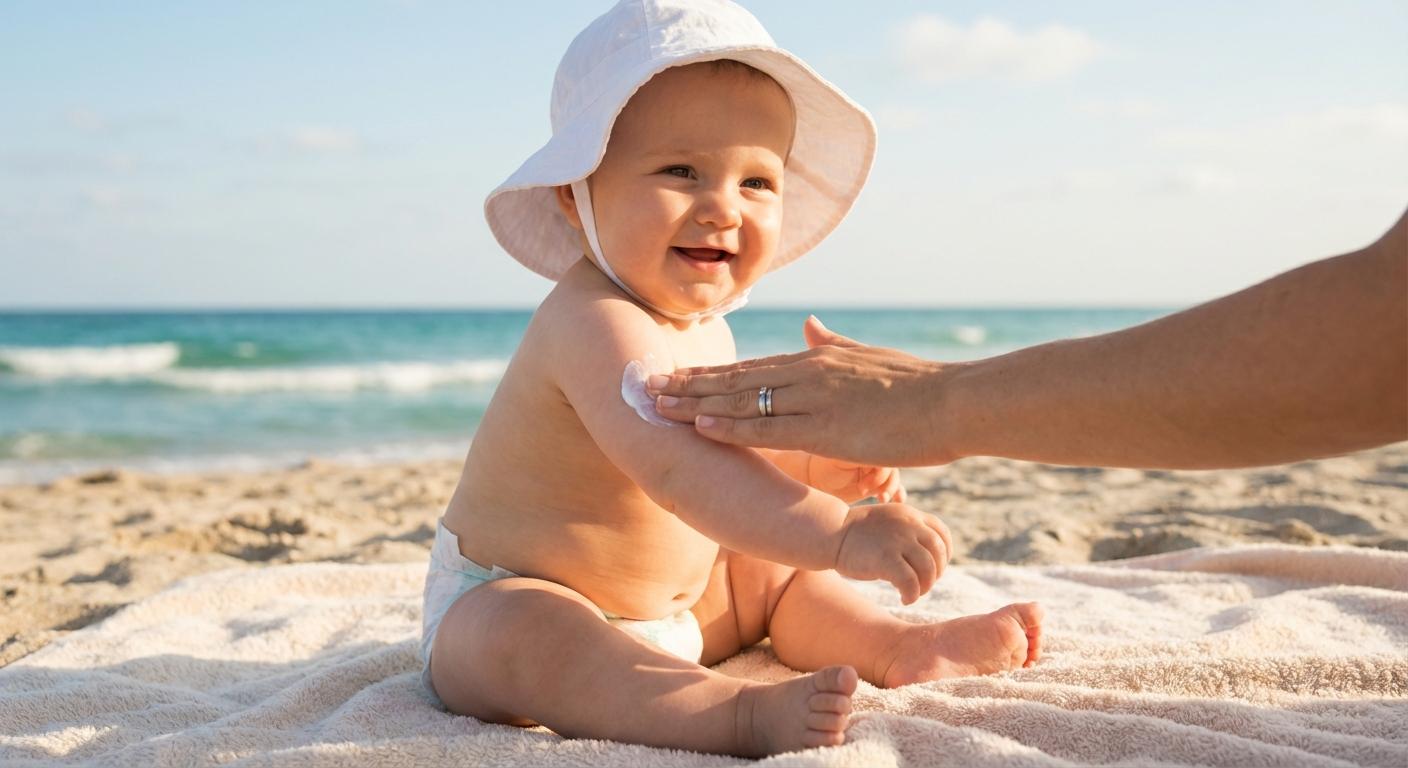
Apply 15–30 minutes before sun exposure so the film can settle. No need under clothing, focusing on exposed areas reduces heat and irritation.
Face + missed spots
Use fingertips near eyes. Don’t forget: ears (and behind), back of neck, tops of feet, backs of hands, hairline, swimsuit edges.
Squirmy baby strategies
- Dot method (forehead, cheeks, chin), then blend
- Warm hands help spread thicker mineral creams
- Stick for face, lotion for body
Good-enough coverage done consistently beats perfect technique that turns into a battle.
White cast tips
Two thin layers blend better than one thick layer. Let moisturizer absorb first if pilling happens.
Sprays and powders
For babies, lotions and sticks are usually safer and more controlled. Sprays and powders raise inhalation concerns and can leave patchy coverage.
Sensitive skin, eczema, and allergy-prone babies
If eczema is present
Because the barrier is disrupted, prioritize a zinc oxide mineral sunscreen that is fragrance-free, dye-free, and minimal-ingredient. If stinging occurs, an alcohol-free base often feels better.
If irritation happens
If a rash appears:
- Rinse with cool or lukewarm water
- Apply a simple fragrance-free emollient
- Stop the suspected product
Seek medical advice if symptoms spread, persist beyond 24–48 hours, or if you see swelling, hives, or any breathing difficulty.
Moisturizer + sunscreen pairing
Moisturizer first, then sunscreen. Wait a few minutes so the sunscreen forms a more even film. This can reduce flaking and discomfort on dry patches.
Sun protection beyond sunscreen
Clothing, shade, timing
UPF clothing does not rub off. Hats protect scalp, ears, and neck. Midday sun is stronger, shifting outings earlier or later reduces UV load. Sunglasses labeled UV400 help near water, sand, and snow.
After-sun care and heat warning signs
Rinse off salt/sand/sweat/sunscreen with lukewarm water, then moisturize.
If your child develops a significant sunburn, remember that sun and heat can travel together. Watch for:
- unusual sleepiness or lethargy
- vomiting
- refusal to drink, fewer wet diapers
- fast breathing, very hot skin
Move to a cool place, offer fluids, and seek medical advice promptly.
Safety, storage, and travel notes
Heat can degrade sunscreen. Avoid hot cars, discard if it separates, changes color, or smells off. If you buy sunscreen abroad, read the ingredient list, filters vary by country.
Best baby sunscreen buying checklist
- Mineral filters (zinc oxide ± titanium dioxide)
- Broad Spectrum
- SPF 30–50 daily, SPF 50+ for intense sun can be practical
- Fragrance-free (not unscented) and essential oil–free
- Alcohol-free if stinging/dryness occurs
- 80-minute water resistance for water play
- Format you will actually use (lotion/cream for body, stick for face)
Key takeaways
- The best baby sunscreen is usually a Broad Spectrum mineral option (often zinc oxide-based) that your child tolerates and that you can reapply.
- Under 6 months: shade and covering clothing first, sunscreen use is limited and situation-dependent.
- SPF 30–50 is suitable for everyday, SPF 50+ can add a buffer in intense sun, but reapplication stays essential.
- Water resistance helps, yet you still reapply after swimming, sweating, or towel drying.
- For eczema/sensitive skin: fragrance-free, essential oil–free, often alcohol-free, patch test.
- Apply zone by zone and scan missed spots (ears, neck, hands, feet, swimsuit edges).
- Professionals can help refine choices (pediatrician, pharmacist, dermatologist), and you can download the Heloa app for personalized tips and free child health questionnaires.
Questions Parents Ask
Do babies need sunscreen if they’re in the shade or wearing UPF clothing?
It’s totally normal to wonder if sunscreen is still useful when you’re doing “all the right things.” Shade and UPF 50+ clothing are excellent because they don’t rub off. Sunscreen is mainly for exposed skin and the spots that clothing and hats often miss: ears, neck, hands, feet, hairline, and along swimsuit edges. Keep in mind that UV can bounce off water, sand, and pavement, so even shaded babies may get some exposure.
Can baby sunscreen block vitamin D?
Rassurez-vous: in real life, most families don’t apply sunscreen perfectly thick or evenly enough to fully block UVB. And vitamin D isn’t only about sun—food and supplements can cover needs safely, especially for babies. If you’re unsure what’s right for your child (breastfed, formula-fed, winter months, darker skin tones), a pediatrician can help tailor vitamin D advice without adding sunburn risk.
How do I remove mineral sunscreen without irritating sensitive skin?
Mineral formulas can cling—especially on dry or eczema-prone patches. You can try a two-step cleanse: first massage with a bland emollient (or a gentle, fragrance-free cleansing oil), then rinse and follow with a mild cleanser. Finish with a simple fragrance-free moisturizer. If redness or bumps appear, pausing the product and switching to a shorter ingredient list often helps.