
When your baby starts coughing, nights feel longer and feeds get choppy. It’s natural to look for a baby cough natural remedy that feels gentle and safe (without sliding into risky DIY mixtures). The most effective “natural” care for infants is usually simple: support breathing, clear the nose, protect hydration, and watch for red flags. Age, cough sound, and breathing effort change the plan.
Baby cough natural remedy: what helps most (and why)
A quick comfort checklist for the next 24 hours
- Watch breathing when your baby is calm: chest pulling in under/between ribs (retractions), nostril flaring, grunting, very fast breathing.
- Protect hydration: breast milk or formula on demand, smaller, more frequent feeds often work better.
- If the nose is blocked: 2–3 saline drops per nostril, then gentle suction before feeds and sleep.
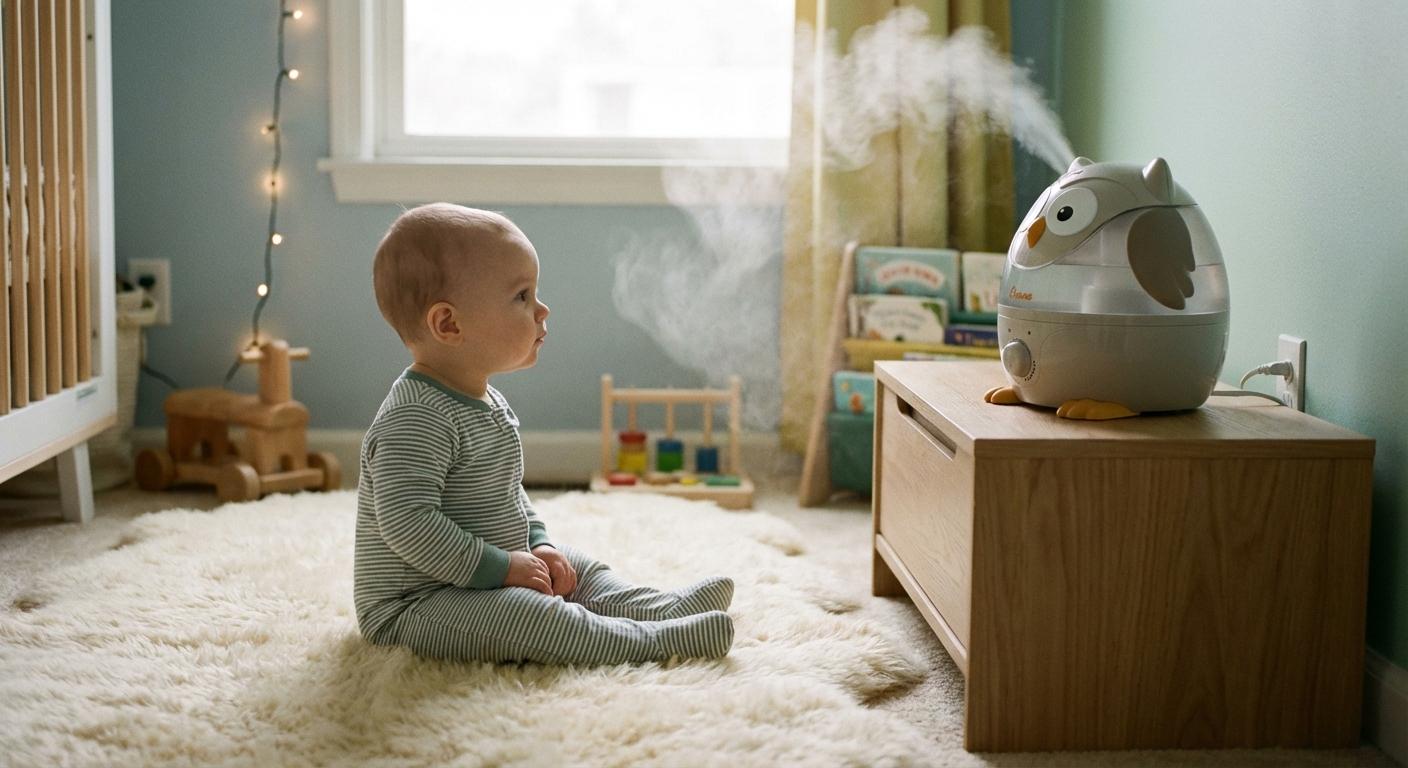
- Use a cool-mist humidifier, aim for 40–50% humidity, change water daily, clean well to limit mold.
- Upright holding while awake can help comfort (never for unsupervised sleep).
- Safe sleep stays non-negotiable: back, firm flat surface, empty crib (no pillows, wedges, positioners).
What “natural” means for babies
For infants, “natural” mainly means supportive care. A baby cough natural remedy is not a homemade syrup, a “micro-dose” of an adult product, or essential oils. Babies have narrow airways and immature drug processing, tiny amounts can cause outsized side effects.
The goal is not to stop the cough
Coughing is often protective. A good baby cough natural remedy helps your baby breathe, feed, and sleep more comfortably, while the body clears the infection.
Understanding baby cough: what it can mean
Why babies cough
Cough is a reflex triggered by mucus, milk, refluxed stomach contents, or irritants touching the airway lining. Most commonly, it’s linked to viral colds plus postnasal drip (mucus draining from the nose into the throat). Other triggers: smoke/vaping aerosols, dust, incense, strong fragrances, reflux after feeds.


Baby anatomy amplifies symptoms
Small nasal passages swell easily. Many young infants rely on nasal breathing, so a blocked nose can disrupt feeding and sleep and increase coughing as secretions pool. Thick mucus is also harder to move, so cough may linger.
Newborn cough: extra caution
In newborns (0–28 days), symptoms can worsen quickly and may look subtle. Any fever in this age group needs urgent medical evaluation.
Match the remedy to what’s driving the cough
A cough usually has a main “driver.” Choosing a baby cough natural remedy works best when it targets that driver.
- Nasal congestion + throat drip: saline + gentle suction reduces drip-triggered cough (often worse when lying down).
- Irritated airways after a viral cold: comfortable humidity, calm routines, time.
- Thick secretions: hydration helps thin mucus.
- Reflux after feeds: upright holding after feeds can reduce cough triggered by spit-up.
If wheeze, repeated coughing fits, fever in a very young baby, or increased work of breathing is present, home care remains supportive, but medical assessment matters.
Types of baby cough: helpful clues
Dry cough
Often follows a viral cold or comes from irritation (dry air, smoke, fragrances). Seek advice if it lasts beyond 2–3 weeks, or if feeding drops, sleepiness is unusual, or fever appears.
Wet/phlegmy cough
Babies usually swallow mucus, so gagging or vomiting mucus can happen. A baby cough natural remedy here focuses on clearing the nose and supporting fluids, not suppressing the cough. Watch for rapid breathing, retractions, fever, or worsening day by day.
Postnasal drip cough
Commonly worse when lying flat and noticed after sleep. Saline drops and gentle suction often reduce the trigger by clearing the nasal passages.
Nighttime cough
Lying down increases mucus drainage backward, dry indoor air can add irritation. A bedtime routine with saline + suction and moderate humidity often helps more than medication in this age group.
Barking cough (croup-like)
A seal-like bark and hoarse voice suggest croup. A harsh sound on breathing in (stridor) can occur. Stridor at rest, blue color, visible retractions, or difficulty drinking needs urgent care.
Whooping cough–like pattern (pertussis)
Pertussis may start like a mild cold, then shift to repeated coughing fits that end in vomiting or exhaustion. In very young infants, “whoop” may be absent, pauses in breathing (apnea) can happen. Call promptly if suspected.
Wheezy cough
Wheeze (a whistling sound, often louder on exhaling) can occur with bronchiolitis. Same-day assessment is appropriate when wheeze comes with fast breathing, retractions, poor feeding, or unusual tiredness.
Common causes of cough in babies
Viral colds and post-viral cough
Most infant coughs are viral. Often: runny nose first, then cough as mucus drains. Cough commonly improves within 1–2 weeks, but can last up to 3 weeks. A post-viral cough may persist 2–4 weeks because the airways remain sensitive.
Bronchiolitis
A viral infection of the small airways. Feeding can become tiring, breathing may look harder. Helpful support at home: frequent saline and nose clearing, smaller feeds more often, tracking wet diapers and energy, keeping the environment calm.
You may wonder: “Is it still okay to manage this at home?” Often yes, if breathing is comfortable, feeds are adequate, and wet diapers remain normal. But if you see retractions, grunting, or your baby is too tired to drink, that’s no longer a “wait and see” moment.
Croup, pneumonia, pertussis
- Croup: barking cough ± stridor.
- Pneumonia: fever, cough, rapid breathing, retractions, baby looks unwell.
- Pertussis: prolonged cough spells, vomiting after coughing, apnea in young infants.
These patterns need prompt medical contact.
Reflux-related cough
Cough clusters after feeds, frequent spit-up, or discomfort may suggest reflux. Focus on feeding rhythm and upright time rather than cough suppressants.
Two practical notes that can matter a lot:
- If bottle-feeding seems “too fast,” a slower-flow nipple can reduce gulping and air swallowing.
- If spit-up is frequent but your baby grows well and seems comfortable, reflux is often physiological (common in infancy) and improves with time.
Teething and irritants
Drool can trigger an occasional cough, but persistent cough should not be blamed on teething. Irritants (smoke, vaping aerosol, perfumes, cleaning sprays) can cause cough without fever, removing the trigger often helps.
Safety first: natural remedy rules by age
Newborn cough natural remedy (0–28 days)
Safest home measures: saline drops, very gentle suction, cool-mist humidifier (cleaned properly), frequent breast milk or formula feeds.
Avoid OTC cough/cold medicines, honey, essential oils, menthol/camphor rubs, herbal products.
Call urgently for: fever (rectal 38°C / 100.4°F or higher), poor feeding, unusual sleepiness, breathing changes, or a new persistent cough.
Infant cough natural remedy (1–12 months)
This is where a baby cough natural remedy approach is most common:
- saline (2–3 drops per nostril as needed) + gentle suction before feeds and sleep
- humidified air
- feeds on demand (often smaller, more frequent)
Still avoid honey under 12 months, OTC cough/cold medicines, essential oils, and homemade syrups.
Baby cough natural remedy after 12 months (12–24 months)
After 12 months, honey can soothe cough (often 1/2 to 1 teaspoon, 2–5 mL, as needed). Saline, humidity, and fluids remain first-line.
Why OTC cough/cold medicines are discouraged
Limited benefit for typical viral cough, but real risks: sedation, agitation, rapid heart rate, and dosing errors, especially when products overlap.
Baby cough natural remedy options that are actually safe
Nasal saline + gentle clearing
For congestion, this is often the most effective baby cough natural remedy.
- When? Before feeds, naps, bedtime.
- How? Saline first, suction only if needed and gently.
Tip: positioning helps. Place your baby on their side with the head slightly turned, add saline to the upper nostril, and let loosened mucus drain out.
Gentle suction (bulb syringe/aspirator)
Keep the tip just inside the nostril, angle slightly toward the side/back, and limit suctioning to avoid irritation. Clean after each use.
Cool-mist humidifier (aim 40–50%)
Too much humidity can encourage mold and dust mites. Place the device out of reach and not blowing directly at the crib, change water daily and clean regularly.
Warm bath or steamy bathroom air
A warm bath can loosen secretions. Or sit in a steamy bathroom for 10–15 minutes with hot shower water running. Avoid bowls/pots of steam.
Hydration and feeding support
Offer breast milk or formula on demand. If feeds shorten due to congestion, offer them more often to protect hydration.
A simple marker parents often like: wet diapers. Fewer wet diapers can be an early sign that intake is slipping, sometimes even before the mouth looks dry.
Upright holding (awake only)
Upright time can reduce postnasal drip and reflux-related cough. After feeds, 15–30 minutes upright while supervised may help, then return to safe back sleeping.
Air quality: remove triggers
Smoke-free home and car, brief daily ventilation, fewer fragrances and aerosols, less dust and dampness.
And a small but powerful detail: avoid overheating the room. Warm, dry air thickens secretions, a slightly cooler, comfortable room often feels better for breathing and settling, especially overnight.
What to avoid (even if it’s called “natural”)
- Honey under 12 months: risk of infant botulism (Clostridium botulinum spores).
- Essential oils/diffusers: airway irritation and possible bronchospasm.
- Herbal teas/supplements/syrups: uncertain dosing, contamination risk, allergy risk.
- Menthol/camphor rubs: irritation, camphor can be toxic.
- Hot steam methods: burn risk.
- OTC cough syrups/decongestants: side effects and dosing errors.
When to call the pediatrician (and when to seek urgent care)
Seek emergency care for marked retractions, grunting, persistent nostril flaring, very fast breathing, blue/gray color, pauses in breathing, inability to feed due to breathing effort, or difficulty waking.
Breathing-rate thresholds (when calm)
- Under 2 months: 60 breaths/minute or more
- 2 to 12 months: 50 breaths/minute or more
Fever with cough
- 0–3 months: rectal temperature 38°C / 100.4°F or higher needs urgent evaluation.
- 3–12 months: same-day advice if fever is high, lasts more than briefly, or comes with poor feeding or breathing symptoms.
Dehydration concerns
Call promptly if wet diapers drop, mouth is very dry, vomiting prevents keeping feeds down, soft spot looks sunken, or sleepiness is unusual.
Cough that persists or worsens
Arrange a check if cough lasts beyond 2–3 weeks, if there is no gradual improvement after 7–10 days, or symptoms worsen after improving.
A simple 24–72 hour action plan (no medications)
1) Saline before feeds and sleep, suction only if needed.
2) Set the room: comfortably cool, 40–50% humidity, brief daily ventilation.
3) Protect hydration: smaller feeds more often if necessary.
4) Remove irritants: smoke, fragrances, aerosols, dust, dampness.
5) Track breathing effort, feeding, wet diapers, energy, seek advice if no improvement in 48–72 hours or if red flags appear.
Key takeaways
- A baby cough natural remedy for infants is supportive care: clear the nose, keep humidity moderate, protect hydration, remove irritants.
- Most cough is linked to congestion and postnasal drip, saline and gentle clearing often help most.
- Age changes urgency: newborns and young infants need faster medical advice, especially with fever or breathing changes.
- Avoid risky “natural” options: honey under 12 months, essential oils, herbal products, menthol/camphor rubs, OTC cough/cold medicines, hot steam.
- Professionals can guide you, and for personalized tips plus free child health questionnaires, you can download the Heloa app anytime, day or night.
Questions Parents Ask
Can I use Vicks (menthol rub) or essential oils for my baby’s cough?
It’s understandable to want something that “works fast.” For infants, menthol/camphor rubs and essential oils can irritate sensitive airways, and some ingredients can be harmful if absorbed or accidentally ingested. A gentler option is focusing on air comfort: cool‑mist humidifier (cleaned well), a comfortably cool room, and nasal saline when congestion is present.
When is a baby’s cough contagious—and when can they go back to daycare?
Most coughs in babies come from viral colds. Contagiousness is usually highest in the first few days of symptoms (often when the runny nose starts), then gradually decreases. Many daycare policies focus on how your baby feels rather than the cough itself: breathing comfortably, feeding reasonably well, and no fever for the required period (often 24 hours without fever-reducers). If the cough is “whooping,” comes in intense fits with vomiting, or your baby is very young, it’s worth calling your pediatrician promptly, as specific infections may need testing and different return-to-group timing.
What if my baby coughs mostly after feeds—could it be reflux?
Yes, it can happen, and it doesn’t mean you’ve done anything wrong. Reflux-related coughing often clusters after feeding or when lying flat. You can try smaller, more frequent feeds, pause for burps, and keep your baby upright for 15–30 minutes while awake and supervised. If coughing after feeds is paired with poor weight gain, significant distress, choking episodes, or breathing concerns, it’s important to seek medical advice.