At around 7 months, many families feel the same mix of excitement and doubt: “Should meals be more regular now?”, “Is my baby eating enough?”, “Do I move on from smooth purées?” With baby food 7 months, the aim is a steady routine, age-appropriate textures, and key nutrients (especially iron), while breastmilk or infant formula still does most of the feeding.
Baby food 7 months: what changes and what to aim for
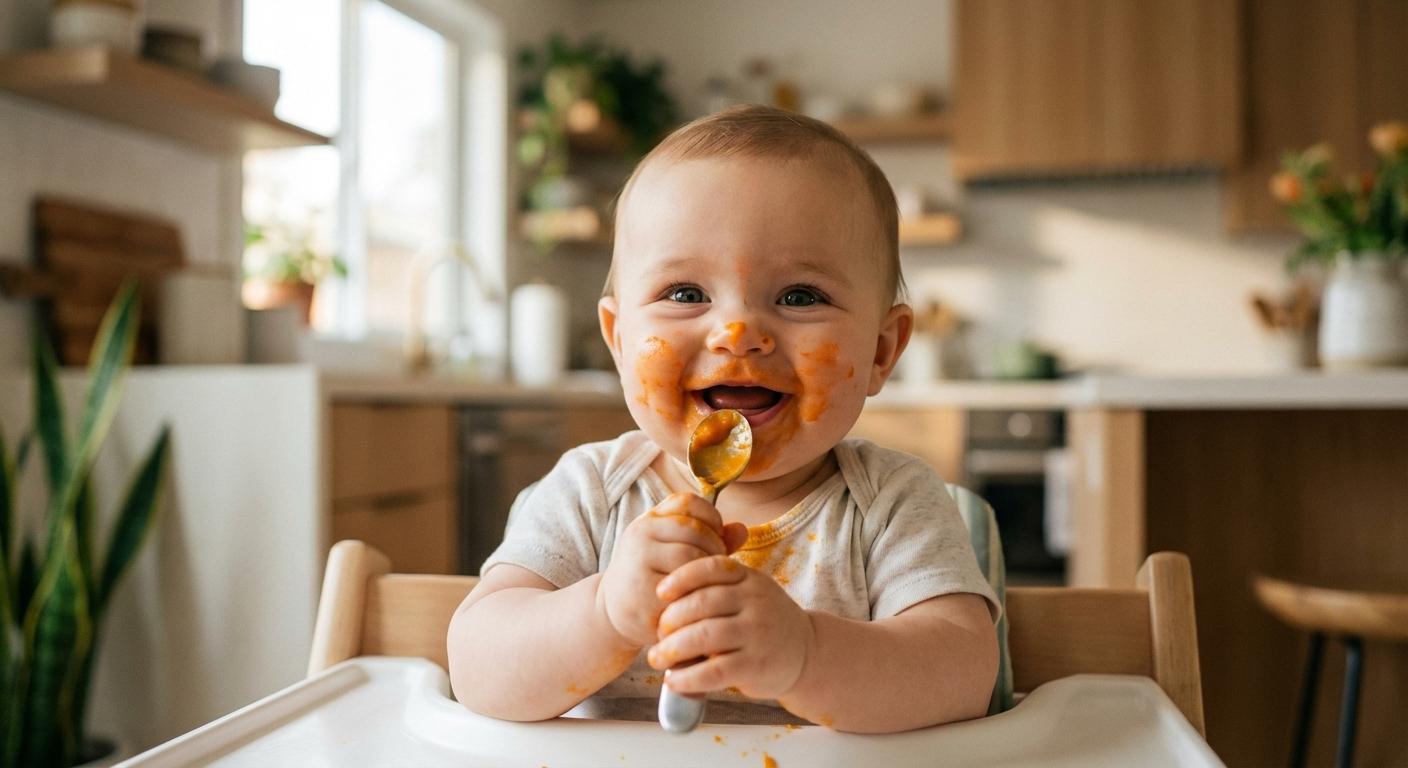
Seven months often marks a shift from “tastes” to a more predictable pattern. Tongue-thrust (pushing food out) usually fades, lip closure improves, and swallowing becomes more coordinated. Hand-to-mouth coordination also jumps: reaching for food, grabbing the spoon, experimenting.
Appetite can swing from day to day. Teething, minor infections, sleep changes, growth spurts, any of these can reduce interest in solids temporarily. One day looks like a full meal, the next day like two bites and done. Both can be normal.
Three guiding ideas for baby food 7 months:


- Milk stays the base (breastmilk or infant formula)
- Variety expands (colors, tastes, food groups)
- Textures progress (step-by-step)
Baby food 7 months vs 6 months: what you may notice
More curiosity at the table is common: watching you eat, leaning forward, opening the mouth early. Some babies want to participate by holding food or taking the spoon.
If thicker textures lead to repeated gagging, it often means the progression is too fast. Going back one step, then moving forward more gradually, is a reasonable approach.
Signs your baby is ready for more variety and texture
Look for:
- Steady head and neck control
- Sitting upright with minimal support
- Bringing toys or food to the mouth
- Interest during meals (reaching, leaning, opening the mouth)
Key goals at 7 months: iron, variety, and skill-building
With baby food 7 months, milk still covers most calories, but solids matter for certain nutrients, especially iron. After about 6 months, iron stores built during pregnancy decrease. Breastmilk contains small amounts of iron (well absorbed, yet limited). Many pediatric references use a target around 11 mg/day for 7–12 months, which is why iron-rich solids are emphasized.
Solids also build skills: moving food around the mouth, chewing motions (even without teeth), and early self-feeding. Chewing is a jaw-and-tongue pattern, not a tooth requirement.
Feeding schedule at 7 months: milk and solids together
Milk stays the backbone (breastmilk or infant formula)
Even when solids go well, breastmilk or infant formula remains the main food at 7 months. Solids complement milk, they do not replace it yet.
Many babies take roughly 24–32 oz (about 710–950 mL) of milk/day. Another common range is 500–800 mL/day, depending on the child and feeding pattern.
A reassuring benchmark once solids are established: keep milk around 500 mL minimum over 24 hours, then adapt based on growth, diapers, sleep, and overall well-being.
How many solid meals a day at 7 months (1–2 meals, moving gradually)
Most babies do well with 1–2 solid meals/day. One meal can still be appropriate if solids started later or texture learning is cautious.
Some families move toward a “family rhythm” (three meals and a snack). It can work, but it doesn’t need to be strict. If your baby is tired at dinner, lunch may become the “main” solid meal for a while, and that is fine.
Best times for solids and a realistic daily rhythm
A practical pattern for baby food 7 months is milk first, solids second, or solids about 30–60 minutes after a milk feed, when your baby is calm but not overly hungry.
You may wonder: “Should I offer solids before milk to boost intake?” Occasionally, yes, if advised for a specific reason by your clinician (for example, slow weight gain). For most babies, milk-first keeps meals calmer and protects milk intake.
Sample day schedules (flexible examples)
Example (2 solid meals):
- Morning: milk
- Mid-morning: solids
- Midday: milk
- Lunch: solids
- Afternoon: milk
- Evening: milk
Portions at 7 months: how much per meal and per day
Portion sizes: start small and increase at your baby’s pace
Portions vary widely with baby food 7 months. At the start, 1–2 tablespoons may be enough. Over time, many babies move toward 2–3 tablespoons, and some reach 1/4 to 1/2 cup (60–120 mL) at a meal.
It can also be uneven: a baby who eats a bigger lunch may barely touch dinner. Think week-to-week rather than meal-to-meal.
Hunger and fullness cues
Signs your baby wants more: leaning forward, opening the mouth, watching the spoon, reaching.
Signs your baby is done: turning away, closing the mouth, pushing the spoon, slowing down, getting distracted.
A useful detail for baby food 7 months: if your baby repeatedly clamps the lips or arches away, it is often fatigue or overstimulation, not “stubbornness.” A short pause, or ending the meal, can prevent escalating refusal.
Practical daily quantity ranges (benchmarks, not rules)
Common benchmarks you may see:
- Vegetables: 150–200 g/day
- Fruit: 120–200 g/day
- A savory purée portion at a meal: around 130 g
- Added fat: 1 teaspoon of oil after cooking (or a small knob of butter)
These are guides. For baby food 7 months, the bigger picture is variety + safe textures + steady milk intake.
Proteins at 7 months: typical amounts
- Meat: 10 g cooked
- Fish: 10 g cooked, carefully deboned
- Egg: 1/4 hard-boiled egg, yolk and white fully cooked
If your baby eats protein inconsistently, that can be normal early on. Offer, repeat, stay calm.
Textures at 7 months: moving beyond smooth purées
The smooth → thicker → mash progression (without rushing)
Many babies with baby food 7 months can handle thicker textures, which supports oral-motor development (tongue, jaw, coordinated swallowing).
A simple progression:
- Smooth purée
- Thicker purée
- Fork-mashed texture with tiny, very soft particles
To thicken purées, use well-cooked starches (potato, very soft rice, semolina, small pasta cooked until very tender). Add fat after cooking.
When to offer soft pieces and finger foods
Pieces depend on readiness, not age alone:
- Stable sitting (with support if needed)
- Good head control
- Improving hand-to-mouth coordination
Many families like mixed feeding: a spoon-fed purée (reliable iron intake) plus a few safe finger foods for practice.
Finger foods at baby food 7 months should be “squashable”: if you press it between finger and thumb, it should flatten easily. Shapes also matter: long sticks and large florets are often easier to grip than tiny slippery cubes.
Gagging vs choking
Gagging is common when learning and is usually noisy (coughing, breathing).
Choking may be silent or involve ineffective coughing with breathing difficulty (unable to cry, bluish color). Treat suspected choking as an emergency.
If you are anxious about safety, consider a certified infant first-aid course. It does not make you paranoid, it often makes feeding feel easier.
Nutrition priorities for baby food 7 months
Iron-rich foods to prioritize
Offer iron-rich foods regularly:
- Iron-fortified infant cereals
- Well-cooked, finely puréed meats
- Lentils/beans/chickpeas (very soft, well mashed)
- Egg (fully cooked)
Plant-based iron is less absorbed, but vitamin C improves absorption (pair lentils with broccoli/pepper, or add fruit).
A common question: “Can a baby be vegetarian at 7 months?” Sometimes, yes, but it needs planning. Iron, zinc, vitamin B12 (if fully plant-based), iodine, and energy density become the nutrients to watch. A pediatric dietitian can help tailor choices.
Healthy fats
Fats support growth and brain development. A practical routine: 1 teaspoon of oil after cooking, rotating oils (olive, canola/rapeseed). Avocado is also useful.
Fruits and vegetables
Aim for variety in colors and tastes, cooked until very soft. Bitter vegetables offered early (broccoli, spinach, green beans) can reduce later selectivity, provided the pressure stays low.
Foods to offer at 7 months (by food group)
Grains and starchy foods
- Very soft rice
- Semolina
- Quinoa cooked until very tender
- Polenta
- Small pasta cooked until very soft
- Potato
A simple savory structure for baby food 7 months: vegetable + starch + added fat, plus protein if planned.
Protein foods: a gentle weekly rhythm
Offer well-cooked proteins in baby-safe textures: meat purée, deboned flaked fish, lentil purée, fully cooked egg.
A flexible rhythm:
- Meat: 2–3 times/week
- Fish: 2 times/week (one lean, one oily)
- Egg: 2–3 times/week
Dairy foods
Plain full-fat yogurt can complement meals (pasteurized, unsweetened). Keep cheese modest because salt adds up.
Vitamin D
Vitamin D supplementation is common in infancy. Follow the plan given by your healthcare professional.
Meal ideas for 7 months
Savory purées/mashes:
- Carrot–potato purée + blended chicken + oil after cooking
- Zucchini–leek purée + oil after cooking
- Sweet potato purée + white fish (fully cooked, carefully deboned)
- Green beans purée + very soft rice to thicken
- Lentil purée + tomato (cooked) + a splash of oil after cooking
Finger foods (very tender, easy to mash):
- Soft-cooked sweet potato or zucchini sticks
- Ripe avocado strips
- Very ripe banana pieces
- Steamed broccoli florets (squashable)
Allergens and introducing new foods
Introducing new foods: simple observation
One new food at a time can make reactions easier to spot. Many babies need 6–10 exposures (or more) before acceptance.
A small practical trick with baby food 7 months: keep the rest of the meal familiar when introducing a new item. That way, if appetite drops, your baby still has something predictable.
Common allergens: safer ways to offer them
- Peanut: smooth peanut butter thinned with milk, mixed into porridge
- Egg: fully cooked, mashed
- Dairy: plain yogurt, pasteurized cheese in small amounts
- Wheat/gluten: cereal, semolina, pasta cooked very soft
- Soy: soft tofu
- Sesame: thin tahini mixed into food
- Fish/shellfish: well-cooked, finely flaked/minced
If severe eczema or a prior reaction exists, speak with a pediatrician before introducing peanut or egg.
What to watch for after new foods
Mild signs: hives, localized swelling, vomiting once, new rash.
Emergency signs: breathing trouble, swelling of tongue/throat, repeated vomiting with lethargy, widespread hives, blue/pale color, collapse.
Foods to limit or avoid at 7 months
- No added salt, limit ultra-processed foods
- No added sugar, skip juice
- No honey before 12 months (botulism risk)
- No cow’s milk as a main drink before 12 months (small amounts in cooking are usually fine)
- Avoid raw or undercooked egg, fish, or meat
Safety basics for feeding at 7 months
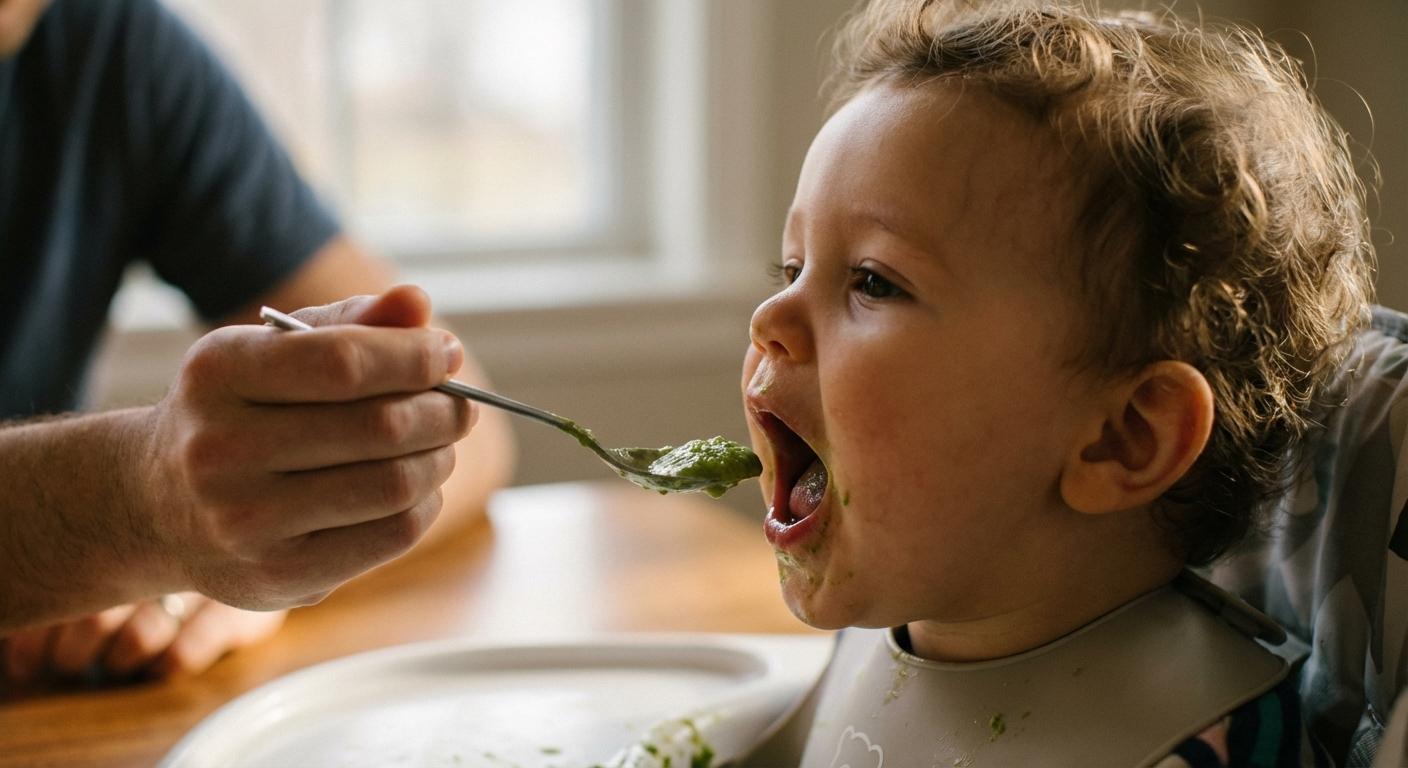
Sit your baby upright in a high chair with straps, stay within arm’s reach, and keep food soft.
Avoid major choking hazards: whole grapes/cherry tomatoes, whole nuts, popcorn, raw hard vegetable rounds, sausage chunks.
Food storage matters too. Homemade purées are commonly kept 24–48 hours refrigerated (depending on preparation) or frozen in small portions. If using jars, spoon into a bowl rather than feeding from the jar, once saliva gets in, bacteria multiply faster.
Offer a few sips of water with meals (open cup or training cup). Water supports comfort with solids, but it does not replace milk feeds.
Common challenges and gentle solutions
Refusing foods or eating very little
Common with baby food 7 months:
- Offer again without pressure
- Pair a new food with a familiar one
- If textures are refused, go smoother briefly, then re-try
Constipation
If stools harden: keep milk intake steady, vary fruits/vegetables, and avoid stacking binding foods (rice + banana + carrot) too often. Seek medical advice if pain, blood, or persistent constipation.
Key takeaways
- baby food 7 months works best when milk remains the base and solids build skills and nutrients.
- Most babies manage 1–2 solid meals/day, flexibility is normal.
- Typical milk intake ranges are wide, day-to-day changes happen.
- Progress textures gradually and prioritize iron-rich foods.
- Keep allergens in safe forms and watch for reactions.
- Safety rules: upright posture, close supervision, soft foods in baby-safe shapes.
- For tailored guidance and free child health questionnaires, you can download the Heloa app.
Questions Parents Ask
How much water can a 7-month-old drink with solids?
A few small sips with meals is usually enough. Water at this age is mainly for practice (open cup or training cup) and comfort with thicker foods, not to replace milk feeds. If your baby seems less interested in breastmilk or formula after offering water, you can simply reduce the amount and keep water “meal-only.” If diapers are clearly less wet or your baby seems unusually sleepy, it’s a good idea to check in with your clinician.
Can my 7-month-old eat the same food as the family (just adapted)?
Yes, and many parents find it simplifies daily life. The key is adapting texture and seasoning: choose very soft, easy-to-mash foods, and set aside a portion before adding salt, spicy seasonings, or sugary sauces. You can mash with a fork, thin with a little milk, or offer safe finger-food shapes (soft sticks or florets your baby can squash). It’s also perfectly okay if some days you rely on a simple purée—progress isn’t always linear.
What if my baby has no teeth—can they still handle thicker textures?
Absolutely. Chewing is more about jaw and tongue movements than teeth. Many babies manage thicker purées and fork-mashed foods by gumming them. Going step-by-step helps: smooth → thicker → mashed with tiny soft lumps. If gagging is frequent or stressful, slowing down for a few days is often reassuring and still supports learning.
Further reading: