Parents often wonder when to give baby water, especially during heat waves, after a first spoonful of purée, or when diapers seem a little less heavy than usual. The question looks simple. Yet infant hydration is tightly linked to nutrition, kidney maturity, and electrolyte balance. So timing matters, amounts matter, and the way water is offered matters, too.
Expect clear age landmarks (under 6 months, around 6 months, after 12 months), practical volumes that stay realistic, and safety points you can act on quickly without turning every sip into a math problem.
When to give baby water: the age milestones that make sense
Under 6 months: usually no water (even when it’s hot)
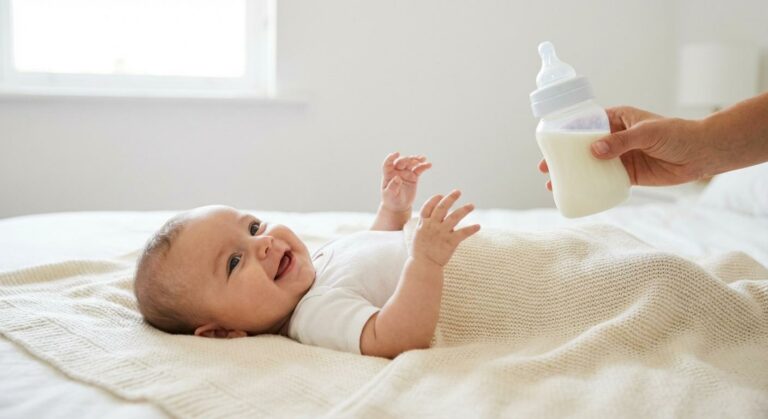
When parents ask when to give baby water before solids, the safest default is: don’t. For most healthy babies, breast milk or correctly prepared infant formula already supplies water plus calories plus electrolytes.
What changes in hot weather? Typically not the drink, but the rhythm: more frequent feeds, sometimes shorter, often better tolerated.


A few situations need individualized medical input (prematurity, kidney or heart disease, certain metabolic disorders, poor weight gain, major fluid losses). In those cases, when to give baby water and how much should be decided with a clinician.
Around 6 months: a few sips with solids
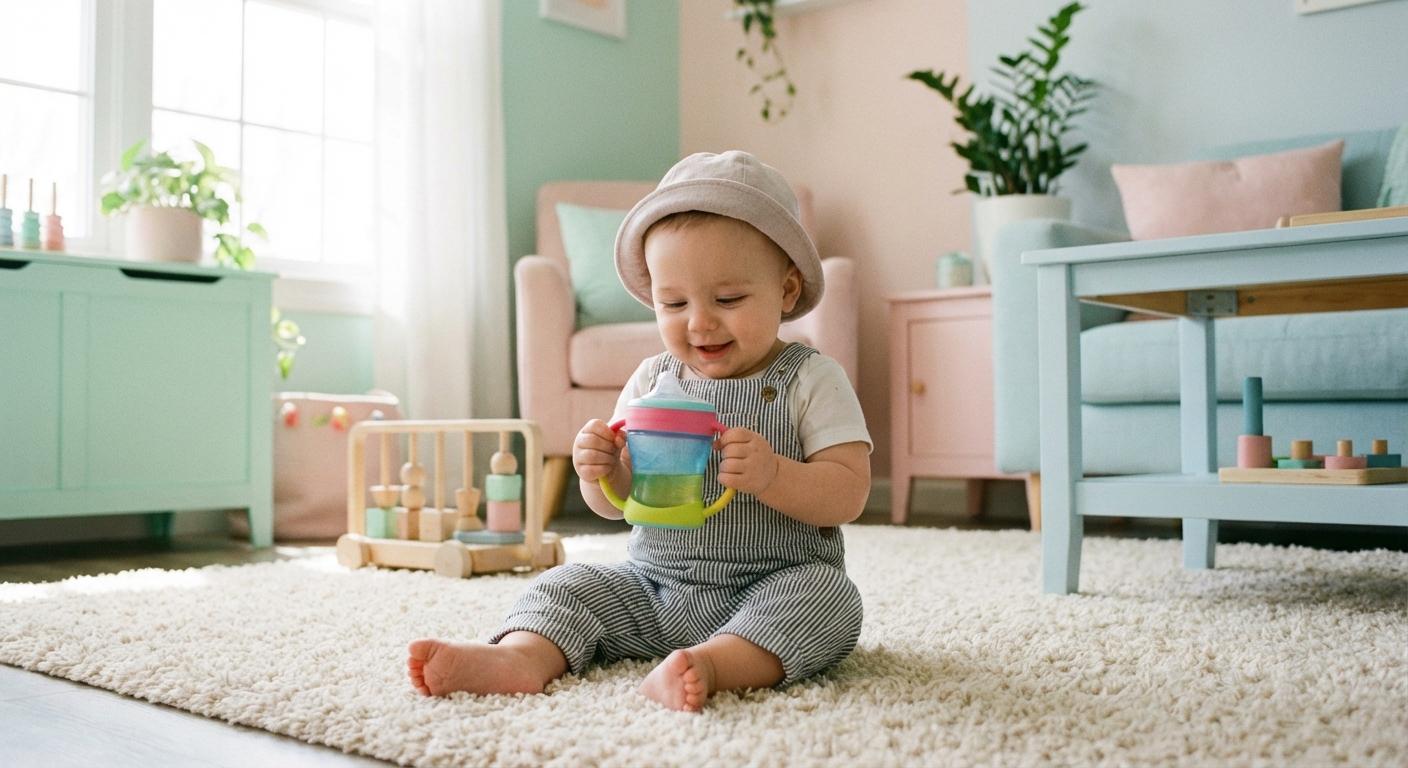
Around the moment solids begin, the question when to give baby water finally gets a practical answer: small sips, offered in a cup, mainly with meals.
Think: “training sips.” Not “filling the tank.” Milk still carries hydration and energy throughout the first year.
After 12 months: water becomes the default drink
After 12 months, water gradually becomes the everyday thirst-quencher, at meals and between meals. As salt, protein, fiber, and activity increase, water helps keep fluid balance steady. Milk may still be part of your routine, but water takes the lead.
Why babies rarely need water before 6 months
Early infancy: hydration and nutrition travel together
In the first months, drinking and eating are essentially the same act. Milk provides:
- water
- energy (calories)
- protein and fat
- vitamins and minerals
So the better question is often: is feeding going well? Is your baby gaining weight and wetting diapers normally?
Breast milk adjusts during a feed
Breast milk composition shifts during a nursing session: the milk at the beginning is more watery (helpful for thirst), and later milk is richer in fat (helpful for satiety). In warm weather, babies commonly compensate with more frequent feeds.
Formula hydrates, only if mixing is exact
Prepared formula is mostly water, yes. But the preparation ratio is non-negotiable: level scoops, correct water volume.
- Too concentrated: higher solute load (more particles for the kidneys to handle).
- Too diluted: too much free water, not enough nutrients.
If you use bottled water for formula, choose a low-mineral option to avoid unnecessary sodium, sulfates, or fluoride.
Immature kidneys and sodium balance: why “extra water” can backfire
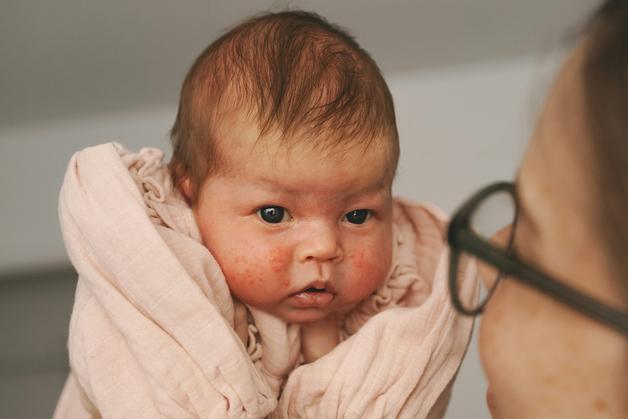
Newborn kidneys have a limited ability to eliminate large amounts of free water. If a baby drinks too much plain water, blood sodium can drop (hyponatremia). It’s uncommon, but potentially serious.
Signs can include unusual sleepiness, marked irritability, and, at the severe end, seizures. This is exactly why when to give baby water is not only a preference question, it’s physiology.
Can newborns have water?
0–3 months: water is not needed for healthy babies
For healthy newborns, plain water is not advised. Hydration should come from breast milk or properly prepared formula.
Fever or heat can make parents think “water.” A better reflex: offer milk more often, and seek medical advice early for very young infants.
4–5 months: still generally no
At 4–5 months, babies are typically not ready for meaningful water intake. Solids haven’t truly started, and milk remains both food and drink. If you worry about dehydration, don’t “top up” with water, call your clinician.
Starting water at 6 months: how to introduce it without reducing milk
The best times to offer water
Once you’ve hit the stage when to give baby water becomes appropriate, timing keeps things smooth:
- During a solid meal: a few sips can help with thicker textures
- After breastfeeding or a bottle: milk first, water second
- Between meals (6 months+): in warm weather, after active play, or when your baby asks
If solids are still tiny tastes, avoid offering water right before meals, it can blunt appetite.
Learning to drink: offer, observe, stop
Some babies gulp. Others protest. Many simply dribble.
You can demonstrate the cup, let your baby explore it, then offer a sip. Watch for cues: turning away, lips closed, pushing the cup, fussing. Stop there.
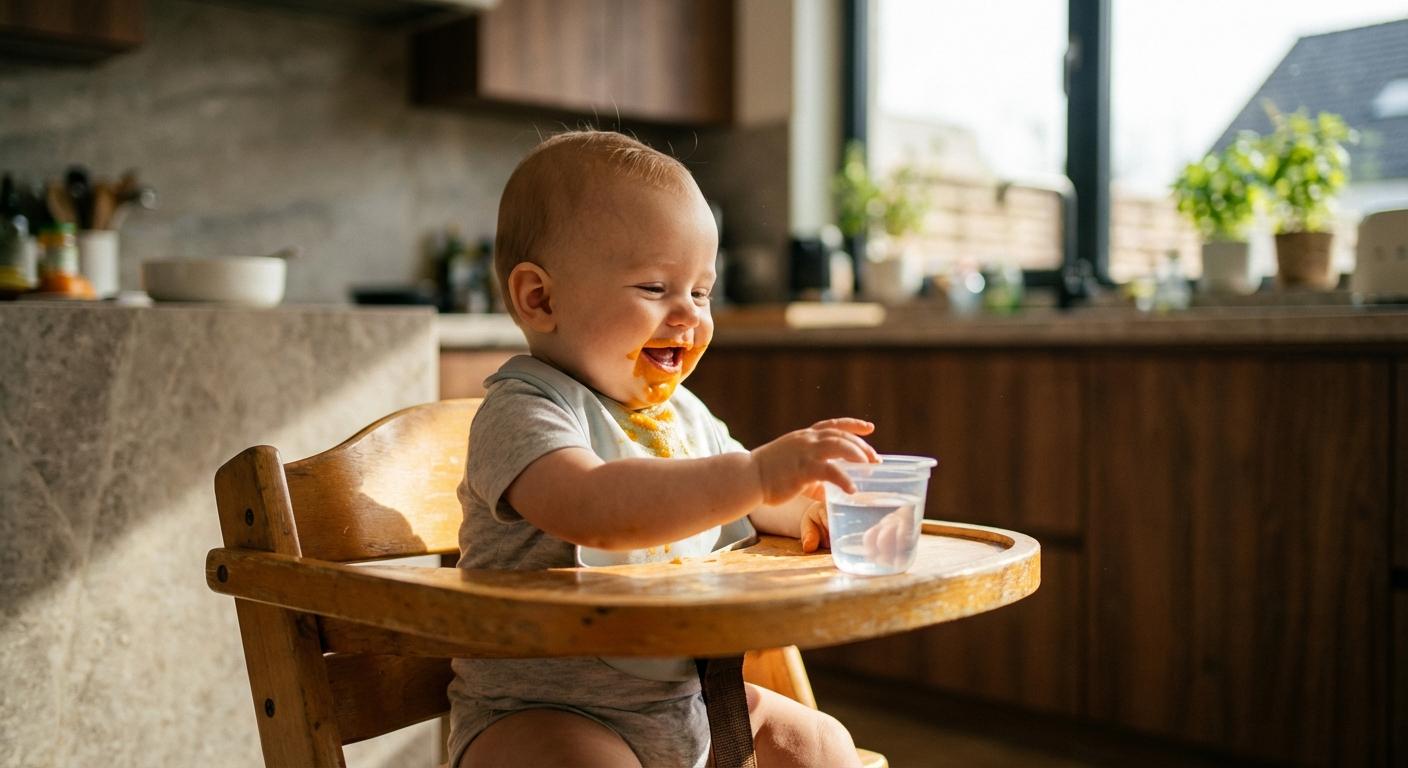
Practice counts, even if most of the water ends up on the bib.
Cup choices: open cup, free-flow, straw (skip the bottle)
A small open cup supports sipping skills. A free-flow cup can be convenient. Straw cups often work well once the skill clicks.
Try to avoid using a bottle for water: it makes fast intake easy, and “too much, too quickly” is exactly what you want to prevent.
How much water by age? Flexible ranges, not rigid rules
6–12 months: small amounts, guided by milk intake
Families often see “total water” needs listed. Remember: that includes water from milk and foods. It is not a target for plain water.
Practical ranges:
- Early solids: 20–30 mL with a meal (a few sips)
- As solids expand: 50–100 mL spread over the day if your baby wants it
- A little more after meals can be fine as long as milk feeds stay strong
A common safety cap before 12 months is around 240 mL (8 oz) per day, mainly to avoid displacing milk and to reduce hyponatremia risk.
Water “hidden” in foods counts
Purées, fruit, yogurt, soups, and water-rich vegetables contribute fluid. Cooked grains also retain cooking liquid. Looking at the whole day usually makes hydration feel much less mysterious.
After 12 months: water rises naturally
As toddlers eat more solids, move more, and sweat more, they typically drink more water. Keep water available, offer it regularly, and let thirst cues do their job.
Heat, fever, vomiting, diarrhea: adapting safely
Hot weather
- Under 6 months: increase breast milk or formula frequency.
- 6 months and older: keep prioritizing milk, add small water offers with meals and after.
A practical trick: if your baby becomes fussy at the breast or bottle, pause, burp, and offer again, heat can make feeding feel tiring.
Fever
Fever increases fluid loss through sweating and faster breathing. Babies may drink less because they feel unwell. Offer small, repeated feeds. After 6 months, small amounts of water can complement milk.
Vomiting and diarrhea: why oral rehydration solution may be safer than water
Gastroenteritis causes losses of water and electrolytes (sodium, potassium). Plain water does not replace electrolytes.
Oral rehydration solution (ORS) is designed to correct dehydration safely. If vomiting is frequent, a common approach is 5–10 mL every 5 minutes (spoon or oral syringe), then increase as tolerated. Continue breastfeeding or formula feeding, shorter, more frequent feeds can work well.
Seek medical advice promptly for: very sleepy baby, refusal to drink, repeated vomiting, bloody stools, or a clear drop in wet diapers, especially under 6 months.
How to tell if your baby is hydrated
Diapers and urine
Steady wet diapers and pale straw-colored urine are reassuring. Many babies have about 4–6 wet diapers in 24 hours after the early newborn phase (a broad guide, not a target).
Behavior and tone
A well-hydrated baby is generally alert for age, feeds in a familiar pattern, and keeps normal color and muscle tone. During illness, unusual sleepiness or marked irritability can signal trouble.
When to seek help for dehydration
Call if you notice: fewer wet diapers, dark urine, dry mouth/lips, crying without tears, sunken fontanelle (soft spot) with other symptoms, persistent vomiting/diarrhea, poor feeding, or a baby who seems unusually quiet or hard to rouse. For infants under 6 months, seek advice earlier, especially if symptoms escalate quickly.
Too much water: what to watch for
Water intoxication (hyponatremia)
Water intoxication is dilutional hyponatremia: too much free water lowers blood sodium. Babies are more vulnerable because of small body size and immature kidneys, and because bottles or over-diluted formula can deliver large volumes quickly.
Possible signs
Watch for unusual sleepiness, unusual irritability, vomiting, puffiness/swelling, low body temperature, or a baby who suddenly seems “off” after taking a lot of water.
Red flags: urgent assessment
Seek urgent care for seizures, extreme lethargy, difficulty waking, breathing changes, bulging fontanelle, or repeated vomiting with poor responsiveness, especially if excess water or diluted formula is suspected.
Choosing water for your baby: simple, safe criteria
Tap vs bottled water
If your local tap water is declared safe, it is usually fine once you’ve reached the stage when to give baby water (around 6 months). If you have doubts (older plumbing, local advisories), bottled water labeled for infants can simplify decisions.
Labels to prioritize
Look for:
- low mineralization
- low nitrates
- low sodium
Avoid sparkling water, flavored water, sweetened drinks, and “vitamin waters.”
Well water: nitrates and testing
Well water should be tested, especially for nitrates. High nitrate exposure can be dangerous in infants.
As a practical benchmark, avoid using well water for infants if nitrate exceeds 10 mg/L as nitrate-nitrogen (NO3-N) or 45 mg/L as nitrate (NO3-).
Boiling: what it does and doesn’t do
Boiling reduces many germs. It does not remove nitrates and does not reliably remove chemical contaminants like lead, it can even concentrate minerals if water evaporates. For formula preparation, follow the formula label and local health guidance.
Temperature and hygiene
Room-temperature water is fine. Wash cups, straws, and lids with warm soapy water, rinse well, and let them dry. Offer fresh water, discard water that has been sitting out.
Drinks to avoid in the first years
- Juice and sugary drinks: not needed for hydration, increase dental caries risk, and can crowd out more nutritious options.
- Herbal teas and flavored waters: often poorly studied in infants, sometimes sweetened, and can shape taste preferences early.
- Diluted formula: never adjust the ratio, electrolyte imbalance and inadequate nutrition can follow.
Key takeaways
- When to give baby water: for most babies, small sips start around 6 months, typically with solids.
- Under 6 months, hydration should come from breast milk or correctly prepared formula, even in heat, offer milk more often.
- From 6–12 months, keep water modest (often a few sips with meals), many families cap plain water near 240 mL/day.
- During vomiting/diarrhea, ORS is often safer than plain water, seek advice early for young infants or reduced wet diapers.
- Choose safe water, keep cups clean, and avoid juice, sweet drinks, and diluted formula.
- If you’re unsure when to give baby water in a specific medical situation, your pediatric clinician can tailor the plan, and you can download the Heloa app for personalized tips and free child health questionnaires.
Questions Parents Ask
What if I accidentally gave my baby water before 6 months?
No panic—this happens, especially during hot days or when someone else is helping. A tiny taste is unlikely to cause harm. What matters is the amount and how your baby seems afterward. If your baby drank more than a few sips, or you notice unusual sleepiness, extreme fussiness, vomiting, puffiness, or anything that feels “off,” it’s perfectly reasonable to contact your pediatric clinician for reassurance. Going forward, you can simply return to breast milk or correctly prepared formula as the main drink.
Can I give water to help constipation in a young baby?
It’s completely understandable to look for quick relief when stools are hard. For babies under 6 months, constipation is usually better addressed by reviewing feeding, formula preparation, and comfort measures rather than adding plain water. Once solids are started (around 6 months), a few sips of water with meals can support softer stools, and water-rich foods (like fruit purées) may help too. If constipation is persistent, painful, or accompanied by poor feeding or vomiting, a clinician can help you find a gentle, effective plan.
Do I need to offer water to a formula-fed baby?
Most formula-fed babies don’t need extra water before solids begin. Prepared formula already provides the fluid they need—as long as the mixing ratio is exact. If your baby seems thirsty in warm weather, offering feeds more often is usually the simplest option. After about 6 months, small “practice sips” of water in a cup can fit nicely alongside meals.
Further reading: