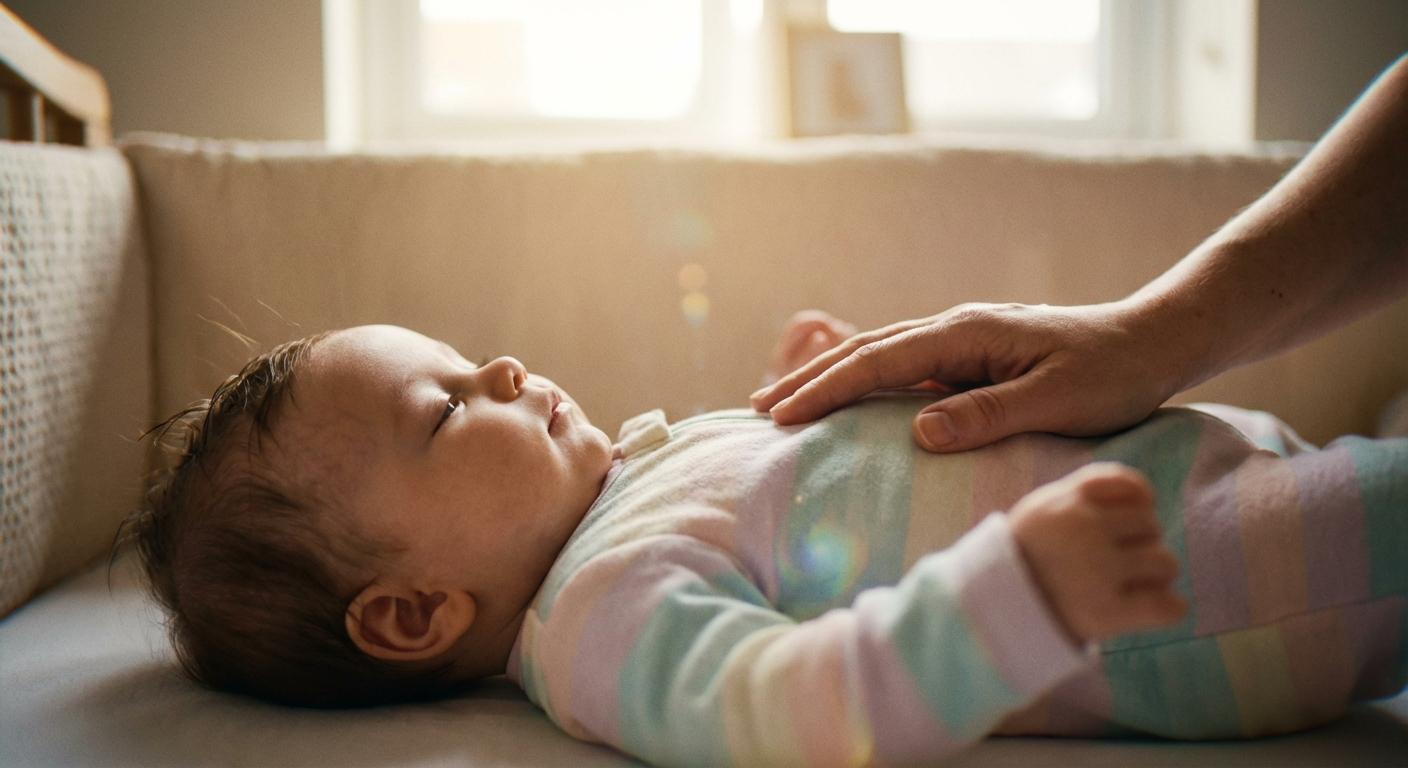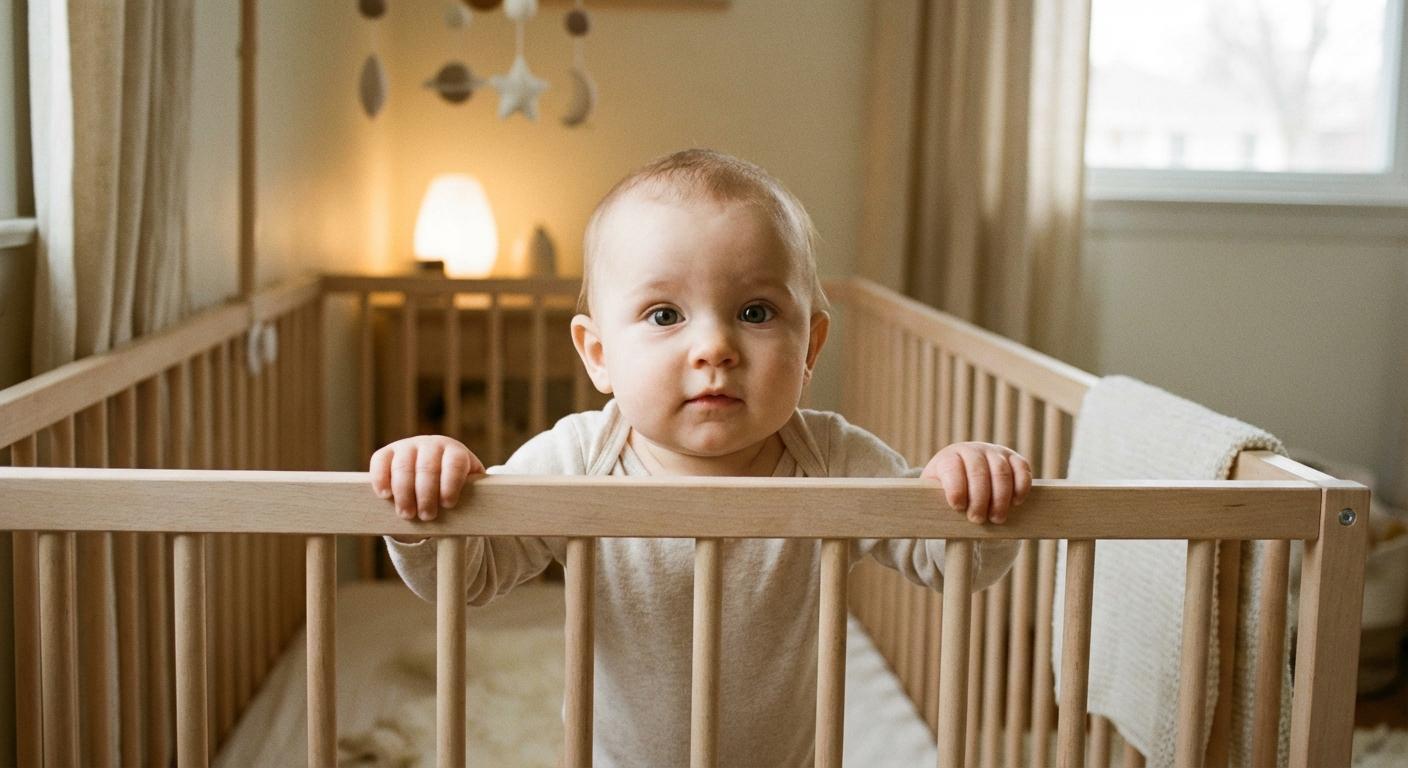
Your baby finally dozes off… in your arms. You lower him into the mattress, and his eyes pop open. Crying. Startling. A full reset. When baby won’t sleep in crib, it can feel like every evening is a test of endurance: rocking, feeding, second-guessing, then doing it again.
Crib “refusal” is rarely defiance. More often, it’s biology meeting environment: immature sleep cycles, a strong need for proximity, discomfort that becomes obvious when lying flat, or sleep cues that don’t transfer. Small, steady adjustments can shift the pattern without ignoring real needs.
Baby won’t sleep in crib: what it can look like (and what’s normal)
At home, baby won’t sleep in crib can look like:
- Asleep in arms, awake on transfer
- One short crib stretch (often 20-45 minutes), then protests
- “False starts” at bedtime
- Naps that only happen as contact sleep
Closeness helps infants regulate temperature, breathing rhythm, and stress responses (cortisol and adrenaline). A flat, open space can feel abrupt compared with warm arms and familiar cues.


Age patterns: typical phases vs. a persistent issue
- Newborn (0-3 months): fragmented sleep, short cycles, frequent waking with transfers. Priority: safe sleep.
- 3-6 months: sleep becomes more structured, settling in the crib is a skill that can be built.
- 8-9 months: mobility plus separation anxiety often boosts protests.
- 12-24 months: stronger opposition, anticipation, sometimes fears.
Be more alert when baby won’t sleep in crib for weeks despite stable routines, or when it comes with pain signs, feeding difficulties, poor growth, breathing concerns, or frequent vomiting.
If nothing improves after 3-4 weeks of consistent timing and responses, a clinical check-in can help sort out health, schedule, and sleep associations.
The three drivers behind many crib struggles
- Sleep pressure (homeostatic drive): undertired babies fight sleep, overtired babies get “wired.”
- Circadian rhythm (body clock): shaped by morning daylight, dim evenings, and predictable timing.
- Sleep cycles: infants transition between light and deep sleep quickly. If sleep began with help that disappears (arms, rocking, feeding), baby may call for that help again.
When to worry if baby won’t sleep in crib
Most crib resistance is developmental. Still, some signs deserve medical advice, especially if new or intense.
Red flags suggesting pain, illness, or breathing trouble
Contact a clinician promptly if you notice:
- High-pitched crying with stiffening or marked back-arching
- Breathing difficulty: retractions (skin pulling in at ribs/neck), wheeze, fast breathing, pauses
- Persistent fever
- Clear drop in intake, signs of dehydration (fewer wet diapers)
- Vomiting that is forceful, green, bloody, or tied to unusual sleepiness
- Poor weight gain
If fever occurs under 3 months (38°C / 100.4°F or higher), seek urgent medical advice.
The Number 1 hidden trigger: timing (overtired vs. undertired)
If baby won’t sleep in crib, timing is often the lever.
- Undertired: playful in the crib, then escalates.
- Overtired: frantic settling, intense crying at put-down, stress hormones rise.
Early tired signs: slower blinking, zoning out, rubbing eyes, yawning, a tense face, sudden fussiness.
Typical wake windows (always adjust to cues):
- 0-3 months: 45-60 minutes
- 3-4 months: 1h15-2h
- 4-6 months: 2-3h
- 6-9 months: 2.5-3.5h
- 9-12 months: 3-4h
- 12-18 months: 3-4h
- 18-24 months: 4-6h
A small schedule shift, often 10-20 minutes earlier, can change the whole bedtime.
Why baby won’t sleep in crib: the most common causes
The crib feels unfamiliar (sensory mismatch)
Cribs are flat, firm, open. Arms are warm, contained, moving. Smell, temperature, and acoustics change too. For a tired infant, that mismatch can trigger a startle and a full wake.
Transitions (bassinet to crib, room changes, daycare, travel)
Babies don’t automatically generalize sleep skills. A new mattress or a different room can temporarily undo progress. When changes stack up, keep the steps identical: same order, same words, similar timing.
Sleep associations that don’t transfer
A sleep association is what is present at the instant sleep begins. If it’s feeding, rocking, or being held, baby may search for that cue at each cycle transition.
The aim is not to remove comfort. It’s to make comfort possible while baby stays in the crib.
Separation anxiety and proximity needs
Often around 8-9 months, babies protest separation more strongly. They may cry when you step away, then settle fast when you return. That’s brain development (attachment behaviors and object permanence).
Milestones and “stuck” patterns
Rolling, sitting, crawling, pulling to stand: exciting skills that can fragment sleep. If baby always falls asleep held, every micro-wake can trigger the same request again.
Environment mismatch: temperature, light, noise
Many babies sleep best with:
- A dark room (even for naps when naps are fragile)
- Steady white noise (continuous, not looping abruptly)
- Comfortable temperature
A commonly used range is 20-22°C (68-72°F), many families also do well with 18-20°C (64-68°F) using appropriate layers. Avoid overheating, check the chest or back of neck for sweat.
Discomfort or health factors
Crib sleep can expose discomfort:
- Hunger or growth-spurt feeds
- Wet/dirty diaper
- Gas
- Reflux-like discomfort (spit-up with distress, irritability after feeds)
- Teething
- Viral illness
- Skin itch (eczema)
If you suspect reflux with pain, choking/coughing during feeds, persistent vomiting, or poor weight gain, discuss it with a pediatric clinician.
Nasal congestion: the “can’t lie flat” cycle
Young babies are mostly nose-breathers. Congestion can make lying flat feel harder.
If baby won’t sleep in crib during a cold:
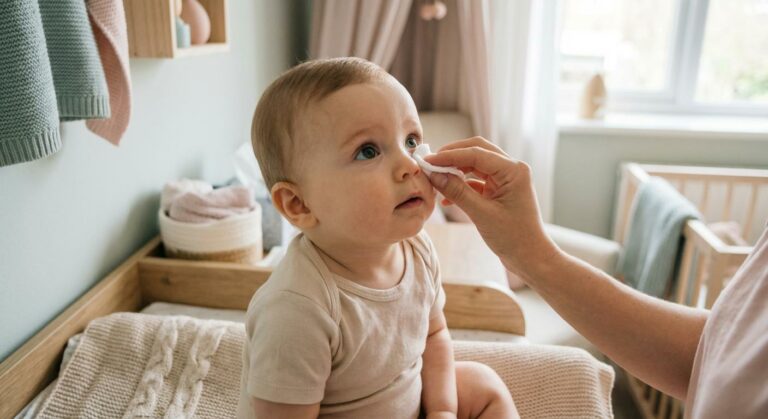
- Saline drops and gentle nasal clearing before sleep
- Smaller, more frequent feeds if sucking seems tiring
- Cool room and good hydration
Seek medical advice if breathing becomes labored or intake drops.
Safe sleep first: set the crib up for safety and calmer sleep
When baby won’t sleep in crib, adding “extras” can be tempting. Keep the setup simple.
- Back to sleep for every nap and night (lower SIDS risk).
- Firm, flat mattress with a tight sheet.
- Bare crib: no pillows, bumpers, loose blankets, stuffed toys, or positioners. Use a sleep sack.
- Avoid routine sleep in swings, loungers, or car seats (incline can compromise the airway).
A quick plan for tonight
If baby won’t sleep in crib tonight, aim for repeatable steps.
1) Reset the room: dark, cool, boring, steady white noise.
2) Meet immediate needs: feed if due, burp gently, diaper change if needed, if baby seems unwell, prioritize health.
3) Align timing: if overtiredness is likely, move bedtime earlier tomorrow by 15-20 minutes.
4) Pick one response style:
- In-room support (stay close, minimal touch)
- Brief checks (short reassurance at intervals)
Keep it low-stimulation.
Build the foundation: routines that make the crib predictable
A short bedtime routine, same order
Aim for 10-20 minutes:
- Diaper
- Sleep sack
- Feed if needed (often not as the final step)
- Short song or consistent phrase
- Into the crib
Mini nap routine
Darken the room, say your phrase, place baby down. Short and consistent.
Soothing cues that transfer
Cues that work without lifting baby:
- White noise
- Shushing
- Gentle pat
- One calm sentence
Minimal-handling put-down + happy crib practice
Move slowly. If baby fusses, try a hand on the chest for 30-60 seconds, then release.
Add 2 short “happy crib” moments during the day while baby is awake and content. A few minutes is enough.
Drowsy but awake: the skill that often changes everything
“Drowsy but awake” means sleepy signs are there (soft body, slower blinking), but baby is still aware. If sleep always begins in arms, the next cycle transition can trigger a “scene change” alarm.
A realistic bridge:
- Calm in arms -> into crib -> settling finishes in the crib.
If crying builds after put-down: keep lights off, reassure briefly. If you pick up, soothe only until calm, then place back down before fully asleep.
Baby won’t sleep in crib after sleeping in a bassinet
A bassinet feels snug, a crib feels open. The mattress, distance, and sound shift all at once.
Try a gradual transition:
- Start with nights.
- Keep identical cues (darkness, white noise, sleep sack, routine).
- Add one crib nap later, often the first nap.
Baby won’t sleep in crib unless held
Ask: what is present at the instant sleep begins? Holding, rocking, feeding, motion? That’s the association.
Gentle fading ideas:
- Shorten rocking a little every few nights.
- Move from fully asleep-in-arms -> sleepy-in-arms -> down.
- If you use pick-up/put-down, keep pick-ups brief and calm.
Night sleep often improves first. Naps can follow.
Support, then gradual withdrawal (a low-conflict path)
You may wonder: “If I stay, will my baby depend on me forever?” Typically, no. Gradual withdrawal teaches predictability.
A common progression:
- Stay by the crib with minimal touch
- Move a little farther away every few nights (chair method)
- Step out earlier, using brief reassurance if needed
Measure progress over 1-2 weeks: shorter settling, fewer false starts, fewer wake-ups.
Choosing a method: gentle to faster options
- Parent-present methods (shush/pat, pick-up/put-down, chair method): steady, responsive, often slower.
- Graduated checks (Ferber-style): short, low-stimulation check-ins at increasing intervals (often used from about 4-6 months and beyond).
- Full extinction (cry-it-out): no check-ins after put-down except for safety/needs, some families avoid it.
Choose what you can repeat calmly for 1-2 weeks.
Feeding, digestion, and night waking: keep it simple
If feeding is always the last step, baby may request it between cycles. A small sequence shift can help:
- Feed -> diaper -> sleep sack -> song -> crib
For gas or reflux-sensitive babies: gentle burping, paced bottle-feeding if relevant, and 10-20 minutes upright after feeds.
At night, keep interactions brief: minimal light, few words, short reassurance.
A question that clarifies many hard nights when baby won’t sleep in crib: What changed since sleep began? A parent left, a pacifier fell out, the room got colder, the noise stopped.
If early-morning sleep collapses, also consider simple physiology: sleep is lighter after about 4-5 a.m., and babies may wake to feed, feel cold, or seek a familiar presence. Keeping the room dark until your desired wake time, and responding in the same calm way, often prevents a full “morning start.”
When to talk to a pediatrician
Seek medical advice if baby won’t sleep in crib and you also see breathing concerns, poor feeding, dehydration signs, poor weight gain, persistent or unusual vomiting, severe reflux symptoms with distress/choking, fever (especially under 3 months), inconsolable crying, or repeated pain signs.
Bringing 7-14 days of notes (sleep times, how baby fell asleep, wake-ups, feeds, diapers, symptoms) can help a clinician pinpoint what’s driving the pattern.
Key takeaways
- If baby won’t sleep in crib, the cause is often sleep cycles plus timing plus associations, not stubbornness.
- Keep safe sleep front and center: back-sleeping, firm flat surface, bare crib, and a sleep sack.
- Wake windows matter, adjust in small steps (10-20 minutes) and watch the trend over a week.
- Separation anxiety, milestones, illness, and transitions can temporarily worsen sleep, predictable routines and gradual withdrawal can help.
- Red flags (breathing trouble, persistent fever, significant vomiting, poor intake, poor weight gain, marked pain) deserve medical advice.
- Support exists: health professionals can guide you, and you can download the Heloa app for personalized guidance and free child health questionnaires for children.
Questions Parents Ask
Why won’t my baby sleep in the crib all of a sudden?
No panic—this is common. A baby who was doing fine can suddenly protest because of a growth spurt, a new skill (rolling, crawling, pulling up), separation anxiety, travel, vaccinations, or a simple schedule drift. Try keeping the routine exactly the same for several days, then adjust timing in small steps (10–20 minutes). If you also notice fever, unusual crying, breathing difficulty, or feeding changes, it can be reassuring to check in with a clinician.
How long does it take to transition a baby to sleeping in the crib?
It varies, and that’s normal. Many families see progress within 7–14 days when they keep the same cues and the same response each time (white noise, sleep sack, short phrase, consistent soothing). Aim for a clear “bridge”: baby gets calm with you, then finishes settling in the crib. Consistency matters more than speed—especially during naps, which often take longer to improve than nights.
My baby sleeps in the crib at night, but not for naps—why?
Day sleep is lighter and more sensitive to timing and environment. Naps often succeed when the room is darker than you think, wake windows are spot-on, and you keep a tiny nap routine (same words, same order). If a nap fails, you can reset with a brief break and try again later—without feeling like you’ve “ruined” the day.