A smelly umbilical cord can make worry spike fast. Is it just the stump doing its normal drying-and-detaching routine, or is it an infection starting to brew? The calming truth: odor alone is not always a red flag. Context matters more than scent. Think spreading redness, warmth, swelling, pus, fever, or a baby who simply seems “off”.
The newborn belly button goes through a surprisingly busy healing phase: moisture under the diaper, tiny scabs, normal healing fluid, and that moment when the stump finally separates. So what does a smelly umbilical cord actually mean, what can you do at home right now, and when is it time to call?
Smelly umbilical cord: what the odor can mean
Normal smell during drying and healing (mild, slightly sour, musky/earthy)
In the first days after birth, the umbilical stump transitions from moist living tissue to dry, devitalized tissue that will naturally detach. This natural “drying out” can come with a light odor, often described as slightly sour, musky, or earthy, but not truly foul.
You may notice it most:


- Right before the stump falls off, as it thickens, darkens, and starts to detach at the base
- Or in the 24–48 hours after it falls off, when a small scab remains deeper in the belly button
A mild smell that stays stable, with no spreading redness, no warmth, no swelling, and no increasing drainage, can match normal healing.
Concerning smell patterns (foul, rotten) and why they matter
A strong, new, worsening foul or rotten smell can reflect bacterial overgrowth. Odor becomes far more worrisome when it comes with other warning signs, such as:
- Pus-like discharge
- Wet, thick drainage that keeps coming back after cleaning
- Redness that spreads outward from the base
- Warmth, swelling, or marked tenderness
- A baby who feeds poorly, seems unusually sleepy, very irritable, or develops fever
Newborns can deteriorate quickly, so a shift from “mild” to “bad” smell deserves close attention.
Why odor can change day to day (drying tissue, moisture, soiling)
Smell can fluctuate because the stump is evolving: it dries, crusts, then separates. Odor can also increase when:
- The area stays damp under the diaper or in skin folds (maceration, meaning skin softened by prolonged moisture)
- Urine, stool, sweat, or milk residue reaches the stump
- The stump is washed but not dried thoroughly afterward
In many situations, improving cleanliness and dryness makes the odor settle within 24–48 hours.
Umbilical stump healing timeline (what’s normal)
Typical separation window and what influences it (often 5–21 days, sometimes up to 3 weeks)
Many stumps fall off between day 5 and day 21. Timing varies. A modest delay is not necessarily a problem if the area stays clean, dry, and calm-looking.
If the stump is still attached after about 3 weeks, it is reasonable to discuss it, especially if the area remains moist or a smelly umbilical cord keeps returning.
Normal appearance changes (drying, darkening, crusting)
As the stump dries, it often:
- Hardens and shrinks
- Turns brown, then black
- Develops small scabs or crusts
It can look messy. Messy is not the same as infected.
Normal wetness and crust vs signs it’s staying too moist
Around separation time, a small amount of clear moisture or slightly yellowish residue can appear. This is not automatically infection.
More concerning patterns include:
- Persistent dampness day after day
- Increasing drainage rather than decreasing
- Strong odor that persists despite better drying
A moist environment encourages bacteria (and sometimes yeast) to multiply, which can turn a mild situation into a smelly umbilical cord that lingers.
What to expect right after the stump falls off (small spot of blood, mild moisture)
Right after the stump falls off, you may see:
- A tiny blood spot on the diaper
- Mild clear or pale fluid
- A small scab in the belly button
The surrounding skin should look similar to the rest of the belly, without redness spreading outward.
Common reasons a newborn’s umbilical cord smells
Moisture trapped under the diaper or in skin folds (maceration)
One of the most common reasons for a smelly umbilical cord is trapped moisture, especially when:
- The diaper rides up to the stump
- Clothing is tight across the belly
- The baby sweats or the weather is humid
Less moisture usually means less smell. Simple, but very real.
Urine or stool contamination (and why fast diaper changes help)
Even with careful diapering, urine or stool can reach the stump. Gut bacteria near the belly button do not help odor or skin comfort, so prompt diaper changes after stool can make a noticeable difference.
Mild, normal oozing vs discharge that becomes more abundant
During separation, a small amount of light ooze can happen. A practical guide:
- Reassuring: light oozing that decreases day by day
- Concerning: discharge that increases, thickens, and smells very strong
When parents describe a smelly umbilical cord, this “is it decreasing or escalating?” question is often the key.
Skin irritation from friction or products
A rubbing diaper edge or frequent, vigorous cleaning can inflame fragile newborn skin. Fragranced wipes, powders, oils, creams, or “home remedies” can also trap moisture or irritate, which may worsen odor and delay drying.
Yeast overgrowth in a persistently moist area
Warmth plus moisture can allow yeast (Candida) to overgrow. You might see irritated red skin nearby and persistent dampness. This is usually less dramatic than bacterial infection, but it is worth discussing if it does not improve with better dryness, especially if the smelly umbilical cord keeps coming back.
Bacterial overgrowth or infection (including omphalitis)
Sometimes odor is simply bacterial colonization on moist tissue. Other times it is omphalitis, a true infection of the stump and surrounding skin that needs prompt medical attention.
When smell points to infection (omphalitis)
What omphalitis is and why newborns can get sick quickly
Omphalitis is an infection of the umbilical stump and/or the surrounding skin. It is uncommon, but taken seriously in newborns because infection can spread quickly from this area (the umbilicus is close to blood vessels used during pregnancy).
A classic pattern is a strongly smelly umbilical cord together with:
- Redness
- Warmth
- Swelling
- Pain/tenderness
- Sometimes pus
Prematurity or low birth weight can increase vulnerability, but omphalitis can also occur without an obvious risk factor.
Local warning signs around the belly button
Look for:
- Redness that spreads outward (not just a tiny rim)
- Warmth to the touch
- Swelling or firm, puffy, shiny skin
- Marked tenderness (baby reacts strongly when you gently touch near the base)
What discharge can look like (crust vs thick yellow/green pus)
Some crusting is normal. The key is whether there is active, returning drainage:
- Crust/scab: dries and does not quickly reappear after gentle cleaning
- Concerning discharge: thick yellow/green fluid that looks like pus, stays wet, and keeps coming back, especially with a smelly umbilical cord
Whole-baby warning signs (fever, poor feeding, unusual sleepiness, irritability)
Seek urgent medical advice if odor or discharge comes with any whole-baby change, including:
- Fever (in a young baby this needs same-day assessment)
- Poor feeding, shorter feeds, refusal to feed
- Unusual sleepiness, limpness, hard to wake
- Persistent irritability or baby “not like usual”
- Vomiting or signs of dehydration (fewer wet diapers, dry mouth, sunken fontanelle)
How to check the cord at home without overhandling it
What to look at (odor, redness spread, warmth, wetness, discharge)
Once a day is enough for most families. A quick scan:
- Smell: mild vs strong and worsening
- Skin: is redness staying small, or spreading?
- Wetness: occasional vs persistent dampness
- Discharge: dry crust vs wet drainage
- Baby: acting and feeding normally?
A simple way to tell crust from active pus
Wash your hands, gently clean only if needed, dry it, and then watch. If thick fluid quickly returns and the smell stays strong, that leans more toward infection than a harmless scab.
Track changes if you are unsure
Unsure whether the redness is expanding? A daily photo in similar light can help you notice:
- Whether redness is expanding
- Whether wetness is decreasing
- Whether the smelly umbilical cord improves after better drying
What you can do now to reduce odor and support healing
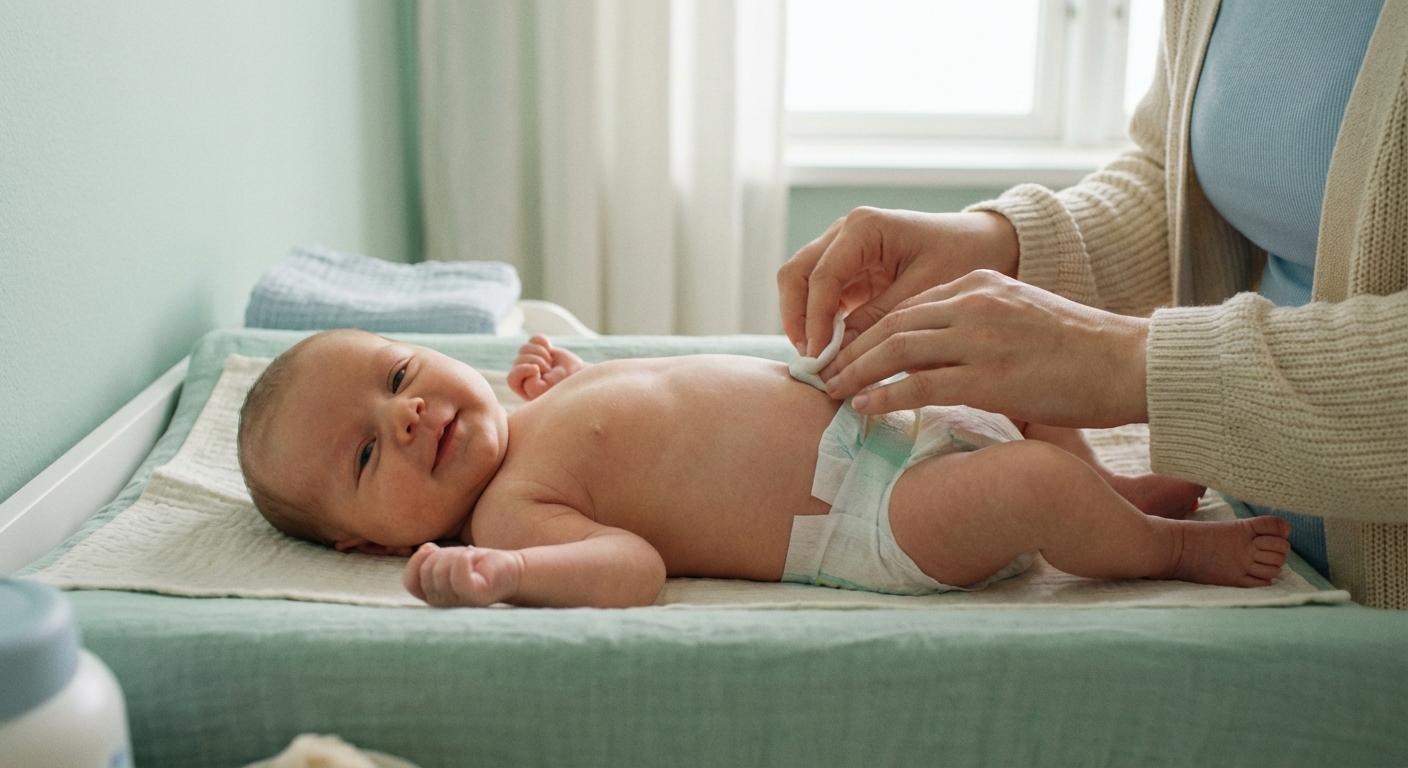
Gentle cleaning when needed (especially after soiling)
Start with basics that protect the skin barrier:
- Wash your hands before and after
- Clean gently only when needed (after urine/stool contamination or visible debris)
- Use plain water on a clean cloth or cotton pad, or saline if that is what you have been advised to use
- Wipe softly, do not scrub
Dry cord care: keeping it clean, dry, and uncovered when possible
The most effective step for a smelly umbilical cord is thorough drying:
- Pat dry with a clean, soft cloth or gauze (no rubbing)
- Allow a few minutes of supervised air exposure during a diaper change if the room is warm
- Aim for a “clean, dry, and not tightly covered” environment
Dryness is not cosmetic. It changes the local biology by limiting bacterial growth.
Diapering and clothing to limit moisture
- Fold the diaper down below the stump to reduce friction and improve airflow
- Choose loose, breathable clothing
- Change diapers promptly, especially after stools
Bathing while the stump is still on (moisture management)
Many parents find sponge baths easier until the stump falls off. If the stump gets wet:
- Pat dry carefully
- Let it air out briefly
Long soaking can keep the area damp and worsen maceration, and a smelly umbilical cord often follows.
What to avoid (pulling, picking, overcleaning, and products unless advised)
Avoid:
- Pulling or twisting the stump, even if it is dangling
- Picking at scabs
- Cleaning too frequently or too vigorously (can irritate skin, cause bleeding, and slow healing)
- Alcohol, antiseptics, ointments, powders, oils, or adhesive dressings unless a clinician specifically recommended them
After the stump falls off: lingering odor, discharge, and next steps
Normal early changes after separation
After separation, it is common to see:
- A tiny smear of blood
- A small scab
- Mild redness for a few days
Complete healing can take another 1–2 weeks. Keep care simple: clean when needed, dry well, and allow airflow.
Odor that persists after the stump falls off: common causes
A belly button that stays smelly after separation most often reflects:
- Persistent moisture and irritation (skin folds plus diaper height)
- A mild superficial infection
- An umbilical granuloma (a small red, moist bump that can ooze)
An umbilical granuloma is not “dirty” and not necessarily painful, it is healing tissue that stays too wet. If it persists, it should be assessed so the right treatment can be chosen (often a simple in-clinic treatment).
When lingering wetness suggests another cause to rule out
Wetness that persists beyond a couple of weeks after separation, or fluid that seems urine-like or stool-like, should be evaluated rather than repeatedly managed at home. Rarely, persistent drainage can be linked to an anatomic issue (for example, a urachal remnant), and that needs a clinician’s assessment.
When to contact a clinician (and how urgent it may be)
Same-day contact
Get same-day medical advice if you notice:
- Strong odor plus spreading redness, warmth, or swelling
- Thick yellow/green discharge or increasing, abundant drainage
- Fever
- Baby very irritable, clearly painful when the area is touched, refusing feeds, or unusually sleepy
If you are unsure
Contact a clinician if:
- The appearance is hard to interpret
- The smelly umbilical cord persists despite good drying and airflow
- Light oozing or crusts do not gradually improve over the following days
If the stump has not fallen off
If the stump is still attached after about 3 weeks, discuss it, especially if the area remains moist, irritated, or a smelly umbilical cord keeps being an issue.
What the medical evaluation may include
What clinicians check on exam
A clinician will assess:
- The stump base and how far redness extends
- Warmth, swelling, and tenderness
- The type and amount of discharge
- Your baby’s overall condition, feeding, and alertness
When swabs, cultures, or blood tests might be considered
If infection is suspected and there is drainage, a swab may be taken for culture. If your baby has fever or looks unwell, clinicians may consider broader testing (sometimes including blood tests) to check for more widespread infection.
Treatment options if a problem is confirmed
Irritation or superficial overgrowth: supportive care and moisture control
If odor is mainly from moisture and irritation, treatment usually focuses on gentle cleaning when needed, careful drying, limiting friction, and avoiding irritating products.
Omphalitis: antibiotics and possible hospital care
Omphalitis typically requires antibiotics. Because newborns can worsen quickly, hospital evaluation and intravenous antibiotics may be recommended depending on age and severity.
Key takeaways
- A mild smelly umbilical cord can happen during normal drying, especially right before the stump falls off or in the first 24–48 hours after it falls off.
- A very strong smelly umbilical cord together with spreading redness, warmth, swelling, pus, fever, or a baby who seems unwell needs prompt medical advice.
- The most effective home steps are simple: clean hands, gentle cleaning only when needed, dry thoroughly, increase airflow, and fold the diaper below the stump.
- A tiny blood spot can be normal, but persistent bleeding or worsening discharge should be assessed.
- Ongoing odor and oozing after separation can be due to moisture, a mild infection, or an umbilical granuloma, which is common and treatable.
- Support exists through midwives, pediatricians, family doctors, and maternity services, and parents can also download the Heloa app for personalized tips and free child health questionnaires.
Questions Parents Ask
Can a smelly umbilical cord be caused by the diaper rubbing or sitting too high?
Yes, and it’s more common than many parents think—no guilt. When the diaper edge rubs the stump or traps moisture (especially after pee/poop), the area can get irritated and smell stronger. You can try folding the diaper down, choosing looser clothing, and keeping the belly button as dry as possible. If the smell improves within 24–48 hours and the skin looks calm, that’s reassuring.
Can I use rubbing alcohol, hydrogen peroxide, or antibiotic ointment to stop the smell?
It’s understandable to want a quick fix, but many products can irritate the skin or keep the area too moist, which may prolong healing. Unless a clinician has recommended something specific, simple care tends to be best: clean gently with water when needed, then pat dry and allow a little air time. If you’re unsure what’s safe for your baby, asking your midwife or pediatrician can bring peace of mind.
Is a foul smell alone enough to suspect an infection?
Not always. Odor becomes more concerning when it comes with other changes: spreading redness, warmth, swelling, pus-like drainage, fever, poor feeding, or a baby who seems unusually sleepy or very fussy. If the smell turns suddenly “rotten,” keeps worsening, or comes with any of those signs, same-day medical advice is a good idea.

Further reading: