
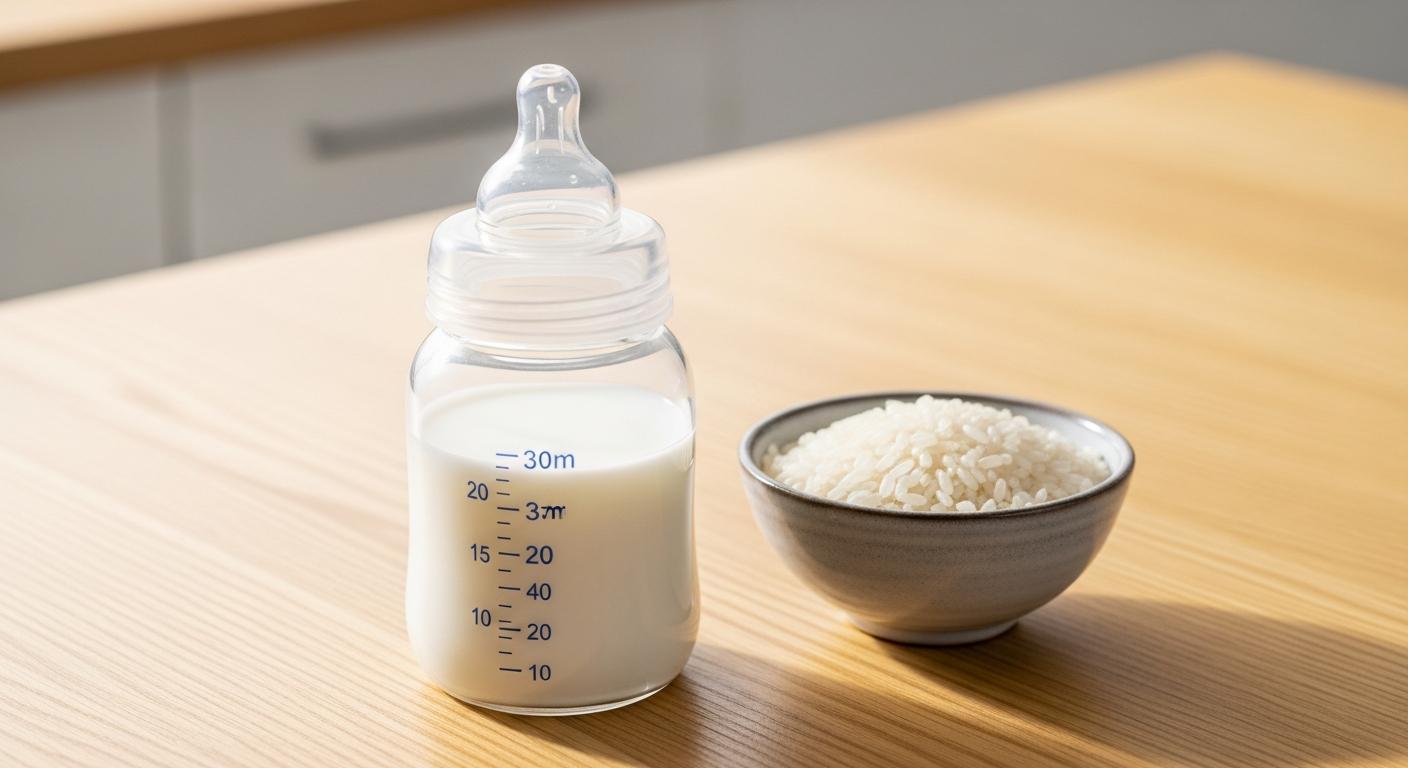
Feeding decisions can feel simple—until they suddenly don’t. A baby who spits up, a rash that won’t settle, a suspicion of allergy, a bottle that becomes a battleground… and the search term rice milk for babies appears like a lifeline. But one phrase hides two very different realities: a plant-based rice drink from the supermarket shelf, and a medically regulated rice-based infant formula. Same “rice,” radically different nutrition.
Rice milk for babies: what parents usually mean (and why the wording matters)
When people type rice milk for babies, they may be referring to:
- A commercial rice drink (often called “rice drink” or “rice beverage,” not legally “milk” in many countries)
- A rice-based infant formula (a true infant formula, fortified and regulated, sometimes using hydrolyzed rice protein)
You might wonder, “If it’s fortified, isn’t it close enough?” Not necessarily. Fortification can’t fully compensate for low protein quality/quantity, low fat, and the tight nutrient targets infants need.
Rice drink: what it is, and why it tastes sweet
Most rice drinks start as rice plus water, blended and filtered. Manufacturers often add enzymes (amylases) that break rice starch into smaller sugars (maltose, glucose). Result: a sweet taste even when “no added sugar” is printed on the carton.


Typical nutrition gaps in commercial rice drink
Commercial rice drink is commonly:
- Very low in protein (often <0.5 g/100 mL)
- Low in fat (therefore low in essential fatty acids)
- Low in iron and zinc (and plant compounds like phytates can reduce mineral absorption)
- High in carbohydrates, sometimes with a higher “free sugar-like” profile because starch has been pre-digested by enzymes
A baby can drink a large volume and still miss the building blocks for growth. That’s the trap.
Rice-based infant formula: why it’s a different product
A rice-based infant formula must meet strict rules for:
- Energy density (calories per 100 mL)
- Protein content and quality
- Essential fatty acids (including DHA/ARA requirements depending on local regulation)
- Vitamins and minerals (iron, calcium, vitamin D, etc.)
Its protein is typically hydrolyzed rice protein (protein broken into smaller fragments), which can improve tolerance in selected situations under medical supervision.
When can babies drink rice milk?
The answer depends on what “rice milk” means.
Under 12 months: why rice drink is not suitable
Before 12 months, a supermarket rice drink should not replace breast milk or infant formula. For rice milk for babies, this is the point that changes everything.
Main reasons:
- Insufficient protein for rapid growth
- Insufficient fat for brain, retina, and nervous system development
- Micronutrients are unreliable across brands (iron and vitamin D are frequent weak points)
- Additional concern: inorganic arsenic exposure from rice-based products
If a non-dairy option is needed in the first year, the safe route is a clinician-chosen infant formula (extensively hydrolyzed, amino-acid-based, or sometimes a rice-based infant formula depending on the clinical picture).
After 12 months: where rice drink can fit
After the first birthday, rice drink can be used occasionally as part of a varied diet. Think: an extra beverage with a meal, or an ingredient in cooking—not the default drink all day.
Prefer:
- Unsweetened, unflavored versions
- Fortified cartons (calcium + vitamin D, vitamin B12 matters in vegan families)
Even then, rice drink stays low in protein and often low in fat. So if rice milk for babies is really “rice milk for toddlers,” balance matters.
Ages 1–3: why overuse can backfire
Toddlers grow fast, but their stomachs are small. A sweet, easy-to-drink rice beverage can quietly replace foods that deliver iron, protein, and fats.
Ask yourself:
- Is my child filling up on drinks and nibbling at meals?
- Are stools changing (hard, infrequent)?
- Is growth steady on the curve?
Rice milk for babies: safety questions parents ask most
Rice can absorb arsenic from soil and water. The form that worries health agencies most is inorganic arsenic.
Why babies and young children are more exposed:
- Higher intake per kilogram of body weight
- Rapid development of organs and nervous system
Practical ways to lower exposure without panic:
- Don’t make rice drink a daily “main beverage” for young children
- Vary grains during weaning (oats, wheat, corn, quinoa, barley—when age-appropriate)
- If an infant needs a rice option for medical reasons, a regulated rice-based infant formula is a safer framework than a rice drink
You may be thinking, “Does that mean I must avoid rice completely?” No. The goal is variety and avoiding heavy reliance.
Sweetened versions, syrups, and dental risk
Because rice drink can taste sweet naturally, sweetened versions can push total sugar higher.
Check labels for:
- Added sugar
- Syrups (including rice syrup)
- Flavored versions (vanilla/chocolate often contain more sugar)
Frequent sipping—especially from a bottle—raises risk of early childhood caries (tooth decay). Offer drinks at set times, water in between.
Constipation and stool changes
Rice is low in fiber, and rice-heavy patterns can firm stools in some children.
Call a clinician if you notice:
- Painful constipation, blood from fissures
- Persistent vomiting or diarrhea
- Signs of dehydration (fewer wet diapers, dry mouth, lethargy)
Rice milk for babies: nutrition basics (protein, fat, iron, calcium)
Protein is not only “muscle.” It supports immune defenses, tissue repair, enzymes, hormones—everything under construction.
Rice drink is naturally low in protein. If a toddler drinks it often, protein needs must be covered elsewhere:
- Eggs, fish, meat (as tolerated)
- Yogurt/cheese (if dairy is tolerated)
- Legumes (lentils, beans), tofu
- Nut/seed butters in safe textures for age
Fat and essential fatty acids: brain fuel
Young children need dietary fat for energy and neurodevelopment. Rice drinks are often skimpy here.
If rice drink appears on the menu, aim to add fats in meals:
- Avocado
- Olive or canola oil
- Full-fat dairy (if tolerated)
- Oily fish (age-appropriate), nut/seed butters
Iron, calcium, vitamin D: the “gap trio” during wrong substitutions
When families swap infant feeding products incorrectly, three nutrients tend to drop first:
- Iron (risk of iron-deficiency anemia, which can affect development)
- Calcium and vitamin D (bone mineralization)
Infant formula is built to deliver them, rice drink is not reliably built for that job.
Why rice drink cannot replace breast milk or infant formula
Infants require a precise package: energy density, high-quality protein, essential fats, and micronutrients in predictable amounts.
A homemade rice milk is even riskier: the recipe changes the calorie density, straining removes nutrients, fortification is absent, and spoilage is faster.
If rice drink displaces breast milk or formula in the first year, possible outcomes include:
- Inadequate calories
- Protein and fat intake too low
- Iron and vitamin D shortfalls
Over weeks, that can show up as slowed weight gain or a flattening growth curve.
Rice-based infant formula: when clinicians may consider it
When families search rice milk for babies, they are often looking for an alternative to cow’s milk-based formula. Medical teams may consider rice-based infant formula in selected scenarios.
Cow’s milk protein allergy (CMPA)
CMPA involves an immune reaction to cow’s milk proteins (casein, whey). Symptoms can be:
- Skin (eczema flare, hives)
- Digestive (vomiting, diarrhea, blood in stool, colic-like crying)
- Respiratory (wheeze—less commonly)
Common steps:
- First-line: extensively hydrolyzed formula (eHF)
- If symptoms persist or avoidance must be strict: rice-based infant formula may be proposed
- Severe cases: amino-acid formula
Lactose intolerance: not the same issue
Lactose intolerance is reduced lactase enzyme activity. In infants it is often temporary, for example after viral gastroenteritis.
Key point: “lactose-free” does not equal “allergy-safe.” If the problem is CMPA, proteins—not lactose—drive symptoms.
Reflux: thickened formulas and stool monitoring
Reflux (regurgitation) is common in infancy. Most babies outgrow it.
Thickened formulas, including some rice-based options, may be discussed if reflux affects feeding, comfort, sleep, or growth. Thickening can also firm stools—so bowel patterns deserve attention.
Using rice-based infant formula safely (daily-life essentials)
Look for:
- Correct age stage (0–6 months, 6–12 months, 1–3 years, depending on product)
- Hydrolyzed rice protein
- Added iron, calcium, vitamin D
- Whether it is thickened (and possible constipation)
If the package is a carton from the plant-drink aisle, it is not infant formula—no matter how wholesome the branding looks.
Preparation: dosing and water
Small steps, big safety gain:
- Clean hands, clean bottles/teats
- Exact scoops and volumes (levelled, not heaped)
- Use the water type and temperature specified by the manufacturer
Never concentrate formula to “help sleep” or “keep baby fuller.” It can disturb electrolyte balance and digestion.
Storage rules
- No microwave heating (hot spots)
- Discard after 2 hours at room temperature
- Refrigerate prepared bottles only if allowed by the product, generally up to 24 hours at ~4°C
- For outings: keep powder separate, mix fresh when possible, keep prepared bottles chilled
Once a baby has started a bottle, discard the remainder.
Switching: often gradual unless medically directed
Unless you’ve been told to change immediately (for example, an elimination trial in suspected allergy), transitions are often smoother stepwise: 25/75, 50/50, 75/25, then 100% over several days.
Watch: stools, rash, spit-up, appetite, and overall comfort.
Rice drink after 12 months: choosing and serving
If your search for rice milk for babies is really about a toddler who won’t drink cow’s milk, keep it structured.
Quick label checklist
- Unsweetened, unflavored
- Fortified with calcium and vitamin D
- No syrups, minimal sugars
Serving habits that protect appetite and teeth
- Use an open cup or straw cup rather than a bottle
- Offer with meals
- Water between meals
Homemade rice milk: why it’s not a baby solution
Homemade rice milk is not appropriate for infants. For toddlers, it remains unpredictable (protein, fat, calories, micronutrients) and usually lacks calcium, vitamin D, and vitamin B12 fortification.
If it appears in family cooking, keep portions modest and pair it with nutrient-dense foods.
When to seek medical advice quickly
If feeding changes coincide with poor growth, persistent symptoms, or signs of allergy, don’t wait.
Seek medical advice promptly for:
- Poor weight gain, tiring during feeds
- Worsening eczema, hives
- Wheeze or breathing discomfort
Seek urgent care for facial/lip/tongue swelling, breathing difficulty, or collapse.
Key takeaways
- Rice milk for babies can mean a supermarket rice drink or a regulated rice-based infant formula, the difference is nutritional safety.
- Before 12 months, commercial rice drink should not replace breast milk or infant formula because it is too low in protein, fat, and key micronutrients.
- Rice-based infant formula (fortified and regulated) may be used under clinical guidance for situations such as CMPA management or reflux with significant impact.
- Because of inorganic arsenic, avoid relying on rice drinks as a daily main beverage for young children and vary grains during complementary feeding.
- For tailored guidance and free child health questionnaires, parents can download the Heloa app and consult their pediatric clinician when needed.
Questions Parents Ask
Can a baby be allergic to rice milk?
Yes, it can happen—although it’s less common than cow’s milk protein allergy. A reaction may look like hives, vomiting, worsening eczema, diarrhea, or (more rarely) breathing symptoms. If you notice symptoms soon after a rice-based product, pause it and reach out to your pediatric clinician for guidance. If there are signs like lip/face swelling or breathing difficulty, urgent care is the safest option.
What are the best milk alternatives if my baby can’t have dairy?
It depends on age. Under 12 months, the most suitable alternatives are regulated infant formulas chosen with a clinician (for example, extensively hydrolyzed or amino-acid formula, in some cases a rice-based infant formula). For toddlers, fortified soy drink is often the closest nutritionally to cow’s milk (more protein), while oat or almond drinks may fit occasionally but usually need extra protein and healthy fats elsewhere in meals.
Why do some countries advise avoiding rice milk until around 4–5 years?
Some health agencies advise extra caution because rice-based drinks can contribute more inorganic arsenic than other plant drinks, and young children are more exposed “per kilo.” The aim isn’t to create worry—just to keep rice drink from becoming the everyday main beverage. Variety (different grains and drinks) is a simple way to lower long-term exposure.

Further reading :