Typing free baby bath into a search bar often comes with a very specific hope: keeping baby clean without stretching the budget—and without turning bath time into a slippery, heart-racing moment. And yet the phrase can mean several things: a genuinely free baby bathtub, free samples and coupons, free local support, or a “free-movement” bath method that focuses on baby’s natural motions in shallow water.
You’ll find clear ways to spot real free baby bath offers, what equipment matters (and what’s just marketing), how to set safe water temperature and depth, and how to choose products that respect infant skin (thin, reactive, and easily dried out).
What parents usually mean by “free baby bath”
The words look simple, but parents use free baby bath in at least four ways.
1) A free baby tub (new or second-hand)
Sometimes free baby bath really means “Where can I get an infant bathtub without paying?” This can be:


- A basic plastic infant tub
- A foldable tub for small spaces
- A newborn tub with an insert or sling (positioning aid)
2) Free bath products (samples, trial sizes, coupons)
Often, free baby bath points to mini bottles of wash, shampoo, lotion, or coupon bundles that become “free” through points or welcome gifts.
3) Free accessories that make bathing safer
Small add-ons can change everything:
- Rinse cup
- Washcloths
- Bath thermometer
- Non-slip mat for the caregiver’s feet
4) Free support and education
A calm professional demo can lower stress fast. Maternity wards, nurses, and prenatal classes may show sponge bathing, umbilical stump care, safe positioning, and temperature checks.
What you truly need for baby bath time (simple, safe, affordable)
Newborn skin has an immature skin barrier (the outer layer that limits water loss and blocks irritants). Too many products—or too much soap—can increase dryness and trigger flares in babies prone to atopic dermatitis (eczema).
Bare-minimum checklist
- A stable setup (infant tub, clean sink, or sturdy basin)
- Soft washcloths
- A clean towel
- Warm water (target 35–37°C / 95–98.6°F)
- Clean diaper and clothes ready before starting
- Optional cleanser: mild, fragrance-free wash (often plain water is enough for many newborn baths)
Many infants do well with 2–3 baths per week, plus quick daily wipe-downs of the face, neck folds, hands, and diaper area.
Nice-to-haves that are often easy to get for free
If you’re hunting free baby bath items, these are realistic targets:
- Sample-size wash/shampoo from registry boxes or hospital kits
- A fragrance-free moisturizer sample (helpful when skin runs dry)
- Extra washcloths (hand-me-downs work perfectly)
Items to avoid or use with extra caution
- Strong fragrance, bubble baths, “antibacterial” washes (more irritation, no hygiene advantage)
- Essential oils in bath water (common irritation trigger)
- Talc/powders (inhalation risk)
- Bath rings/seats marketed as “support” (they can tip, they also create false reassurance)
“Free baby bath” can mean a free-movement baby bath method
Here’s the twist: some families searching free baby bath are asking about a type of bath, not a giveaway.
A free baby bath style sometimes refers to a “free-movement baby bath”: baby lies on their back in a very shallow layer of warm water, with the body supported by the bottom so arms and legs can move naturally. It’s sensory exploration—under strict safety rules.
Free-movement bath vs swaddled bath vs skin-to-skin bath
- Swaddled bath: baby is wrapped in cloth for a contained feeling (often soothing for a strong startle reflex).
- Skin-to-skin bath: baby is held against a parent in water (warmth, smell, breathing rhythm), supporting regulation.
- Free-movement bath: more room for spontaneous movement, with non-negotiable supervision.
When to start a free-movement baby bath (age, readiness, and exceptions)
You may hear “around 2–3 months.” Useful as a reference, but readiness matters more than the calendar.
Signs your baby may be ready
- Increased muscle tone (baby feels more stable on the back)
- Curiosity (eyes track, limbs move with interest)
- Comfort (baby settles with your voice and doesn’t tense immediately)
The key safety point: the face stays clear, airway remains above water.
If your baby was premature or medically fragile
Prematurity, low tone (hypotonia), respiratory conditions, or recent hospital recovery merit extra caution. One practical issue: thermoregulation (how baby maintains body temperature). Some infants lose heat quickly, so shorter baths and a warmer room can matter.
Baby bath safety basics (for every “free baby bath” scenario)
Bathing is high-risk because water accidents are fast and quiet.
Constant supervision: the rule that never changes
A baby can drown in a very small amount of water.
- Prepare everything first (towel, diaper, clothes, washcloth, cleanser, cup)
- No phone
- No “just one second”
- Keep a hand ready to reach baby immediately
If you must step away, wrap baby in a towel and take them with you.
Water temperature, water depth, and bath duration
- Temperature: aim for 35–37°C.
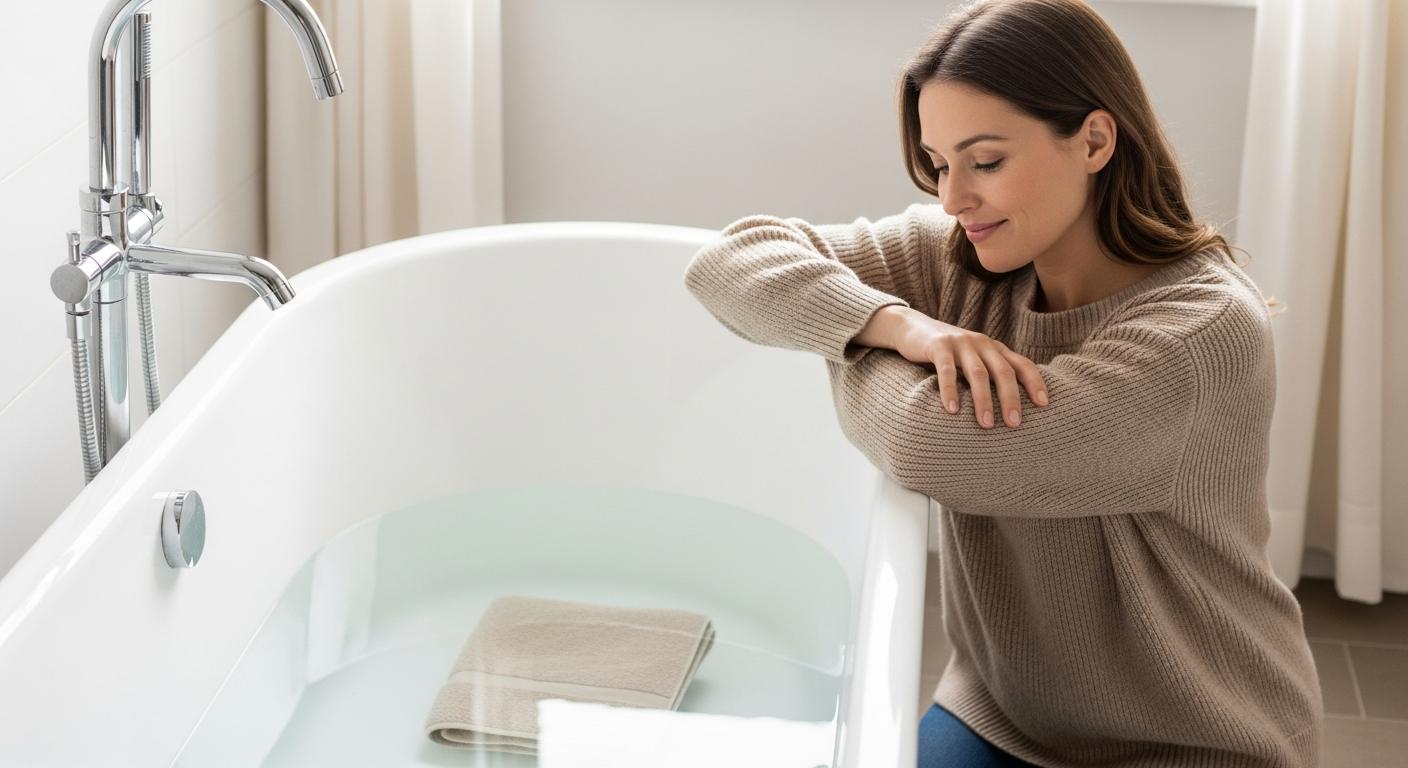
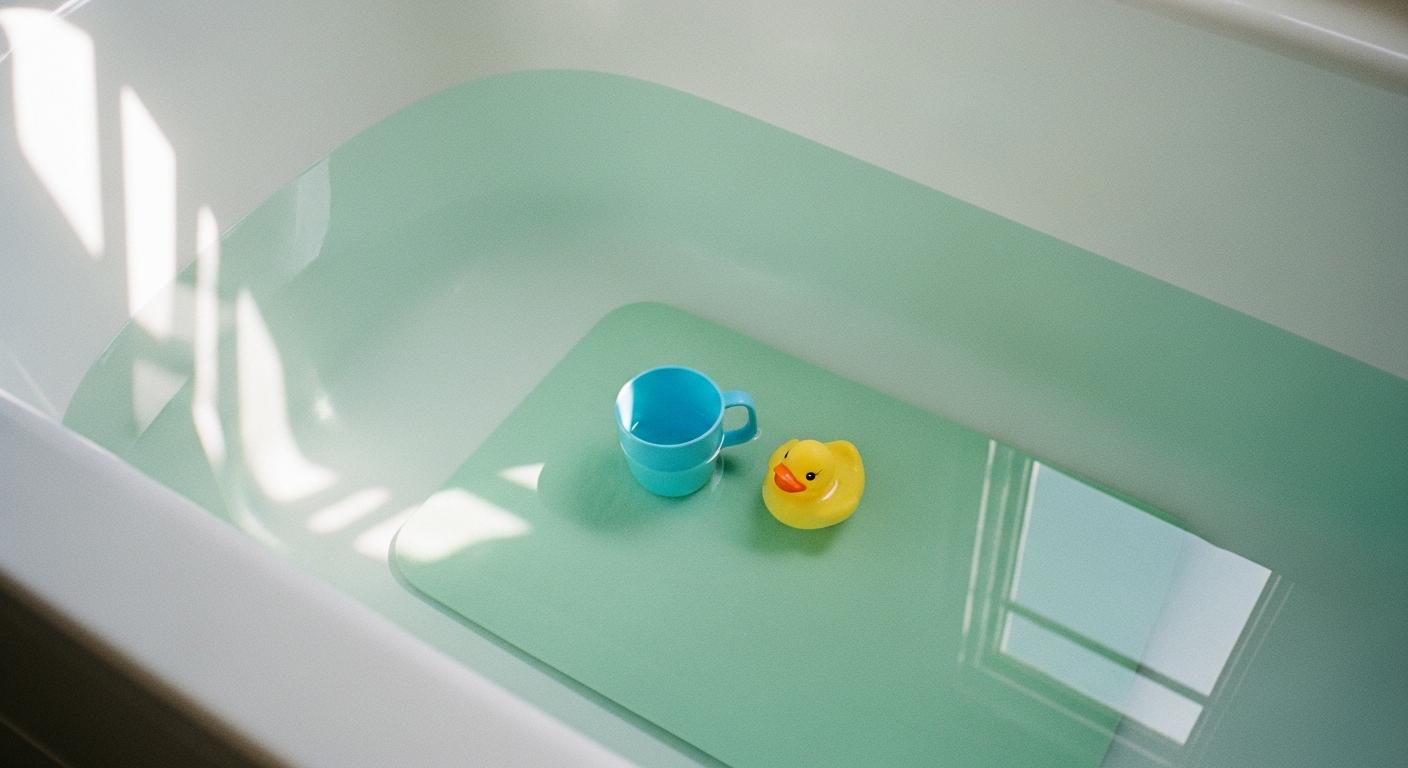
- Depth (free-movement bath): often 5 cm, sometimes up to 10 cm depending on baby size and the tub. Baby should not float, bottom contact is the point.
- Duration: commonly 5–8 minutes (up to ~10 minutes).
Preventing chilling
Warm the bathroom, keep the bath short, and pour warm water gently over the chest if baby cools quickly.
Common safety mistakes
- Adding more water “to keep baby warm” (reduces bottom support)
- Trusting an accessory as if it prevents drowning
- Bathing when baby is very hungry, ill, or exhausted
Simple equipment for a safe baby bath
The goal is stability and traction.
Where to place your baby
- Infant bathtub
- Sturdy basin
- Family bathtub (if you can bend safely and keep stable footing)
Prevent slipping on the bottom
- Non-slip mat (ideal)
- Or a thick towel under water
If baby slides, reduce water level and improve grip.
Hygiene: minimal product, careful rinsing
Use a gentle, preferably fragrance-free cleanser in a small amount. Often, warm water is enough, with cleanser focused on the diaper area and skin folds (neck, armpits, groin). Rinse carefully so residue doesn’t irritate.
How to do a free-movement baby bath (repeatable steps)
- Set the non-slip surface. Fill 5–10 cm of water. Check 35–37°C.
- Undress baby close to the bath, speak calmly.
- Place baby on the back with bottom contact. Keep your hand close.
- Pause 10–20 seconds for adaptation, watch breathing and face.
- Wash gently (folds, hands, diaper area). Use plain water for the face.
- Rinse slowly with a cup.
- Lift with a secure hold (under shoulders and pelvis). Wrap immediately.
Finding a free baby tub near you: the most reliable options
When parents type free baby bath plus a city name, local reuse networks often outperform national promotions.
- Registry welcome boxes (often samples and coupons)
- Hospital or maternity ward kits (ask the discharge team or social worker)
- Prenatal classes and new-parent programs (gear swaps happen quietly)
- Community programs (public health, nonprofits, baby banks)
- Buy Nothing / Freecycle groups
- Facebook Marketplace “free” listings and neighborhood apps
- Friends, family, and lending closets
Second-hand tub: inspection and cleaning in a few minutes
Before you bring it home:
- Check stability on a flat surface
- Look for cracks, sharp edges, warping, stains, or strong odor
- Confirm all parts are present and attach securely
- Find the label/model info for recall checks
To clean: hot soapy water, rinse well, optional diluted bleach per label directions, then rinse again and air-dry completely (ideally upside down).
If you can’t find a free baby bathtub
A safe minimalist setup can work well:
- A clean sink with a towel for grip (watch the faucet and hard surfaces)
- A sturdy plastic basin placed inside the adult tub
Sometimes the most realistic free baby bath win is free samples plus a stable setup.
Key takeaways
- Free baby bath can mean a free tub, free products, free accessories, free education, or a free-movement bath method.
- Keep bath time simple: stable setup, warm water (35–37°C), short duration, minimal cleanser.
- Free-movement baths use shallow water (often 5–10 cm) with bottom contact and constant, hands-on supervision.
- Inspect and sanitize any second-hand tub, skip damaged, moldy, or unidentifiable models.
- Local reuse groups and community programs are often the best sources for a free tub.
- For tailored guidance and free child health questionnaires, you can download the Heloa app.
Questions Parents Ask
Are “free baby bath” offers real, or are they scams?
Many free offers are legitimate (registry welcome boxes, brand mini-sizes, community baby banks), but it’s normal to feel cautious. A quick check helps: look for a clear brand/organization name, transparent terms, and no pressure to “act now.” If an offer asks for a card number for a “free” item, or hides high shipping costs, you can simply skip it and choose a safer option (local parent groups or hospital/community programs).
Can I use a clean plastic storage tub or laundry basket as a baby bath?
Yes—some parents do, especially when budgets are tight or space is small. What matters most is stability and grip. A wide, sturdy container placed on a flat surface (often inside the adult tub) can work, with a towel for traction and very shallow warm water. Keep baby’s face well above water and stay hands-on the whole time. If the container flexes, slides, or feels unstable, it’s best to switch setups.
How can I get free baby bath samples without irritating my baby’s skin?
If your baby’s skin seems reactive, try fragrance-free, dye-free options first. Patch-test a tiny amount on a small area, and introduce only one new product at a time—this makes reactions easier to spot without stress. Rassurez-vous: for many newborns, warm water alone is already enough for most baths, with cleanser used only where it’s truly useful (folds and diaper area).
Further reading:
- Bathing Your Baby (https://www.healthychildren.org/English/ages-stages/baby/bathing-skin-care/Pages/Bathing-Your-Newborn.aspx)