Pregnancy can feel like a fast-moving mix of body changes, mental noise, and practical pressure: appointments, new sensations, shifting hormones, and sleep that suddenly turns light. You may be asking yourself, how do I stay steady when everything is changing? pregnancy meditation can be a simple, realistic pause—sometimes two minutes, sometimes fifteen—to settle your nervous system, soften tension, and prepare for birth without trying to control every detail.
What pregnancy meditation is (and what it isn’t)
pregnancy meditation gathers gentle mind–body practices that calm the autonomic nervous system (your internal “autopilot”), support emotional regulation, and often strengthen the felt connection with your baby.
Common formats include:
- guided audio or in-person sessions
- breath awareness and slower exhalation
- a pregnancy-adapted body scan (attention moving from head to toe)
- soothing imagery (safe place, warmth, “waves”)
- loving-kindness phrases (supportive inner language)
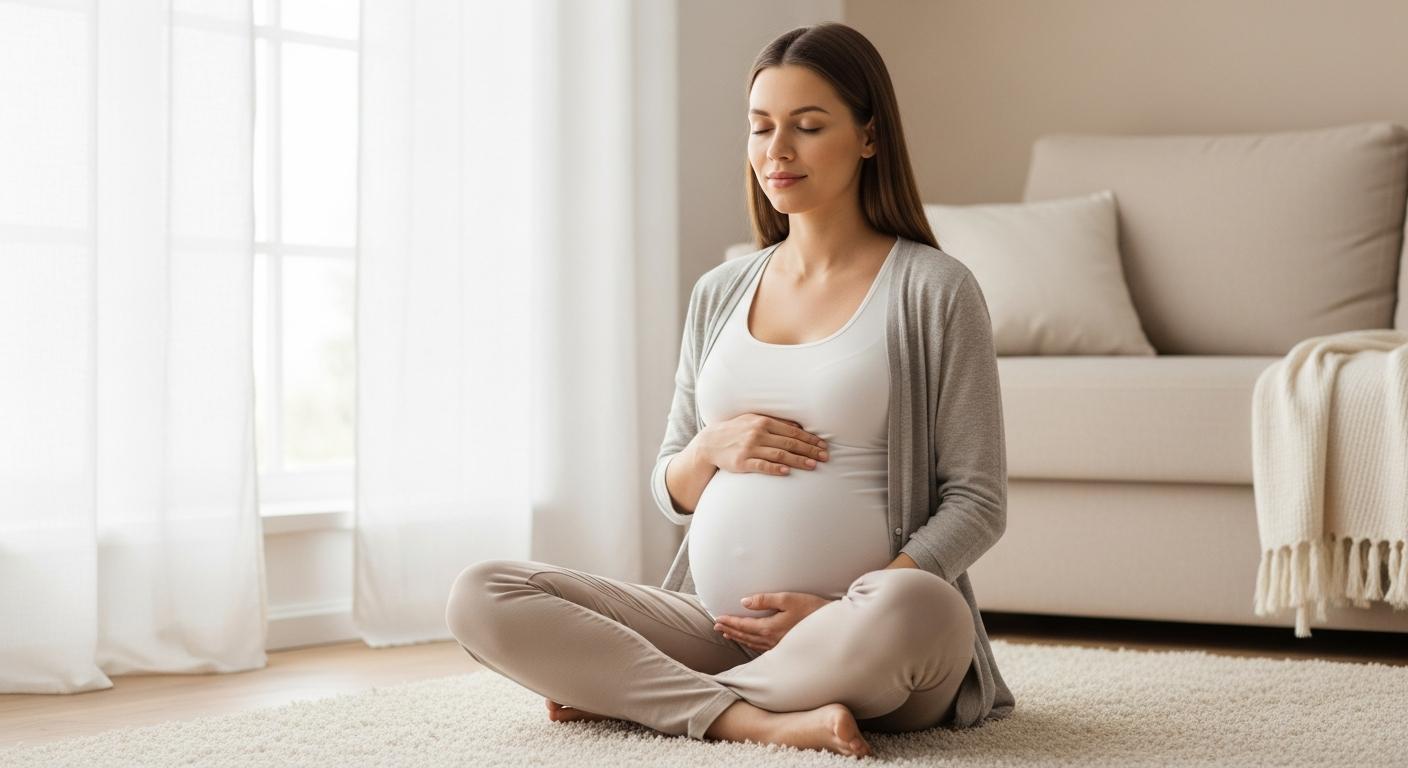
What it is not: a medical treatment, a replacement for prenatal care, or a test of willpower. Minds wander. That is normal physiology: the brain is built to anticipate. In pregnancy meditation, “success” is simply noticing you drifted, then returning—gently—to an anchor (breath, hands on belly, contact points).


Why pregnancy meditation can feel so effective in pregnancy
When stress rises, the sympathetic nervous system activates: heart rate increases, muscles brace, breathing becomes shallower. Pregnancy itself can amplify that “alert” tone—more vivid dreams, more startle, more rumination.
Many styles of pregnancy meditation tilt the balance toward the parasympathetic nervous system (often described as the “rest-and-digest” side). Slower breathing and a longer exhale influence the vagus nerve (a major pathway between brain, heart, and gut), which can reduce physiological arousal. The sensation is often very concrete: shoulders drop, jaw unclenches, the belly softens.
You may be wondering: does this change outcomes like birth weight or preterm birth? Research is mixed. Benefits are most consistent for stress, anxiety symptoms, mood, and sleep quality. That alone can be a big win.
Who can benefit—and when to start
pregnancy meditation can be useful if you:
- feel “on edge” or easily overwhelmed
- struggle with falling asleep or going back to sleep
- notice worry spirals that speed up at night
- want tools for labor (breath, focus, coping)
Any trimester works. Starting early helps build a habit, starting late still helps because the nervous system responds quickly to downshifting.
If you have a history of trauma, panic attacks, major depression, bipolar disorder, psychosis, or a high-risk pregnancy, pregnancy meditation can still fit—but choose gentle practices and discuss it with your midwife or obstetrician.
What parents often notice: body and mind benefits
Less stress, less pregnancy anxiety
With repetition, pregnancy meditation trains attentional control: you catch the worry earlier, you respond with less self-criticism, and you return to something steadier (breath, sensation, voice). Many parents describe fewer “mental loops,” and a quicker return to baseline after stress.
Breathing, muscle tension, and recovery
Stress shows up in the body—neck, shoulders, pelvic floor, even hands. pregnancy meditation often uses diaphragmatic breathing (belly expands on the inhale, slow exhale), which can support oxygenation and reduce muscle guarding.
Try this micro-reset (30–60 seconds):
- inhale softly through the nose
- exhale a little longer, like a quiet sigh
- on the exhale, soften jaw → shoulders → hands
Better sleep (even when nights are choppy)
Hormones, reflux, frequent urination, and discomfort can fragment sleep. pregnancy meditation helps by reducing hyperarousal—the “tired but wired” state. Guided relaxation or yoga nidra-style sessions can make bedtime smoother and reduce the classic loop: waking → thinking → getting more awake.
Emotional balance and self-compassion
Pregnancy can magnify emotion. Mindfulness-based approaches show modest improvements in rumination and mild-to-moderate depressive symptoms. Practically, pregnancy meditation helps you notice early signs of overload (tight chest, clenched teeth, racing thoughts) and meet them with a kinder, more spacious attention.
Connection with baby (and sometimes with a partner)
A hand on the belly, three slow breaths, a few quiet words—simple, but powerful. Some parents make pregnancy meditation a shared ritual: one person breathes slowly, the other mirrors it. That co-regulation (two nervous systems settling together) can be surprisingly calming.
Coping with discomfort
Meditation does not erase pelvic pressure, back pain, or Braxton Hicks sensations. It can, however, reduce catastrophizing and improve interoception (awareness of internal sensations), which often changes how intense discomfort feels—especially when paired with posture changes and clinical advice.
Safe practice basics (positions, breathing, and red flags)
Positions by trimester
Comfort first.
- First trimester: seated with back support, side-lying, or short periods on the back if it feels fine.
- Second trimester: prefer seated support or side-lying, avoid long periods flat on the back.
- Third trimester: side-lying (often left) with pillows under head, between knees, and under the belly, or a well-supported recline.
Breathing: gentle beats forceful
Choose easy nasal breathing and a slightly longer exhale. Avoid rapid breathing, forceful techniques, and long breath holds (they can trigger dizziness, tingling, or anxiety).
When to pause and get medical advice
Stop the session and seek prompt clinical guidance if you develop:
- dizziness, fainting, palpitations
- persistent or unusual abdominal/pelvic pain
- regular painful contractions before term
- vaginal bleeding or fluid leakage
- markedly reduced fetal movement
- severe headache with visual changes or sudden swelling of face/hands
pregnancy meditation should never delay evaluation when a symptom worries you.
A simple routine that actually sticks
Pick a “minimum version”
On low-energy days, aim for two minutes. Consistency matters more than duration.
Choose a time cue
After brushing teeth. After lunch. When you get into bed. Linking pregnancy meditation to an existing habit reduces mental effort.
Duration that fits pregnancy life
- 1–3 minutes: a reset
- 5–10 minutes: a daily rhythm
- 15–20 minutes: deeper relaxation, often best for bedtime
Pregnancy meditation techniques (practical and pregnancy-adapted)
1) Belly-to-baby breathing
One hand on chest, one on belly. Feel movement. On the exhale, soften shoulders and jaw. If it feels right, imagine “space” around baby.
2) Coherent breathing (no strain)
A common rhythm is inhale 4, exhale 6—no holds. If counting irritates you, drop numbers and simply lengthen the exhale.
3) Body scan (skip uncomfortable areas)
Move attention from forehead to feet (or the reverse). Notice tension, neutral zones, pleasant sensations. If an area feels unpleasant, skip it and return to hands or feet.
4) Grounding with the 5 senses (for sudden anxiety)
Name: 5 things you see, 4 you feel, 3 you hear, 2 you smell, 1 you taste. It pulls the brain out of spiraling and back into the present.
5) Loving-kindness phrases
Try repeating:
- “May I be safe. May I be calm.”
- “May my baby be safe. May my baby grow in peace.”
If harsh self-talk shows up, this can be the most relieving form of pregnancy meditation.
Trimester tweaks: what to prioritize
First trimester: nausea, fatigue, early worries
Short sessions (3–5 minutes) and cooler air help. Side-lying or supported recline often feels best. Let the goal be simple: “one breath at a time.”
Second trimester: building the habit
Energy is often steadier. Many parents do well with 5–10 minutes combining breath + body scan + a hand-on-belly pause.
Third trimester: comfort, sleep, and birth preparation
Side-lying support becomes central. Shorter, more frequent pregnancy meditation sessions can reduce end-of-day tension. Add labor cues: long exhale, soft jaw, wave imagery.
Short guided scripts (ready to use)
3-minute calm reset
Settle seated with support or left side-lying.
Breathe in 4, breathe out 6 (no holds). Place one hand on heart, one on belly. On each exhale, soften jaw and shoulders.
Notice three contact points holding you (feet, back, hips). If a thought pulls you away, label it “thinking,” then return to the exhale.
10-minute daily stress relief
Breathe gently. Exhale a little longer.
Scan: forehead → jaw → shoulders → hands. Soften each area on the exhale.
Repeat silently: “Inhaling, I invite calm. Exhaling, I let go.” End with one kind sentence to yourself.
Bedtime wind-down (10–15 minutes)
Lie on your left side with pillows supporting head, belly, and knees. Let breathing be natural or slightly longer on the exhale.
Body scan from toes upward. If thoughts arrive, imagine placing them on a leaf floating away. Finish with: “My body can rest. My baby is growing. I can let go for tonight.”
Pregnancy meditation for labor: what changes during contractions
Labor pain is partly signal, partly interpretation. Fear and tension can amplify it, safety and tools can soften it. pregnancy meditation helps because it trains skills you can use between and during contractions:
- returning to one anchor (breath, a spot on the wall, a partner’s voice)
- relaxing reflex tension (jaw, shoulders, hands, glutes)
- meeting one wave at a time, not the whole labor at once
No one “fails” at birth for choosing pain relief. Think of pregnancy meditation as an extra tool that can sit alongside epidural, gas, water, movement, or hypnobirthing techniques.
Mental health and trauma-sensitive options
If closing your eyes feels unsafe, keep them open with a soft gaze. Prefer grounding and external anchors (sounds in the room, feet on the floor) rather than deep inward focus. Go slowly.
Pause pregnancy meditation if you feel panicky, emotionally flooded, detached, or worse afterward. Swap to grounding, gentle walking, a warm drink, or contact a supportive professional.
Seek professional help promptly if anxiety or low mood lasts more than two weeks, disrupts sleep and daily functioning, or if thoughts of self-harm appear.
Key takeaways
- pregnancy meditation can support stress regulation, sleep quality, emotional balance, and coping in pregnancy and postpartum.
- Gentle breathing and a longer exhale often calm the autonomic nervous system.
- Comfort-first positions matter more as pregnancy progresses (side-lying is often best in the third trimester).
- Stop and seek medical advice for dizziness, bleeding, fluid leakage, severe pain, regular preterm contractions, severe headache with visual changes, swelling, or reduced fetal movement.
- For tailored tips and free child health questionnaires, parents can download the Heloa app.
Questions Parents Ask
Can pregnancy meditation help with nausea or morning sickness?
It can, for some parents. Gentle practices (1–3 minutes) may ease the “stress layer” that can amplify nausea: a softer jaw, slower breath, and a calmer stomach-brain loop. If focusing inward makes nausea worse, no worries—try an external anchor (listening to a voice, noticing sounds in the room) or meditating upright with fresh air. If vomiting is persistent, hydration is difficult, or you feel faint, it’s important to check in with your maternity care team.
Which pregnancy meditation apps or audios are best?
The “best” option is the one that feels safe and easy to repeat. Many parents prefer pregnancy-specific tracks that include side-lying positions, shorter sessions, and reassuring language. Look for: trauma-sensitive options (eyes open is OK), adjustable length (5–15 minutes), and voices you genuinely like. If an audio triggers anxiety or pressure to “do it right,” feel free to switch—your comfort matters.
Can I do pregnancy meditation if I have a high-risk pregnancy?
Often yes, with a gentle approach and medical alignment. Calm breathing, body scans, and guided relaxation are usually adaptable, but it’s important to ask your midwife or obstetrician what’s appropriate for your situation (especially if you’ve been advised to limit activity). Choose comfortable positions, avoid strong breathwork or long holds, and keep sessions short if fatigue is high.