Feeling breathless after climbing stairs, waking up with hip stiffness, wondering whether a twist is still “allowed”? Prenatal yoga often shows up as a gentle answer to very real pregnancy days. Not to chase flexibility. Not to “perform.” To move safely, breathe better, ease tension, and rehearse coping skills you may reuse in labor.
You’ll see what prenatal yoga is, how it differs from regular yoga, which benefits are realistic (and which promises are too big), the safety basics clinicians usually agree on, trimester-by-trimester adjustments, and a shortlist of pregnancy-friendly poses and practices to avoid.
What prenatal yoga is (and what it is not)
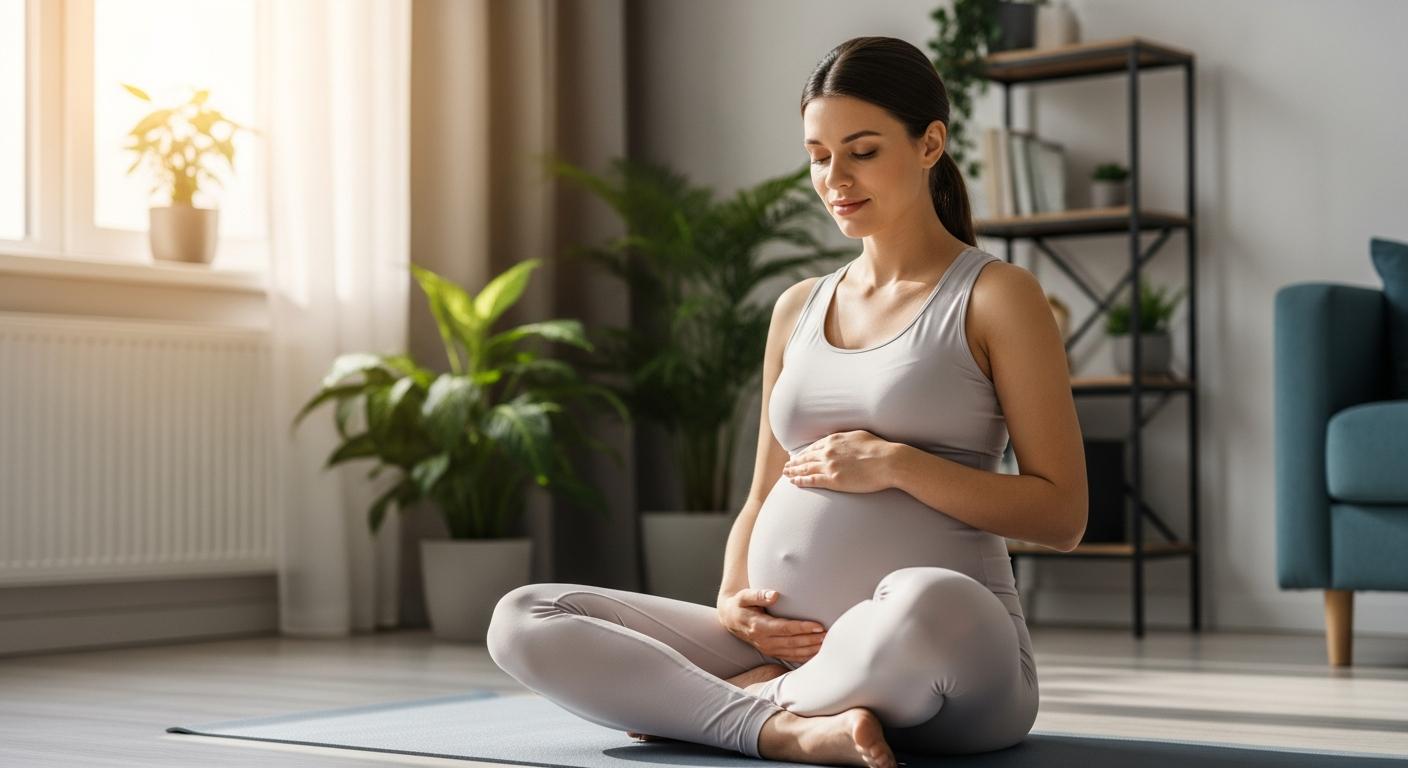
Prenatal yoga is a pregnancy-adapted form of yoga that blends gentle mobility, posture work, and light strength with breath training and relaxation. Think: comfort, stability, circulation, and self-awareness.
What it is not? A test of range of motion. Pregnancy hormones (especially relaxin) increase ligament laxity, so “deeper” can sometimes mean “easier to irritate.”


Most sessions include:
- Slow, belly-friendly poses (often with props)
- Comfortable diaphragmatic breathing (no forcing)
- Pelvic mobility (tilts, circles) and posture support
- A longer restorative rest, frequently side-lying
How prenatal yoga differs from a regular class
Why not just join any yoga class? Because pregnancy changes mechanics: balance shifts, breathing feels different, circulation can be more sensitive, and abdominal pressure matters.
In a well-taught prenatal yoga class, you’ll usually find:
- More props (chair, wall, blocks, pillows) for stability and comfort
- Less abdominal compression (fewer deep closed twists and big backbends)
- No deliberate breath-holding (no voluntary apnea) and no forceful rapid breathing
- Less time lying flat on the back after the first trimester (risk of supine hypotension, a drop in blood return to the heart when the uterus compresses major vessels)
- No heated rooms (overheating is a real pregnancy issue)
A simple rule that works surprisingly well: if your breathing becomes strained or you feel pressure that alarms you, modify or stop.
Benefits parents commonly notice (body + mind)
People come to prenatal yoga for many reasons (low back pain at day’s end, heavy legs, anxious thoughts at 2 a.m., or the desire to feel “at home” in a fast-changing body).
Calmer stress response
Slow breathing with a slightly longer exhale tends to tone down the sympathetic “stress” system and support parasympathetic settling (the part linked with rest and digestion). In everyday life, that can look like fewer spikes of tension, and a smoother wind-down at bedtime.
Sleep support (imperfect, but often helpful)
Pregnancy sleep is disrupted by reflux, frequent urination, vivid dreams, and discomfort. Prenatal yoga may help by reducing muscle tone, lowering arousal, and giving you a repeatable pre-sleep ritual. Short sessions (10–20 minutes) often beat long, exhausting ones.
Posture, pelvic support, and functional strength
As the uterus grows, posture adapts: rib flare, rounded shoulders, anterior pelvic tilt. Prenatal yoga typically builds supportive strength in the glutes and upper back while keeping the work low-impact.
And yes, the pelvic floor matters, but not as “tighten all the time.” A healthy pattern is coordination:
- Inhale: soften and widen (pelvic floor descends slightly)
- Exhale: a gentle lift (pelvic floor recoils upward)
- No breath-holding, no bearing down
Circulation comfort
Regular position changes, ankle/leg movements, and supported rest can feel soothing if you have heavy legs or mild swelling. Evidence on swelling is mixed, but many pregnant people report better comfort when they avoid overheating and keep moving gently.
Birth preparation that stays realistic
Prenatal yoga can rehearse labor-friendly skills:
- Steady breathing under effort
- Relaxing jaw and shoulders (often linked with pelvic tension)
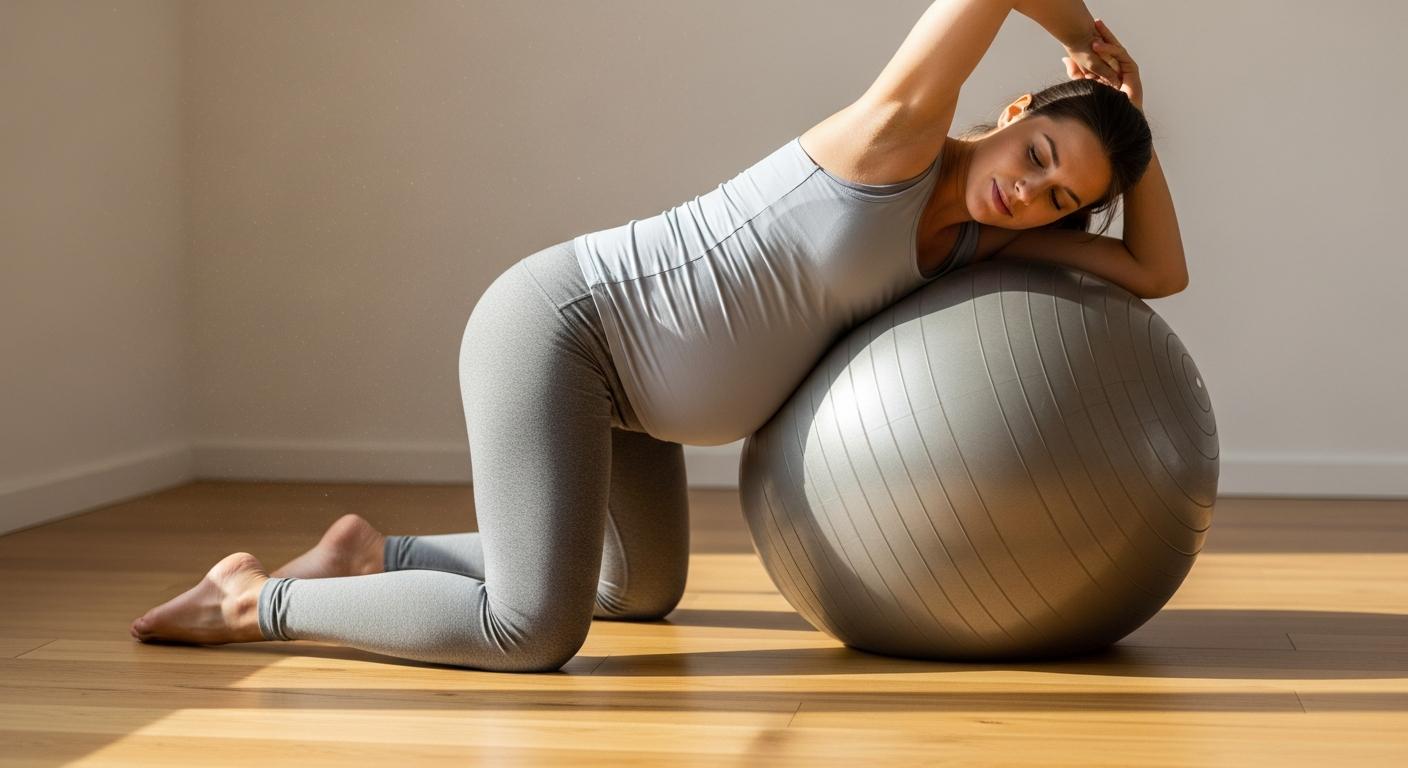
- Supported positions you may reuse: hands-and-knees, forward-leaning on a chair, wall-supported standing, sitting on a ball
- Learning the rhythm of effort + recovery (very transferable to contractions)
Can it guarantee a shorter or easier labor? No. Some studies show associations with improved coping and sometimes shorter labor, but outcomes vary widely.
Prenatal yoga safety: the essentials
Safety in prenatal yoga is mostly about physiology and common sense: avoid overheating, protect joints, reduce fall risk, and manage abdominal pressure.
The “talk test” and pacing
- You should be able to speak in full sentences.
- Breath stays smooth (no gasping, no breath retention).
- Effort is fine, strain is your cue to back off.
Rest breaks are not failure. They are smart self-regulation.
Hydration, food timing, and temperature
Pregnancy increases susceptibility to dizziness and heat.
- Sip water before and during.
- A small snack can prevent lightheadedness.
- Prefer a cool or comfortably warm room with airflow.
Warning signs: stop and contact your clinician
Stop prenatal yoga and seek urgent advice if you notice:
- Vaginal bleeding or leaking fluid
- Chest pain, severe shortness of breath at rest, or strong palpitations
- Fainting, persistent dizziness, severe headache, or visual changes
- Severe abdominal/pelvic pain or pressure
- Painful regular contractions before term
- Clear decrease in fetal movements
If something feels “off for you,” that is enough reason to pause and ask.
When to start prenatal yoga (and how often)
With medical clearance, prenatal yoga can start in any trimester.
- First trimester: nausea and fatigue often dominate. Choose short, upright, breath-led sessions.
- Second trimester: many people feel steadier. Great time for posture work and gentle standing strength.
- Third trimester: slower pace, more props, more restorative rest.
Realistic routines:
- 2–3 sessions/week of 20–30 minutes, or
- 10–15 minutes on most days
Consistency tends to matter more than duration.
Pregnancy changes that shape your practice
A few physiology reminders make prenatal yoga feel safer and more predictable.
Relaxin and joint laxity
You may feel more flexible. That does not mean connective tissues want end-range stretching. Use props, keep micro-bends, and choose “stable” over “deep.”
Balance shifts
Center of gravity moves forward. Falls become a bigger concern. Use a chair or wall, widen stance, slow transitions.
Breathing mechanics
The diaphragm is pushed upward as the uterus grows. Feeling short of breath sooner can be normal. Keep effort moderate, and choose shapes that give ribs space (seated, tall kneeling, supported standing).
Supine hypotension
Long holds lying flat can trigger nausea, sweating, or lightheadedness in some pregnancies. If it happens: roll to your side. If you want a reclined rest, elevate the torso with pillows.
Prenatal yoga by trimester: simple adaptations
First trimester
- Gentle mobility: cat-cow, seated side bends
- More upright work if nausea worsens with head-down positions
- Avoid overheating and “max effort” classes
Second trimester
- Supported standing strength (shorter Warrior II, chair-supported Chair Pose)
- Open twists (rotate away from the belly)
- Upper-back opening to counter shoulder rounding
Third trimester
- Wide stances, slow transitions, frequent pauses
- Pelvic mobility and restorative rest take priority
- Side-lying relaxation often feels best
A short list of pregnancy-friendly poses (with safer options)
In prenatal yoga, the best poses are the ones you can breathe through.
- Cat-Cow (small range, breath-led)
- Supported Child’s Pose (knees wide, torso on pillows)
- Seated side bend (breathe into the ribs)
- Wall-supported Chair Pose (less strain, more control)
- Warrior II (shorter stance, use a chair for balance)
- Supported low lunge (hands on blocks or a chair)
- Side-lying relaxation (pillow between knees, support under belly if needed)
What to avoid (or heavily modify)
These are common “no thanks” zones for prenatal yoga, not because yoga is dangerous, but because pregnancy has specific constraints.
- Deep closed twists that compress the abdomen (choose open twists instead)
- Strong backbends that load the low back
- Long flat-on-the-back holds after the first trimester if they make you unwell
- Crunches and high-pressure core work (watch for midline doming linked with diastasis recti)
- Hot yoga and overheating
- Forceful breathing or breath retention
- Inversions unless you had a solid pre-pregnancy practice and have explicit medical and instructor support
Breathwork you can reuse in daily life and labor
A simple prenatal yoga pattern: exhale slightly longer than inhale.
- Inhale for 4
- Exhale for 6
Why does it feel calming? A longer exhale often supports vagal tone, easing the “alarm” state.
In labor, perfection matters less than rhythm. Some people also like a low hum on the exhale (jaw soft, throat relaxed). If dizziness appears, return to normal breathing.
Postpartum: a quick look ahead
After birth, tissues need time: uterine involution (the uterus shrinking back), possible stitches, pelvic floor strain, or a cesarean incision.
Many parents do best when they start with clinical clearance and rehabilitation first (pelvic floor, then deep abdominal function), and later shift to postnatal yoga that matches recovery.
Key takeaways
- Prenatal yoga blends gentle movement, breathing, and relaxation to support comfort, posture, and coping skills in pregnancy.
- Benefits often include calmer mood, better body awareness, and practical preparation for labor positions and pacing.
- Keep intensity moderate (talk test), avoid overheating, and skip breath-holding.
- Use trimester adaptations: gentler early, steadier strength mid-pregnancy, more support and rest late pregnancy.
- Stop and seek medical advice for bleeding, leaking fluid, persistent dizziness/fainting, severe pain, regular contractions before term, or reduced fetal movement.
- For extra support, professionals can guide you, and you can download the Heloa app for personalized tips and free child health questionnaires.
Questions Parents Ask
Can I do prenatal yoga if I have pelvic girdle pain (SPD) or sciatica?
Yes—many parents find it soothing, and there’s no need to “push through” pain. Favor stable, supported shapes: wide-knee Child’s Pose with pillows, Cat-Cow in a small range, side-lying stretches, and chair-supported standing. Keeping transitions slow, avoiding deep lunges or wide single-leg loading, and using props often helps. If symptoms spike during or after practice, it may be worth asking a physiotherapist for personalized options—rassurez-vous, adjustments usually make a big difference.
Is prenatal yoga OK if I’m pregnant with twins?
Often, yes, with clinician clearance and a more conservative approach. Multiple pregnancy can increase fatigue, pelvic heaviness, reflux, and the need to avoid overheating. Many parents do well with shorter sessions, more rest breaks, and extra support (wall, chair, bolsters). It’s also helpful to choose classes or videos specifically labeled “prenatal” and to mention twins to the instructor so they can offer safer pacing and alternatives.
What if I’ve never done yoga—can I start prenatal yoga as a beginner?
Absolutely. Prenatal yoga is commonly designed for beginners, and starting gently is completely normal. You can aim for simple goals: comfortable breathing, easier posture, and less tension—rather than perfect poses. Trying a beginner prenatal class (in-person or online), using props, and keeping intensity at a level where you can talk easily can feel both reassuring and effective.
Further reading: