Sleeping on your stomach can be a lifelong habit—until a positive test, a tender chest, and a belly that slowly takes up new space. You may be wondering whether sleeping on stomach while pregnant can harm your baby, why it suddenly feels “wrong,” and what to do when you keep waking up on your back or half-twisted. The good news: the body is usually an excellent alarm system. The goal is not perfect positioning, it’s comfortable, restorative sleep while protecting circulation, breathing, and your joints.
Sleeping on stomach while pregnant: is it safe?
What “sleeping on your stomach” means in pregnancy—and why it changes over time
Sleeping on stomach while pregnant means lying prone (face-down) with the abdomen against the mattress. Early on, this can still feel normal because the uterus stays low, protected by the pelvic bones. As pregnancy progresses, the uterus rises into the abdomen, your center of gravity shifts, and the “flat” contact that once felt soothing becomes awkward—or simply impossible.
Why the fear of “squashing the baby” is so common (and usually not the reality)
It’s an understandable thought: “If I lie on my belly, am I pressing on the baby?” Yet in an uncomplicated pregnancy, early sleeping on stomach while pregnant is rarely a direct threat. The embryo/fetus is not sitting right under the skin. What usually becomes limiting first is your comfort—breast tenderness, bloating, or a pulling sensation.
What protects the baby early on (natural cushioning and anatomy)
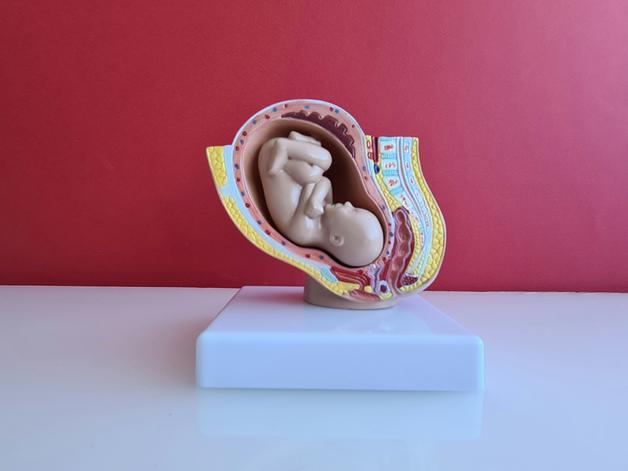
In early pregnancy, pressure is distributed through several protective layers:


- abdominal wall (skin, fat, and abdominal muscles)
- the uterus (a thick, muscular organ)
- fetal membranes (the amniotic sac)
- amniotic fluid (a hydraulic cushion where the baby floats)
In the first trimester, the uterus is also tucked behind the pelvic bones. That combination makes early sleeping on stomach while pregnant generally more about comfort than danger.
Safety vs comfort: what matters most for most pregnancies
Clinicians do not routinely forbid sleeping on stomach while pregnant in the first trimester. For most people, it fades out because it becomes uncomfortable: pressure on the breasts, pulling in the pelvis, reflux, or a strong instinct to roll away.
From mid-pregnancy onward, the priority shifts. Positions that support circulation and reduce symptoms tend to work best, which is why side-lying becomes the default.
Why stomach sleeping gets harder as pregnancy progresses
Common body changes that make prone sleep uncomfortable
Why does sleeping on stomach while pregnant become less appealing?
- breasts enlarge and can feel sore
- the bump changes where your weight lands
- pelvic heaviness increases, especially in the evening
- bloating, reflux, and constipation can make abdominal compression unpleasant
Posture and joint changes that affect sleep (ligament laxity, low back strain)
Pregnancy hormones (including relaxin) increase ligament laxity, especially around the pelvis. Add a forward-shifting center of gravity and a deeper low-back curve (lumbar lordosis), and the musculoskeletal system works harder.
Prone sleeping may increase the arch in the lower back, pull the neck into rotation, and aggravate hip or pubic symphysis discomfort.
Why sleep position can matter (comfort, breathing, circulation)
Sleep position matters because pregnancy changes how you tolerate gravity and pressure:
- Comfort: stretching tissues, sensitive breasts, and loose joints can make certain positions painful.
- Breathing: the growing uterus can limit diaphragm movement, particularly if you are compressed.
- Circulation: later in pregnancy, lying flat on your back can compress the inferior vena cava, decreasing blood return to the heart.
Safety and comfort by trimester
First trimester: when stomach sleeping is usually fine
Weeks 1–13 are when sleeping on stomach while pregnant is most often still comfortable—and generally considered safe if it feels good.
Miscarriage in the first trimester is most commonly related to chromosomal factors and other medical causes, not sleeping position.
Early symptoms can still disrupt sleep:
- nausea
- breast soreness
- fatigue
- frequent urination
- bloating
Second trimester: transitioning as the belly grows
During the second trimester, the uterus expands upward and forward. Your posture adapts, your back may feel more arched, and sleeping on stomach while pregnant may work only briefly.
Transition options that often help:
- a “three-quarter stomach” position (mostly side-lying with the chest slightly turned toward the mattress)
- a small pillow or wedge under the belly to reduce round ligament pull
- a pillow under the upper chest if breathing feels restricted
Third trimester: why stomach sleeping is rarely workable
In the third trimester, sleeping on stomach while pregnant is usually not physically practical. The uterus is larger, abdominal pressure is uncomfortable, and the position can strain the lower back and neck.
Reflux and pelvic discomfort also become more common, even Braxton Hicks contractions (irregular, often painless tightening) may make awkward positions less tolerable.
Stomach, back, and side sleeping: clearing up the main risks
Stomach sleeping: low risk early, mostly limited by comfort later
If sleeping on stomach while pregnant stops working, it is usually because your body is already juggling posture-related low back pain, rib/diaphragm pressure, or tension through hips and pelvis.
A practical rule: a “good” position should not require endurance.
Back sleeping after mid-pregnancy: vena cava compression and “not right” symptoms
After mid-pregnancy, lying flat on the back can cause supine hypotensive syndrome in some people. The uterus may compress major blood vessels, especially the inferior vena cava.
Possible symptoms include dizziness, nausea, sweating, palpitations, shortness of breath, or a vague “something is off” feeling. If this happens, rolling onto your side usually improves symptoms quickly.
Waking up on your back: what to do (without stress)
If you wake up on your back:
- roll calmly onto your side
- place a firm pillow behind your back as a gentle bumper
- consider a slight upper-body incline if reflux is a problem
When stomach sleeping is no longer comfortable: positions that help
Side sleeping: the most adaptable option
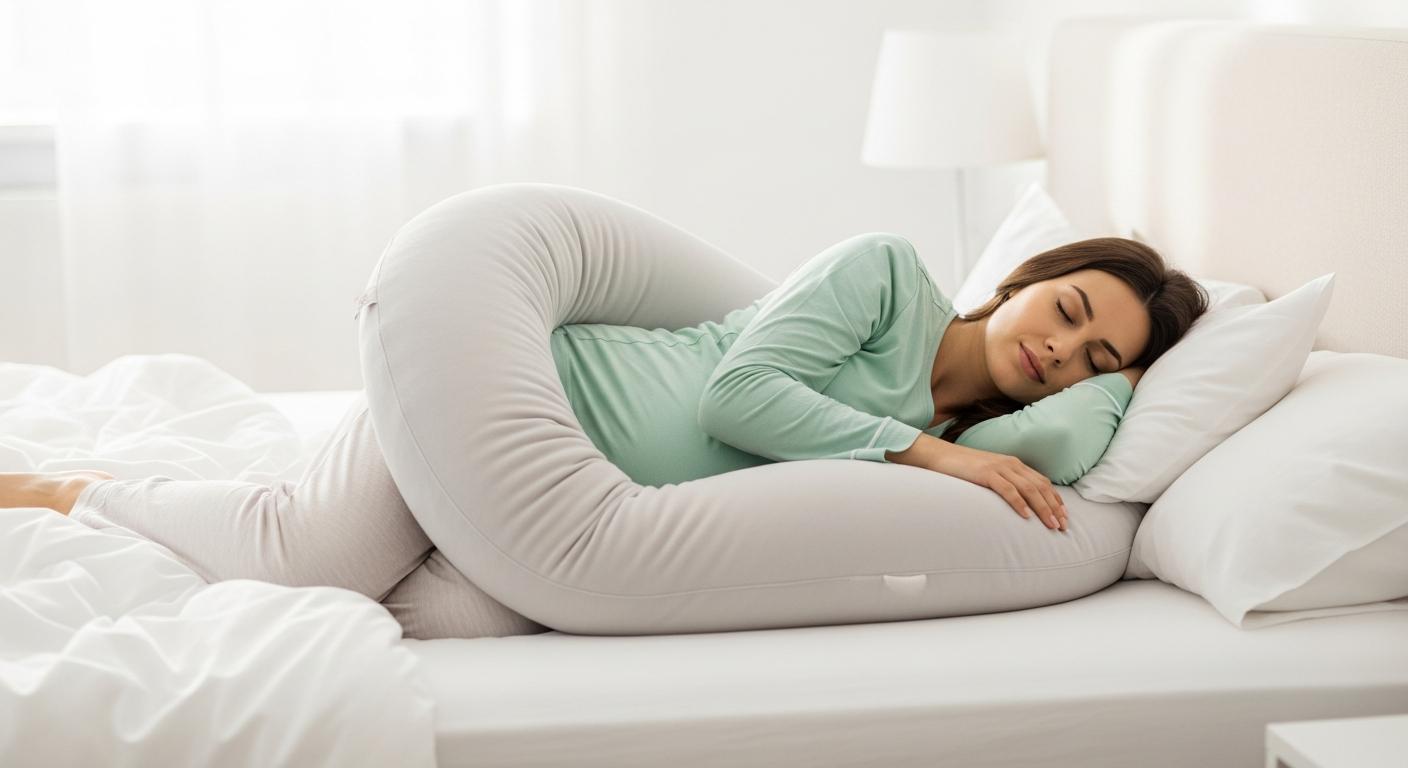
Side-lying supports the belly without compressing the ribcage. Think alignment: shoulder–hip–knee in one line.
Two supports often change everything:
- pillow between the knees (hip stability)
- small support under the belly (less traction on back and ligaments)
Left side and right side: what really matters
Left-side sleeping is often suggested because it can support uteroplacental blood flow and kidney function (some notice less heavy legs or swelling). Right-side sleeping is generally fine too, and alternating sides can reduce one-sided hip soreness.
If you tend to roll onto your back, a small pillow behind you can keep a comfortable tilt.
Three-quarter stomach and a gentle upper-body incline: especially useful for reflux
If you miss the “almost on my stomach” sensation, a three-quarter position can recreate it without direct belly compression. Pairing that with a moderate incline often helps gastroesophageal reflux, common in pregnancy.
Pillow setups, bedding, and sleep stability tricks
Pregnancy pillows: how to use them simply
A pregnancy pillow can stabilize the pelvis:
- U-shaped: supports back, belly, and legs
- C-shaped or long body pillow: flexible, easy to reposition
A reliable setup: support under the belly + pillow between the knees + optional support behind the back.
Keeping it simple: regular pillows and small wedges
Regular pillows can work very well:
- between the knees to limit pelvic rotation
- behind the back to avoid rolling flat
Mattress firmness: how it affects hips and lower back
Too firm can increase pressure points. Too soft can let the pelvis sink and aggravate low-back discomfort. If your mattress sags, a supportive topper may improve alignment.
If you wake up on your stomach or back during the night
Brief time in that position is usually not harmful
Waking up on your stomach or back happens. Brief time there is usually not harmful—especially if you move once you notice. Think “most of the night, most nights,” not rigid control.
How to roll to your side more comfortably (move hips and knees together)
To roll with less strain: bend both knees slightly, move knees and hips together as one unit, use your arms to assist, then place a pillow between your knees.
Discomfort vs warning signs: what to listen for
Change position if you feel persistent discomfort, clear shortness of breath, chest tightness, sweating, tingling, numbness, or feeling faint.
Common symptoms at night: position tweaks and when to seek advice
Lower belly pulling: often ligament stretching
Pulling sensations can reflect stretching of the round ligaments as the uterus grows. If it eases when you add support or change position, that is usually reassuring.
Seek prompt medical advice if you have bleeding, fever, fluid leakage, regular contractions, severe pain, or decreased fetal movement compared with your baby’s usual pattern.
Back and pelvic discomfort: three adjustments that can change the night
- pillow between the knees
- support under the belly
- turning “as a unit” rather than twisting at the waist
If pain is significant or affects walking, ask about pelvic girdle pain assessment and physiotherapy.
Reflux and shortness of breath
Often, side-lying plus a gentle incline improves breathing comfort and reflux. However, significant shortness of breath at rest, chest pain, or repeated dizziness needs medical advice without delay.
Sleep habits that support better rest in pregnancy
Small habits can make nights smoother:
- drink more earlier, then reduce fluids right before bed if night-time urination is an issue
- eat dinner earlier if reflux is common
- reduce screens before sleep
- keep the bedroom cool (about 18–20°C / 64–68°F)
- try slow breathing for a few cycles (inhale 4 seconds, exhale 6 seconds)
When to talk with your doctor or midwife about sleep position
Personalized advice matters if you have a higher-risk pregnancy (hypertension/preeclampsia risk, diabetes, twins, placenta concerns, heart or lung disease) or if pain is significant.
Seek prompt medical advice if you have vaginal bleeding, fluid leakage, fainting, chest pain, severe abdominal pain, or a noticeable decrease in fetal movement.
Key takeaways
- Sleeping on stomach while pregnant is often possible early on: the uterus, membranes, pelvic bones, and amniotic fluid protect the baby.
- Over time, sleeping on stomach while pregnant typically becomes uncomfortable, and many naturally switch positions.
- After mid-pregnancy, flat back sleeping can trigger symptoms linked to vena cava compression, if you wake up on your back, calmly roll to your side.
- Side-lying (left or right) with pillows for alignment is a strong foundation, a three-quarter position can help former stomach sleepers.
- Seek medical advice promptly for faintness, repeated dizziness, chest pain, significant breathing difficulty, persistent pain, bleeding, fluid leakage, or decreased fetal movement.
- For extra support, you can download the Heloa app for personalized tips and free child health questionnaires.
Questions Parents Ask
Can sleeping on my stomach cause miscarriage?
Reassuringly, miscarriage in the first trimester is most often linked to chromosomal or medical factors—not sleep position. If an uncomplicated pregnancy and stomach sleeping still feels comfortable early on, it’s generally not considered a cause of miscarriage. If you notice bleeding, strong cramping, fever, or you simply feel worried, reaching out to your midwife or doctor can help you feel supported and safe.
Is it safe to sleep on my stomach after 20 weeks?
Around (and after) 20 weeks, stomach sleeping usually becomes difficult mainly because of comfort and body mechanics—not because you’ll “squash” the baby. Many people naturally move into side-lying or a “three-quarter” position (mostly on the side, slightly turned forward). If you miss the prone feeling, a body pillow can let you lean forward without putting direct pressure on the bump.
How can I sleep if I’m a lifelong stomach sleeper?
You’re not alone—changing a long-standing sleep habit is hard. A few gentle options can make the transition smoother:
- Try a three-quarter position with a pillow under your top knee for stability.
- Add a small wedge or folded towel under the side of the belly to reduce pulling.
- If you keep rolling, a pillow behind your back can create a comfortable tilt without feeling “forced.”

Further reading :