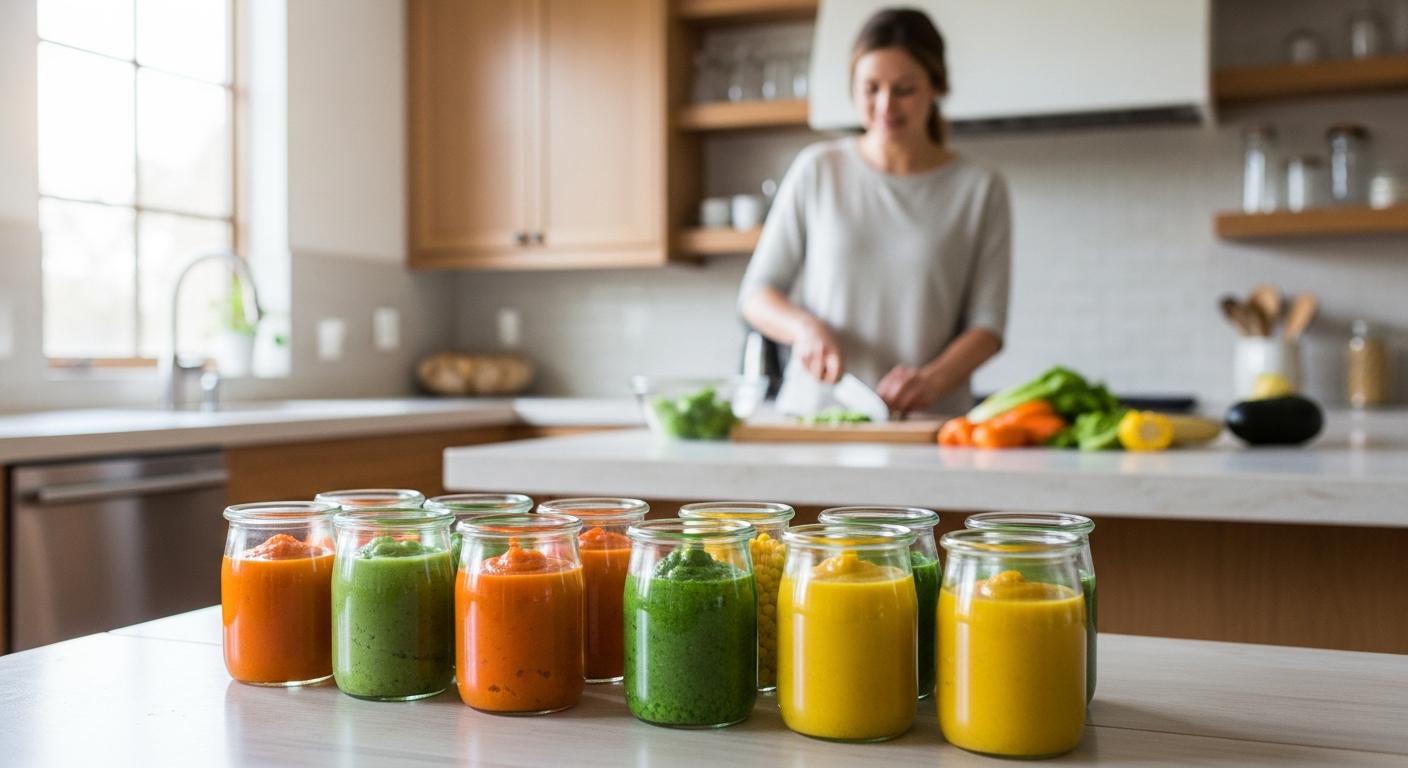
Starting solids can feel like a leap: excitement, questions, and that very normal fear of “What if my baby chokes?” Baby-led weaning recipes help you turn guidance into real plates—soft, graspable foods that support self-feeding while keeping nutrition (especially iron) and safety front and center. You may be wondering when to start, what “ready” looks like, and which foods need extra care.
Baby-led weaning recipes: what they are and when to start
Baby-led weaning (BLW) vs traditional spoon-feeding
Baby-led weaning (BLW) means offering foods prepared so your baby can pick them up and bring them to the mouth independently—soft sticks, spears, and strips that squash easily. Traditional spoon-feeding usually begins with smooth purées offered by an adult, then gradually moves toward thicker textures.
Many families combine both: baby-led weaning recipes for finger foods, plus thick purées on a preloaded spoon (placed on the tray so your baby can pick it up). What matters most:
- Enough iron and energy
- Safe textures and shapes
- Respect for hunger and fullness cues
When to start: age ranges and why readiness matters
For BLW-style finger foods, many babies start around 6 months because sitting posture, head control, and oral-motor coordination (how the tongue and swallowing work together) are more mature.


Some babies begin solids earlier with spoon-feeding (often between 4 and 6 months, depending on readiness). Milk feeds remain the main nutrition source through the first year.
Readiness signs (posture, interest, coordination, swallowing)
Look for a cluster of signs:
- Strong head and neck control
- Ability to sit upright with minimal support
- Can grasp and bring hands/toys to the mouth
- Clear interest in food (watching, leaning in, reaching)
- Tongue-thrust reflex is fading (less pushing food out)
If the spoon keeps being pushed out, it is often the tongue-thrust reflex, a normal protective reflex early on. A break and retry later is reasonable.
Special situations to discuss with your pediatrician
Extra guidance can help in case of prematurity, poor weight gain, significant reflux, neuromuscular differences, or severe eczema/strong allergy history.
A simple texture roadmap (smooth → soft pieces)
- 4–5 months (if spoon-feeding starts): very smooth purées, small tastes
- 6 months: thicker purées, soft finger foods if readiness signs are present
- 7–8 months: mashes and soft lumps, wider finger-food variety
- 9–10 months: very well-cooked pasta, tender shredded meats, mixed textures
Benefits and common myths
BLW can support self-regulation and texture learning. The big worry is choking. Gagging is common (and can look impressive), but it is a protective reflex. With upright positioning, close supervision, and genuinely soft foods, baby-led weaning recipes can be offered safely.
Baby-led weaning recipes safety essentials
Choking vs gagging
Gagging is noisy and active: coughing, watery eyes, pushing food forward, sometimes spitting it out.
Choking is quiet or ineffective: the baby cannot cough or cry well and may struggle to breathe. If you suspect choking, treat it as an emergency—use infant first-aid steps (back blows and chest thrusts) and call for help.
High-risk choking hazards and safer ways to offer them
Some foods are high-risk because they are small, round, hard, sticky, or rubbery:
- Grapes and cherry tomatoes: never whole, cut lengthwise, then smaller
- Nuts: never whole, use finely ground nuts or smooth nut/seed butters thinned with yogurt or purée and spread very thinly
- Raw hard produce (raw apple, raw carrot): cook until tender, offer as soft sticks
- Popcorn and hard/gummy candies: avoid
Safe shapes, sizes, and textures
Early finger foods should be easy to hold and easy to gum-mash:
- Stick shapes about the width of 1–2 adult fingers
- Food should squash easily between thumb and index finger
- Avoid hard crusts, very sticky clumps, and small round pieces
Cooking methods that create safe softness
- Steam vegetables and fruit
- Roast for flavor, but keep pieces tender
- Braise meat until it falls apart easily
- Poach fish so it flakes gently
Common BLW mistakes to avoid
- Foods too hard, too small/round, or too sticky
- Eating reclined, on the move, or without full supervision
- Too many low-iron meals
- Added salt or high-sodium sauces
- Multiple new allergens at once
Nutrition basics for baby-led weaning recipes
Milk still comes first
Breast milk or infant formula remains the main nutrition source through the first year. Solids complement milk feeds.
Quantities and frequency
Start small. Follow cues:
- Fullness: turning away, closing lips, slowing down
- Hunger/interest: leaning in, reaching, staying engaged
Low sodium and no added sugar
Babies do best with low salt: cook without salt, avoid processed foods, and season adult portions after removing the baby’s share. Skip added sugars, let sweetness come from ripe fruit and roasted vegetables.
Honey under 12 months
No honey before 12 months (even baked) because of infant botulism risk.
Balanced meals: iron + energy + produce
A simple plate formula keeps baby-led weaning recipes nutritionally steady:
- Iron: meat, fish, egg, lentils/beans, tofu, fortified foods
- Energy: avocado, olive oil, full-fat yogurt, cheese, nut/seed butters (safe form)
- Produce: fruit and vegetables
Iron-forward pairing
Heme iron (meat/fish) absorbs well. Non-heme iron (lentils, beans, tofu) absorbs better with vitamin C.
Ideas:
- Beef strips + broccoli
- Lentil patties + strawberries
- Omelet strips + tomato wedges
Fiber, hydration, and stool changes
Stool changes are common when solids start. Offer sips of water with meals. If stools become firmer, rotate in produce that often supports softer stools (pear, zucchini, green beans) and increase fiber gradually.
Allergens in baby-led weaning recipes
When and how to introduce allergens
Introduce allergens when your baby is well, earlier in the day, offering one at a time and waiting a few days before the next.
Possible allergy signs: hives, swelling (lips/eyes), repetitive vomiting, cough/wheeze, breathing difficulty. Breathing difficulty needs urgent care.
Easy allergen examples that fit BLW
- Egg: fully cooked omelet strips or soft scrambled curds
- Fish: well-cooked, boneless flakes or soft strips
- Peanut: smooth peanut butter thinned with yogurt or fruit purée, spread very thinly
If severe eczema or strong family allergy history is present, plan with your pediatrician.
Baby-led weaning starter foods to begin solids
Best first finger foods
- Avocado sticks
- Ripe banana spears
- Steamed sweet potato batons
- Fully cooked omelet strips
- Very tender broccoli florets with a short stem
Fruit, vegetable, and protein starters
Fruit: ripe pear/peach slices, steamed apple sticks, halve or quarter berries.
Vegetables: steam/roast until fork-tender (carrot, zucchini, sweet potato, bell pepper, broccoli).
Proteins: egg strips, flaky fish, lentil patties, bean dip thinly spread on toast fingers.
Easy baby-led weaning recipes parents start with
Simple beginner ideas
These baby-led weaning recipes are quick and easy to portion:
- Omelet Fingers: cook thin, cut into strips
- Banana-Egg Pancakes: banana + egg, pan-cook, cut into wedges
- White Bean Dip: blend beans + olive oil + lemon, serve with soft veggie sticks
Optional purées for a BLW + spoon hybrid
Purées can be a texture bridge. Keep them thick and use preloaded spoons.
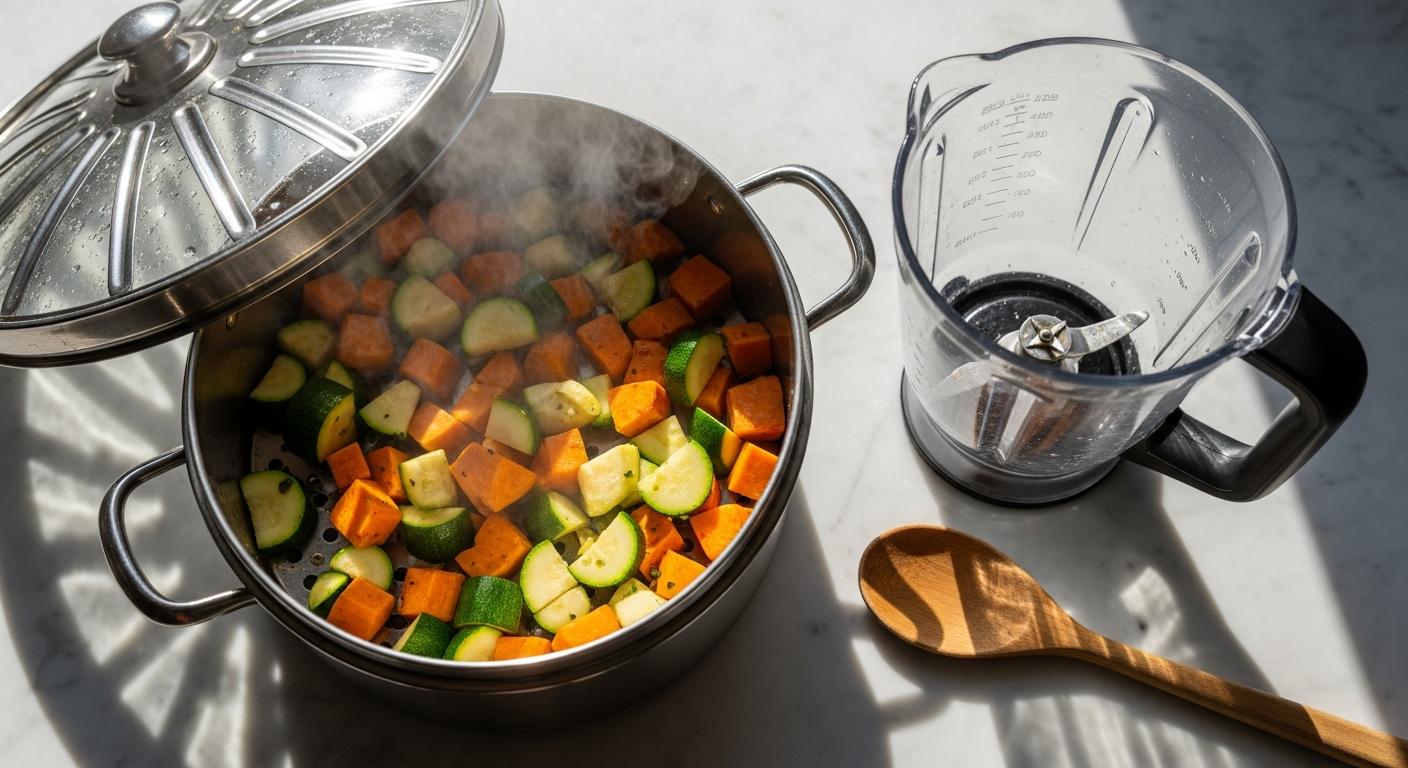
- Carrot purée (steamed and blended smooth)
- Pear compote
- Very ripe banana mash
Baby-led weaning recipes for picky phases
Texture hesitation is often developmental. Keep offering variety without pressure. Change the shape before changing the food, and use dips to reduce dryness.
Baby-led weaning breakfast, lunch, dinner, and snacks
Breakfast
- Avocado toast fingers
- Soft scrambled egg strips
- Thick plain yogurt + mashed fruit on a preloaded spoon
Lunch and dinner plates
Build plates with iron + energy + produce. Adapt family meals by cooking without salt first, removing the baby’s portion, then seasoning adult plates.
Snacks
On-the-go: banana pieces, avocado sticks, cheese sticks, mini egg muffins, soft fruit slices. Freeze extra pancakes, meatballs, or veggie fritters and reheat until steaming, then cool.
Storage and make-ahead prep for baby-led weaning recipes
Storing foods safely
Fridge at 4°C / 40°F or below. Follow the 2-hour room-temperature rule (1 hour in hot weather). Most cooked finger foods keep 2–3 days, freeze what you will not use.
Freezing and reheating
Freeze in baby-sized portions, label dates, thaw in the fridge, and reheat until steaming hot throughout, then cool. Reheat only once.
Troubleshooting common challenges
When baby refuses textures
Offer a familiar food next to a new one, and change one element at a time. Repetition helps, pressure rarely does.
Managing mess and pacing
A mat under the chair and small portions reduce stress. Your job is to offer safe baby-led weaning recipes, your baby decides how much to eat.
Key takeaways
- Start baby-led weaning recipes when readiness signs are present: upright sitting stability, good head control, active hand-to-mouth coordination.
- Milk remains the foundation in the first year, solids build gradually.
- Safety rests on posture, supervision, and truly soft textures, avoid high-risk foods (whole grapes/cherry tomatoes, nuts in pieces, raw hard produce, popcorn, candy).
- Keep meals low sodium with no added sugar, no honey before 12 months.
- Introduce allergens one at a time in safe forms. Professionals can help, and you can download the Heloa app for personalized tips and free child health questionnaires.
Questions Parents Ask
H3: Can I do baby-led weaning if my baby doesn’t have teeth yet?
Yes—no teeth is very common at the start, so no worries. Babies can manage many finger foods with their gums as long as the texture is truly soft. A quick check: the food should squish easily between your thumb and forefinger. Think ripe avocado, steamed sweet potato, soft omelet strips, or tender fish that flakes. If something feels “bouncy” or hard to mash, it can wait a little longer.
H3: How can I make baby-led weaning recipes more iron-rich?
It’s a very common concern, and it’s important. Try adding an iron option at least once a day, then pair it with vitamin C for better absorption. Easy combos include: shredded slow-cooked beef with soft pepper strips, lentil patties with strawberries, or flaked salmon with steamed broccoli. If you prefer plant-based meals, beans, lentils, tofu, and egg are helpful—serving them with fruit or vegetables can boost iron use.
H3: How many baby-led weaning meals should I offer per day at the start?
Starting small is completely normal. Many families begin with 1 meal a day, then gradually move toward 2–3 meals as interest and skills grow. Portions can stay tiny—your baby is practicing and exploring, not “finishing a plate.” If milk feeds remain steady and your baby seems content, you’re on the right track.
Further reading:
- Recipes and meal ideas – Best Start in Life: https://www.nhs.uk/best-start-in-life/baby/recipes-and-meal-ideas/