Parents often wonder whether a Diaper change is “just hygiene” or something more. In reality, those few minutes touch several big topics at once: skin physiology, infection prevention, sleep quality, and even motor freedom (a diaper that pinches or gapes changes how a baby moves). Add the pressure of doing it quickly, sometimes in the dark, sometimes in public, and it is easy to feel that small details matter more than they should. They do, a little. Not because perfection is needed, but because simple, repeatable steps lower leaks, reduce irritation, and make rashes easier to prevent.
Diaper change basics: what it is and why it matters
A Diaper change is a short care sequence with a clear endpoint: a baby who is clean, dry, and comfortable. Practically, that means removing the soiled diaper, cleansing urine and stool from the skin, letting the area dry (even briefly), then placing a clean diaper with a seal at the waist and thighs, snug, not squeezing.
It is also a rapid health scan. In under a minute you can spot:
- erythema (redness) beginning in the folds,
- small erosions (tiny raw areas),
- swelling,
- changes in stool (color, mucus, watery output) that can hint at digestive upset.
Why does technique matter? The diaper area is warm, often humid, and exposed to irritants:


- urine (ammonia can form as it breaks down),
- stool and digestive enzymes (lipases, proteases) that irritate skin,
- friction in groin creases.
When moisture lingers, the outer skin layer (stratum corneum) becomes overhydrated (think “waterlogged”) and its barrier function drops. Then even gentle rubbing can sting. A consistent Diaper change routine interrupts that cycle.
When to do a Diaper change: timing without overthinking
Signs a diaper needs changing
Some diapers include a wetness indicator line, but it is not the only clue. You may notice:
- a heavier, sagging diaper,
- stronger urine odor,
- fussiness, squirming, back-arching,
- repeated grabbing at the diaper area.
With highly absorbent disposables, a baby may seem unbothered. In that case, your best signal is the skin: if redness is recurring, shorten the interval between each Diaper change.
After pee vs after poop
Stool is the skin’s main enemy because of enzymes and bacteria. After poop, change promptly. For urine, a routine schedule is often fine, unless skin is sensitive, there is diarrhea, or a rash is already present.
Around feeds
You might ask: change before or after a feed?
- If your baby often stools during or right after feeding, waiting 10-20 minutes can save you from doing two changes back-to-back.
- If the diaper is already very wet or your baby seems uncomfortable, a Diaper change before feeding can make the feed calmer.
- If reflux or spit-up is common, a change immediately after feeding can put pressure on the belly, changing before, or changing with very gentle handling, often goes more smoothly.
Before naps and bedtime
One small step, big payoff. A Diaper change just before sleep lowers wake-ups from dampness and reduces leaks. It is also the ideal moment for a quick fit check: waistband aligned, no twisting, leg elastics sitting correctly.
How often should you do a Diaper change?
Frequency shifts fast with age, feeding, and skin reactivity.
- Newborn (0-3 months): often 8-12 per day, sometimes more.
- Infant (3-12 months): commonly 6-8 per day, with wide normal variation.
- After solids: stool becomes thicker and often more irritating depending on foods, after poop, change as soon as feasible.
Two traps are common:
- waiting too long (moisture + friction builds),
- changing so often, and wiping so much, that skin becomes irritated from mechanical rubbing.
Overnight decisions
At night, change if there is:
- poop,
- a leak (or an imminent leak),
- significant redness, broken skin, or a known rash that needs protection.
If there is no stool, no leak, and the diaper is high-absorbency, many babies can sleep until morning. Sleep supports growth hormone secretion, immune function, and regulation of stress hormones, so preserving it can be medically sensible.
A low-stimulation night routine
If a night Diaper change is needed:
- pre-stage everything (clean diaper, wipes or water, disposal bag),
- use dim light and slow movements,
- keep voice quiet and interaction minimal,
- for urine only, consider warm water + cotton, then dry well.
Coordinating with daycare or other caregivers
Share a simple plan:
- when to check,
- which cream (and when to use it),
- any current rash or sensitivity.
A short log of change times can prevent “too soon/too late” swings.
Situations that change timing
- Diarrhea: increase frequency and use barrier at every change.
- Illness: monitor hydration, fewer wet diapers may signal dehydration.
- Digestive transitions (solids, temporary stool changes): if stools become acidic or frequent, tighten your Diaper change rhythm and simplify products.
Diaper change setup: supplies and safety that actually work
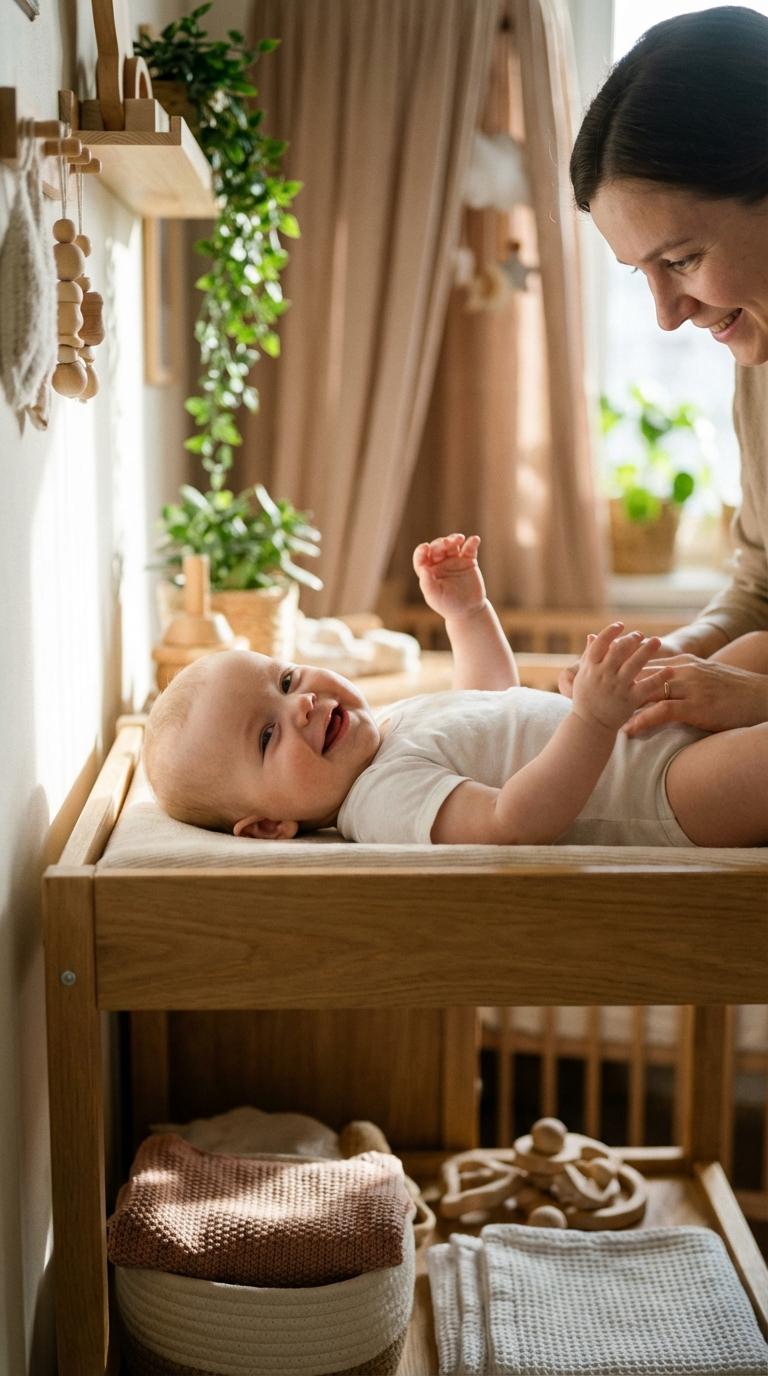
A calm Diaper change starts before the tabs open.
Changing station checklist
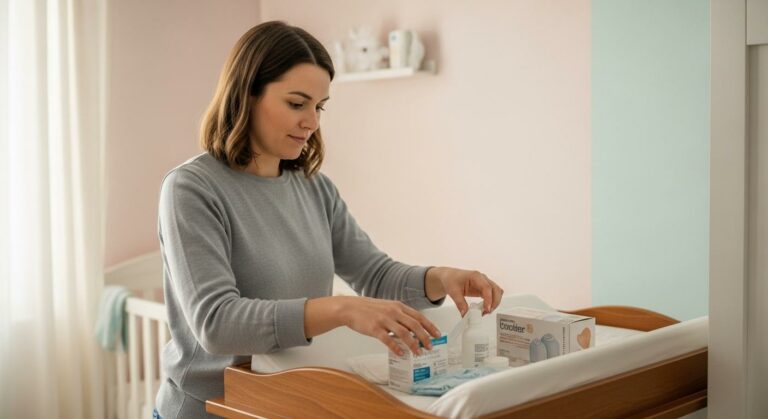
Keep within arm’s reach:
- diapers (current size + a few of the next),
- wipes or warm water with cotton pads/washcloth,
- barrier product if needed,
- soft cloth for patting dry,
- disposal bags + lidded bin or pail,
- spare outfit,
- optional: a small “change-only” toy.
Choosing the safest spot
A stable, flat surface is key. Once rolling begins, the floor is often safest. Beds feel convenient but still carry fall risk.
One-hand-on-baby rule
Babies can roll unexpectedly, even early. On any raised surface, keep one hand on your baby. If you must step away, take your baby with you.
Diaper sizing and fit
Sizing is about seal and coverage.
- Too small: deep marks, discomfort, leaks at the waist, blowouts.
- Too big: thigh gaps, side leaks.
If leaks and blowouts are frequent, or you see deep indentations, consider sizing up.
Wipes vs warm water
Fragrance-free, alcohol-free wipes work well for most babies. Warm water + cotton can be gentler:
- for newborn skin,
- during active irritation,
- during diarrhea (repeated wiping can inflame skin).
For urine, water is often enough. For stool, cleanse gently, then dry thoroughly.
Barrier products: what they do
Barrier products form a physical shield between skin and irritants.
- Zinc oxide paste: thick, helpful when skin is red/inflamed.
- Petrolatum (petroleum jelly) ointment: smooth, reduces friction, useful for prevention.
Use a thin layer when skin is healthy. Use a thicker “frosting-like” layer when irritation is active (especially with diarrhea) so stool lifts off the product rather than the skin.
Avoid stacking many products, buildup can trap moisture in folds.
Hand hygiene
Soap and water is best. Alcohol-based sanitizer is a backup when you cannot reach a sink immediately. Gloves can help during diarrhea, but they do not replace handwashing.
Step-by-step Diaper change (newborns and babies)
1) Set up first
Clean hands. Choose a stable surface. Pre-open the clean diaper. Keep wipes/water and any barrier product ready.
2) Open and remove bulk
Unfasten the diaper. If stool is present, use the front of the diaper to lift away the bulk first. Fold/roll the dirty diaper closed.
3) Clean gently, then dry
- Urine: light cleansing, then dry.
- Stool: clean folds (groin creases, between buttocks) with gentle pressure.
Always wipe front to back. Pat dry, rubbing increases irritation.
4) Lift safely
You can lift hips by holding both ankles together, or roll your baby slightly to the side to slide the clean diaper under. For very wiggly babies, side-rolling is often steadier than lifting high.
5) Barrier only if needed
Healthy skin may not need cream every time. Red, reactive skin often benefits from a thin protective layer, active irritation needs more.
6) Put on the clean diaper
Bring the front up, fasten tabs evenly, then pull leg cuffs outward so they sit like a gasket around the thighs.
7) Fit check
Aim for snug, not tight. Many parents use the “two-finger” waistband check. Look for gaps at legs or back.
8) Clean up
Dispose of the diaper, wipe down the surface if soiled, and wash hands.
Newborn-specific tips (cord stump and first stools)
Umbilical cord stump care
Keep the stump clean and dry. Use diapers with a notch or fold the front down to avoid rubbing and to improve airflow.
Meconium cleanup
Meconium is sticky. A small amount of petrolatum as a preventive barrier in the first days can make the next Diaper change easier. Warm water + cotton also reduces friction.
Toddler Diaper change strategies
Toddlers are quick, strong, and opinionated.
Reduce escapes
Change on the floor, keep supplies close, and keep your routine short and predictable.
Standing changes
Standing changes can work for toddlers with stable balance and cooperation. Use pull-up style diapers if helpful. Avoid standing changes on raised surfaces.
Cooperation tools
A single toy, a short song, or a small task (“hold the wipes”) adds predictability and reduces resistance.
Diaper change for boys vs girls
Girls
Wipe front to back to reduce the chance of bacteria reaching the urethra. Clean gently between outer folds, no scrubbing.
Boys
Clean around penis and scrotum and in groin creases. If uncircumcised, do not retract the foreskin, clean only what is visible.
“Surprise pee” management
Cool air can trigger urination. Briefly cover the penis with a cloth or the front of the clean diaper while you finish cleaning.
Point the penis downward
Before fastening, point the penis downward so urine flows into the absorbent zone rather than toward the waistband.
Hygiene around Diaper change: germs, surfaces, disposal
- Wash hands after every change.
- If the surface is soiled: clean with soap and water, then disinfect per product directions, allow to dry.
- Do not flush diapers. Avoid flushing wipes, even “flushable” ones.
For cloth routines: store in a dry pail or wet bag and wash on a steady cadence (often every 2-3 days) with enough water and detergent to remove residues.
Diaper rash: prevention, patterns, and when to seek help
Diaper rash (irritant diaper dermatitis) often starts from moisture + friction + irritants.
Common causes
- prolonged wetness,
- stool enzymes (worse with diarrhea),
- friction,
- irritants (fragrances, some wipes/creams),
- yeast overgrowth (Candida) suggested by bright red rash in folds with small “satellite” spots.
Prevention that works
- prompt changes after stool,
- gentle cleansing,
- thorough drying,
- barrier protection when skin is reactive,
- short diaper-free air time on a towel.
When medical advice is needed
Seek care if:
- no improvement within 48-72 hours,
- oozing, cracking, bleeding, blisters, pus, spreading redness,
- marked pain, fever, or unusual unwellness,
- rash pattern suggests yeast.
Leaks and blowouts: fast troubleshooting
If leaks appear, check:
- cuffs pulled out,
- waistband position,
- tabs even,
- clothing not compressing the diaper.
Blowouts often suggest the diaper is too small or back coverage is too low. For cloth, reassess rise snaps, thigh seal, and insert placement, add boosters where wetting is strongest.
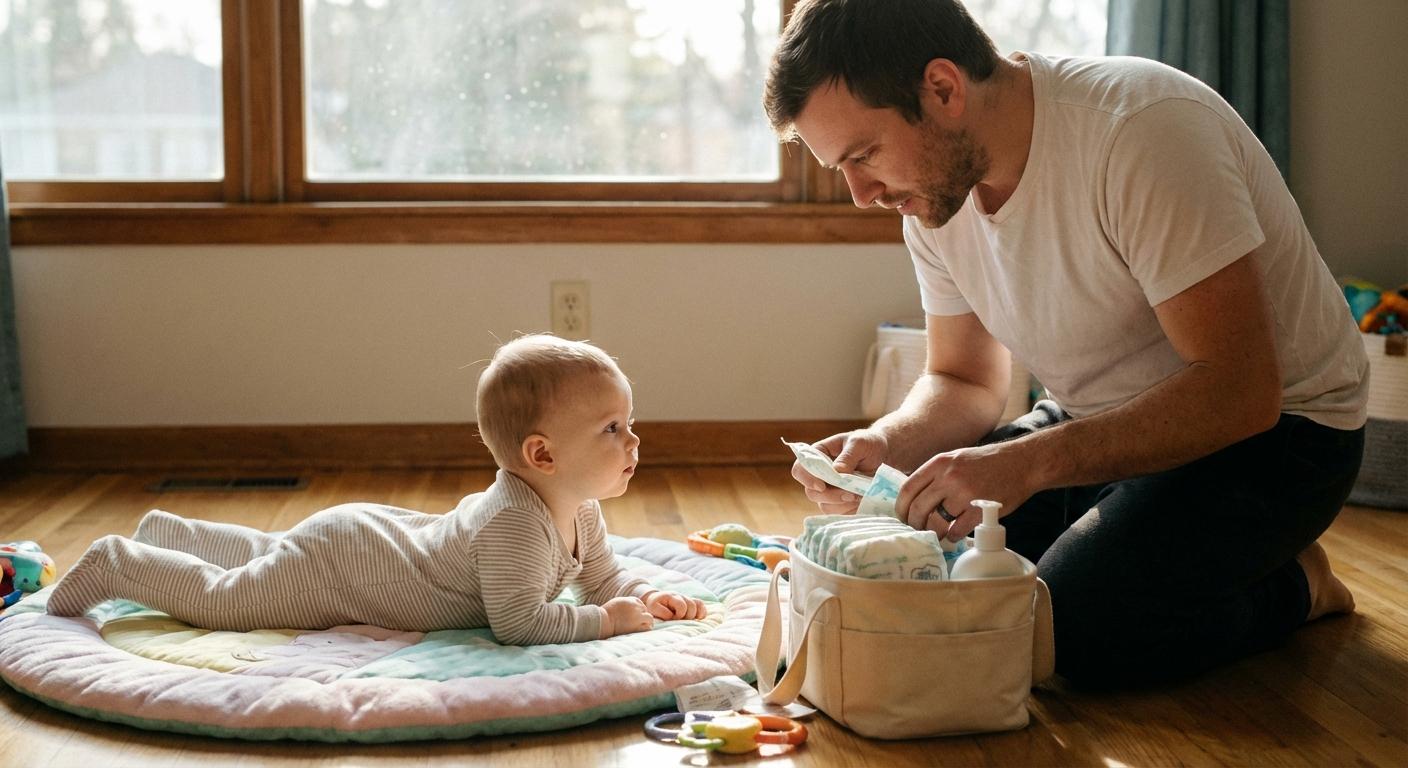
Diaper change on the go
Pack a compact kit:
- diapers,
- wipes or cotton + small water bottle,
- disposal bags,
- portable changing pad,
- spare outfit,
- small cloth for drying.
On public tables, use your pad as a barrier and keep one hand on your baby. If the surface seems unstable, consider stroller recline or a pad on the floor in a clean corner.
Comfort and bonding during a Diaper change
A Diaper change can feel like a small interruption, or a predictable, respectful routine.
- Narrate simply: “Change. Wipe. Dry. All done.”
- Use eye contact, a short song, or a consistent step order.
- For older babies, a small role (holding wipes) can help.
Key takeaways
- A consistent Diaper change routine reduces moisture, irritation, and leaks.
- Change after poop promptly, for urine, follow the wetness indicator, routine, and skin condition.
- Overnight, change mainly for poop, leaks, or significant irritation, otherwise sleep can continue.
- Safety matters: stable surface, supplies ready, one hand on baby on raised surfaces.
- Clean gently, focus on folds, dry thoroughly, and keep skincare products simple.
- If you want tailored tips and free child health questionnaires, you can download the Heloa app and use professional resources whenever you need reassurance.
Questions Parents Ask
How long can a baby stay in a wet diaper?
It depends on age, skin sensitivity, and how absorbent the diaper is. Many parents find that every 2–3 hours in the day works well for newborns, and a bit longer for older babies. If the diaper is very heavy, smells strongly of urine, or your baby’s skin looks red, it can be a good idea to change sooner. Rassurez-vous: occasional delays happen—what matters most is the overall routine and your baby’s comfort.
Is it OK to use only water instead of wipes?
Yes, for many babies warm water + cotton pads/soft cloth is a gentle option, especially with newborn skin or during irritation. Water is often enough for pee, for poop, you may need a bit more wiping, then pat dry. If you prefer wipes, fragrance-free and alcohol-free versions are usually well tolerated. You can choose what fits your baby’s skin and your day-to-day life.
Why does my baby get a rash even with frequent diaper changes?
Sometimes the skin is reacting to friction, repeated wiping, diarrhea/acidic stools, or even ingredients in wipes or creams. Try: fewer “scrubbing” wipes (more patting), a short air-dry moment, and a simple barrier (zinc oxide or petrolatum). If the rash is bright red in the folds, has small “satellite” spots, or doesn’t improve in 48–72 hours, it’s sensible to ask a clinician—there are effective treatments.
Further reading :