Baby dry scalp can be unsettling the first time you spot it: tiny white flakes on the brush, a scalp that looks dull, or a baby who suddenly dislikes having their head washed. Is it just dryness? Is it cradle cap? Could it be eczema, or even an infection? Most of the time, baby dry scalp is harmless and short-lived. Still, a few patterns deserve a closer look, because the right gesture depends on the right cause.
Baby dry scalp basics: what it is and what’s normal
What “baby dry scalp” means (and why it’s so common)
Baby dry scalp usually refers to fine, dry flaking on the scalp, with skin that may feel tight or look slightly rough. Clinicians may call simple dryness xerosis (meaning “dry skin”). In infants, it happens easily because the outer barrier is still maturing.
A useful concept is transepidermal water loss (TEWL): the amount of water that evaporates through the skin. In babies, TEWL is naturally higher. When the air is dry, bathing is frequent, or water is too hot, the scalp loses moisture quickly and starts to shed tiny flakes.
Another layer in the story: the protective surface film (often described as the hydrolipid film, a mix of water and lipids). When this film is thinned by detergents, heat, or friction, the scalp becomes more fragile. Small corneocytes (dead cells from the outer layer) detach and look like “snow.”


Baby dry scalp vs normal newborn peeling and vernix loss
In the first weeks of life, peeling can simply be the skin adapting to the outside world. The womb is warm and wet, the air at home is often dry, especially with indoor heating.
Newborns also lose vernix caseosa (the creamy coating that protected the skin before birth) within hours to a couple of days. As vernix disappears, the scalp may look temporarily drier. It usually settles as the barrier strengthens and the acid mantle (the skin’s slightly acidic surface pH) stabilizes.
“Flakes,” “dandruff,” and “scales”: using the right words
Parents often say “baby dandruff” when they see small white flakes in the hair. Most often, that’s baby dry scalp.
“Scales” means larger sheets of dead skin. When they become thicker, stick to the scalp, and look yellowish or greasy, the picture fits better with cradle cap (infantile seborrheic dermatitis). The two can overlap: a dry matte area next to a waxy plaque is a common sight.
Why a baby’s scalp reacts so quickly
A baby’s skin is thin, with a developing barrier and a changing skin microbiome (the community of microorganisms living on the skin). During the first year, that microbiome shifts a lot. Temporary imbalance can increase redness and flaking without meaning anything dangerous.
You may also notice how fast the scalp “answers back” after a change: a new detergent, a new hat, an extra shampoo day. That’s not your baby being fragile, it’s simply infant physiology.
Baby dry scalp vs cradle cap vs eczema vs infection
Dry scalp vs cradle cap: what’s different
Typical baby dry scalp:
- scattered white flakes
- scalp looks matte rather than greasy
- flakes brush away fairly easily
Typical cradle cap:
- thicker, patchy scales that cling
- yellow-white and greasy or waxy
- may extend behind the ears or to eyebrows
- often not very itchy
Cradle cap often peaks between 2 weeks and a few months, when sebum activity is still influenced by maternal hormones. It can look dramatic. It rarely signals a hygiene problem.
Baby dry scalp vs eczema and contact dermatitis
Atopic dermatitis (eczema) often looks more inflamed: redness, rough dry patches, and flaking that can extend beyond the scalp (cheeks, hairline, neck, behind the ears). Itching is common, sometimes intense.
Contact dermatitis often follows a trigger (new shampoo, lotion, laundry detergent, fragranced product, hat fabric). The irritation tends to sit where contact occurred. Sometimes it looks “sharply outlined,” as if the skin is drawing the map of exposure.
A practical question: “Did anything change in the last 7-10 days?” If yes, returning to basics can be surprisingly effective.
Baby dry scalp vs infection: signs that deserve prompt advice
Infections are less common.
- Impetigo (bacterial infection): sores, spreading redness, warmth, swelling, honey-colored crusts.
- Tinea capitis (fungal infection): scaly patches with broken hairs or patchy hair loss, often itchy and contagious.
If your baby has fever, rapidly spreading redness, oozing, pain on touch, or seems unusually sleepy or irritable, seek medical advice.
Baby dry scalp symptoms: what parents usually notice
Flakes, scales, and where they show up
Baby dry scalp often leaves flakes on the brush, in the hair, or on dark clothing.
Fine flakes that lift easily suggest dryness. Thick stuck-on scaling, especially greasy, suggests cradle cap.
Check the “neighbors,” too. Eyebrows, behind the ears, and the neck folds can tip the balance toward cradle cap or eczema.
Redness, sensitivity, and “my baby hates scalp care now”
A mildly pink scalp can happen with dryness or cradle cap. Stronger redness suggests irritation, eczema, sun exposure, or friction.
If washing or brushing suddenly triggers fussing, treat it as a clue: the scalp may be sore or itchy.
Itch in babies: how it may look
Babies can’t say “it itches,” but they may:
- rub the head against bedding
- reach toward the scalp repeatedly
- become agitated during shampooing or drying
- sleep less comfortably
Cradle cap is often more visible than bothersome. If itch seems prominent, eczema or product irritation becomes more likely.
Cracks, weeping, odor
Small cracks can appear at the hairline or behind the ears when skin is very dry.
Weeping (oozing), wet crusts, warmth, swelling, bleeding, pus, or unusual odor are not typical for baby dry scalp.
Hair changes
Some shedding is normal in infancy.
Patchy hair loss, especially round patches with scale or broken hairs, should be assessed (tinea capitis is one possibility). Hair changes also matter if your baby wears tight headwear or if there is persistent rubbing due to itch.
Baby dry scalp causes and triggers
Environment and routine
Common drivers of baby dry scalp include:
- low humidity (winter air, indoor heating, air conditioning)
- hot water or long baths
- frequent shampooing
- rushed rinsing (residue left on the scalp)
- friction (rough towels, tight hats)
- sweat and overheating
A practical home target is a comfortable room temperature (often around 18-20°C) with moderate humidity.
Products: irritants and buildup
Fragrance, dyes, harsh detergents, and adult shampoos can irritate infant skin. Another frequent issue is buildup from layering oils and leave-in products, which can trap flakes and worsen scaling.
What about “natural” products? They can be fine, but they can also contain botanical extracts that act like allergens. If baby dry scalp starts right after switching products, timing is meaningful.
Skin conditions that can mimic dryness
- Cradle cap may involve early-life oil patterns and overgrowth of Malassezia yeast.
- Psoriasis can cause well-defined plaques with thick scale.
- Eczema creates inflammation plus dryness and itch.
How to tell what kind of baby dry scalp it is (a quick parent checklist)
Ask yourself:
- Are the flakes powdery and easy to brush off (dryness), or thick and stuck (cradle cap)?
- Does the scalp look greasy (more cradle cap) or matte (more dryness)?
- Is there clear itch behavior (more eczema/contact irritation)?
- Are there round patches of hair loss or broken hairs (needs assessment for fungal infection)?
If you hesitate between two options, that’s common. Mixed pictures happen.
Baby dry scalp home care: a gentle routine
1) Wash gently, rinse longer than you think
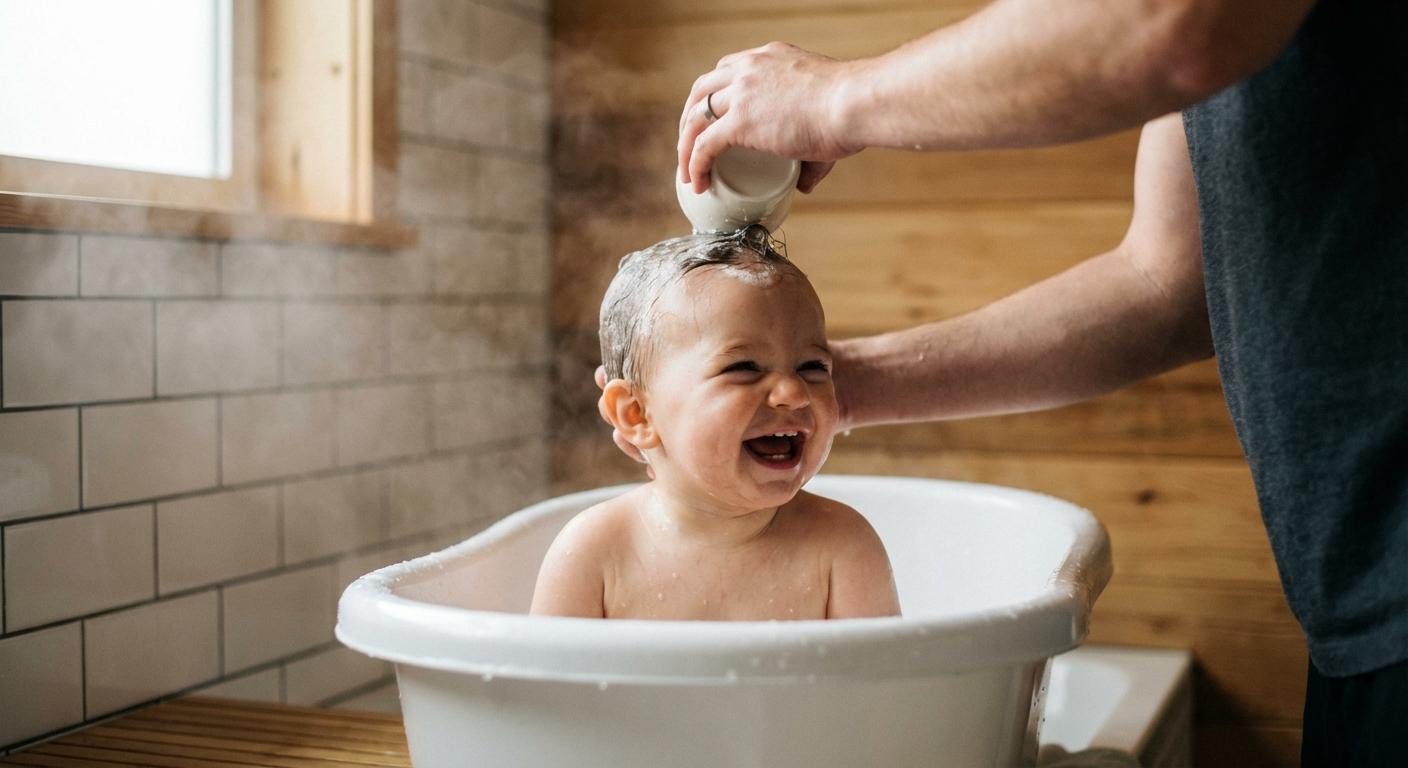
Use a mild baby shampoo, ideally fragrance-free. Massage with fingertips. Then rinse thoroughly, leftover cleanser can keep baby dry scalp going.
If your baby has very little hair, think “scalp care” rather than “hair care.” The goal is comfortable skin, not a squeaky-clean feel.
2) Keep baths short and warm, not hot
Warm water and brief baths reduce oil stripping. If your baby enjoys long baths, you can keep playtime but limit soap and shampoo exposure.
3) Soften stuck flakes, but keep it light
For stubborn patches, apply a tiny amount of mineral oil or petrolatum for 5-10 minutes, then proceed to gentle brushing. Heavy layers can worsen buildup.
4) Lift flakes without picking
Use a soft baby brush or fine baby comb with light pressure. Avoid fingernails. Picking creates micro-cuts, and micro-cuts can invite bacteria.
5) If you used oil, remove the excess
Wash or rinse it out. Pat dry.
6) Consider a thin emollient film on very dry spots
A bland emollient can help seal moisture. A thin layer is enough.
7) When the scalp is inflamed
If you see marked redness and your baby seems itchy, home care still starts gently: stop fragranced products, simplify to one cleanser, avoid overheating. If there is no improvement, a clinician may discuss short courses of anti-inflammatory treatment (for example, a low-potency topical corticosteroid) depending on age and diagnosis.
Washing frequency: how often to wash by age and season
There isn’t one perfect schedule. Still, patterns help.
- Many newborns do well with shampoo 2-3 times per week.
- If cradle cap is thick and greasy, short-term more frequent washing can help, then taper.
- If baby dry scalp looks dry and matte, fewer shampoo days often feels better.
Between shampoo days:
- a warm-water rinse can remove sweat
- a short, gentle brush after drying can limit buildup
Season matters. Winter often calls for less washing and more barrier support, summer may require extra rinsing after sweat.
Safe products for baby dry scalp: what to look for
Helpful label clues
Look for fragrance-free or unscented, mild/tear-free, and pH-balanced formulas. Short ingredient lists are often easier for reactive skin.
Ingredients that often fit sensitive skin
Some babies tolerate:
- glycerin (humectant: attracts water)
- panthenol (pro-vitamin B5)
- allantoin (comforting)
- ceramides (support barrier lipids)
What to avoid
Avoid essential oils and heavily fragranced products. Skip adult anti-dandruff shampoos unless advised by a clinician.
Also be cautious with “multi-active” routines. If you apply oil, then a leave-in cream, then a styling product, it becomes hard to know what helped and what irritated.
What can make baby dry scalp worse
Common traps:
- over-scrubbing and vigorous towel drying
- picking scales
- switching products too often
- leaving cleanser or oil residue on the scalp
- tight hats that trap heat and sweat
If baby dry scalp keeps returning, consider friction and heat first. They are often underestimated.
When to seek medical care
Call for advice if baby dry scalp does not improve after 1-2 weeks of consistent gentle care, if it worsens, or if it spreads beyond the scalp.
Seek prompt help for:
- oozing/weeping or wet crusts
- pus, warmth, swelling, rapidly spreading redness
- fever or a baby who seems unwell
- significant itch with sleep disruption
- patchy hair loss, especially round patches with broken hairs
A clinician may consider eczema, contact dermatitis, bacterial infection, fungal infection (tinea capitis), psoriasis, or a product reaction.
Baby dry scalp over the first year
- First weeks: normal peeling and vernix loss can mimic baby dry scalp.
- 2-4 weeks to early months: cradle cap often appears and may peak.
- 3-6 months: mixed pictures are common, consistency usually helps more than intensity.
- 6-12 months: many babies improve, mild flakes can still show up with seasonal dryness.
- After 12-18 months: persistent scaling, strong itch, spreading rash, or patchy hair loss deserves a diagnostic check.
Key takeaways
- Baby dry scalp is common because infant skin loses water easily (higher TEWL) and the barrier is still maturing.
- Fine white flakes that brush away suggest dryness, thicker yellowish greasy scales suggest cradle cap.
- Gentle care helps: warm water, short baths, mild fragrance-free shampoo, thorough rinsing, soft brushing, and a thin emollient layer if needed.
- Avoid picking, scrubbing, essential oils, heavy fragrance, harsh cleansers, and product buildup.
- Red flags include oozing, wet crusts, fever, rapidly spreading redness, strong itch, or patchy hair loss.
- Support exists: for personalized tips and free child health questionnaires, download the Heloa app.
Questions Parents Ask
Is coconut oil (or olive oil) safe for baby dry scalp?
In many families, a little oil can help soften flakes. That said, some babies react to plant oils (including coconut or olive oil) with more redness or itch. If you’d like to try, consider a tiny amount on a small area for one short session (about 5–10 minutes), then gently brush and wash out thoroughly. Many parents find mineral oil or petrolatum simpler and less likely to trigger irritation. If you notice worsening redness, weeping, or your baby seems uncomfortable, it’s perfectly okay to stop and keep the routine minimal.
Can baby dry scalp cause hair loss?
A few flakes on the scalp typically do not cause hair loss. It’s also normal for babies to shed some hair during the first months. What deserves advice is patchy hair loss, broken hairs, or round scaly spots—this pattern can suggest a fungal infection (tinea capitis) or another skin condition. If hair loss appears quickly, spreads, or comes with swelling or tenderness, a clinician can help clarify the cause and the next steps.
Should I use a humidifier for my baby’s dry scalp?
Yes, it can be helpful—especially in winter or with indoor heating. Dry air increases water loss from the skin, so improving humidity may calm flaking over time. Aim for a comfortable, moderate humidity (often around 40–50%), keep the device clean, and pair it with gentle scalp care (warm—not hot—baths, fragrance-free cleanser, and light moisturizing when needed).
Further reading :