By Heloa | 24 October 2025

Water birth, what parents need to know

9 minutes
de lecture
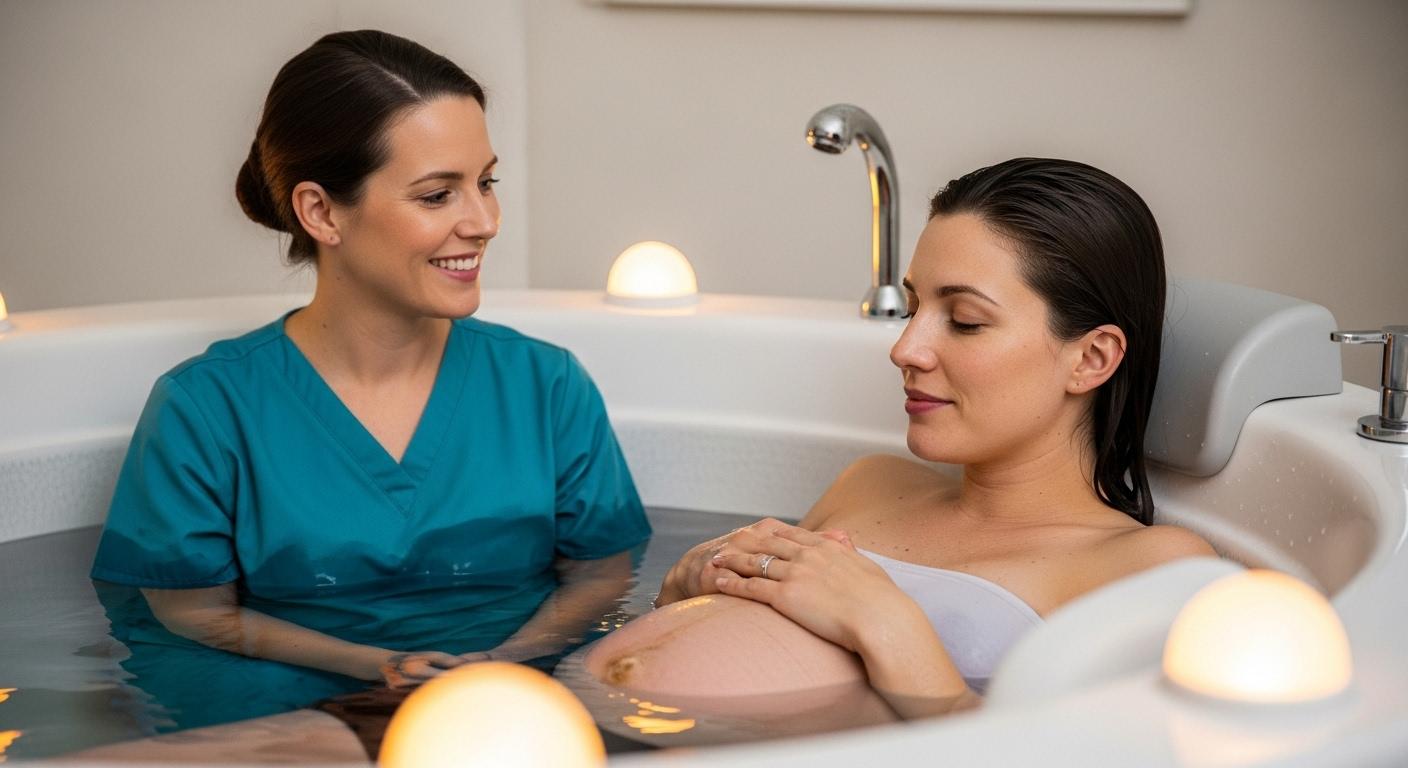
Water birth in a maternity ward with a serene expectant mother and a midwife supporting her in a modern hospital bathtub

By Heloa | 24 October 2025

Water birth, what parents need to know

9 minutes
Water birth in a maternity ward with a serene expectant mother and a midwife supporting her in a modern hospital bathtub

Par Heloa, le 24 October 2025

Water birth, what parents need to know

9 minutes
de lecture
Water birth in a maternity ward with a serene expectant mother and a midwife supporting her in a modern hospital bathtub

Warm water, gentle movements, an enveloping sense of calm—many parents imagine the possibility of water birth as both enchanting and reassuring, yet questions swirl: Is it genuinely safe for the baby? Who is considered eligible? Is the pain really less intense? And what about infection or the practical logistics at your chosen hospital or at home? If the idea of spending labour, or even the birth itself, in clear, temperature-regulated water appeals to you, there is much to consider beyond dreams of comfort. From the strong evidence supporting pain reduction to the nuanced instructions surrounding infection control, water birth is an option that blends tradition, modern medicine, and the power of informed choice. Let’s explore together: eligibility criteria, benefits and risks—rare but real—medical protocols and science, preparation steps, and how to craft your perfect plan (plus a reliable Plan B, of course).

What is water birth: definition, history, and how it fits today

Water birth is the process in which a mother spends labour—and sometimes the birth itself—in a specially designed pool of warm water. But not all water birth is equal. There are subtle distinctions:

  • Water labour: The mother remains in water for the first stage (contractions and cervical dilatation), stepping out for the actual delivery.
  • Water birth (strict sense): Both labour and the birth of the baby occur in water, with the newborn emerging beneath the surface before being brought up for their first breath.

The allure of water as a medium for childbirth has grown alongside advances in physiological birth practices. Hospitals, birthing centres, and home birth teams have increasingly adopted the idea, although actual practices diverge based on available equipment, policies, and above all—staff training.

Water birth settings: hospital, birthing centre, home

Picture three scenes: a hospital room with a fixed, disinfected tub surrounded by staff equipped with rapid transfer plans; a quiet birth centre designed for privacy and hydrotherapy comfort; a living room prepared with an inflatable pool, towels lined up and a backup route clear, just in case. Each environment offers a unique blend:


  • Hospitals: Access to immediate surgical intervention and highly trained teams is a firm reassurance. Integrated pools or portable rigid tubs are maintained with strict hygiene logs, disposable liners, robust water quality checks, and regular staff simulation training.
  • Birth centres: Often designed for hydrotherapy with more flexible and homely atmospheres, centres frequently prioritise continuity of care. Protocols around transfer times and monitoring are paramount; not all facilities support full water birth.
  • Home: Portable or inflatable birth pools are the mainstay—affordable, flexible, but demanding in terms of set-up, floor strength (a filled pool is heavy), drainage, and stringent cleanliness.

Ultimately, water birth is generally an option reserved for carefully selected, low-risk pregnancies, and each location requires rigorous preparation and communication. Fast access to advanced care, privacy, and the comfort of familiar surroundings—these are all tradeoffs parents must weigh.

Who is eligible for water birth? Indications and exclusions

Selection is decisive. You might wonder: “Is water birth right for me, or is it unsuitable in my case?” Here’s how teams decide:

Good candidates

  • Single fetus (not twins/triplets), head-down position, at or beyond 37 weeks.
  • No placenta previa, no active maternal infection, and normal blood pressure.
  • No requirement for constant, intensive monitoring—only brief checks needed.
  • Healthy, low-risk pregnancy with steady fetal growth and stable vitals.

Situations where water birth is avoided

Some situations prompt a clear “No” from the medical team:

  • Multiple pregnancy (twins, triplets, etc.), breech or transverse presentations, prematurity, heavy unexplained bleeding, active infection, or complicated previous births.
  • Compromised maternal health: uncontrolled hypertension or diabetes, severe preeclampsia, or circumstances needing continuous monitoring.
  • Placental issues or known fetal complications needing direct intervention.

Assessment is always individual. What suits one might not for another—even from labour’s start to the moment of birth.

Benefits for mother and baby: Science and experience

The promise of water birth extends beyond mere comfort—though, for many, that alone is considerable. Here’s what science (and countless parents) observe:

Maternal comfort, mobility, and emotional well-being

Buoyancy relieves pelvic and joint strain, freeing the mother to shift position—kneeling, squatting, even floating—all while reducing the pressure on her back and hips. Less gravity means more flexibility; muscles and the perineum are gently warmed. What follows is often a reduced perception of pain, lower stress, and—according to most mothers—a greater sense of self-agency.

Not all pain dissolves. Water is not a pharmaceutical anesthetic, but it is a strong, non-drug alternative for those wishing to minimise medicinal analgesia.

Impact on labour and the perineum

Some systematic reviews highlight a shorter first stage of labour (contractions and dilatation), less reliance on epidurals, and potentially fewer episiotomies or severe tears. Why? The combination of warmth, gradual crowning and gentler pushing helps tissues adapt. Still, no method is foolproof; individual variation exists.

Well-being of the newborn

Meticulous monitoring and strict infection control keep early outcomes, such as Apgar scores, in line with those of land births in low-risk cases. The first moments are often peaceful—skin-to-skin contact commences right in the tub, and delayed cord clamping is practised when possible. Rare complications are noted, but they are not the norm when all checks are respected.

Risks and complications: Separating worry from evidence

No birth is entirely without risk. Water birth has its own list of concerns—sometimes debated, always taken seriously.

For the mother

  • Infection: Curtailing this risk involves new disposable liners or scrupulous tub disinfection, documented water checks, and aseptic procedures by all staff.
  • Overheating or faintness: Temperatures above 38°C (100.4°F) are discouraged. Robust, visible thermometers and regular checks keep things within the recommended range.
  • Bleeding is managed according to obstetric protocols—most teams transition to land quickly if abnormal bleeding occurs.

For the newborn

  • Water aspiration (baby accidentally inhales water on delivery): Unlikely with well-trained staff and clear protocols.
  • Respiratory distress, infection, or umbilical cord complications (like cord avulsion): Uncommon, but immediate response is necessary if warning signs like poor tone or blue colour appear.

What does the evidence say?

Large-scale reviews like the Cochrane review suggest reliable benefits for pain and maternal satisfaction during hydrotherapy, though neonatal outcomes show little clear difference versus land birth in well-screened cases. Professional bodies such as NICE and ACOG support the use of water for labour pain relief but recommend caution regarding underwater delivery, especially the second stage. The conclusion? Benefits for maternal comfort are consistent; neonatal benefits are not obvious, but strict adherence to protocols is non-negotiable.

Key safety protocols: Water, monitoring, and readiness

  • Temperature: Keep the water close to body temperature, typically between 34–37°C (93–98.6°F), never exceeding 38°C (100.4°F).
  • Hygiene: Disposable liners or full disinfection after each use are standard. All pool fills, cleanings, and inspections are logged.
  • Monitoring: Intermittent auscultation (using a waterproof doppler) is the default for low-risk cases, with more advanced monitoring if complications arise.
  • Exit criteria: If fetal heart tones are not reassuring, maternal fever develops, heavy bleeding occurs, or equipment becomes unreliable, it’s time to move to land—without hesitation.

The physiology of water for childbirth: Why does it help?

Why does water sometimes make such a difference? Imagine buoyancy supporting your every movement, the pelvis loosening, fatigue melting. Endorphin release increases, cortisol drops, and the overall pain threshold is naturally elevated. Warm water also helps maintain steady thermoregulation for mother and baby, preventing chills and excessive sweating.

Planning for water birth: What parents can do now

Early conversations and planning

Don’t wait until labour day. Consult your doctor or midwife about your interest in water birth during your third trimester—if not before. Ask these practical questions:

  • Is a clean birthing pool available, and is staff trained for water birth or hydrotherapy management?
  • How is water temperature managed and monitored?
  • What equipment is used for waterproof fetal monitoring?
  • What signs prompt a transition out of the pool?
  • Is an anaesthetist available rapidly if an epidural is later needed?
  • Where would neonatal resuscitation occur if required?

Write your birth plan, including your preference for water, your limits, pain-management wishes, skin-to-skin intentions, and your Plan B for swift transfer.

Physical and mental exercises

Gentle pelvic floor work, coordinated breathing, and exercises that encourage mobility (even water-based prenatal classes) strengthen mother’s confidence and physical readiness. Mental preparation—visualising the steps of entering, moving, and, if needed, exiting the pool—can significantly reduce stress.

Birthing pools and home logistics

  • A sturdy, well-designed tub (fixed in hospitals, deep dedicated pools in centres, inflatable for home) is essential.
  • Accessories, such as handles, mats, towels, and visible thermometers, offer both safety and comfort.
  • If planning at home, evaluate floor load (water is heavy!), arrange uninterrupted walkways, and ensure rapid, safe filling and draining.

Labour in water: Practical management

  • Low-risk mothers typically undergo intermittent monitoring, switching to advanced tracing if needed.
  • Position shifts—kneeling, floating, squatting—help with descent and comfort.
  • Move slowly: Notify your care provider before any major position changes in water for stability and safety.

Pain management and other options

  • Hydrotherapy stands out as a primary non-pharmacological relief technique.
  • Need an epidural? Plan to exit the pool, as insertion and monitoring cannot be conducted safely in water.
  • In some locations, nitrous oxide or opioids are available as alternative analgesia, typically out of the pool.

Protecting the perineum and newborn care

  • Gentle crowning, warm compresses, and hands-on or “hands-poised” techniques reduce tearing risk.
  • Once the baby’s head surfaces, airway clearance happens promptly; routine suction is unnecessary unless the situation indicates it.
  • Immediate skin-to-skin contact and neonatal assessment come next. If anything seems amiss, rapid transfer to land for resuscitation follows.

Special scenarios, induction, and emergency preparation

  • Some medical scenarios, such as VBAC, twins, breech, or comorbidities, usually exclude water birth—though hydrotherapy for labour may be possible under close supervision and special protocols.
  • Induced or augmented labours typically require strict monitoring, potentially limiting water time.

Emergencies? All teams must rehearse exit and transfer steps before birth. Neonatal equipment must remain on standby.

Myth-busting: Sorting facts from fiction

  • “Babies breathe underwater!” Not quite. The first breath is triggered only after surfacing; trained staff ensure a smooth transition.
  • “Water guarantees no tears.” Warm water may help soften tissue, but no method is foolproof.
  • “Infection is inevitable.” With rigorous cleaning and disinfection protocols, infection remains rare.

Practical checklists for parents

Before birth

  • Confirm medical eligibility.
  • Document your water birth plan and Plan B.
  • Verify tub, monitoring, hygiene, and transfer logistics.
  • Ensure all emergency and neonatal equipment is ready.
  • Know the staff available for your birth.

Admission

  • Ensure head-down, term baby.
  • Rule out fever or bleeding.
  • Check water temperature and hygiene.
  • Confirm neonatal support is ready.

During labour

  • Apply correct fetal monitoring delays/protocols.
  • Record time in/out of the pool and fill/disposal of water.
  • Continue to monitor maternal vitals, temperature, blood pressure, and pulse.
  • Be clear on when to exit the pool.

After delivery

  • Assess and repair perineum if necessary.
  • Perform immediate newborn assessment (Apgar scores).
  • Clean and disinfect tub thoroughly.
  • Review postnatal instructions and arrange for follow up.

Postnatal care and recovery

Skin-to-skin bonding continues as baby stabilises, with dedicated support for early feeding. The placenta is checked, perineal assessment concludes, and stitches applied if needed. Should pelvic floor symptoms (pain, incontinence, heaviness) persist, don’t hesitate—arrange for dedicated pelvic floor rehabilitation.

Key takeaways

  • Water birth, when conducted with adherence to infection control and clear eligibility guidelines, can be a safe, satisfying option for low-risk pregnancies, delivering unique advantages in comfort, pain relief, and birth experience.
  • Safety rests on candidacy selection, well-trained staff, robust protocols, hygiene, real-time monitoring, temperature regulation, and a well-rehearsed plan for quick transfer.
  • Professional bodies such as Cochrane, NICE, and ACOG underscore immense comfort benefits during labour; second-stage underwater delivery requires further research and individual risk screening.
  • Education, preparation, and open dialogue with your care provider are your strongest assets.
  • Explore resources such as the Heloa application, for detailed, personalised advice and free paediatric health questionnaires.

Questions Parents Ask

How much does a water birth cost and is it covered by insurance?

Cost can range significantly depending on your setting—hospital, birth centre, or home. Some hospitals include water birth as part of their routine maternity care, but if you opt for a private or home setup, expect potential fees for pool rental, additional supplies, or extra midwifery hours. Insurance coverage varies—certain policies might reimburse the basic delivery but leave out supplementary costs for pools or specific devices. Asking the hospital for a written breakdown and cross-verifying with your insurance company is often the fastest way to clarify. Unsure which services are covered? A quick phone call usually resolves the confusion.

Is water birth safe for first-time parents (first pregnancy)?

First pregnancy is not a barrier if your situation is “low-risk”. Many first-time mothers find water birth especially helpful for pain relief, and early studies indicate no increase in complications compared with land births under strict medical supervision. Still, first labours tend to be longer, and some teams recommend using the pool for comfort but moving to land for the pushing phase if progress stalls. Discuss preferences, clarify all concerns, secure an agreement around exit criteria, and keep open communication going with your care team.

How do I find a provider or facility that offers water birth near me, and what should I ask them?

Start by reviewing websites of hospitals or birthing centres, and directly contacting maternity wards or local midwives. Peer recommendations—parent support groups, midwife forums—are valuable too. When reaching out, focus on clarity:

  • Their water birth policy, eligibility criteria
  • Pool cleaning, water temperature protocols
  • Equipment for waterproof monitoring, and when you’d be asked to exit the tub
  • Staff experience and emergency preparedness
  • Cost transparency for every component

If possible, arrange a tour: seeing the space can bring reassurance and highlight new questions. Any reputable team should welcome your curiosity and strive to reassure you.

Ready to plan or still curious? Use every question above to build the confidence and comfort that you and your baby truly deserve, on your terms.

Water birth at home shared by a supportive couple in a warm and reassuring atmosphere

Further reading :

Similar Posts

You want safer comfort, you want real options, you want clear lines about when to stay in the water and when to step out. Water birth can help with pain, movement, and a calmer atmosphere, yet parents often worry about safety, temperature, monitoring, and infection. Here is the big picture, in practical steps. What water birth means, who is a good candidate, how benefits and risks compare, how teams monitor babies, what equipment matters, and how to set up a plan that can flex quickly if you need a different route.

What water birth means today

Water birth refers to a baby born while the parent remains in a pool of warm water. Water labor refers to using warm water for comfort during contractions, then leaving the pool for the actual birth. The difference sounds simple, the baby either emerges under water or not, yet it changes equipment, staffing, and decision points.

You may hear hydrotherapy for labor, warm water labor, birth pool time, or tub birth. Facilities vary. Some hospitals offer integrated tubs with strict cleaning and clear exit routes. Birth centers often lean into water options. Home setups use purpose built inflatables or rigid portable pools, and they demand careful hygiene and a reliable transfer plan.

Who is a candidate and who is not

Typical eligibility for low risk pregnancies

  • Single baby, head down, at or after 37 weeks
  • No placenta problems or active maternal infection
  • No condition that requires intensive or continuous monitoring that cannot be done safely in water
  • Normal fetal growth, stable blood pressure, no heavy bleeding

When teams recommend a different plan

  • Multiple pregnancy, breech or transverse presentation, significant prematurity
  • Heavy bleeding, severe preeclampsia, placenta previa, fetal conditions that need immediate procedures
  • Relative reasons to avoid, unstable diabetes, uncontrolled hypertension, prolonged membrane rupture, or the need for continuous monitoring that does not work well in water

Assessment is individual. Your status may look eligible during pregnancy visits, then change at admission, so the plan should flex.

Benefits for you and your baby

Comfort, movement, satisfaction

Warm water relaxes muscles, reduces load on joints, and lets the pelvis open more freely. That lift, the physical lightness you feel in the pool, is explained by buoyancy and it often helps parents change position without added fatigue. Pain scores usually drop, stress hormones often settle, and the sense of control rises.

Labor progress and perineal outcomes

Some studies show shorter first stages in low risk settings and lower epidural use, others are neutral. Differences reflect selection, policies, and team experience. Perineal outcomes can be favorable, fewer episiotomy procedures and fewer severe perineal tears in some cohorts, likely due to warm tissues and gradual crowning. Water supports, it does not guarantee a specific outcome.

Newborn transition and early feeding

With careful selection and reliable monitoring, Apgar scores, early breathing, and temperature stability are generally comparable to land birth. Many families describe a quiet first minute and easy skin to skin. Teams commonly practice delayed cord clamping when both baby and parent are well.

Risks, rare complications and how teams reduce them

Infection risk exists, and it drops when facilities follow strong infection control routines, new or disinfected liners, verified water quality, gloves, and accurate records of cleaning cycles. Overheating is possible if temperatures creep up, so a visible thermometer and frequent checks matter. Heavy bleeding, known as postpartum hemorrhage PPH, is treated as per standard obstetric protocols.

For newborns, reported rare events include water aspiration, respiratory distress, and infection when pool maintenance or monitoring fell short. Warning signs include blue coloring, weak tone, poor breathing, or a low early Apgar score. If concerns appear, the team brings you out of the water quickly and starts support without delay.

Safety parameters, monitoring and hygiene

  • Temperature targets, many teams keep 34 to 36 Celsius, 93 to 97 Fahrenheit during dilation, then approach 37 Celsius, 98.6 Fahrenheit near birth. An upper limit of 38 Celsius, 100.4 Fahrenheit is common. This protects maternal and newborn thermoregulation, which is the body system that controls temperature.
  • Monitoring, low risk labors often use intermittent auscultation, a trained clinician listens to the baby’s heart at set intervals. If risk rises or medications are used, electronic monitoring may be needed. Waterproof belts exist, and some units can use cardiotocography CTG in water. If the tracing is unreliable, step out for a clear check.
  • Hygiene and equipment, many facilities use a disposable liner in a birth pool or a thoroughly disinfected fixed tub. Non slip floors and a non slip mat around the pool reduce falls. Water source and hose cleanliness matter. Documentation should record temperature checks, fill and drain times, and disinfection.

Planning and preparing step by step

Your questions for the team

  • Which birthing tub or pool is available, and how is temperature kept in range
  • Which monitoring methods are used in water, and what situations require leaving the pool
  • How fast an epidural can be placed if you request one
  • Where neonatal resuscitation equipment is set up, and how a newborn will be supported if breathing is not adequate

Physical and mental preparation

Gentle pelvic floor work, breathing drills, and mobility exercises can help. Some parents add water based stretching sessions in mid pregnancy if approved by their clinician. Mental rehearsal helps, imagine entering the water, shifting from kneeling to side sitting, then a quick exit if the team calls it.

Settings and logistics, hospital, birth center, home

  • Hospitals, integrated tubs or rigid portable pools, trained staff, documented cleaning, rapid exit drills, fast access to surgery if needed
  • Birth centers, purpose designed spaces for water labor, sometimes water birth as well, check emergency transfer time to a hospital
  • Home, dedicated portable or inflatable pools, plan for floor strength, water supply, drainage, clear walkways, and a direct route to transfer if needed

Each setting has pros and cons. Hospitals can escalate care fastest, birth centers and home care can offer privacy and continuity, and both require strong preparation and clear transfer plans.

Labor management in the water

Monitoring, positions, and pacing

Low risk pregnancies usually use intermittent listening. Entering the pool in active labor often softens pain quickly. Rotate positions, kneel, lean forward on the pool edge, side sit with one leg extended, or take standing breaks with support. Move slowly, tell your midwife before changing position, and use handles for stability. If sensors slip or the tracing is unclear, a brief pause on land can restore safe fetal heart rate monitoring.

Stages and pushing

Pushing can be spontaneous or coached. Caregivers often encourage a slow crown to protect the perineum. If any concern emerges, the team will cue an organized move to land for the birth.

Pain relief options alongside water birth

Water is a proven nonpharmacologic method that often reduces requests for stronger analgesia. If you ask for an epidural, you will step out for placement and monitoring. Other options outside the pool may include nitrous oxide in units that offer it or small dose opioids, always within protocol.

Pushing, birth mechanics and newborn care

Warm compresses and gentle manual support during crowning may reduce tearing. If the cord is around the neck, standard maneuvers are used, either sliding the loop over the head or clamping after birth if required. After a water birth, the baby is lifted up promptly with the head above water, the airway is clear, and routine suction is not needed unless secretions are obstructive. Skin to skin starts as soon as stability is confirmed. If breathing or tone is not adequate, resuscitation proceeds on land immediately.

Induction, augmentation and assisted birth

Oxytocin induction or augmentation usually requires closer monitoring. Some units can continue with waterproof belts, others will pause pool time. Prolonged rupture raises infection risk. When premature rupture of membranes PROM is present, teams weigh the benefit of water against bacteria exposure from longer time with ruptured membranes. Forceps or vacuum births occur on land for access and safety.

Transfers, cesarean and emergency readiness

Know the exit steps in advance. Reasons to leave the pool include non reassuring fetal tracing, heavy bleeding, fever, faintness, stalled progress, request for epidural, or any procedure that requires land. Units that offer water birth practice calm exit drills, rehearse roles, and keep equipment close.

Special situations and nuanced decisions

VBAC, twins, breech, growth restriction, insulin treated diabetes, or hypertensive conditions call for individualized planning. Many centers allow water for comfort in early labor with extra monitoring, then recommend delivery on land. Discuss thresholds for leaving the water, so the plan is clear.

Evidence at a glance and common myths

Observational studies and meta analyses through the mid 2010s found lower perceived pain, fewer epidurals, and perineal outcomes that trend favorable in well selected cases. Neonatal outcomes are comparable when protocols are followed. Randomized trials are fewer than cohort studies, which means results need careful interpretation. More recent program level data from the 2020s, especially from hospitals with standardized policies, support safety when selection, monitoring, and hygiene are consistent.

Myths persist. Babies do not start breathing underwater, the dive reflex and lack of air contact delay the first breaths until the head reaches air, then the team ensures the airway is clear. Water does not guarantee no tears, it may reduce strain but anatomy, position, and speed of crowning still matter. Infection is not expected when cleaning protocols are followed well.

The physiology behind warm water comfort

Warm water changes how your body feels load. Hydrostatic pressure and buoyancy increase venous return to the heart, reduce pressure on joints, and can make the pelvis feel freer. Pain perception often lowers as stress hormones fall and endorphins rise. Temperature balance matters, for you and for your baby, which is why careful thermometers and frequent checks are standard.

Practical checklists

Pre birth checklist

  • Medical eligibility confirmed for low risk pregnancy
  • Water birth preferences written with a clear plan B
  • Pool type verified, temperature management clarified, monitoring options understood
  • Transfer route clear, emergency call plan documented
  • Neonatal equipment checked and staff trained

Admission checklist

  • Head down position confirmed
  • No fever, no significant bleeding
  • Tub temperature and hygiene verified, pool liner or tub disinfection documented
  • Newborn station ready, warm towels available

In labor checklist

  • Monitoring per protocol, record times in and out of the pool
  • Regular maternal vitals, temperature, blood pressure, pulse
  • Clear triggers for exit, non reassuring tracing, heavy bleeding, fever, faintness

Postnatal checklist

  • Perineal assessment and repair if needed
  • Early newborn assessment with Apgar score
  • Thorough cleaning and disinfection of the pool and accessories
  • Written postnatal care plan, pain control, feeding support, pelvic floor follow up if symptoms arise

Home setup and logistics

Choose a location with strong floor support, a filled pool is heavy. Ground floor is often best. Plan filling and draining with clean hoses, and use safe disposal. Keep the path to the door clear for a rapid transfer if needed. Have towels, warm blankets, and good lighting ready.

Water temperature, monitoring and when to exit

Stay within the temperature range noted above. Check often. If you feel overheated, flushed, or weak, tell the team and cool down with sips of water or step out. Leave the pool without delay for any of the following, non reassuring heart rate, blood loss, fever, faintness, confusion, or any procedure your team recommends on land.

Frequently asked questions

  • Is water birth safe
    In low risk pregnancies with trained staff, clear protocols, and reliable monitoring, outcomes for parent and baby are comparable to land birth.
  • Can I have an epidural with water birth
    Yes, but you will leave the pool for placement and monitoring.
  • Can the baby breathe in water
    No. Breathing begins once the head reaches air, then the team ensures a clear airway immediately.
  • How warm should the water be
    Usually 34 to 36 Celsius during dilation, then closer to 37 near birth, upper limit about 38.
  • What equipment is essential
    A safe pool with temperature control, clean hoses, a liner or full disinfection process, sturdy handles, towels, warm blankets, and monitoring tools.

Key takeaways

  • Water birth can ease pain, increase mobility, and create a calmer atmosphere for many low risk parents, and water labor without underwater delivery is widely available.
  • Safety depends on good selection, clear temperature limits, reliable monitoring, strong hygiene, and a practiced plan to exit if anything changes.
  • Evidence supports lower perceived pain and fewer epidural requests, neonatal outcomes remain comparable when protocols are followed. Underwater birth requires case by case decisions, discussed early and revisited at admission.
  • Practical steps matter, choose the setting, confirm cleaning and monitoring policies, rehearse exit steps, and keep a flexible plan B.

Reliable people and tools can make a real difference from planning to recovery. Your care team will help personalize decisions. For ongoing support and tailored guidance for your family, you can download the application Heloa for personalized tips and free child health questionnaires.

Questions Parents Ask

How much does a water birth cost and is it covered by insurance?

Costs vary a lot by country and by setting. In some hospitals a water birth is included in routine maternity care; in birth centres or home births you may pay for pool rental, extra staff time, or specific supplies. Insurance policies differ — some cover the delivery itself but not additional fees for a private pool or special equipment. It’s a good idea to ask the facility for a written estimate and to check with your insurer about which items are reimbursed. Don’t worry if the numbers seem unclear at first — a short call to the maternity unit and your insurer usually clears things up.

Is water birth safe for first-time parents (first pregnancy)?

Many people having their first baby find water labour and even water birth helpful and safe — provided the pregnancy is low-risk and the team follows clear protocols. First labours can be longer, so some units recommend using the pool mainly for comfort and transferring to land for the actual birth if progress slows. The important point is individual assessment: discuss your preferences and any concerns with your clinician, plan a flexible “Plan B”, and agree on clear exit triggers before labour starts. That way you feel supported whatever happens.

How do I find a provider or facility that offers water birth near me, and what should I ask them?

Start by checking local hospital and birth centre websites, calling maternity wards, or asking community midwives. Parent groups and midwife networks can also point you to experienced teams. When you contact a provider, ask about:

  • their water birth policy and who is allowed to deliver in water
  • how pools are cleaned and how temperature is managed
  • monitoring methods used in the pool and criteria for leaving the water
  • staff training and how often they perform water births
  • emergency transfer times and nearby surgical backup
  • any extra costs or required supplies

Request a tour if possible — seeing the space helps you feel more confident. It’s perfectly normal to want clear answers; a good team will welcome your questions and help you decide what feels safest and most comfortable for your family.

Water birth at home shared by a supportive couple in a warm and reassuring atmosphere

Further reading :

Similar Posts